


The Advanced Research Projects Agency for Health, a federal funding body established to drive high-stakes breakthroughs in medicine, has announced a landmark investment of up to $175.3 million aimed at revolutionizing the treatment of acute ischemic strokes. Through its Autonomous Interventions and Robotics program, known as AIR, the agency is partnering with several leading medical technology firms and research institutions to develop autonomous and semi-autonomous robotic systems capable of performing mechanical thrombectomies. This initiative seeks to bridge a critical gap in emergency care, ensuring that life-saving interventions are available to patients regardless of their proximity to specialized neurosurgical centers. By integrating artificial intelligence, advanced imaging, and precision robotics, the AIR program aims to decentralize stroke care, potentially saving thousands of lives and significantly reducing the long-term disability costs associated with cerebrovascular accidents.
The Critical Need for Rapid Stroke Intervention
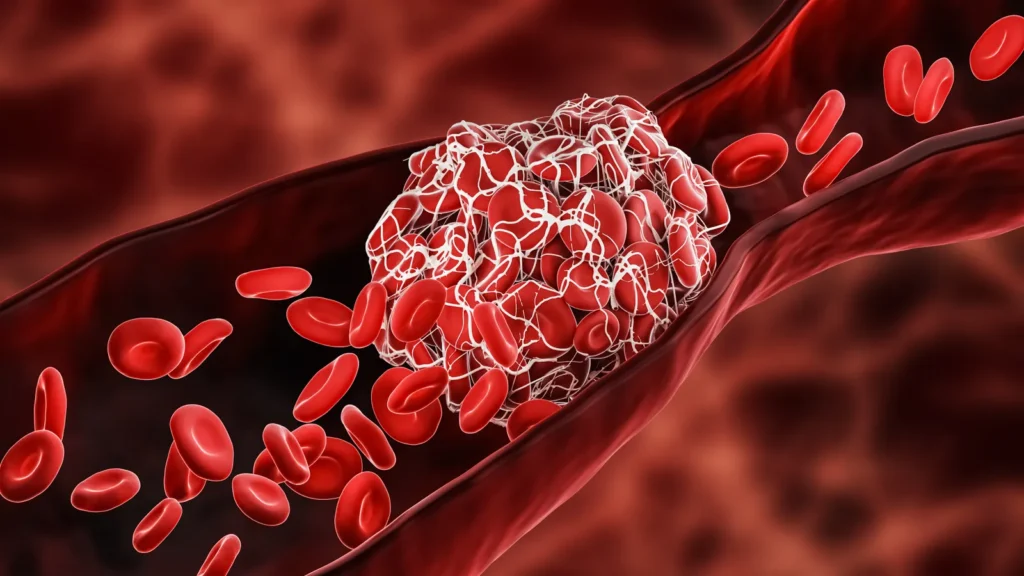
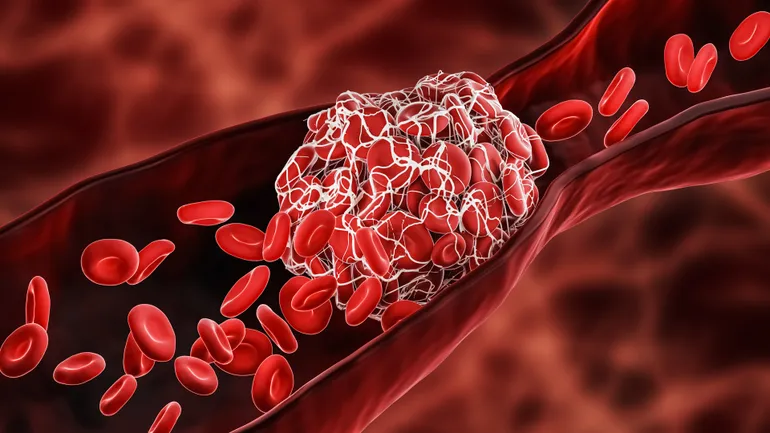
Ischemic strokes, which occur when a blood clot obstructs blood flow to the brain, remain a leading cause of death and long-term disability globally. In the United States alone, approximately 795,000 people suffer a stroke each year. The clinical standard for treating large vessel occlusions is mechanical thrombectomy—a procedure where a catheter is threaded through the arterial system to physically remove the clot. When performed within the "golden hour," the procedure can result in near-total recovery for patients who might otherwise face permanent paralysis or cognitive impairment.
However, the current healthcare infrastructure presents a significant logistical hurdle. Mechanical thrombectomy is a highly specialized procedure requiring the expertise of interventional neuroradiologists or neurosurgeons, who are predominantly stationed at large, urban Comprehensive Stroke Centers. According to data cited by ARPA-H, more than 50% of the U.S. population resides more than an hour away from a facility capable of performing these procedures. This "stroke desert" phenomenon means that by the time a patient is stabilized at a local hospital and transferred to a specialized center, the window for effective treatment has often closed. Currently, only about 12% of eligible stroke patients receive a thrombectomy, a statistic the AIR program intends to change by bringing the procedure to the patient rather than the patient to the procedure.
Strategic Funding and Key Industry Players
The $175.3 million funding pool is being distributed among several key innovators in the medtech sector, each tasked with solving different aspects of autonomous endovascular intervention. The AIR program, led by Program Manager Ileana Hancu, focuses on high-risk, high-reward technologies that could fundamentally alter the trajectory of emergency medicine.
Siemens Healthineers, a global leader in medical imaging and laboratory diagnostics, has been awarded up to $31.1 million to accelerate the development of an autonomous remote endovascular robot. To demonstrate its commitment to the project, Siemens will contribute an additional $5.4 million of its own capital, bringing the total project investment to $36.5 million. The company is also collaborating with Stryker, a major player in medical equipment and neurovascular technology, to create a comprehensive system capable of performing both elective and emergency neurovascular procedures, including the treatment of aneurysms.
Philips, another titan in the healthcare technology space, received an award of up to $33.7 million. Their focus within the AIR program is the creation of a robotic platform designed to navigate the complex vascular architecture of the human body autonomously. By utilizing sophisticated sensors and real-time imaging, the Philips system aims to guide catheters to the site of a blockage with minimal human intervention, reducing the reliance on on-site specialists.
Magnendo, a specialized robotics firm, was granted up to $32 million to advance its magnetic robotic navigation platform. Unlike traditional wire-guided catheters, Magnendo’s technology utilizes external magnetic fields to steer micro-robots through the bloodstream. This approach offers a higher degree of precision and reduces the risk of vessel wall damage, which is a significant concern during emergency endovascular maneuvers.
Technical Challenges and the Vision for Autonomous Care
The move toward autonomous mechanical thrombectomy represents one of the most ambitious frontiers in surgical robotics. Navigating the femoral or radial artery up into the delicate, winding vessels of the brain requires extreme precision. Currently, surgeons rely on continuous fluoroscopy (X-ray imaging) and a high degree of tactile feedback to move catheters through the body.
The AIR program’s participants are working to replace this manual expertise with AI-driven navigation systems. These systems must be capable of interpreting 3D vascular maps in real-time, adjusting for the patient’s unique anatomy, and identifying the exact composition and location of a clot. The goal is to create a "plug-and-play" robotic suite that can be installed in community hospitals. In this vision of the future, a general surgeon or even a highly trained technician could initiate the robotic sequence, while a specialist monitors the procedure remotely from a central hub, intervening only if complications arise.
Philipp Fischer, Head of Advanced Therapies at Siemens Healthineers, emphasized the transformative potential of this technology. "Early access to the right treatment makes all the difference for stroke patients," Fischer stated. "By integrating robotics, imaging, devices, and artificial intelligence, we want to transform the way endovascular therapy is delivered, towards greater accessibility and precision across a broader range of care settings."
Chronology of ARPA-H and the AIR Initiative
The establishment of ARPA-H in 2022 marked a shift in federal health policy, moving toward a model inspired by DARPA (the Defense Advanced Research Projects Agency). While the National Institutes of Health (NIH) focuses on foundational biological research, ARPA-H is designed to bridge the "valley of death" between laboratory discovery and clinical application.
- March 2022: ARPA-H is formally established with bipartisan support to tackle the world’s most difficult health challenges.
- Late 2023: The Autonomous Interventions and Robotics (AIR) program is launched, identifying stroke and trauma as primary areas where robotics could save lives in "austere or remote" environments.
- Mid-2024: ARPA-H begins reviewing proposals from medtech consortia to develop autonomous endovascular tools.
- Late 2024/Early 2025: Official announcement of the $175.3 million in awards to Siemens Healthineers, Philips, Magnendo, and other partners.
- Future Outlook: The funded projects are expected to undergo rigorous prototyping and preclinical testing over the next three to five years, with the ultimate goal of achieving FDA clearance for autonomous or semi-autonomous clinical use.
Economic and Public Health Implications
The societal cost of stroke is staggering. Beyond the immediate medical expenses, the long-term costs associated with rehabilitation, lost productivity, and nursing home care place a massive burden on the U.S. economy. By increasing the percentage of patients who receive successful thrombectomies, the AIR program could significantly reduce these downstream costs.
Data from clinical trials, such as the MR CLEAN trial, have already proven that mechanical thrombectomy is more effective than "clot-busting" drugs (tPA) alone for large vessel occlusions. Patients who undergo successful thrombectomy are significantly more likely to regain independence. However, the current "hub-and-spoke" model of stroke care—where patients are transferred from small hospitals to large centers—often introduces delays that result in millions of brain cells dying every minute.

If autonomous robots can be deployed in community hospitals, the "time to needle" and "time to groin" (the start of the procedure) could be slashed by hours. This democratization of high-tech care would be a major step toward health equity, ensuring that rural populations receive the same standard of emergency care as those in major metropolitan areas.
Political Headwinds and Funding Stability
Despite the promising nature of these advancements, the future of ARPA-H remains a subject of political debate. The agency was a flagship initiative of the Biden administration, and like many newer federal programs, it has faced scrutiny regarding its budget and long-term necessity.
Recent policy discussions within the incoming Trump administration have suggested potential cuts to federal science and research spending. Critics of ARPA-H argue that its functions could be absorbed by existing NIH institutes, while proponents argue that the agency’s unique structure allows it to move faster and take bigger risks than traditional bureaucracy. The $175.3 million allocated to the AIR program represents a significant portion of the agency’s current budget, and the success of these robotic projects may serve as a litmus test for the agency’s continued viability in a shifting political landscape.
Conclusion: A New Era of Endovascular Therapy
The ARPA-H investment in autonomous mechanical thrombectomy represents a pivotal moment in the intersection of medicine and technology. By leveraging the expertise of Siemens Healthineers, Philips, and Magnendo, the federal government is placing a multi-million dollar bet on the idea that robots can eventually match, or even exceed, the precision of human surgeons in the high-stakes environment of stroke intervention.
As these projects move from the drawing board to the operating room, the medical community will be watching closely. The successful development of these systems would not only redefine stroke care but also pave the way for autonomous robotics in other fields, such as cardiac intervention and emergency trauma surgery. For now, the focus remains on the "golden hour," and the hope that one day, no patient will be "too far away" from a life-saving cure.