









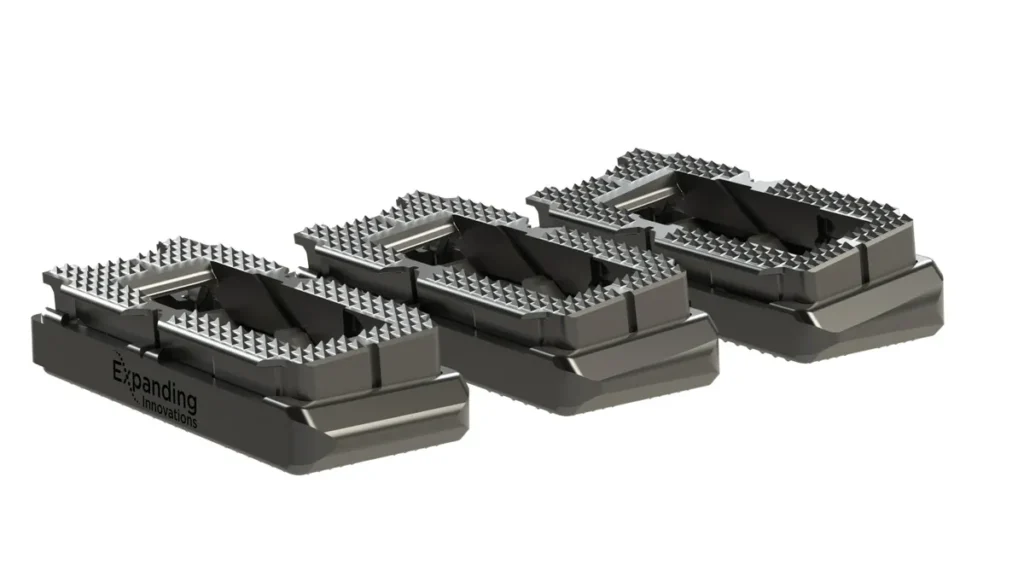
In a strategic move designed to consolidate its leadership in the global orthopedics market, DePuy Synthes, the MedTech subsidiary of Johnson & Johnson, has finalized the acquisition of Expanding Innovations, a privately held medical technology company specializing in advanced expandable interbody structures for spinal surgery. The acquisition centers on Expanding Innovations’ proprietary X-PAC Expandable Lateral Cage System, a specialized technology that addresses some of the most persistent challenges in lumbar fusion procedures, including implant subsidence and surgical complexity. This transaction marks a significant milestone in DePuy Synthes’ ongoing effort to modernize its spine portfolio by integrating "screwless" mechanical solutions with its sophisticated Velys Digital Surgery platform.
By acquiring Expanding Innovations, DePuy Synthes gains access to a unique suite of expandable implants that are engineered to be placed between vertebrae during spinal fusion surgery. Unlike traditional static cages or first-generation expandable devices that often rely on complex screw-based mechanisms for deployment, the Expanding Innovations technology utilizes a streamlined mechanical design intended to optimize the fit within the disc space. This acquisition reflects a broader industry trend toward minimally invasive surgery (MIS) and the demand for "smart" hardware that can be seamlessly integrated into robotic-assisted workflows.
Technical Innovation: The Shift Toward Screwless Expandable Cages
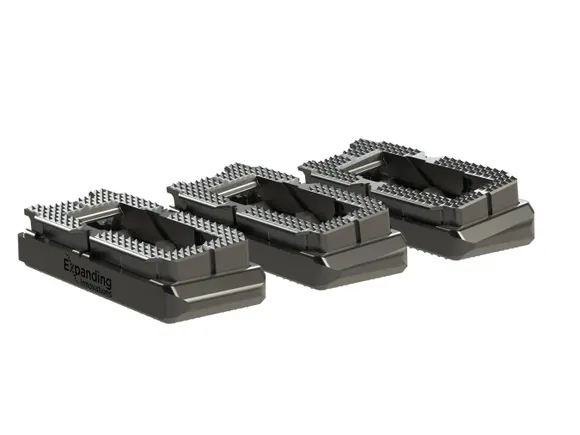
The core of the Expanding Innovations portfolio is the X-PAC Expandable Lateral Cage System. In spinal fusion surgery, an interbody cage is used to replace a damaged or degenerated disc, restoring disc height and providing a stable environment for bone growth between the vertebrae. Traditionally, these cages were "static," meaning they were a fixed size. Inserting a large static cage often required significant retraction of nerves and tissue, increasing the risk of post-operative complications.
Expandable cages were developed to solve this problem, allowing surgeons to insert a smaller device and then expand it once it is safely positioned within the disc space. However, many early expandable models relied on internal screw mechanisms that could be prone to mechanical failure or "back-out." Expanding Innovations’ screwless technology is designed to provide a more robust expansion profile. By eliminating the traditional screw-driven expansion, the system reduces the number of moving parts, potentially lowering the risk of mechanical wear and debris within the surgical site.
Furthermore, the technology specifically targets the prevention of vertebral subsidence—a complication where the implant sinks into the adjacent vertebral bone. Subsidence can lead to a loss of disc height, nerve impingement, and the failure of the fusion itself. The X-PAC system’s ability to provide controlled, incremental expansion allows for a customized fit that distributes the load more evenly across the vertebral endplates, thereby mitigating the risk of bone compromise.
Strategic Integration with the Velys Digital Surgery Portfolio
The acquisition is not merely a hardware play; it is a critical component of Johnson & Johnson’s digital transformation strategy. DePuy Synthes has invested heavily in its Velys Digital Surgery platform, which includes robotic assistance, navigation, and data analytics designed to improve surgical precision and patient outcomes.
The integration of Expanding Innovations’ technology into the Velys ecosystem is expected to provide surgeons with a more holistic toolset. In a robotic-assisted spine procedure, the precision of the robotic arm is only as effective as the hardware it is implanting. By pairing the X-PAC system with Velys, DePuy Synthes aims to offer a closed-loop system where the robot assists in the precise trajectory and placement of the cage, and the expandable nature of the device allows for real-time adjustment based on the patient’s unique anatomy.
This integration is particularly relevant as the market for robotic spine surgery continues to grow. Industry analysts suggest that the combination of advanced imaging, robotics, and expandable implants will become the standard of care for complex spinal reconstructions. DePuy’s move ensures it remains competitive against rivals such as Medtronic’s Mazor platform and Globus Medical’s ExcelsiusGPS system.
Market Context and the Competitive Landscape of Spine Care
The global spinal implants and surgery devices market is projected to reach over $14 billion by 2030, driven by an aging global population and a rising prevalence of degenerative disc diseases. Within this broader market, the expandable interbody cage segment is one of the fastest-growing sub-sectors. Surgeons are increasingly moving away from static cages in favor of expandable options because they allow for smaller incisions and more precise restoration of lordosis (the natural curve of the spine).
Prior to this acquisition, DePuy Synthes held a strong position in the spine market but faced stiff competition from specialized firms that focused exclusively on expandable technology. By absorbing Expanding Innovations, Johnson & Johnson is effectively neutralizing a nimble competitor while simultaneously upgrading its own product offerings.
The move also follows a period of significant consolidation in the spine industry. The merger of Globus Medical and NuVasive in 2023 created a powerhouse in the space, putting pressure on legacy players like DePuy Synthes and Stryker to innovate or acquire. DePuy’s decision to target a "screwless" technology provider suggests a focus on differentiated engineering rather than just increasing market volume.

Chronology of the Acquisition and Future Roadmap
The acquisition of Expanding Innovations follows several years of clinical validation for the X-PAC system. Since receiving initial regulatory clearances, Expanding Innovations has focused on the lumbar fusion market, specifically Transforaminal Lumbar Interbody Fusion (TLIF) and Lateral Lumbar Interbody Fusion (LLIF) procedures.
Under the DePuy Synthes umbrella, the roadmap for this technology is expected to accelerate. The company has indicated plans to expand the portfolio into Anterior Lumbar Interbody Fusion (ALIF), a surgical approach that accesses the spine through the abdomen. ALIF procedures often require larger implants and have specific requirements for stability and lordotic correction, making them an ideal application for the X-PAC’s expandable technology.
The timeline for full integration into the Velys platform is expected to span the next 18 to 24 months. During this period, DePuy Synthes will likely focus on:
- Surgeon Education: Rolling out training programs for existing DePuy customers to transition to the screwless expandable system.
- Regulatory Expansion: Seeking further international clearances to market the X-PAC system in European and Asian markets.
- Data Collection: Utilizing the Velys platform to collect real-world evidence on the long-term efficacy of the screwless cages in reducing subsidence rates compared to traditional models.
Clinical Implications and Patient Benefits
From a clinical perspective, the primary benefit of the Expanding Innovations technology lies in its potential to improve the "fusion environment." Successful spinal fusion depends on three factors: stability, alignment, and biology. The X-PAC system addresses stability and alignment by providing a rigid, expandable structure that can be tailored to the patient’s disc space.
For patients, the use of expandable cages often translates to shorter operative times and less blood loss. Because the devices are inserted in a collapsed state, the "surgical window" (the space the surgeon needs to work through) is smaller. This minimizes the disruption to the psoas muscle and the surrounding neural structures, which can lead to faster recovery times and reduced post-operative pain.
Furthermore, the reduction in subsidence risk is a major clinical win. When a cage subsides, it often necessitates a "revision surgery," which is significantly more complex and carries higher risks for the patient. By providing a more stable interface with the vertebral bone, the screwless expandable cages aim to increase the "one-and-done" success rate of spinal fusions.

Broader Impact on Johnson & Johnson’s MedTech Strategy
The acquisition of Expanding Innovations is a microcosm of Johnson & Johnson’s broader MedTech strategy: identifying high-growth "pockets" of innovation and integrating them into a massive global distribution network. Since the spin-off of its consumer health business (Kenvue), Johnson & Johnson has doubled down on its MedTech and Pharmaceutical divisions, with a specific focus on high-margin, technology-driven medical devices.
In recent earnings calls, J&J executives have emphasized the importance of the "Spine and Sports" segment as a key driver of growth. While the orthopedics market has faced headwinds due to hospital staffing shortages and supply chain fluctuations, the demand for advanced spinal solutions remains resilient. The addition of Expanding Innovations provides DePuy Synthes with a high-growth asset that complements its existing portfolio of pedicle screws, biologics, and navigation tools.
Conclusion and Industry Outlook
The acquisition of Expanding Innovations by DePuy Synthes represents a pivotal shift in the spine surgery landscape. By prioritizing a "screwless" mechanical design and focusing on the integration of hardware with digital surgery platforms, DePuy Synthes is positioning itself to lead the next generation of spinal care.
As the industry moves toward 2030, the success of this acquisition will likely be measured by how effectively DePuy can convert its massive user base of orthopedic surgeons to this new technology. If the X-PAC system can deliver on its promise of reduced subsidence and simplified surgical workflows, it may well become the cornerstone of DePuy Synthes’ spine business, reinforcing the company’s status as a dominant force in the evolution of minimally invasive surgery. For now, the move serves as a clear signal to the market: the future of spine surgery is expandable, digital, and increasingly screwless.