





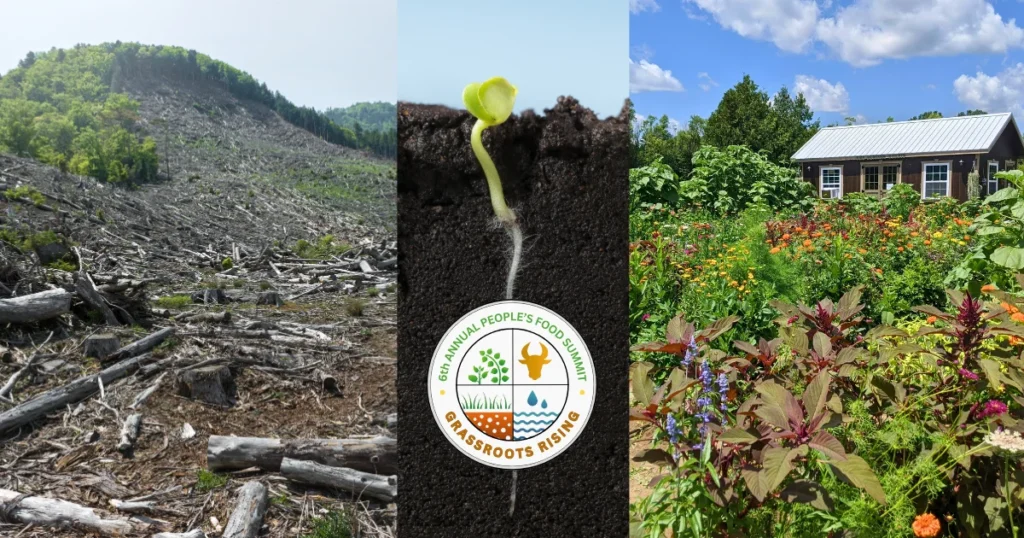
The 6th annual People’s Food Summit, scheduled for October 16, 2026, marks a significant milestone in the global movement to reclaim food systems from industrial and corporate hegemony. Established as a direct counter-narrative to the 2021 United Nations Food Systems Summit (UNFSS), this 24-hour virtual event has grown from a localized protest into a massive global platform, reaching over 10 million people and accumulating more than 3.2 million views across digital media. By centering the voices of small-scale farmers, Indigenous leaders, and regenerative activists, the summit seeks to address the systemic failures of a global food architecture that critics argue prioritizes profit over planetary and human health.
The 2021 Catalyst: A Crisis of Governance and Representation
The origins of the People’s Food Summit are rooted in the controversial 2021 United Nations Food Systems Summit. While the UN framed the event as a "People’s Summit" designed to accelerate the Sustainable Development Goals (SDGs), the process was met with immediate and widespread backlash from civil society. The primary point of contention was a strategic partnership agreement signed in 2019 between the UN and the World Economic Forum (WEF), an organization representing the interests of the world’s 1,000 largest corporations.
Critics, including over 300 global civil society organizations, argued that this partnership allowed corporate interests to bypass the established multilateral mechanisms of the UN. Specifically, the UNFSS appeared to sideline the UN Committee on World Food Security (CFS), which for decades had served as the most inclusive international platform for food policy, incorporating representatives from smallholder farmers, fisherfolk, and Indigenous communities.

The appointment of Agnes Kalibata, President of the Alliance for a Green Revolution in Africa (AGRA), as the UN Special Envoy for the summit further fueled concerns. AGRA’s focus on high-input, industrial agriculture—characterized by the use of synthetic fertilizers, chemical pesticides, and commercial seeds—was seen by many grassroots organizations as a continuation of the same policies that have historically disenfranchised small farmers and degraded soil health. This perceived "corporate capture" of the UN process led Regeneration International, the Organic Consumers Association, and their partners to launch the People’s Food Summit as an autonomous alternative.
A Chronology of the People’s Food Summit Movement
The evolution of the People’s Food Summit reflects a broader shift in global activism, moving from defensive protesting to proactive platform-building.
- 2021: The inaugural People’s Food Summit is launched on World Food Day. It serves as a 24-hour virtual marathon, intentionally bypassing the paywalls and restrictive access of high-level diplomatic meetings.
- 2022–2024: The summit expands its reach, incorporating more languages and time zones. During this period, the movement integrates the "Grassroots Rising" philosophy, emphasizing that local innovation is the primary driver of global change.
- 2025: Data reveals that the summit has successfully connected regional hubs in Oceania, Asia, Africa, and the Americas, creating a permanent digital repository of regenerative agricultural knowledge.
- 2026: The upcoming 6th annual event is set to feature a diverse array of global leaders, focusing on the intersection of Indigenous sovereignty, climate resilience, and decentralized food economies.
This timeline illustrates a growing disillusionment with top-down "solutions" to hunger. According to data from the Food and Agriculture Organization (FAO), global hunger has remained stubbornly high, affecting nearly 733 million people in 2023, despite decades of industrial agricultural expansion. The People’s Food Summit argues that this persistent insecurity is not a failure of production, but a failure of distribution and sovereignty.
The Legacy of Ronnie Cummins and Grassroots Rising
The 2026 summit theme, "Grassroots Rising," is an homage to the late Ronnie Cummins, co-founder of Regeneration International and a central figure in the organic movement for over 50 years. Cummins’ work was predicated on the belief that the "solution to our planet’s greatest crises lies right beneath our feet"—in the soil.
In his final book, Grassroots Rising, Cummins outlined a blueprint for a global "Regeneration Revolution." He argued that the transition from industrial to regenerative agriculture could sequester enough carbon to reverse climate change while simultaneously restoring rural economies and improving public health. His vision was not merely theoretical; it was based on the observation of millions of small-scale farmers who already produce 70% of the world’s food on less than 30% of its agricultural land.
Cummins’ influence is visible in the summit’s structure. Unlike traditional conferences that feature a few keynote speakers in a central location, the People’s Food Summit is decentralized. It begins in Oceania and follows the sun westward, ensuring that farmers in the Global South are not marginalized by time zones or travel costs. This format embodies the "organized grassroots" approach Cummins advocated, turning a one-day event into a continuous cycle of global knowledge exchange.
Key Perspectives and Featured Speakers for 2026
The 2026 lineup represents a cross-section of the most influential voices in the regenerative and Indigenous food movements. Each speaker brings a specific focus to the challenges of the current food system:
- Dr. Vandana Shiva: A world-renowned environmental activist from India, Dr. Shiva has long been a critic of seed patenting and industrial monocultures. Her address is expected to focus on "Earth Democracy" and the reclamation of seeds as a common heritage of humanity.
- Sean Sherman (The Sioux Chef): An Oglala Lakota chef and founder of North American Traditional Indigenous Food Systems (NATIFS), Sherman will discuss the role of Indigenous culinary traditions in addressing health disparities and environmental degradation. His work emphasizes that food sovereignty is inseparable from cultural sovereignty.
- Allan Savory: The founder of Holistic Management, Savory will present evidence on how managed livestock grazing can restore degraded grasslands, turning vast tracts of desertifying land back into productive ecosystems that sequester carbon.
- Shelley Cabrera and Jennifer Judith Chox Ixmatá: Representing Indigenous Quechua and Mayan communities, these leaders will highlight the "milpa" system and ancestral knowledge. Their participation underscores the vital role of women in preserving biodiversity and traditional maize cultures against the encroachment of GMOs.
- Kaluki Paul Mutuku: A youth leader from Kenya, Mutuku will explore how storytelling and digital advocacy are empowering a new generation of African farmers to reject chemical-intensive agriculture in favor of agroecological practices.
Supporting Data: The Economic and Environmental Context
The urgency of the People’s Food Summit is supported by increasingly dire environmental and economic data. The global food system is currently responsible for approximately one-third of all anthropogenic greenhouse gas emissions. Furthermore, industrial agriculture is the primary driver of biodiversity loss, contributing to the decline of pollinator populations and the degradation of roughly 33% of the world’s topsoil.
From an economic perspective, corporate consolidation in the food sector has reached unprecedented levels. A small number of firms—often referred to as the "Big Four"—control the majority of the global trade in grain, seeds, and agrochemicals. This concentration of power has led to a "price-scissors" effect, where the costs of inputs (seeds, fertilizers, pesticides) rise while the prices paid to farmers remain stagnant or fall.
In contrast, the regenerative sector is showing significant growth. The global organic food market is projected to reach over $480 billion by 2030. Research suggests that regenerative farms can be more profitable than conventional ones over the long term due to lower input costs and increased resilience to extreme weather events like droughts and floods. The People’s Food Summit serves as a clearinghouse for this data, providing farmers with the evidence they need to transition away from chemical dependency.
Analysis of Implications: A Shift in Global Food Policy
The rise of the People’s Food Summit suggests a growing bifurcation in global food policy. On one side is the "Techno-Fix" model, championed by organizations like the WEF and large agribusinesses. This model emphasizes precision agriculture, lab-grown proteins, and gene editing as the solutions to food security. Proponents argue that these technologies are necessary to feed a growing global population in a changing climate.
On the other side is the "Agroecological" or "Regenerative" model, championed by the People’s Food Summit. This model argues that the techno-fix approach ignores the root causes of hunger—namely poverty, inequality, and the loss of local sovereignty. Agroecology emphasizes biological diversity, social equity, and the restoration of ecosystem services.
The success of the People’s Food Summit in reaching 10 million people indicates that the agroecological model is gaining significant cultural and social momentum. While industrial systems still dominate global markets, the "ground-up" movement is building a parallel infrastructure of seed banks, local markets, and community-supported agriculture (CSA) networks. This parallel system provides a safety net as the industrial model faces increasing volatility from climate change and supply chain disruptions.
Conclusion: The Path Forward for World Food Day 2026
As October 16, 2026, approaches, the People’s Food Summit stands as a testament to the power of digital connectivity in the service of grassroots organizing. By providing a platform for those who are often silenced in the halls of the United Nations, the summit is redefining what "food security" actually means. It is no longer just about the calories produced per acre; it is about who owns the land, who controls the seeds, and how the food is grown.
The 6th annual summit will likely serve as a critical checkpoint for the global movement. With a lineup of speakers that spans continents and generations, the event will continue to amplify the message that another food system is not only possible but is already being built in the fields and forests of the world. For the millions who tune in, the summit offers more than just information; it offers a vision of a future where the people who tend the land are the ones who lead the way.