









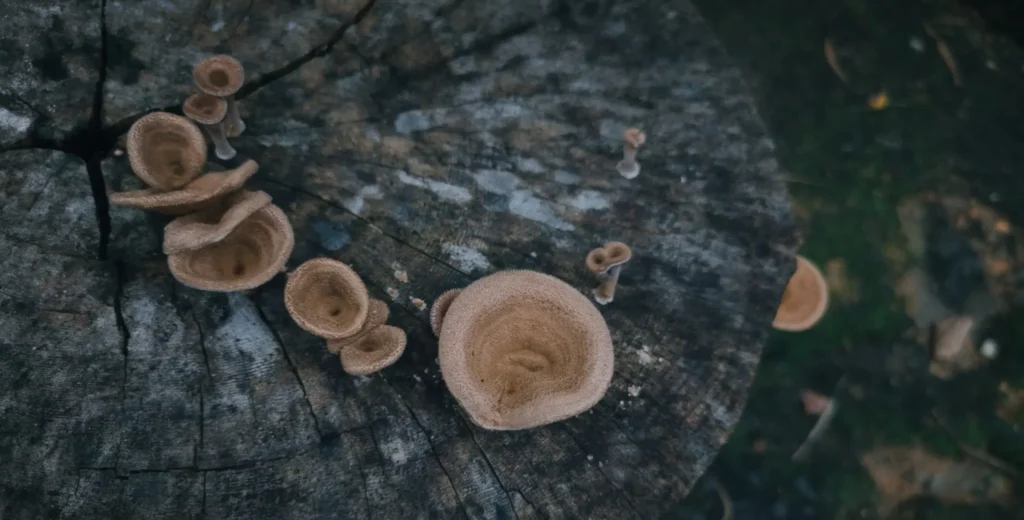
In the quiet expanses of temperate woodlands and manicured meadows, nature occasionally produces a geometric anomaly that has captivated the human imagination for millennia. These phenomena, known colloquially as fairy rings, consist of nearly perfect circles of mushrooms that appear overnight, seemingly disconnected from the surrounding flora. While folklore has long attributed these formations to the supernatural, modern science is only now beginning to unravel the sophisticated biological and genetic mechanisms that govern their growth. A recent breakthrough led by mycologist Hanna Johannesson of Stockholm University in Sweden has provided a deeper look into the subterranean world of these fungal structures, utilizing advanced DNA analysis and innovative transplantation experiments to determine why these organisms grow in rings rather than solid disks and how they maintain their precise symmetry over decades or even centuries.
The Cultural and Historical Context of Fairy Rings
Before the advent of modern mycology, the appearance of a perfect circle of fungi was often interpreted through the lens of local mythology. Across Europe, these "fairy rings" or "elf circles" were believed to be the sites of nocturnal dances by supernatural beings. In English folklore, it was said that if a human stepped into the ring, they would be compelled to dance until they died of exhaustion or were whisked away to the fairy realm. In German tradition, the circles were known as Hexenringe (witches’ rings) and were thought to mark the location where witches gathered on Walpurgis Night. In Dutch lore, the rings were believed to be where the Devil rested his milk churn, leaving a scorched circular mark on the grass.
Despite these colorful interpretations, early naturalists began seeking physical explanations as early as the 17th century. In 1686, the British scientist Robert Plot suggested that the rings might be caused by lightning or the movements of burrowing animals. It was not until the late 18th and early 19th centuries that botanists correctly identified fungi as the source of the phenomenon. However, identifying the agent did not immediately explain the geometry. The question of why the fungus forms a hollow ring rather than an expanding solid mass remained one of the more persistent mysteries in forest ecology.
The Biological Mechanism of Radial Expansion
At the heart of a fairy ring is a single fungal organism, or mycelium, which lives primarily underground. The mushrooms that appear on the surface are merely the reproductive "fruiting bodies" of this much larger, hidden network. The process begins with a single spore or a small piece of mycelium that lands in a nutrient-rich environment. As the fungus grows, it radiates outward from the center in search of fresh organic matter to decompose.
The formation of the ring shape is a result of the mycelium’s interaction with its environment. As the fungus moves outward, it consumes the nutrients in the soil—primarily nitrogen and carbon—leaving the center of the circle depleted. Additionally, many species of fungi produce metabolic waste products or secondary metabolites that may inhibit their own growth in older parts of the colony. This creates a "dead zone" in the center where the fungus can no longer survive, forcing the living edge of the organism to push further outward into "virgin" soil. This outward march results in the characteristic ring shape.
Researchers have identified two primary types of fairy rings: "free" rings, which are formed by saprobic fungi that decompose dead organic matter, and "tethered" rings, which are formed by mycorrhizal fungi that live in a symbiotic relationship with the roots of trees. The study led by Hanna Johannesson focuses largely on the former, specifically the species Marasmius oreades, also known as the Scotch bonnet or fairy ring champignon, which is famous for creating exceptionally large and long-lived circles in grasslands.
The Stockholm University Study: Methodology and Discovery
Hanna Johannesson and her team at Stockholm University sought to understand the internal genetic dynamics of these massive, aging colonies. Because a single fairy ring can persist for hundreds of years, it represents a unique opportunity to study "somatic mutations"—genetic changes that occur in the body of an organism during its lifetime. In most animals, these mutations are lost when the individual dies, but in a clonal, expanding fungus, these mutations can be carried forward as the ring grows.
The research team employed a two-pronged approach. First, they conducted a detailed DNA analysis of samples taken from different points along the circumference of several large fairy rings. By sequencing the entire genomes of these samples, they could track how the genetic code shifted as the fungus moved through the soil. Second, they performed a "fungal transplantation" experiment, moving sections of the mycelium to new environments to observe how they adapted and whether the ring-forming behavior was "hard-coded" into the genetic structure or a response to external stimuli.
The findings revealed that while the fungus is technically a single individual, it functions more like a population of competing genetic lines. As the ring expands, different sectors of the mycelium accumulate different mutations. Over time, this leads to a "mosaic" effect where the ring is no longer genetically uniform. This discovery has profound implications for our understanding of fungal evolution, suggesting that natural selection may be occurring within a single organism as it grows.
A Chronology of Scientific Inquiry into Fairy Rings
The investigation into fairy rings has evolved significantly over the last three centuries, moving from visual observation to molecular biology:
- 1792: William Withering, a British botanist, provides one of the first accurate descriptions of fairy rings as being caused by fungi rather than atmospheric phenomena.
- 1880s: Researchers begin to measure the growth rates of fairy rings, noting that they expand at a consistent rate of approximately 10 to 30 centimeters per year, depending on soil conditions.
- 1917: Studies in the United States estimate that some large rings found in the prairies could be over 400 years old, making them some of the oldest living organisms on the continent.
- 1990s: The advent of early DNA fingerprinting allows scientists to confirm that most fairy rings are indeed formed by a single genetic individual (a genet), rather than a cluster of different fungi.
- 2020-2024: The Johannesson lab applies Whole Genome Sequencing (WGS), revealing the complex landscape of somatic mutations and the "immortality" of the fungal germline.
Supporting Data: Growth Rates and Genetic Longevity
The data gathered by Johannesson and other mycologists highlights the incredible efficiency of the fairy ring structure. In ideal conditions, a ring of Marasmius oreades can maintain a near-perfect circularity with a variance of less than 5%.
Key data points regarding fairy ring growth include:
- Average Expansion: 12 to 25 cm per year.
- Maximum Diameter: Some rings in France and the UK have been measured at over 600 meters in diameter.
- Estimated Age: Using expansion rates, scientists have calculated that the largest known rings are between 600 and 700 years old.
- Genetic Stability: Despite centuries of growth, the core functional genes of the fungus remain remarkably stable, though "neutral" mutations (those that do not affect survival) accumulate at a rate of approximately 2-5 mutations per genome per meter of expansion.
The transplantation experiments conducted by the Stockholm team also yielded surprising results. When sections of a ring were moved to a new, nutrient-rich environment, they did not immediately form a new ring. Instead, they grew in a disorganized mass until the local nutrients were depleted, at which point the radial, ring-forming behavior re-emerged. This suggests that the "ring" is an emergent property of the organism’s foraging strategy rather than a predetermined shape.
Official Responses and Scientific Significance
The scientific community has reacted to the Stockholm University study with considerable interest. Dr. Gregory Bonito, a specialist in fungal ecology at Michigan State University, noted that the research "bridges the gap between classical ecology and modern genomics." According to Dr. Bonito, understanding how fungi manage their genetic load over centuries of clonal growth could provide insights into the aging processes of other multicellular organisms, including humans.
"The fairy ring is essentially a slow-motion explosion of life," said one researcher affiliated with the British Mycological Society. "By mapping the mutations within these rings, Johannesson is showing us how life persists and adapts in a static environment. It challenges our definition of what an ‘individual’ is when that individual is spread across an acre of land and possesses multiple slightly different genomes."
Furthermore, agricultural scientists are looking at the implications of this research for soil health. Fairy rings are known to significantly alter the chemistry of the soil they inhabit. The leading edge of the ring often releases high levels of nitrogen, which causes a "lush green" zone of grass to appear just outside the mushrooms. Conversely, the interior of the ring can become hydrophobic (water-repellent), leading to the death of grass and the "dead zone" often seen in older rings.
Broader Impact and Environmental Implications
The study of fairy rings extends beyond mere curiosity; it has practical implications for carbon sequestration and ecosystem management. Fungi are the primary decomposers in most terrestrial ecosystems. By understanding how they expand and how they "decide" to move through the soil, scientists can better predict how forests and grasslands will respond to climate change.
Moreover, the genetic findings regarding somatic mutations offer a new perspective on the resilience of fungi. Because they can maintain multiple genetic variants within a single colony, fairy rings may be more adaptable to environmental stressors than previously thought. If one part of the ring encounters a toxin or a change in pH, a specific mutation in that sector might allow it to survive and eventually recolonize the rest of the circle.
In the context of biodiversity, fairy rings also serve as micro-habitats. The altered soil chemistry and the physical structure of the mycelium create niches for specific bacteria and insects that are not found in the surrounding "normal" soil. Thus, the "otherworldly" circles are actually vital engines of terrestrial biodiversity.
Conclusion: The Enduring Mystery of the Mycelium
While the work of Hanna Johannesson and her colleagues has pulled back the veil on the genetic and biological drivers of fairy rings, much remains to be explored. The exact chemical signals that tell the mycelium to fruit simultaneously in a perfect circle remain elusive. However, the transition from folklore to genomic science has not stripped the fairy ring of its wonder. Instead, it has replaced the myth of dancing elves with the equally incredible reality of an ancient, sentient-like organism navigating the earth with mathematical precision.
As the research continues, the fairy ring stands as a testament to the complexity of the natural world. It is a reminder that beneath our feet, a sophisticated and ancient struggle for survival is being waged—one that uses the language of DNA and the geometry of the circle to ensure that life continues to expand, one centimeter at a time. For those who encounter these rings in the wild, they remain a bridge between the seen and the unseen, a biological masterpiece that continues to challenge our understanding of life, death, and the persistence of the individual.