


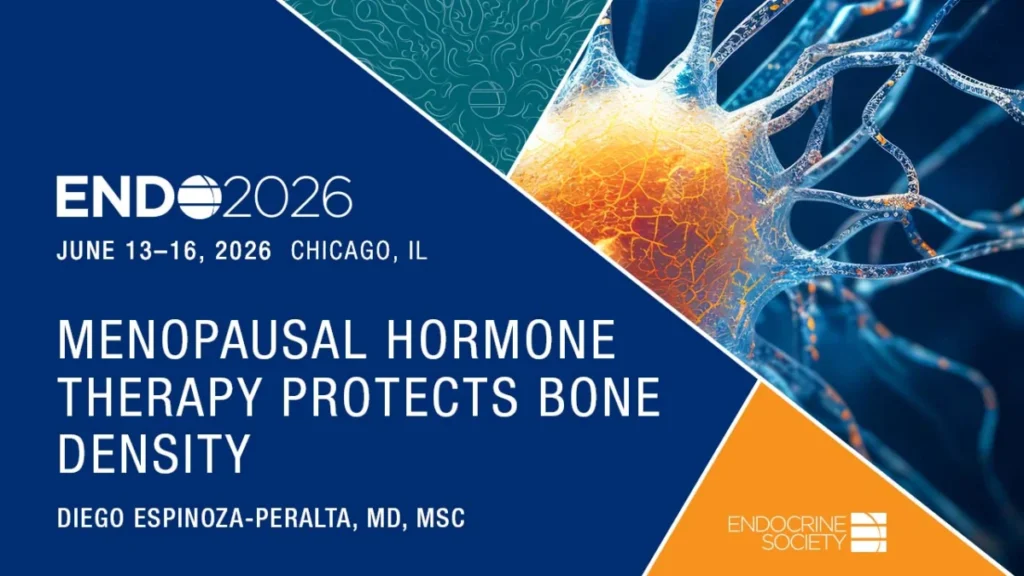
New clinical data presented at the ENDO 2026 annual meeting has provided robust evidence that menopausal hormone therapy (MHT) plays a critical role in preserving skeletal integrity, significantly lowering the risk of osteopenia and osteoporosis in postmenopausal women. The research, led by Diego Espinoza-Peralta, MD, MSc, Vice President of the Mexican Society of Nutrition and Endocrinology (SMNE) and principal investigator at Investigación Médica Sonora (INMEDS), suggests a 69% reduction in the risk of low bone mineral density (BMD) among MHT users compared to non-users. This finding is poised to reshape the clinical conversation regarding the long-term management of menopausal health, moving away from a decade-long trend of avoidance toward a more nuanced, benefit-oriented approach for eligible patients.
For many years, the medical community and the public have viewed menopausal hormone therapy with caution, largely due to the legacy of the early 2000s Women’s Health Initiative (WHI) study, which highlighted potential risks regarding cardiovascular health and breast cancer. However, Dr. Espinoza-Peralta’s research revisits the narrative by emphasizing the preventative capabilities of MHT against one of the most debilitating conditions associated with aging: bone loss. The study highlights that for women who do not utilize MHT, the risk of developing low bone mineral density is markedly higher, often leading to a cascade of physical decline characterized by fractures, chronic pain, and a significant loss of functional independence.
Methodology and Study Design
The findings presented at ENDO 2026 are based on a comprehensive retrospective cohort study conducted between 2021 and 2025. The research team analyzed data from 387 postmenopausal women who underwent Dual-energy X-ray Absorptiometry (DXA) scans, the gold standard for measuring bone mineral density. The study population was categorized into two distinct groups: those who were actively using or had used menopausal hormone therapy (33% of the cohort) and those who had never used the treatment (67%).
The primary objective was to determine the prevalence of low bone mineral density, defined as either osteopenia (the precursor to bone loss) or osteoporosis (a systemic skeletal disorder characterized by low bone mass and microarchitectural deterioration). The researchers utilized a multi-variable analysis to ensure the findings were robust, accounting for several confounding factors that typically influence bone health. These variables included the age of the participants, the duration of time since the onset of menopause, serum vitamin D levels, smoking status, and the presence of co-existing health conditions such as diabetes or inflammatory disorders.
The results were stark: women utilizing MHT demonstrated a 69% lower risk of exhibiting low bone mineral density in both the spine and the hip—the two areas most susceptible to life-altering fractures. Crucially, this protective effect remained statistically significant even after adjusting for lifestyle and biological factors, suggesting that the hormones themselves provide an independent protective mechanism for the skeletal system.
The Biological Context of Menopause and Bone Loss
To understand the implications of Dr. Espinoza-Peralta’s research, it is necessary to consider the biological relationship between estrogen and bone remodeling. In a healthy premenopausal state, the body maintains a balance between osteoclasts (cells that break down bone) and osteoblasts (cells that build bone). Estrogen plays a pivotal role in this process by inhibiting the activity of osteoclasts.
When a woman enters menopause and estrogen levels plummet, this balance is disrupted. The rate of bone resorption begins to outpace bone formation, leading to a rapid decline in bone density, particularly in the first five to ten years following the final menstrual period. This physiological shift explains why postmenopausal women represent the largest demographic affected by osteoporosis globally. According to international health statistics, approximately one in three women over the age of 50 will experience an osteoporotic fracture in her lifetime. These fractures, particularly of the hip, are associated with high mortality rates and a permanent loss of mobility for a significant percentage of survivors.
Historical Perspective and the Shift in Clinical Narrative
The discourse surrounding MHT has undergone a dramatic evolution over the last twenty-five years. In the late 1990s, MHT was widely prescribed as a "fountain of youth" for aging women. This changed abruptly in 2002 when the initial findings of the WHI were published, leading to a massive decline in prescriptions as patients and physicians feared increased risks of stroke and breast cancer.
"For years, many women have avoided menopausal hormone therapy because of safety concerns and warning labels," noted Dr. Espinoza-Peralta during his presentation. "This study revisits that narrative and shows that menopausal hormone therapy may have an important added benefit: protecting bone health. That shifts the conversation from ‘avoid if possible’ to ‘reconsider in the right patient.’"
In the decades since the WHI, subsequent re-analyses of the data have shown that the risks are often age-dependent. Women who start MHT closer to the onset of menopause (the "window of opportunity" hypothesis) generally experience more benefits and fewer risks than those who begin the therapy much later in life. The research presented at ENDO 2026 reinforces this modern understanding, suggesting that when used appropriately, MHT serves a dual purpose: the alleviation of vasomotor symptoms (such as hot flashes and night sweats) and the systemic protection of the skeleton.
Expert Reactions and Public Health Implications
The presentation of this data has sparked significant interest among endocrinologists and gynecologists attending the ENDO 2026 conference. While not participating directly in the study, several experts noted that the 69% risk reduction is one of the most substantial figures reported in recent observational cohorts.
Medical analysts suggest that these findings could lead to a revision of clinical guidelines. Currently, many professional organizations recommend the "lowest dose for the shortest duration" to manage menopausal symptoms. However, if MHT is recognized as a primary tool for the long-term prevention of osteoporosis, the duration of treatment might be extended for women at high risk of bone loss.
"In simple terms: menopausal hormone therapy appears to independently protect bones, not just by coincidence," Dr. Espinoza-Peralta emphasized. This independence from other factors like Vitamin D or exercise suggests that for many women, lifestyle modifications alone may not be sufficient to counteract the hormonal void left by menopause.
From a public health perspective, the implications are vast. The economic burden of treating osteoporotic fractures runs into the billions of dollars annually in North America and Europe. By preventing the transition from osteopenia to osteoporosis, healthcare systems could potentially save significant resources while improving the quality of life for the aging population.
Future Outlook and Clinical Application
The study’s findings are expected to encourage clinicians to weigh the benefits of MHT more carefully during the early stages of menopause. Dr. Espinoza-Peralta noted that the goal is not a universal prescription of hormones, but rather a personalized medical approach. "Clinicians may begin to weigh its benefits more carefully, especially in women early after menopause, potentially improving long-term health and quality of life," he stated.
Despite the positive results, researchers at the conference cautioned that MHT is not suitable for everyone. Patients with a history of hormone-sensitive cancers, undiagnosed vaginal bleeding, or a high risk of thromboembolic events must still approach the therapy with caution. However, for the majority of symptomatic women entering menopause, the data from 2021–2025 provides a compelling argument for the skeletal benefits of the treatment.
As the medical community continues to digest the findings from ENDO 2026, the focus will likely shift toward long-term follow-up studies to determine if the 69% risk reduction translates directly into a lower incidence of fractures over a 10-to-20-year period. For now, the research serves as a pivotal reminder that menopause management is not merely about treating temporary symptoms, but about implementing strategies that ensure long-term structural health and autonomy.
The research conducted by Dr. Espinoza-Peralta and his colleagues at SMNE and INMEDS represents a significant step forward in reclaiming the narrative of menopausal care. By providing clear, data-driven evidence of bone protection, the study empowers women and their doctors to make more informed decisions, potentially sparing thousands of women from the debilitating effects of osteoporosis in their later years.