

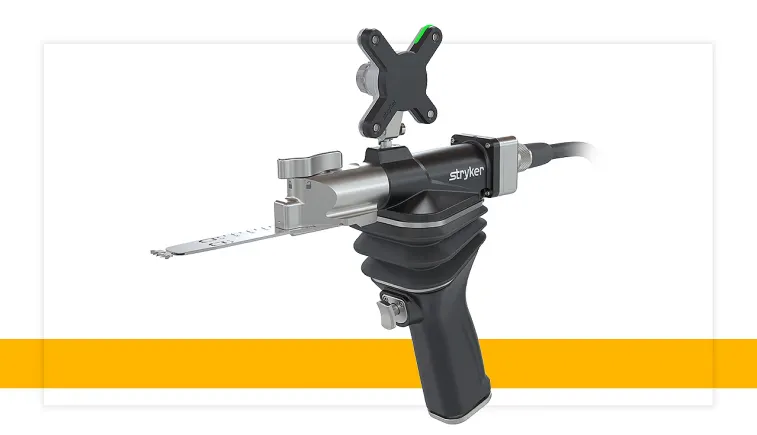
The 2026 American Academy of Orthopaedic Surgeons (AAOS) Annual Meeting served as the backdrop for Stryker to unveil its latest strategic advancements in surgical robotics and implant technology, marking a pivotal moment in the company’s decade-long effort to digitize the operating room. Central to the presentation was the Mako RPS, a handheld surgical robot designed to bridge the gap between traditional manual surgery and fully robotic-assisted procedures. Following its initial U.S. Food and Drug Administration (FDA) clearance in 2025 and its first clinical applications in January 2026, the device is currently navigating a phased rollout that reflects Stryker’s broader ambition to capture the remaining segments of the orthopedic market that have yet to adopt robotic platforms.
The introduction of the Mako RPS represents a significant departure from the large-format, robotic-arm systems that have defined the Mako brand since Stryker acquired the company in 2013. While the traditional Mako system utilizes a high-degree-of-freedom robotic arm to provide haptic boundaries and precision cutting based on pre-operative CT scans, the Mako RPS offers a more portable, handheld interface. Keith Evans, General Manager of Stryker’s Mako and Enabling Technologies business, confirmed during the meeting that the device is currently in a limited market release. This controlled phase is scheduled to continue through the first half of 2026, with plans to significantly scale the user base in the latter half of the year and into 2027.
Strategic Market Positioning and Surgeon Adoption
The development of the Mako RPS is a calculated response to a specific segment of the orthopedic community. Despite the "tremendous growth" cited by Evans regarding the traditional Mako system, a significant portion of orthopedic surgeons remains committed to manual techniques. For these practitioners, the transition to a full robotic arm can feel like a disruption to their established workflow and tactile relationship with the patient’s anatomy. The Mako RPS is engineered to mimic the ergonomics of the standard saws and cutting tools that surgeons use in manual total knee arthroplasty (TKA).
By providing a tool that feels familiar but is augmented with robotic precision, Stryker aims to lower the barrier to entry for robotic-assisted surgery. The primary objective is to convert manual surgeons to Stryker’s proprietary Triathlon knee system. Once a surgeon adopts the robotic interface, the likelihood of them utilizing the compatible Stryker implants increases exponentially, creating a self-sustaining ecosystem of hardware and software. Evans noted that internal discussions regarding a handheld alternative have been ongoing for over ten years, highlighting the long-term vision of providing a comprehensive suite of "enabling technologies" that cater to varying surgeon preferences.
Expanding the Mako Platform: From Spine to Shoulder
While the handheld RPS dominated much of the conversation, Stryker also provided updates on its flagship Mako 4 system. This iteration of the robotic arm is currently indicated for knee, hip, and spine procedures, representing a multi-joint platform that justifies the high capital expenditure for hospitals. The integration of spine and shoulder capabilities is a critical component of Stryker’s competitive strategy against rivals like Zimmer Biomet’s ROSA and Smith & Nephew’s CORI system.
The company announced that it is on track to introduce a dedicated shoulder application for the Mako system late in the first half of 2026. This expansion into upper extremity procedures is particularly significant as shoulder replacements are among the fastest-growing segments in orthopedics, yet they remain technically challenging due to the limited visibility and small working space of the glenoid. By applying the same CT-based planning and haptic guidance to the shoulder, Stryker expects to replicate the clinical success seen in lower extremity procedures.
Additive Manufacturing and the Triathlon Gold Knee
In addition to robotic hardware, Stryker showcased its prowess in materials science with the debut of the Triathlon Gold femoral component. This new implant is specifically designed for the growing population of patients with metal sensitivities, particularly those who react to nickel, cobalt, or chromium—materials commonly found in traditional orthopedic alloys. The Triathlon Gold component features a titanium nitride coating, which provides a biocompatible surface while maintaining the structural integrity required for long-term implant survival.
The production of the Triathlon Gold knee is a testament to the advancements in 3D printing, or additive manufacturing, within the medical device industry. Lisa Kloes, General Manager of Stryker’s knee business, explained that the use of 3D printing allowed the company to offer both cemented and cementless options for the new component. Historically, manufacturing a titanium-based implant that could withstand the friction of a knee joint required complex coating processes. Stryker’s investment in proprietary printing technology enabled the creation of a titanium base that meets these demands. The component received FDA clearance in October 2025 and is currently in a limited market release, paralleling the rollout strategy of the Mako RPS.
The Shift Toward Outpatient and Global Markets
A recurring theme throughout Stryker’s AAOS presentation was the increasing relevance of Ambulatory Surgery Centers (ASCs). The Mako RPS, with its smaller footprint and potentially lower cost of entry compared to a full robotic arm, is ideally suited for the outpatient setting. ASCs typically operate with tighter margins and less floor space than large hospital systems, making portable robotic solutions highly attractive. Evans confirmed that Stryker has observed intense interest from outpatient facilities, though the device is being marketed as a versatile tool for all surgical environments.
Beyond the domestic market, the Mako RPS is positioned as a key driver for Stryker’s international expansion. In many global markets, the capital cost and infrastructure requirements for a full-scale Mako robotic arm are prohibitive. A handheld, high-precision tool could allow Stryker to penetrate emerging markets in Asia and Latin America, where the volume of orthopedic procedures is rising but the adoption of high-cost robotics has been slow.
A Chronology of Stryker’s Robotic Evolution
The current suite of technologies presented at AAOS 2026 is the culmination of a decade of strategic acquisitions and internal research and development.
- 2013: Stryker acquires Mako Surgical Corp for $1.65 billion, a move that was initially met with skepticism by some analysts but has since become the benchmark for robotic integration in orthopedics.
- 2016-2020: The company focuses on the "Triathlon" knee integration and expands the Mako platform to include Total Hip and Partial Knee applications.
- 2021-2024: Stryker iterates on software, introducing Mako 4 and beginning the development of the RPS (Handheld) system to address the manual surgeon segment.
- October 2025: FDA clearance is granted for the Triathlon Gold knee component, addressing the niche but critical market of metal-sensitive patients.
- January 2026: The first clinical cases using Mako RPS are successfully completed, kicking off the limited market release.
- Mid-2026: Anticipated launch of the Mako Shoulder application and the expansion of the RPS user base.
Broader Implications for the Orthopedic Industry
Stryker’s dual-track approach—offering both a high-end robotic arm and a versatile handheld device—signals a shift in the industry toward "personalized robotics." Rather than forcing surgeons into a single methodology, the market is moving toward a model where the technology adapts to the surgeon’s preferred workflow. This flexibility is likely to accelerate the overall adoption rate of robotic-assisted surgery, which currently sits at approximately 15-20% of total knee procedures in the U.S., with significant room for growth.
Furthermore, the emphasis on additive manufacturing and specialized materials like those found in the Triathlon Gold knee suggests that the "one size fits all" era of orthopedic implants is ending. As diagnostic tools improve, surgeons are better able to identify patients who may have adverse reactions to standard materials, creating a demand for specialized solutions that were previously too expensive or difficult to manufacture.
The data presented by Stryker at AAOS 2026 underscores a robust financial and clinical outlook. By diversifying its portfolio to include spine, shoulder, and handheld robotics, Stryker is insulating itself against competitors who may only offer a single-joint or single-format solution. The company’s ability to leverage its massive install base of Triathlon knees while providing new avenues for manual surgeons to enter the robotic space suggests a comprehensive strategy to maintain its leadership position in the global orthopedic market. As the limited market releases for the Mako RPS and Triathlon Gold progress, the industry will be watching closely to see if these innovations can deliver the promised improvements in surgical consistency and patient outcomes.
