







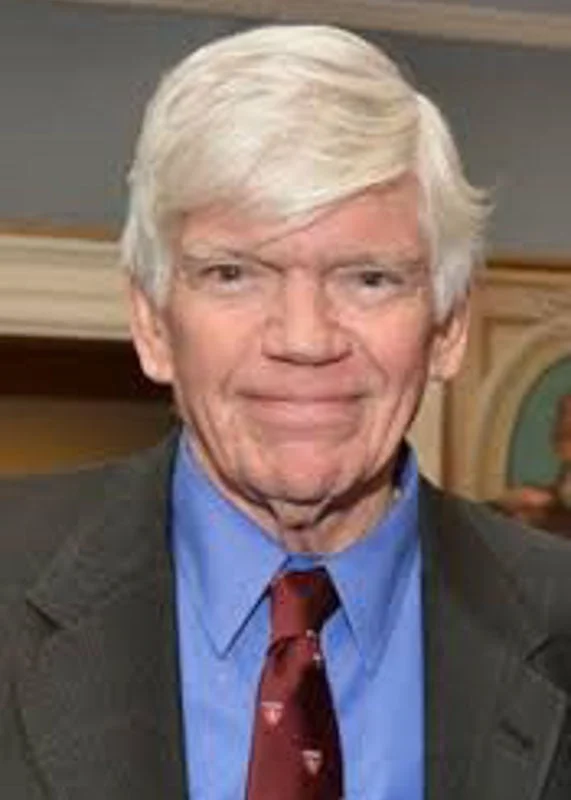
The global medical community is mourning the loss of Dr. John T. Potts Jr., MD, DSc, a titan in the field of endocrinology and a transformative figure in the history of Massachusetts General Hospital (MGH) and Harvard Medical School. Dr. Potts, who served as the Jackson Professor of Clinical Medicine Emeritus at Harvard and was a past president of the Endocrine Society, passed away on August 12, 2026, at the age of 94. His death marks the end of an era for academic medicine, concluding a career that spanned nearly seven decades and fundamentally altered the understanding of calcium metabolism and bone biology.
Dr. Potts was widely regarded as one of the most influential physician-scientists of the 20th century. His work bridged the gap between basic laboratory science and clinical application, a transition often referred to in modern medicine as "bench-to-bedside" research. From his early days at the National Institutes of Health (NIH) to his long tenure at MGH, Potts was instrumental in defining the molecular structure of the parathyroid hormone (PTH), developing the assays necessary for its clinical measurement, and establishing the guidelines that remain the standard for treating hyperparathyroidism and osteoporosis today.
A Foundation in Clinical Observation and Protein Chemistry
Born in Moorestown, New Jersey, into a family of florists, John T. Potts Jr. did not initially set out to revolutionize medicine. His early academic interests leaned toward English literature during his time at La Salle College. However, a shift toward medicine led him to the University of Pennsylvania School of Medicine, where he graduated in 1957. It was during his clinical rotations that a single patient with hyperparathyroidism—a condition where the parathyroid glands produce too much hormone, leading to dangerously high calcium levels—sparked a lifelong fascination with the mechanisms of mineral metabolism.
Potts arrived at Massachusetts General Hospital for his internship and residency, joining a department that was still heavily influenced by the legacy of Fuller Albright. Albright was a legendary figure at MGH who pioneered the practice of using rigorous clinical observation to deduce complex physiological processes. Potts embraced this model but recognized that the future of medicine lay in understanding the molecular underpinnings of these observations.
To acquire the necessary scientific rigor, Potts moved to the National Institutes of Health (NIH) in the early 1960s. Working in the laboratory of Christian Anfinsen—who would later win the Nobel Prize in Chemistry—Potts mastered the burgeoning field of protein chemistry. At the NIH, he partnered with Gerald Aurbach to tackle the isolation and characterization of the parathyroid hormone. At the time, PTH was poorly understood; Potts and Aurbach succeeded in purifying the hormone and, through a series of landmark experiments, determined its amino acid sequence. This achievement was a cornerstone of modern endocrinology, providing the structural data necessary to understand how the hormone interacts with its receptors.
Scientific Breakthroughs and Diagnostic Innovations
The collaboration between Potts, Aurbach, and the Nobel-winning team of Solomon Berson and Rosalyn Yalow led to the development of the radioimmunoassay (RIA) for PTH. This was a revolutionary advancement. Before the RIA, clinicians had no reliable way to measure the minute concentrations of hormones circulating in the blood. The PTH RIA allowed scientists to observe, for the first time, the dynamic feedback loop of calcium homeostasis: they proved that falling serum calcium levels immediately stimulated PTH secretion, while rising levels suppressed it.
Upon his return to MGH in 1968 as Chief of the Endocrine Unit, Potts continued to push the boundaries of technology. He recognized the potential of recombinant DNA technology long before it became a standard tool in medical research. By sending his protégés—including future leaders such as Joel Habener, William Chin, and Henry Kronenberg—to learn molecular biology at Harvard and MIT, Potts ensured that MGH remained at the vanguard of the genomic revolution. This foresight led to the cloning of the PTH gene and the subsequent identification of the PTH/PTHrP receptor, which expanded the scientific community’s understanding of how bone density is regulated at the cellular level.
These discoveries had profound clinical implications. The development of increasingly sensitive immunoradiometric assays improved the diagnosis of primary hyperparathyroidism and allowed doctors to distinguish it from humoral hypercalcemia of malignancy—a critical distinction for patient prognosis and treatment. Furthermore, Potts’s work laid the mechanistic groundwork for the use of PTH as an anabolic (bone-building) treatment for severe osteoporosis, a therapy that has since saved countless patients from debilitating fractures.
A Chronology of Leadership and Institutional Growth
Dr. Potts’s career was defined by a steady ascent into the highest echelons of medical leadership. His influence extended beyond the laboratory and the clinic into the structural organization of academic medicine.
- 1957: Graduated from the University of Pennsylvania School of Medicine.
- 1960s: Conducted seminal PTH research at the NIH.
- 1968–1981: Served as Chief of the Endocrine Unit at Massachusetts General Hospital.
- 1981–1996: Served as Chair of the Department of Medicine and Physician-in-Chief at MGH.
- 1987–1988: Served as President of the Endocrine Society.
- 1996–2004: Served as Director of Research at MGH.
- 2013: Awarded the George M. Kober Medal, the highest honor from the Association of American Physicians.
As Chair of Medicine at MGH for 15 years, Potts oversaw a massive expansion of the hospital’s research enterprise. He was a primary architect of "MGH East" in Charlestown, a move that provided the physical space necessary for the hospital to house world-class programs like the MGH Cancer Center and the Cardiovascular Research Institute. His leadership style, which he termed "distributed governance," focused on recruiting exceptional talent and providing them with the resources and autonomy to succeed. He famously remarked, "If you celebrate young people around you, they feel like they can grow."
Mentorship and the Culture of Collaboration
Perhaps Dr. Potts’s most enduring legacy is the "Potts Network"—the hundreds of physicians and scientists he mentored over decades. Unlike the hierarchical structures common in mid-20th-century medicine, Potts fostered a culture of mutual respect and ego-free collaboration. He was known for his uncanny ability to remember the specific scientific data and personal family details of every member of his department.
His commitment to mentorship was particularly evident in his advocacy for diversity. Long before "DEI" (Diversity, Equity, and Inclusion) became standard institutional terminology, Potts was actively working to increase the representation of minority groups in medicine. He established the Minority Recruitment Committee at MGH and was a staunch supporter of the Biomedical Science Careers Program. He also founded the MGH Society of Research Fellows to support young scientists during the precarious early stages of their careers.
Colleagues recall that Potts’s support was not limited to professional development. He was known to call colleagues daily during times of personal crisis or illness, offering emotional support and using his vast professional network to ensure they received the best possible care. This humanistic approach to leadership created a sense of belonging that defined the "Potts era" at MGH.
Broader Impact and Global Recognition
The impact of Dr. Potts’s work is reflected in the numerous accolades he received throughout his life. In addition to the Fred Conrad Koch Award—the Endocrine Society’s highest honor—he was elected to the National Academy of Sciences, the National Academy of Medicine, and the American Academy of Arts and Sciences.
His presidency of the Endocrine Society (1987–1988) occurred at a pivotal moment when the field was at risk of fracturing between basic scientists and clinical practitioners. Potts was instrumental in maintaining the unity of the society, arguing that the two wings of the discipline were intellectually inseparable. His vision helped ensure that the Endocrine Society remained the premier global organization for both hormone research and clinical care.
The implications of his research continue to resonate. Today, the management of hyperparathyroidism and the treatment of metabolic bone diseases are based on the consensus guidelines that Potts helped formulate. His work on PTH remains a textbook example of how molecular biology can be leveraged to solve complex clinical puzzles.
A Life Shared: The Potts Home and Community
Beyond the hospital walls, John Potts and his wife, Susanne, were known for their warmth and hospitality. Their home in Newton, Massachusetts, became a secondary hub for the MGH community. The couple shared a deep love for art, music, and philosophy, and their dinners were famous for bringing together junior trainees and senior faculty to discuss everything from protein folding to international politics.
Susanne Potts was described by many as John’s equal partner in building the department’s culture. Together, they created an environment where the high-pressure world of academic medicine felt like a shared human endeavor. Dr. Potts is survived by Susanne and their three children—John, Martha, and Stephan—as well as several grandchildren.
Conclusion: A Spirit that Endures
In a joint statement, Dr. J. Larry Jameson, Dr. William F. Crowley Jr., and Dr. Henry Kronenberg—all past presidents of the Endocrine Society and former colleagues—noted that "Endocrinology has lost a pioneer, MGH has lost one of its great institutional stewards, and generations of physicians and scientists have lost a mentor and friend."
Dr. John T. Potts Jr. left an indelible mark on the field of medicine not just through the molecules he discovered, but through the institutions he built and the people he empowered. As the medical community reflects on his 94 years, his legacy is seen in every diagnostic test for calcium disorders, every patient treated for osteoporosis, and every young scientist who finds their voice in a collaborative laboratory environment. His career stands as a testament to the idea that the greatest scientific achievements are those that are paired with a profound commitment to the growth and well-being of others.