







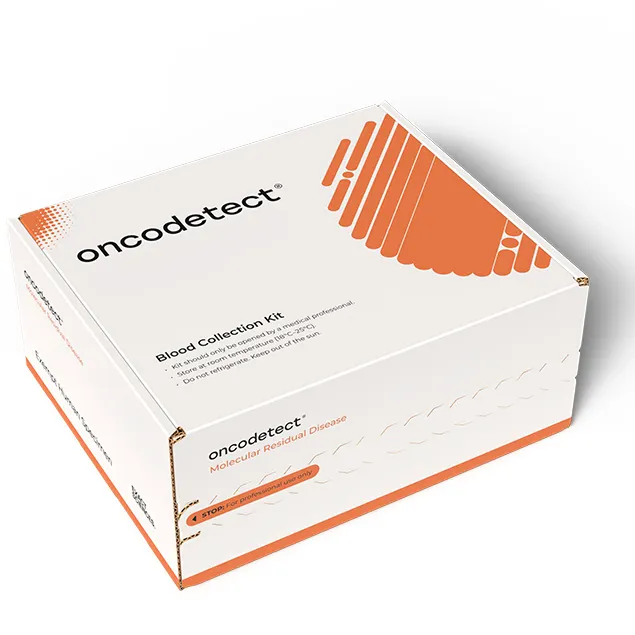
Abbott has officially introduced a next-generation version of its Oncodetect molecular residual disease (MRD) test, marking a significant technological leap in the field of precision oncology. This new diagnostic tool is engineered to identify minute traces of cancer in the bloodstream with unprecedented sensitivity, allowing healthcare providers to monitor patients more effectively during and after treatment. By utilizing whole-genome sequencing (WGS) to track up to 5,000 patient-specific cancer mutations, the updated Oncodetect test represents a substantial upgrade over its predecessor, which monitored only up to 200 variants. This advancement aims to address the "Achilles’ heel" of cancer care: the difficulty of detecting recurrence before it becomes clinically visible through traditional imaging.
The Evolution of Molecular Residual Disease Testing
Molecular residual disease refers to the small number of cancer cells that remain in the body after treatment, which cannot be detected by conventional means such as CT scans or MRIs. These residual cells shed tiny fragments of DNA into the bloodstream, known as circulating tumor DNA (ctDNA). MRD tests are designed to act as a highly sensitive "early warning system," identifying these fragments to predict the likelihood of recurrence months or even years before a tumor becomes large enough to see on a scan.
The newly launched Oncodetect test is the result of a collaboration involving technology developed at the Broad Institute of MIT and Harvard. The transition from whole-exome sequencing (WES) to whole-genome sequencing (WGS) is the cornerstone of this new iteration. While WES focuses only on the protein-coding regions of the genome—which account for less than 2% of human DNA—WGS examines the entirety of the patient’s genetic blueprint. This comprehensive approach allows the test to identify a much broader array of mutations unique to an individual’s tumor, significantly increasing the probability of detecting ctDNA even when it is present in extremely low concentrations.

Dr. Rick Baehner, Abbott’s chief medical officer for precision oncology, emphasized the importance of this shift in an interview following the launch. He noted that the industry is witnessing an evolution driven by the convergence of genomic science and clinical evidence. According to Baehner, the ability to illuminate what was previously invisible is a transformative moment for oncology, providing a level of clarity that was once unattainable.
Unprecedented Sensitivity and Detection Limits
The technical specifications of the new Oncodetect test highlight its superiority over earlier diagnostic models. The previous version of the test, which relied on whole-exome sequencing, had a detection threshold ranging from 15 to 50 parts per million (ppm). In contrast, the whole-genome sequencing version can identify ctDNA levels below one part per million.
During the development and validation phases, researchers were able to identify tumor molecules at a sensitivity of less than 0.5 parts per million. This means that in a background of over one million molecules of healthy cell-free DNA (cfDNA)—which typically originates from white blood cells or cells undergoing normal programmed death (apoptosis)—Abbott’s technology can successfully isolate a single molecule of tumor-derived DNA.
This ultra-sensitive performance is particularly critical for "low-shedding" cancers. Some malignancies, such as prostate, lung, kidney, and HR+ breast cancers, release very little DNA into the blood, making them notoriously difficult to monitor using older MRD technologies. By lowering the detection floor, Abbott aims to provide reliable monitoring for early-stage patients where the stakes of recurrence are highest and the tumor burden is lowest.
Clinical Validation: The Beta-CORRECT Study
The clinical utility of the enhanced Oncodetect test was recently underscored by data presented at the European Society for Medical Oncology (ESMO) meeting. Abbott showcased findings from the Beta-CORRECT study, which focused on patients with colorectal cancer (CRC). The study compared the performance of the WGS-based Oncodetect test against the earlier WES-based version.
The results demonstrated a 30-percentage-point absolute improvement in sensitivity for detecting cancer recurrence within a two-year window. This increase in sensitivity directly translates to better patient outcomes, as it allows oncologists to intervene earlier with secondary treatments, such as chemotherapy or targeted biologics, before the cancer spreads extensively.
Furthermore, the high sensitivity of the test improves the "negative predictive value." In clinical terms, this means that if a test returns a negative result, doctors can have significantly higher confidence that the patient is truly in remission and at a low risk of recurrence. This confidence can help avoid unnecessary "over-treatment," sparing patients from the toxic side effects of chemotherapy when it is not required.

Strategic Integration and the $21 Billion Acquisition
The launch of the new Oncodetect test comes on the heels of Abbott’s massive $21 billion acquisition of Exact Sciences, a deal that closed in March. This acquisition was a strategic move to consolidate Abbott’s position as a global leader in cancer diagnostics. By bringing Exact Sciences’ portfolio under its umbrella, Abbott gained access to established brands and a robust pipeline of screening and monitoring tools.
Colorectal cancer has become a primary focal point for Abbott’s oncology strategy. Through the Exact Sciences buyout, Abbott now controls Cologuard, the widely used at-home stool-based screening test. To further bolster this segment, Abbott recently announced the U.S. launch of Freenome’s SimpleScreen, a blood-based test for colorectal cancer screening. SimpleScreen is positioned as an alternative for patients who are hesitant to undergo invasive colonoscopies or who find stool-based tests inconvenient.
The addition of the WGS Oncodetect test completes a "continuum of care" model for Abbott. The portfolio now covers every stage of the cancer journey:
- Screening: Cologuard and SimpleScreen identify cancer or pre-cancerous lesions in asymptomatic populations.
- Diagnosis and Prognosis: The Oncotype DX genomic tissue test helps early-stage breast cancer patients determine the likelihood of recurrence and the necessity of chemotherapy.
- Multi-Cancer Detection: The Cancerguard test screens a single blood sample for multiple cancer types simultaneously.
- Monitoring: The Oncodetect MRD test tracks treatment response and monitors for recurrence post-therapy.
Market Dynamics and Competitive Landscape
Abbott is entering a rapidly expanding but competitive market for MRD testing. Its primary competitor is Natera, which produces the Signatera MRD blood test. Signatera has established a significant foothold in the market, particularly in colorectal and breast cancer monitoring. However, Abbott believes its shift to a WGS-based platform and the massive scale of its global distribution network will provide a competitive edge.
The market potential for these tests is immense. According to Dr. Baehner, there are more than 3 million patients in the United States alone who could benefit from MRD testing. Despite the clear clinical advantages, current market penetration stands at only about 10%. This gap represents a significant growth opportunity for Abbott as it seeks to make MRD testing a standard component of post-treatment oncology protocols.
The economic implications are also substantial. As healthcare systems move toward value-based care, diagnostics that can accurately predict treatment success or failure are becoming essential. By identifying recurrence earlier, the Oncodetect test can potentially reduce long-term treatment costs associated with advanced-stage cancer care.
Future Outlook and Ongoing Research
Abbott is not slowing down its research and development efforts following the Oncodetect launch. The company is currently spearheading more than 20 ongoing clinical studies to evaluate the test’s efficacy across various solid tumor types. These studies aim to expand the test’s indications and provide the necessary data for broader insurance coverage and regulatory approvals.
The integration of whole-genome sequencing into routine clinical practice marks a turning point in the "precision medicine" movement. As sequencing costs continue to decline and computational power increases, the ability to analyze thousands of mutations in real-time is becoming a reality for the average oncology clinic.
Dr. Baehner concluded that the industry is still in the "early days" of this technological revolution. With the launch of the new Oncodetect technology, Abbott is positioning itself at the forefront of a shift toward more personalized, data-driven cancer management. The goal is to move away from a "one-size-fits-all" approach to a model where every patient’s treatment and monitoring plan is dictated by the unique genetic signature of their disease.
As the 20 ongoing studies reach their endpoints, the medical community expects a wealth of data that will further define the role of WGS-based MRD testing in improving survival rates and quality of life for cancer survivors worldwide. For now, the launch of Oncodetect stands as a testament to the power of public-private partnerships—exemplified by the collaboration with the Broad Institute—in bringing cutting-edge science from the laboratory to the patient’s bedside.