

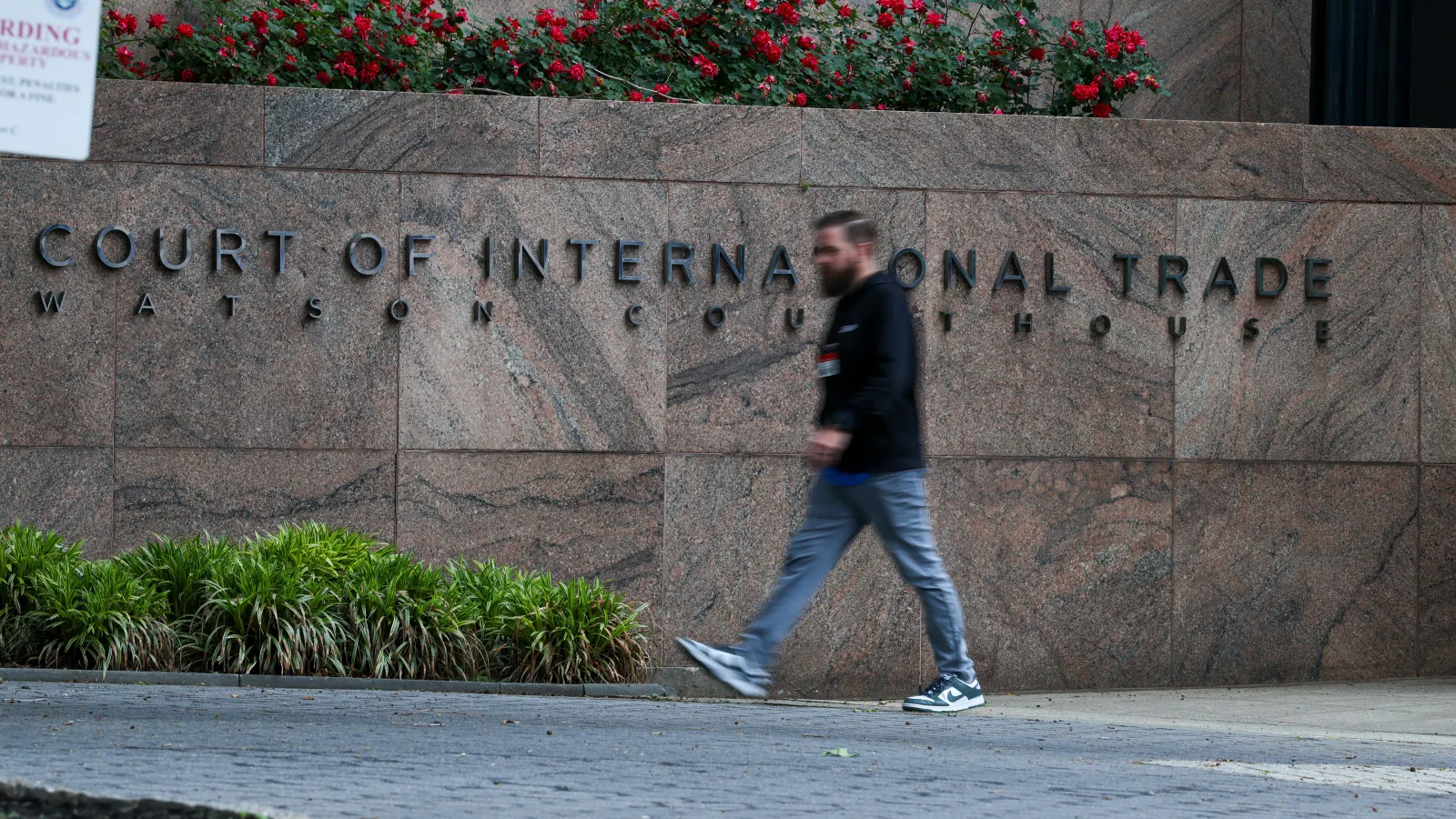
The procedural gridlock that has long stalled the return of billions of dollars in tariff payments to U.S. importers has finally begun to ease following a high-stakes directive from the Court of International Trade (CIT). Senior Judge Richard Eaton issued an order on Wednesday mandating that U.S. Customs and Border Protection (CBP) proceed with the liquidation of unprocessed import entries and the reliquidation of those not yet finalized, explicitly instructing the agency to do so "without regard" to the controversial levies previously imposed by the Trump administration. These tariffs, which were established under the broad authority of the International Emergency Economic Powers Act (IEEPA), were recently struck down by the U.S. Supreme Court, setting the stage for a massive administrative undertaking to reconcile years of disputed trade duties.
The court’s order represents a pivotal moment for the global supply chain, which has navigated a landscape of shifting trade policies and legal uncertainty since the tariffs were first implemented. By directing CBP to ignore the invalidated IEEPA duties during the finalization process, the CIT has provided a clear roadmap for how at least a portion of these funds will be returned to the private sector. However, legal experts warn that while the "bottleneck" is loosening, the path to full recovery remains fraught with technical complexities and the looming threat of further litigation.
The Judicial Catalyst: From the Supreme Court to the CIT
The recent momentum in the tariff refund saga is the direct result of a landmark Supreme Court ruling last month, which invalidated the Trump administration’s use of IEEPA to levy broad import duties. The executive branch had argued that the act provided the President with the necessary flexibility to address economic emergencies via trade barriers. However, the high court determined that the administration had exceeded its statutory authority, rendering the specific IEEPA-based tariffs unconstitutional or otherwise legally void.
Following that decision, the legal community and the logistics industry waited for a procedural mechanism to implement the ruling. Judge Eaton’s order at the CIT serves as that mechanism for "unliquidated" entries. In trade terminology, "liquidation" is the final computation of duties owed on an entry of goods into the United States. Under standard CBP procedures, this process typically occurs within a 314-day window from the date of entry, during which time importers can correct data or provide additional information regarding the classification and valuation of their goods.
The CIT order specifically targets two categories of imports: those that have not yet been liquidated and those that have been processed but remain subject to further administrative or judicial review. For these categories, CBP is now legally obligated to strip away the IEEPA charges, effectively reverting the duty rates to their pre-tariff levels.
Understanding the Liquidation and Reliquidation Process
For many shippers, the distinction between a liquidated and an unliquidated entry is the difference between an automatic refund and a protracted legal fight. According to James Kim, an international trade partner at ArentFox Schiff, the CIT’s order is the most significant development since the Supreme Court’s initial ruling because it provides a concrete instruction to CBP.
When an entry is "unliquidated," the financial books are essentially still open. If an importer paid the IEEPA tariffs at the time of entry as an estimate, the new order requires CBP to issue a refund for the overpayment upon final liquidation. Conversely, for goods where the tariff was estimated but the payment had not yet been finalized, CBP will simply remove the charge from the final bill. Pete Mento, director of global trade advisory services at Baker Tilly, noted that this simplifies the process for recent imports, as the IEEPA charge will essentially vanish during the routine liquidation cycle.
However, the "reliquidation" aspect of the order applies to entries where the initial liquidation occurred but was challenged via a timely protest or was otherwise not legally "final and conclusive." This creates a secondary tier of relief for importers who were proactive in filing administrative protests while the legal validity of the tariffs was being debated in the courts.
A Chronology of the IEEPA Tariff Dispute
The path to Wednesday’s court order has been years in the making, characterized by aggressive executive action and a determined legal defense by the American importing community.
- 2018–2019: The Trump administration began exploring various statutory authorities, including Section 232 of the Trade Expansion Act and Section 301 of the Trade Act of 1974, to impose tariffs. IEEPA was eventually invoked as a supplementary tool to expand these trade barriers, particularly in the context of negotiations with major trading partners and regional security concerns.
- 2020–2022: Importers began filing a wave of lawsuits at the Court of International Trade, arguing that IEEPA was intended for targeted sanctions against foreign adversaries, not for the implementation of broad, nationwide trade policy. During this period, billions of dollars in duties were collected by CBP.
- 2023: Conflicting rulings in lower courts led the issue to the doorstep of the Supreme Court. The trade community argued that if the executive branch could use IEEPA to bypass Congressional oversight on tariffs, it would fundamentally alter the balance of power in U.S. trade law.
- Late 2024: The Supreme Court issued its definitive ruling, striking down the IEEPA levies. This created an immediate administrative crisis, as CBP lacked a formal directive on how to handle the thousands of pending entries subject to the now-void duties.
- Present: The CIT’s order on Wednesday provides the first formal instructions to CBP to begin the process of unwinding the tariffs for unliquidated entries.
The "Real Money" Problem: Liquidated Entries and Legal Hurdles
Despite the optimism surrounding Judge Eaton’s order, a massive segment of the affected trade volume remains in a state of uncertainty. As Pete Mento highlighted, the "real complexity" lies with entries that have already been liquidated. Once an entry is liquidated and the 180-day window for filing a protest has closed, the entry is considered "final and conclusive" under 19 U.S.C. § 1514.
For companies that did not file protests to keep their entries "open," the CIT order may not provide an immediate remedy. Recovering funds for these finalized entries would likely require a separate legislative fix from Congress or a specific "universal" court order—the latter of which faces significant legal obstacles.
Gregory Husisian, a partner at Foley & Lardner, pointed out that the federal government is highly likely to appeal the CIT’s decision to the U.S. Court of Appeals for the Federal Circuit. A central point of contention is whether the CIT has the authority to grant "universal relief" to all importers, regardless of whether they were individual parties to the original lawsuits. Husisian noted that a 2024 Supreme Court ruling (outside of the trade context) has cast doubt on the validity of "nationwide injunctions," which federal courts have used in the past to apply a ruling to non-parties.
"We believe there is a 100% chance that this will be appealed," Husisian said. If the government does appeal, it could seek a stay on Judge Eaton’s order, which would once again halt the flow of refunds until the Federal Circuit issues a final decision—a process that could take another year or more.
Strategic Implications for the Supply Chain
For U.S. importers, the current situation demands a proactive administrative strategy. Trade experts are urging companies to review their historical entry data to identify which shipments were subject to IEEPA duties and what their current liquidation status is.
James Kim emphasized that importers should ensure they are registered for electronic refunds through CBP’s Automated Commercial Environment (ACE). Specifically, being set up for Automated Clearing House (ACH) refunds is critical. "When refunds do start flowing, importers set up for ACH will receive their money faster and with less friction," Kim noted.
Furthermore, the "frictionless" ideal remains elusive. CBP has signaled that it will not simply issue blanket refunds based on the court order without a thorough review. Each entry must be checked for other potential issues, such as classification errors or valuation disputes, before a check is cut. This means that even if the legal path is clear, the administrative processing time at CBP could be substantial.
Analysis of Economic Impact and Future Outlook
The scale of the potential refunds is significant. While exact figures for IEEPA-specific duties are often bundled with other trade actions, the total value of contested tariffs from the era reaches into the tens of billions. For many small and medium-sized enterprises (SMEs), the recovery of these funds could provide a vital infusion of capital at a time when borrowing costs remain high and global demand is fluctuating.
The broader implication of this saga is a reassertion of judicial oversight over executive trade powers. The invalidation of the IEEPA tariffs serves as a warning to future administrations that emergency powers cannot be used as a "blank check" to bypass established trade statutes like Section 232 or Section 301.
As the industry awaits the government’s next move, the focus remains on the Federal Circuit. If the appellate court upholds Judge Eaton’s order, it will cement a major victory for the rule of law in international trade. If it sides with the government on the issue of "universal relief," the result could be a fragmented system where only those companies with the resources to litigate individually see their money returned.
For now, the CIT’s order stands as a beacon of progress in a long-running dispute. Shippers are advised to maintain meticulous records and stay in close contact with their customs brokers and legal counsel to ensure they are positioned to capture refunds as the procedural "gridlock" continues to thaw.
