

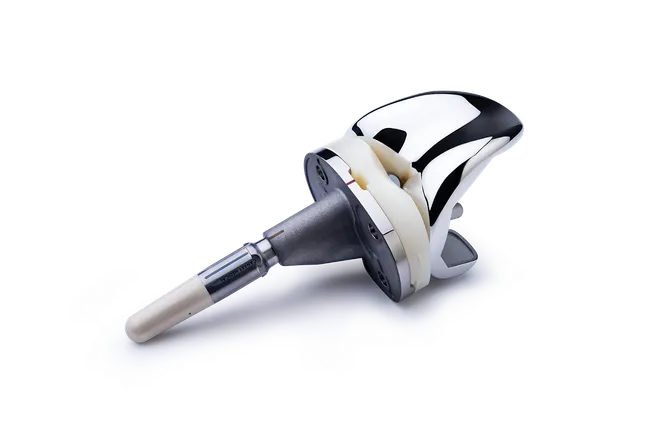
Zimmer Biomet, a global leader in medical technology and musculoskeletal healthcare, presented significant new clinical data during the American Academy of Orthopaedic Surgeons (AAOS) annual conference this week, demonstrating that its Persona IQ smart knee implant is associated with superior patient outcomes compared to traditional knee replacements. The findings, derived from a comprehensive analysis of real-world insurance claims data, suggest that the integration of remote monitoring and objective data collection into post-operative care may lead to a reduction in serious complications, including lower rates of revision surgery and periprosthetic joint infections.
The data presented at the conference underscores a pivotal shift in the orthopedic industry from purely mechanical solutions toward "smart" implants that utilize data analytics to inform clinical decision-making. According to the study, patients who received the Persona IQ implant and utilized the company’s Mymobility digital care management platform experienced a markedly smoother recovery trajectory than those in the control group. This improvement was not limited to clinical complications but also extended to healthcare utilization and pain management, with the smart implant group showing a reduced reliance on opioids and fewer visits to urgent care facilities and physical therapy clinics.
Comparative Analysis and Key Clinical Findings
The study was conducted through a collaborative effort between researchers at the Hospital for Special Surgery (HSS) and Zimmer Biomet’s internal clinical strategy team. To ensure a robust comparison, the researchers utilized a large-scale database of insurance claims to compare 1,081 patients who received the Persona IQ smart implant with a control group of 4,324 patients who received traditional knee implants without the accompanying digital monitoring resources.
At the one-year post-operative mark, the differences in complication rates were statistically significant. The revision rate—the frequency with which a secondary surgery is required to correct or replace the initial implant—stood at 0.3% for the Persona IQ group, compared to 1.0% for the control group. Similarly, the rate of periprosthetic joint infection (PJI), one of the most feared and costly complications in orthopedic surgery, was 0.3% for the smart implant group versus 0.9% for the control group.
Mike Anderson, Zimmer Biomet’s clinical strategy associate director, highlighted the importance of these findings while maintaining a cautious scientific perspective. Speaking in an interview with MedTech Dive, Anderson noted that while the data shows a strong correlation between the use of smart technology and better outcomes, the study’s design does not yet allow for a definitive claim of causality. "We can’t really say that there is causality in this, but we can say that there is an association between being monitored in these digital care pathways and fewer complications," Anderson stated.
Beyond the reduction in major complications, the analysis revealed a notable decrease in the utilization of ancillary healthcare services. Patients in the Persona IQ group required fewer physical therapy sessions and made fewer unplanned visits to urgent care. Furthermore, the data indicated a reduction in opioid prescriptions, suggesting that the continuous monitoring and engagement provided by the digital platform may assist in better pain management and earlier identification of recovery milestones.
The Evolution of the Persona IQ Smart Knee
The Persona IQ represents a landmark in medical device innovation, being the first "smart" knee implant to receive De Novo authorization from the U.S. Food and Drug Administration (FDA) in August 2021. The device was developed in partnership with Canary Medical, a medical data company that provided the sensor technology integrated into the tibial extension of the knee replacement.
The core of the Persona IQ technology is its ability to capture objective kinematic data directly from within the patient’s body. Unlike wearable devices, which can be forgotten, incorrectly placed, or lose battery life, the Persona IQ sensor is implanted alongside the prosthesis and functions autonomously. It tracks a variety of critical metrics, including:
- Stride Length: Measuring the distance covered in a single step to assess gait efficiency.
- Range of Motion: Monitoring the degree of flexion and extension in the knee joint.
- Step Count: Tracking daily activity levels to gauge the patient’s return to normal life.
- Walking Speed: Assessing the velocity of movement as a proxy for joint stability and patient confidence.
This data is transmitted wirelessly to a home base station and then uploaded to the Mymobility platform, a digital ecosystem that allows surgeons and care teams to monitor the patient’s progress remotely. The platform also serves as a communication hub, allowing patients to receive educational materials, guided exercises, and direct messaging capabilities with their healthcare providers.
Understanding the "Why" Behind the Data
While the claims data clearly shows improved outcomes, the exact mechanism behind these improvements remains a subject of ongoing investigation. Anderson pointed out that because the study relies on insurance claims, it does not capture every interaction between the surgeon and the patient. However, the availability of objective data creates a new environment for proactive care.
"Unfortunately, we don’t know if the surgeons did anything with the objective data, but we do know that there were opportunities for surgeons to do that, and opportunities for patients to reach out and really self-direct their rehabilitation," Anderson explained.
One theory for the improved outcomes is that the "Hawthorne Effect" may be at play—patients who know they are being monitored may be more diligent in performing their prescribed physical therapy and following post-operative protocols. Alternatively, the Mymobility app provides a "safety net" that encourages patients to address minor concerns through the app rather than seeking emergency care, while also providing surgeons with the data needed to intervene if a patient’s metrics begin to deviate from the expected recovery curve.
A particularly compelling insight shared during the AAOS conference involved the early detection of infection. Researchers noted that in certain cases, a patient’s gait patterns showed a measurable decrease two to three days before a clinical diagnosis of infection was made. This suggests that the sensor data could eventually serve as a "biomarker" for complications, allowing for medical intervention before a problem becomes severe enough to require surgery.
Industry Implications and the Shift to Value-Based Care
The success of the Persona IQ data comes at a time when the healthcare industry is moving aggressively toward value-based care models. In these models, providers are reimbursed based on patient outcomes rather than the volume of procedures performed. Complications like infections and revisions are not only detrimental to patient health but are also massive financial burdens on the healthcare system.
By demonstrating a reduction in revision rates from 1% to 0.3%, Zimmer Biomet is positioning its smart implant as a tool for hospitals and surgical centers to minimize risk and improve the overall efficiency of joint replacement programs. The reduction in urgent care visits and physical therapy requirements further bolsters the economic case for the technology, potentially offsetting the higher initial cost of the smart implant through long-term savings.
Competitors in the orthopedic space, such as Stryker and Smith+Nephew, are also investing heavily in digital health and robotic-assisted surgery. However, Zimmer Biomet’s approach of embedding sensors directly into the implant provides a unique stream of long-term, objective data that wearables cannot match. The challenge for the industry remains the "data fatigue" experienced by clinicians; surgeons need clear, actionable insights rather than a constant stream of raw metrics.
Future Outlook: From Association to Causality
The current findings represent a significant milestone, but Zimmer Biomet acknowledges that more rigorous testing is required to unlock the full potential of the Persona IQ. To move beyond "association" and prove "causality," the company will likely need to conduct prospective, randomized clinical trials (RCTs).
Such trials would be designed to test whether specific interventions—such as an automated alert triggered by a drop in walking speed—actually result in fewer complications. "In the future, if Zimmer would like to offer alerts for interventions based on this data, prospective, randomized clinical trials will be needed to demonstrate that receiving an alert and acting on it reduces complications," Anderson noted.
As the database of smart implant recoveries grows, Zimmer Biomet and Canary Medical hope to use machine learning and artificial intelligence to create predictive models. These models could identify "at-risk" patients in real-time, allowing surgeons to customize rehabilitation protocols based on an individual’s unique data profile.
The data presented at the AAOS conference suggests that the era of the "connected patient" in orthopedics is no longer a distant prospect but a current reality. As more surgeons adopt these technologies and the clinical evidence continues to mount, the traditional "analog" knee implant may eventually be seen as an incomplete solution in a world increasingly driven by objective data and remote monitoring. For now, the Persona IQ stands as a primary example of how medical technology is evolving to not only replace a failing joint but to actively participate in the patient’s journey toward recovery.
