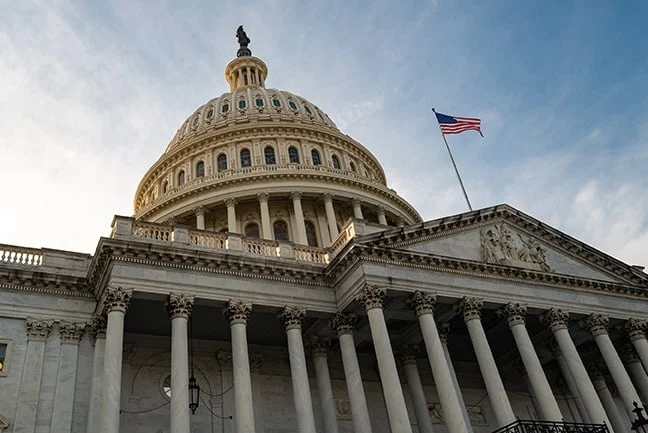
The United States Congress is set to return to Washington, D.C., on November 9, marking the commencement of a high-stakes "lame duck" legislative session. This period, occurring between the conclusion of the midterm elections and the inauguration of the next congressional term in January, represents a final window for the current legislative body to address unresolved fiscal and regulatory matters. Among the most pressing items on the agenda is a contentious proposed rule by the Office of Management and Budget (OMB) that threatens to overhaul the infrastructure of federal grant approvals, scientific research dissemination, and international academic collaboration. This legislative push coincides with a looming deadline to fund the federal government, with the scientific community, led by organizations such as the Endocrine Society, advocating for a robust investment in the National Institutes of Health (NIH).
The OMB Regulatory Challenge: A Shift in Scientific Governance
At the heart of the upcoming legislative debate is a proposed regulatory framework from the Office of Management and Budget. The OMB, which serves as the largest office within the Executive Office of the President, oversees the implementation of the President’s vision across the Executive Branch. The proposed rule in question aims to modify the standards by which federal grants are managed and how research findings are shared globally. While the administration has framed these changes as necessary for administrative efficiency and national security, the scientific community has expressed significant alarm regarding the potential for increased bureaucracy and the stifling of international cooperation.
The proposed rule was originally scheduled for implementation on October 1. However, the rollout was met with immediate resistance from a bipartisan coalition of lawmakers concerned about the lack of stakeholder consultation and the potential for unintended consequences on the American research enterprise. Senator Susan Collins (R-ME), a veteran legislator known for her work on the Senate Appropriations Committee and her advocacy for biomedical research, led a successful effort to secure a delay. This bipartisan intervention pushed the implementation date back to December 11, aligning it with the expiration of the current federal funding agreement.

The implications of the OMB’s proposal are far-reaching. By fundamentally altering grant approval processes, the rule could introduce new layers of scrutiny that might delay the start of critical health studies. Furthermore, changes to research dissemination protocols could impact the "Open Science" initiatives that have become a hallmark of modern scientific progress, potentially limiting the speed at which life-saving data is shared across borders.
Chronology of the Legislative and Regulatory Conflict
The current impasse is the result of a series of legislative maneuvers and regulatory deadlines that have converged in the final quarter of the year. To understand the gravity of the upcoming November 9 return, it is necessary to examine the timeline of events:
- September: Congress departs Washington to allow members to focus on campaigning for the midterm elections. Before leaving, they pass a short-term Continuing Resolution (CR) to keep the government operational past the fiscal year end of September 30.
- October 1: The original scheduled date for the implementation of the OMB’s new grant and research rules. Due to the efforts of Senator Collins and her colleagues, this date is bypassed following a negotiated delay.
- November 8: Midterm elections take place, determining the makeup of the incoming Congress.
- November 9: Congress reconvenes for the "lame duck" session. The primary focus shifts to the December 11 deadline.
- December 11: The expiration date for both the current federal funding extension and the temporary stay on the OMB’s proposed rule.
During this window, lawmakers must decide whether to allow the OMB rule to proceed, modify it through legislative language, or block it entirely. Simultaneously, they must navigate the complex appropriations process to prevent a partial government shutdown.
Scientific Advocacy and the Endocrine Society’s Strategic Response
The Endocrine Society, representing thousands of physicians and scientists worldwide who specialize in hormone research and clinical care, has emerged as a leading voice in the opposition to the OMB rule. The Society argues that the proposed changes could disrupt the delicate ecosystem of international collaboration that is essential for tackling global health challenges such as diabetes, obesity, and thyroid disorders.
Upon the return of Congress in November, the Endocrine Society plans to launch a multi-pronged advocacy campaign. The organization is calling on its U.S.-based members to engage directly with their representatives through an online grassroots platform. The goal is to urge the White House to withdraw the proposed rule voluntarily. The Society’s leadership emphasizes that the strength of their influence is directly proportional to the level of participation from the scientific community.
In addition to grassroots mobilization, the Society is working behind the scenes with congressional staffers to draft bipartisan language for inclusion in upcoming funding legislation. This "policy rider" would effectively prohibit the OMB from using federal funds to implement or enforce the proposed rule. This strategy is a common legislative tactic used to check executive branch overreach when direct repeal is not politically feasible.
Federal Funding and the $53 Billion NIH Mandate
While the regulatory battle over the OMB rule intensifies, the broader issue of federal discretionary spending remains unresolved. The House of Representatives and the Senate failed to reach an agreement on full-year appropriations bills before the start of the fiscal year on October 1. As a result, the government is currently operating under a "stop-gap" measure that maintains spending at previous levels.
The Endocrine Society and its allies in the broader biomedical community are advocating for the passage of a comprehensive, full-year funding bill rather than another short-term extension. A primary objective is securing at least $53 billion for the National Institutes of Health (NIH).
Supporting Data: The Economic and Health Impact of NIH Funding
To provide context for the $53 billion request, it is helpful to look at the historical trajectory of NIH funding and its return on investment:
- Growth Trends: In recent years, Congress has provided steady, bipartisan increases for the NIH, recognizing that medical research is a primary driver of both public health improvements and economic growth. A $53 billion appropriation would represent a significant step forward from previous fiscal years, accounting for inflation and the rising costs of advanced laboratory technologies.
- Economic Multiplier: According to data from United for Medical Research, every $1 of NIH funding generates approximately $2.60 in local economic activity. In a typical fiscal year, NIH grants support over 500,000 jobs across the United States.
- Research Continuity: Short-term funding extensions, known as Continuing Resolutions, are notoriously disruptive to scientific research. When the NIH operates under a CR, it often delays the awarding of new grants and creates uncertainty for multi-year clinical trials. A full-year budget provides the stability necessary for long-term scientific planning.
Official Responses and Political Dynamics
The push to block the OMB rule and increase NIH funding is characterized by a rare degree of bipartisanship in an otherwise polarized political climate. Senator Susan Collins’ leadership highlights a faction of lawmakers who view scientific research as a matter of national competitiveness and public welfare rather than a partisan wedge issue.
While the White House and the OMB have not yet signaled a willingness to withdraw the rule, the pressure from both the legislative branch and professional societies is mounting. Critics of the rule within the administration may argue that the changes are essential for "research security"—a term used to describe efforts to prevent foreign adversaries from misappropriating U.S.-funded intellectual property. However, the Endocrine Society and other groups argue that these concerns should be addressed through targeted measures rather than broad, sweeping changes to the grant system that penalize legitimate international partnerships.
Observers expect that if the White House does not offer concessions, the "lame duck" session could see intense negotiations over the language of the final omnibus spending bill. Lawmakers will have to balance the administration’s regulatory goals against the scientific community’s need for autonomy and the bipartisan desire to maintain America’s lead in biomedical innovation.
Broader Implications for Public Health and Innovation
The outcome of the November session will have lasting effects on the trajectory of American science. If the OMB rule is implemented as currently written, researchers may face an increased administrative burden that diverts time and resources away from the laboratory. For early-career scientists, these hurdles can be particularly daunting, potentially discouraging a new generation of talent from entering the field of federally funded research.
Furthermore, the focus on international collaboration is particularly salient in the post-pandemic era. The rapid development of vaccines and treatments for COVID-19 was made possible by the global exchange of genomic data and clinical findings. Restrictions on how U.S. scientists interact with their international peers could slow the response to future health crises.
On the fiscal side, the decision between a full-year funding bill and another short-term extension will determine whether the NIH can launch new initiatives in areas such as Alzheimer’s research, cancer moonshots, and endocrine-disrupting chemical studies. A government shutdown, should Congress fail to act by December 11, would be catastrophic, resulting in the furlough of thousands of federal scientists and the potential loss of sensitive biological samples and long-term data sets.
Conclusion: The Road Ahead
As the November 9 return date approaches, the eyes of the scientific and medical communities will be on Washington. The "lame duck" session is often a time of frantic negotiation and unexpected legislative breakthroughs. For the Endocrine Society and its members, the goal is clear: protect the integrity of the research process from regulatory overreach and ensure that the NIH has the resources it needs to continue its mission.
The interplay between the OMB’s regulatory ambitions and Congress’s power of the purse will define the final weeks of the current term. Whether through a withdrawal of the rule by the White House or a legislative block in a funding bill, the resolution of this conflict will set the stage for federal research policy for years to come. In the interim, the call to action for scientists remains urgent, as they seek to ensure that their voices are heard in the halls of power before the legislative calendar expires.