The landscape of endovascular and cardiac intervention is undergoing a rapid transformation as two major players in surgical robotics, Remedy Robotics and Capstan Medical, announce significant milestones that promise to reshape how life-threatening conditions are treated. Remedy Robotics, a San Francisco-based startup, has successfully closed a $62 million Series B funding round to advance its autonomous and remote neurovascular system, while Capstan Medical has completed the first-ever U.S. transcatheter mitral valve replacement (TMVR) using its proprietary robotic guidance platform. These developments signal a shift toward greater precision, remote accessibility, and the integration of artificial intelligence in high-stakes surgical environments.
Remedy Robotics and the Evolution of Neurovascular Care
Remedy Robotics has positioned itself at the forefront of the "telerobotics" movement, aiming to solve a critical bottleneck in healthcare: the scarcity of specialized neurointerventionalists available to treat acute ischemic strokes and other vascular emergencies. The company’s $62 million Series B round, led by venture capital firm DCVC, brings in a diverse group of investors, including UC Investments—the investment arm of the University of California—Skip Capital, and the Australian pension fund Hostplus.
The infusion of capital is earmarked for a pivotal clinical trial conducted in collaboration with the University of California. This trial is a cornerstone of the company’s strategy to secure Food and Drug Administration (FDA) clearance for its N1 system. The N1 system is not merely a mechanical assistant; it is an AI-enabled platform designed to handle the complexities of endovascular procedures, which involve navigating thin catheters through the body’s intricate vascular network to reach the brain, heart, or peripheral limbs.
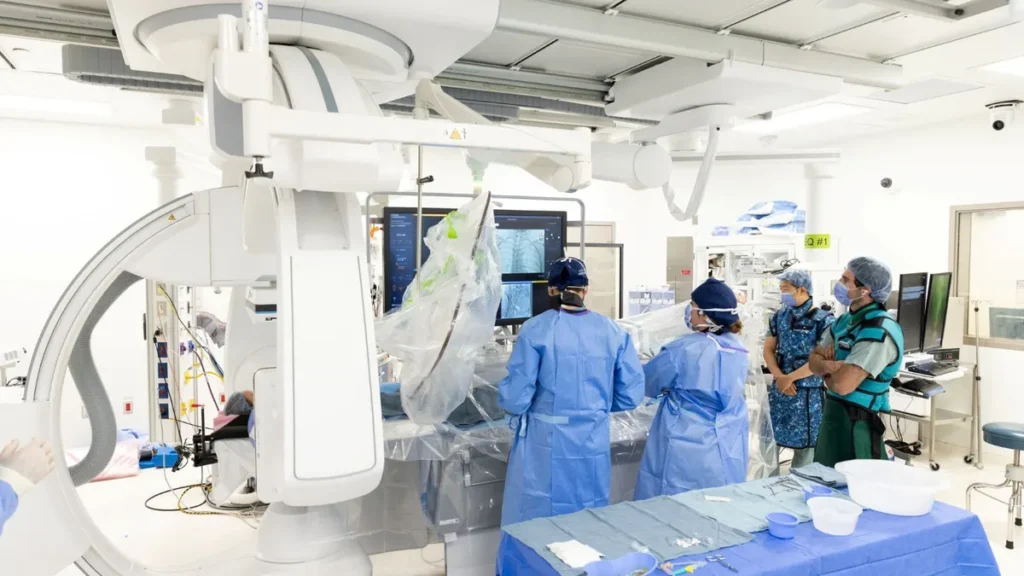
The N1 system is designed for a triad of operational modes: on-site, remote, and autonomous. By utilizing machine learning, the platform can analyze preoperative imaging to create a digital twin of the patient’s anatomy, allowing surgeons to simulate the procedure before the first incision is made. During the surgery, the system provides real-time image registration, ensuring that the robotic instruments are aligned perfectly with the patient’s live anatomy. This level of precision is intended to reduce the risk of vascular perforation and improve the speed of clot retrieval in stroke patients, where "time is brain."
The Strategic Importance of Remote Intervention
One of the most compelling aspects of Remedy Robotics’ mission is the democratization of specialized care. Currently, patients suffering from major strokes in rural or underserved areas often face long transport times to reach a "Comprehensive Stroke Center" capable of performing mechanical thrombectomies. Remedy’s successful completion of remote neurointerventional procedures in October 2025 demonstrated that a specialist located in a central hub could theoretically operate on a patient hundreds of miles away.
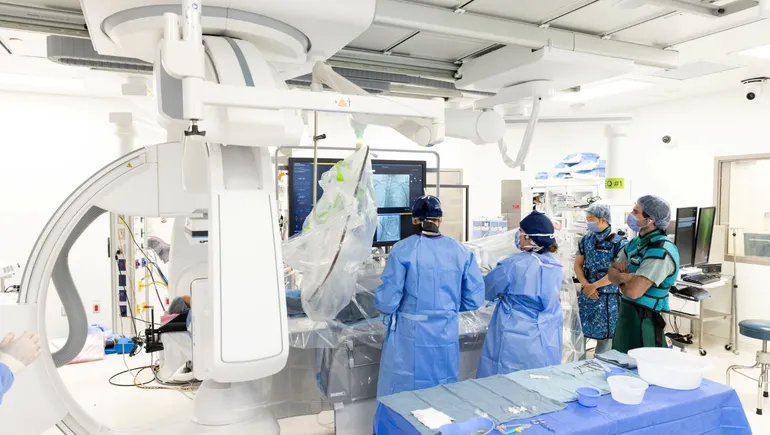
By expanding its reach to over 100 hospitals worldwide, Remedy is building the infrastructure necessary for a hub-and-spoke model of surgical care. If the upcoming pivotal trials prove successful, the N1 system could become a standard fixture in regional hospitals, allowing local teams to stabilize patients while remote experts perform life-saving interventions via the robotic interface.
Capstan Medical: Breaking the Mitral Valve Barrier
While Remedy Robotics focuses on the brain and peripheral vessels, Santa Cruz-based Capstan Medical is tackling one of the most difficult challenges in structural heart disease: the mitral valve. On November 9, 2024, a surgical team at The Christ Hospital in Cincinnati performed the first U.S. transcatheter mitral valve replacement (TMVR) using Capstan’s investigational robotic system.
The procedure was led by Dr. Santiago Garcia, Director of the Structural Heart Program at The Christ Hospital, as part of an FDA-authorized early feasibility study (EFS). The patient, who suffered from severe mitral valve disease and was considered a high-risk candidate for traditional open-heart surgery, was discharged in stable condition. This milestone follows the company’s first-in-human procedures conducted in Chile earlier in 2025.
The mitral valve presents a far greater engineering challenge than the aortic valve. While Transcatheter Aortic Valve Replacement (TAVR) has become a routine procedure for companies like Edwards Lifesciences and Medtronic, the mitral valve is larger, D-shaped rather than circular, and subject to higher systolic pressures. Furthermore, the mitral anatomy is surrounded by the left ventricular outflow tract and the circumflex artery, making precise placement of a replacement valve extremely difficult.
The Compass Robotic System: Precision in Navigation
Capstan’s Compass robotic system was developed specifically to address the stability issues inherent in manual catheter-based procedures. In a traditional TMVR, a surgeon must manually navigate a large delivery sheath through the femoral vein, across the atrial septum, and into the left atrium to position the valve. Maintaining stability in a beating heart while adjusting for the respiratory cycle is a monumental task.
The Compass system utilizes a flexible multi-axis catheter and robotic navigation to provide what the company describes as "sub-millimeter" precision. Surgeons direct the movement of the catheter and the deployment of the valve via a handheld controller, which translates their hand movements into precise robotic actions. This setup is intended to reduce the learning curve for physicians and minimize the "trial and error" often associated with positioning complex implants.

Capstan’s financial backing is as notable as its technology. In 2024, the company raised $110 million in a round that included participation from Intuitive Surgical, the pioneer of the Da Vinci robotic system. The involvement of Intuitive suggests a strong industry belief that the future of structural heart intervention lies in robotic assistance rather than purely manual techniques.
Market Context and Competitive Landscape
The entry of Remedy and Capstan into the clinical phase comes at a time when the broader surgical robotics market is projected to reach over $18 billion by 2030. In the vascular space, the industry is moving beyond the initial "first-generation" robots, such as the Corindus CorPath (acquired by Siemens Healthineers), which focused primarily on coronary interventions.
Remedy Robotics is entering a high-growth sector where the need for neurovascular intervention is rising due to an aging global population. According to the World Stroke Organization, one in four adults over the age of 25 will have a stroke in their lifetime. The ability to automate parts of the thrombectomy procedure could significantly increase the number of patients treated within the critical "golden hour" window.
In the cardiac sector, Capstan is competing in a market currently dominated by manual repair and replacement technologies. Abbott’s Tendyne and Edwards’ Evoque systems have made strides in the TMVR and tricuspid space, but they remain technically demanding. By adding a robotic layer, Capstan aims to make TMVR as predictable and accessible as TAVR has become over the last decade.
Chronology of Key Milestones
The path to these recent announcements has been marked by several years of rigorous development and incremental successes:
- 2024: Capstan Medical raises $110 million to fund clinical trials, with strategic backing from Intuitive.
- March 2025: Capstan completes the first-in-human robot-assisted mitral valve replacement procedures in Chile, proving the safety of the Compass system.
- October 2025: Remedy Robotics announces the successful completion of remote neurointerventional procedures, proving the feasibility of long-distance telerobotics for stroke care.
- November 9, 2024: The Christ Hospital in Cincinnati performs the first U.S. robotic TMVR using Capstan’s technology. (Note: Dates reflect the timeline provided in the source material regarding the sequence of clinical milestones).
- Current: Remedy Robotics secures $62 million in Series B funding to initiate its pivotal U.S. trial with the University of California.
Broader Implications for Healthcare Delivery
The convergence of AI, telerobotics, and advanced imaging represents a "Force Multiplier" for the healthcare system. For Remedy Robotics, the use of AI for preoperative simulation means that surgeons can identify potential complications—such as tortuous vessels or difficult clot morphologies—before the patient is even on the table. This predictive capability reduces procedure times and contrast media exposure.
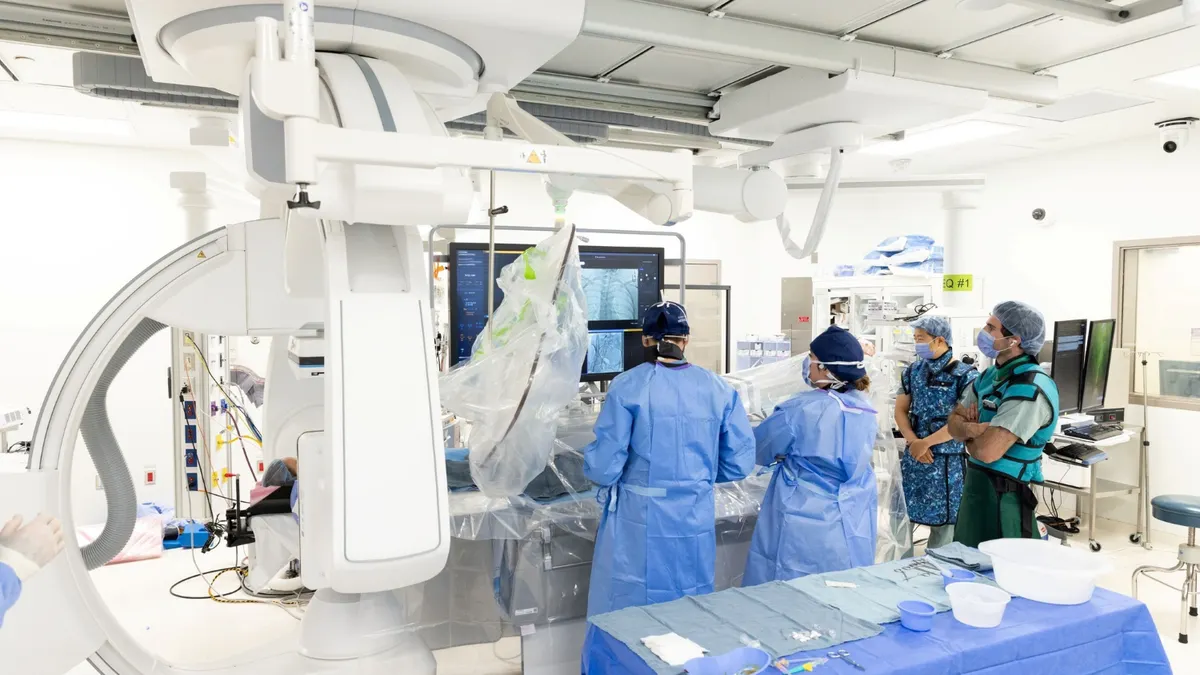
For Capstan Medical, the success of the first U.S. case provides a "proof of concept" that could accelerate the adoption of robotic TMVR. Dr. Santiago Garcia noted that this technology has the potential to fundamentally change the outlook for patients who are currently "untreatable" due to anatomical complexities or surgical risk.
As both companies move forward with their respective FDA pathways, the medical community will be watching closely to see if these robotic platforms can deliver on the promise of better outcomes at a lower total cost to the system. While the initial capital investment for robotic systems is high, the potential to reduce hospital stays, minimize re-interventions, and expand the pool of treatable patients offers a compelling value proposition for hospitals worldwide.
The success of Remedy and Capstan underscores a new era in medtech: one where the steady hand of the surgeon is augmented by the tireless precision of the machine, ensuring that whether the target is the brain or the heart, the intervention is safer, faster, and more effective than ever before.