The Endocrine Society has significantly escalated its legislative outreach on Capitol Hill, spearheading a multi-pronged advocacy campaign aimed at securing the long-term future of the Special Diabetes Program (SDP) and ensuring the passage of the Improving Needed Safeguards for Users of Lifesaving Insulin Now (INSULIN) Act of 2026. This strategic initiative represents a critical junction for federal health policy, as the Society leverages its clinical expertise to influence bipartisan legislation that impacts millions of Americans living with type 1 and type 2 diabetes. Central to these efforts is a series of high-level meetings between medical leaders and key congressional figures, emphasizing the urgent need for stable funding and price protections in the face of rising healthcare costs and a growing chronic disease epidemic.
The Strategic Importance of the Special Diabetes Program
The Special Diabetes Program (SDP) serves as a cornerstone of the federal response to the diabetes crisis in the United States. Established by Congress in 1997, the program is divided into two distinct yet equally vital components: the Special Statutory Funding Program for Type 1 Diabetes Research and the Special Diabetes Program for Indians (SDPI). The former provides essential funding to the National Institute of Diabetes and Digestive and Kidney Diseases (NIDDK), a branch of the National Institutes of Health (NIH), while the latter supports the Indian Health Service (IHS) in delivering prevention and education services to American Indian and Alaska Native communities.
For the Endocrine Society, the reauthorization of the SDP is a top-tier policy priority. The research funded through the NIDDK has led to monumental breakthroughs in diabetes management technology, including the development of continuous glucose monitors (CGMs) and artificial pancreas systems. These innovations have fundamentally altered the standard of care, allowing patients to achieve better glycemic control and reducing the incidence of long-term complications such as retinopathy, neuropathy, and kidney failure. Simultaneously, the SDPI has been hailed as one of the most successful public health programs in history, contributing to a dramatic reduction in diabetes-related kidney failure among Native populations—a demographic that suffers from disproportionately high rates of type 2 diabetes.

Advocacy on the Hill: The Meeting with Representative Kim Schrier
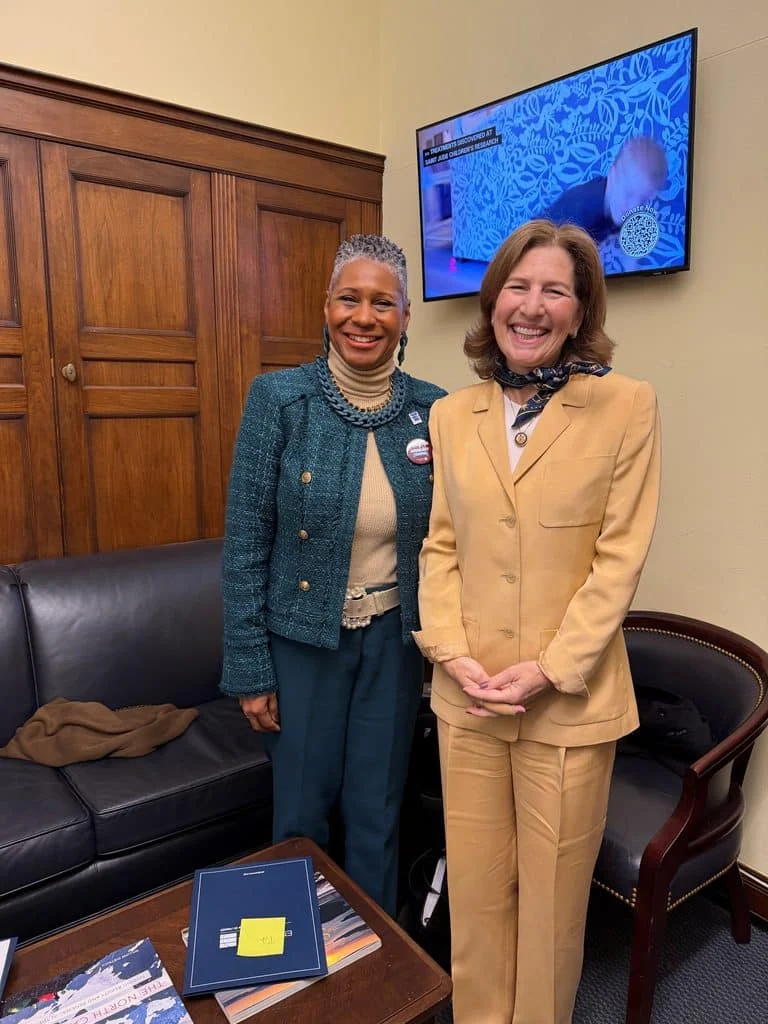
In a move to solidify legislative support, Endocrine Society Board Member Sherita Golden, MD, recently led a delegation to Washington, D.C., to meet with Representative Kim Schrier (D-WA). Representative Schrier, a pediatrician who lives with type 1 diabetes herself, recently assumed the role of co-chair for the Congressional Diabetes Caucus. This leadership position is pivotal, as the caucus is one of the largest bipartisan organizations in Congress, dedicated to educating members about diabetes and supporting legislation to improve patient outcomes.
During the meeting, Dr. Golden and the Society’s advocacy team discussed the specific requirements for a long-term reauthorization of the SDP. While the program has historically enjoyed bipartisan support, it has often been subject to short-term extensions that create uncertainty for researchers and healthcare providers. The Endocrine Society is pushing for a multi-year commitment that would provide the stability necessary for complex, long-term clinical trials. Dr. Golden’s presence on the Hill underscored the professional medical community’s commitment to bridging the gap between clinical research and federal policy.
The INSULIN Act of 2026: Addressing Affordability and Access
Beyond research funding, the Endocrine Society is leading the charge for the INSULIN Act of 2026. This bipartisan legislation is designed to address the "insulin crisis"—a phenomenon where the soaring cost of the hormone has forced many patients to ration their doses, often with fatal consequences. While the Inflation Reduction Act of 2022 successfully implemented a $35 monthly cap on out-of-pocket insulin costs for seniors enrolled in Medicare, the private insurance market and the uninsured population remain largely unprotected from high list prices.
The INSULIN Act seeks to close this gap by mandating a $35 monthly cap for individuals with private insurance and expanding access programs for those without coverage. By targeting the complex system of pharmacy benefit managers (PBMs) and manufacturer rebates, the bill aims to lower the "sticker price" of insulin at the pharmacy counter. The Endocrine Society has organized a powerful coalition of 16 major diabetes organizations to pressure both the White House and Congress to move the bill through the legislative process. This coalition argues that insulin is not a luxury but a basic requirement for survival, and the current market dynamics are creating an unsustainable public health risk.
A Chronology of Federal Diabetes Policy and Advocacy
The trajectory of federal diabetes policy has been marked by periodic reauthorizations and evolving legislative priorities. To understand the current urgency, it is necessary to look at the timeline of the SDP and insulin pricing debates:
- 1997: The Special Diabetes Program is first established, providing $30 million annually for type 1 research and $30 million for the Indian Health Service.
- 2000s-2010s: Funding for the SDP gradually increases to $150 million per year for each component ($300 million total). The program becomes a model for bipartisan cooperation in health policy.
- 2022: The Inflation Reduction Act passes, capping insulin at $35 for Medicare Part D beneficiaries. This sets a precedent for the broader price caps proposed in the INSULIN Act.
- 2023-2024: The SDP faces several "cliffs" where funding is set to expire, leading to temporary extensions. The Endocrine Society increases its lobbying efforts for a permanent or five-year reauthorization.
- November 2024: The Endocrine Society meets with the new leadership of the Congressional Diabetes Caucus to align on priorities for the upcoming legislative session.
This chronology illustrates a shift from merely funding research to actively intervening in the economics of chronic disease management. The Society’s current strategy reflects this dual focus on scientific progress and patient affordability.
Supporting Data: The Human and Economic Cost of Diabetes
The push for legislation is supported by a staggering array of data highlighting the scale of the diabetes epidemic in the United States. According to the Centers for Disease Control and Prevention (CDC), approximately 38.4 million Americans—more than 11% of the population—have diabetes. Furthermore, an estimated 97.6 million adults have prediabetes, a condition that, if left unmanaged, frequently progresses to type 2 diabetes.
The economic burden is equally significant. The American Diabetes Association (ADA) reports that the total annual cost of diagnosed diabetes in the U.S. reached $412 billion in 2022. this includes $306 billion in direct medical costs and $106 billion in reduced productivity. For patients, the individual financial strain is often overwhelming. Studies have shown that one in four Americans with diabetes has reported rationing insulin due to cost. Rationing increases the risk of diabetic ketoacidosis (DKA), a life-threatening complication that often results in expensive emergency room visits and hospitalizations, further straining the healthcare system.
In the American Indian and Alaska Native communities, the impact of the SDPI has been quantifiable. Since the program’s inception, there has been a 54% decrease in the incidence of end-stage renal disease (ESRD) among these populations. This reduction has not only saved lives but has also saved the federal government billions of dollars in Medicare expenditures that would have otherwise been spent on dialysis treatments.
Official Responses and Stakeholder Perspectives
The Endocrine Society’s advocacy has drawn responses from various stakeholders across the political and medical spectrum. Representative Kim Schrier has publicly reaffirmed her commitment to the SDP, noting that "as a doctor and a person living with type 1 diabetes, I know firsthand that the research funded by the SDP is the reason I can do my job today." Her leadership is seen as a vital link between the medical community and the legislative process.
The coalition of 16 diabetes organizations led by the Endocrine Society has also issued formal communications to the White House. These letters emphasize that while administrative actions to lower drug prices are helpful, permanent legislative change is required to ensure that insulin remains affordable regardless of changes in the executive branch.
However, the path to passage is not without obstacles. Some lawmakers have expressed concerns regarding the federal budget and the potential for market interference. In response, the Endocrine Society argues that the "cost of inaction" far outweighs the investment. By preventing complications through affordable insulin and innovative research, the government can reduce the long-term healthcare spending associated with chronic disease.
Implications of Legislative Inaction
The potential consequences of failing to reauthorize the SDP or pass the INSULIN Act are severe. For the scientific community, a lapse in SDP funding would mean the immediate cessation of several high-profile clinical trials. These trials often take years to yield results, and a gap in funding could result in the loss of invaluable data and the departure of specialized researchers from the field.
For patients, the failure to cap insulin costs in the private sector means that the trend of "medical bankruptcy" will likely continue. As insulin prices have historically outpaced inflation, the barrier to access will only grow higher for the millions of Americans who do not qualify for Medicare. From a public health perspective, this leads to a cycle of poor health outcomes, increased disability, and higher overall societal costs.
Mobilizing the Medical Community
In a direct appeal to its members, the Endocrine Society has launched an online advocacy campaign, urging US-based clinicians and researchers to contact their representatives and senators. The Society emphasizes that the voices of healthcare providers carry significant weight in Washington, as they can provide "real-world" anecdotes about the challenges their patients face.
The call to action is clear: the Society is asking members to advocate for a legislative package that combines the research-driven hope of the SDP with the immediate economic relief of the INSULIN Act. By engaging its membership, the Endocrine Society aims to create a grassroots swell of support that mirrors its high-level lobbying efforts.
As the legislative session progresses, the eyes of the medical and patient communities remain fixed on Congress. The efforts of the Endocrine Society and its partners represent a critical attempt to reform the American healthcare landscape, ensuring that the fruits of medical research are accessible to all who need them. The outcome of these advocacy efforts will likely determine the quality of life for millions of Americans for decades to come.