

Cognito Therapeutics, a clinical-stage medical technology company, has successfully closed a Series C financing round aimed at accelerating the commercialization and regulatory submission of its proprietary neuromodulation platform. The funding comes at a critical juncture for the company as it nears the conclusion of a pivotal clinical trial evaluating a noninvasive device that utilizes sensory stimulation to treat Alzheimer’s disease. This financing round was spearheaded by Morningside Ventures, IAG Capital Partners, and Starbloom Capital, with additional participation from a consortium of new and existing investors, including New Vintage, Apollo Health Ventures, and the Benvolio Group. The capital injection is specifically earmarked to support the final stages of the company’s pivotal study, refine its manufacturing capabilities, and establish the commercial infrastructure necessary for a potential nationwide rollout in the United States.
The Science of Gamma Oscillations and Sensory Stimulation
The foundation of Cognito Therapeutics’ technology lies in the stimulation of gamma oscillations—a specific frequency of brain activity (approximately 40Hz) that is essential for high-level cognitive functions, including sensory processing, memory consolidation, and spatial navigation. In patients suffering from Alzheimer’s disease and other neurodegenerative conditions, these gamma oscillations are often significantly disrupted or diminished. This disruption is believed to contribute to the accumulation of toxic proteins, such as amyloid-beta and tau, and the overall decline in synaptic plasticity.
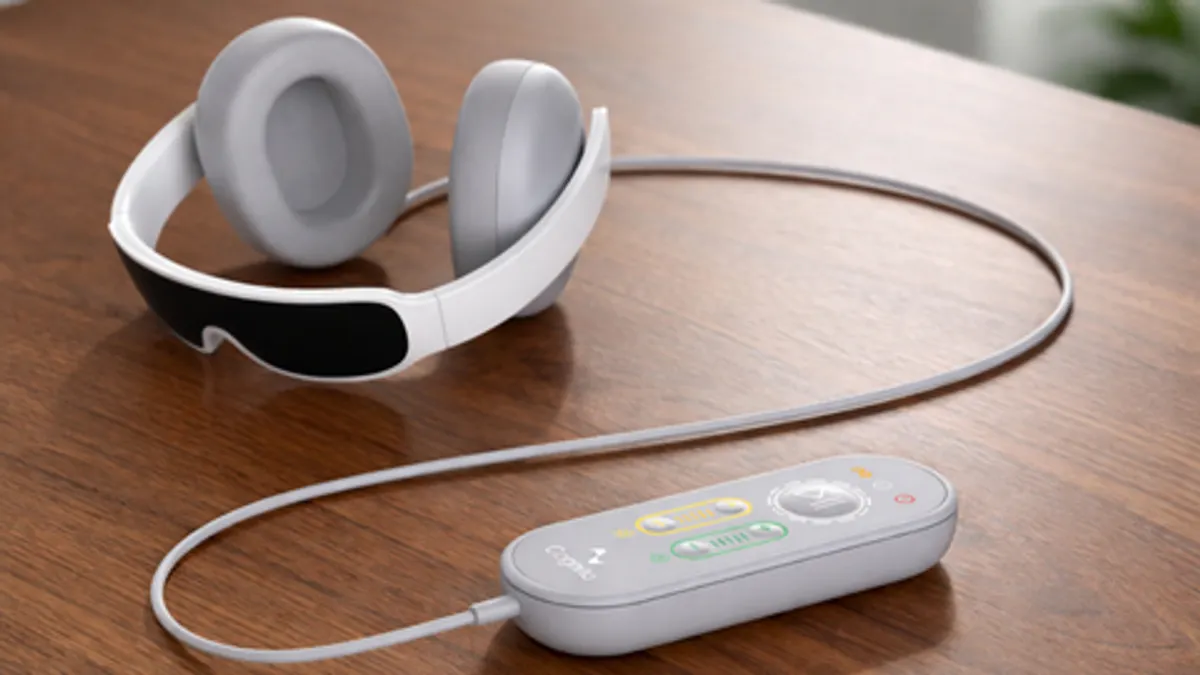
The company’s device, which resembles a pair of specialized sunglasses integrated with high-fidelity headphones, delivers synchronized light and sound pulses at a 40Hz frequency. This "sensory flickering" is designed to entrain the brain’s natural rhythms, effectively "rebooting" the gamma activity. Preclinical research conducted at the Massachusetts Institute of Technology (MIT) by co-founders Li-Huei Tsai and Ed Boyden demonstrated that this specific frequency of stimulation can trigger a biological response in microglia—the brain’s resident immune cells. When activated by 40Hz stimulation, these cells appear to transition from a dormant or inflammatory state to a neuroprotective state, actively clearing amyloid plaques and reducing the inflammation that characterizes Alzheimer’s progression.
Cognito’s approach represents a significant departure from traditional pharmacological interventions. While recent drug approvals have focused on monoclonal antibodies that clear amyloid from the bloodstream or brain via intravenous infusion, Cognito’s therapy is entirely noninvasive and can be administered by the patient in a home setting. This "digital therapeutic" or "electroceutical" model offers a potential alternative or adjunct to drug therapy, particularly for patients who may not tolerate the side effects associated with amyloid-clearing medications, such as amyloid-related imaging abnormalities (ARIA), which can involve brain swelling or microhemorrhages.
Clinical Evolution: From Phase 2 Insights to the Pivotal HOPE Study
The path to the current Series C funding was paved by the results of Cognito’s Phase 2 OVERTURE study. While the Phase 2 trial was primarily designed to evaluate safety and feasibility and was not statistically powered to prove definitive clinical efficacy, the data yielded promising secondary outcomes. Patients who used the device for one hour daily over a six-month period showed a significant reduction in brain atrophy, particularly in the hippocampus and white matter, compared to those in the sham (placebo) group. Furthermore, the treated group demonstrated a slower rate of decline in activities of daily living (ADL) and cognitive performance scores.
Building on these signals, Cognito initiated the HOPE pivotal study (NCT05637801). This large-scale, randomized controlled trial is currently enrolling approximately 670 patients across various clinical sites. The study focuses on individuals with mild-to-moderate Alzheimer’s disease, a population that represents a substantial portion of the millions affected by the condition. The primary endpoints of the HOPE trial are centered on the Alzheimer’s Disease Cooperative Study-Activities of Daily Living (ADCS-ADL) scale and the Integrated Alzheimer’s Disease Rating Scale (iADRS).
The device’s design has been optimized for ease of use to ensure high compliance during the trial. The controller, wired to the headset, allows patients to adjust the intensity of the audio and visual pulses to a comfortable level. During the one-hour daily sessions, patients are instructed to remain awake and minimize strenuous movement, though they can engage in passive activities like reading or watching television. Compliance is a critical metric for the company, as the therapy’s effectiveness is believed to be dose-dependent.
Chronology of Development and Regulatory Milestones
The timeline of Cognito Therapeutics reflects a steady progression from academic discovery to late-stage clinical validation.
- 2016: Foundational research published in Nature by MIT scientists demonstrates that 40Hz light stimulation reduces amyloid levels in mouse models of Alzheimer’s.
- 2018-2019: Cognito Therapeutics is formed to translate these findings into a human-grade medical device. Initial safety studies confirm the feasibility of the headset design.
- 2020: The Phase 2 OVERTURE study begins, testing the device in a clinical setting against a sham control.
- 2021: The U.S. Food and Drug Administration (FDA) grants Breakthrough Device Designation to Cognito’s platform. This designation is reserved for medical devices that provide for more effective treatment of life-threatening or irreversibly debilitating diseases and allows for prioritized review and interactive communication with FDA experts.
- 2022: Positive Phase 2 data is presented at major neurological conferences, highlighting the reduction in brain volume loss and cognitive decline.
- 2023: The HOPE pivotal trial commences enrollment, expanding the study to over 50 sites across the United States.
- 2024: The company secures Series C funding to prepare for the conclusion of the HOPE study and subsequent FDA de novo or PMA (Premarket Approval) submission.
Financial Strategy and Investor Confidence
The successful Series C round is a testament to investor confidence in a difficult macroeconomic environment for the medtech and biotech sectors. The lead investors, including Morningside Ventures and IAG Capital Partners, have a history of supporting disruptive healthcare technologies that address high unmet medical needs.
The funding will be utilized to bridge the gap between clinical data readout and commercial availability. Specifically, the capital will support:
- Regulatory Affairs: Finalizing the data package for the FDA and preparing for the rigorous review process required for a first-of-its-kind neuromodulation therapy.
- Commercial Infrastructure: Hiring sales and marketing teams to engage with neurologists and geriatricians who would be the primary prescribers of the device.
- Manufacturing Scaling: Transitioning from clinical-grade production to high-volume manufacturing to meet anticipated market demand.
- Reimbursement Strategy: Engaging with the Centers for Medicare & Medicaid Services (CMS) to secure coverage.
Because the FDA granted the device Breakthrough Status, Cognito may be eligible for the Transitional Coverage for Emerging Technologies (TCET) pathway. This pathway is designed to provide Medicare beneficiaries with faster access to innovative medical devices by providing a period of national coverage while additional evidence is collected.

Broader Impact and Market Implications for Alzheimer’s Care
The potential introduction of Cognito’s device comes at a time when the Alzheimer’s treatment landscape is undergoing a paradigm shift. For decades, the market was dominated by symptomatic treatments that did not alter the course of the disease. With the arrival of disease-modifying drugs like Leqembi (lecanemab), the focus has shifted to biological intervention. However, these drugs require bi-weekly infusions and carry significant costs and safety risks.
Cognito’s therapy offers several distinct advantages that could position it as a staple in the future of Alzheimer’s management. First, the safety profile observed in clinical trials thus far has been excellent, with no reports of the serious brain swelling or bleeding seen with monoclonal antibodies. Second, the home-based nature of the treatment reduces the burden on caregivers and the healthcare system, eliminating the need for frequent clinic visits for infusions or intensive monitoring.
If the HOPE trial data, expected later this year, confirms the efficacy signals seen in Phase 2, Cognito could redefine the standard of care. Analysts suggest that a non-drug, noninvasive option would be highly attractive to patients in the early stages of cognitive decline who are wary of the risks associated with systemic medications. Furthermore, there is significant interest in exploring whether Cognito’s device could be used in combination with pharmacological treatments to provide a synergistic effect—attacking the disease both chemically and through neuro-oscillatory stimulation.
As the global population ages, the prevalence of Alzheimer’s is expected to rise sharply, with estimates suggesting that over 13 million Americans could be living with the disease by 2050. The economic burden is equally staggering, currently exceeding $300 billion annually in the U.S. alone. Innovations like Cognito’s sensory stimulation device are vital not only for improving patient outcomes but also for creating sustainable, scalable solutions for a global healthcare crisis. The Series C funding ensures that Cognito has the resources to see this vision through to its next major milestone: proving that light and sound can fundamentally change the trajectory of neurodegenerative disease.
