

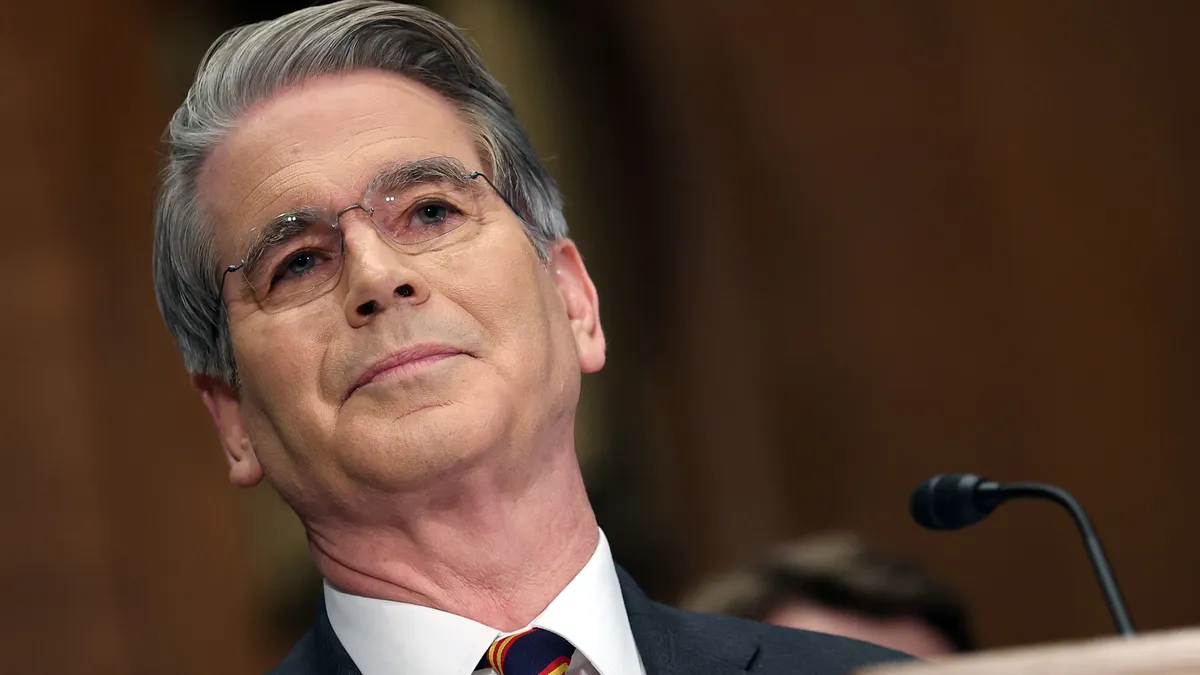
The Trump administration has officially accelerated its efforts to restore and expand the United States’ protectionist trade architecture, signaling a significant escalation in global import duties scheduled for implementation as early as this week. Treasury Secretary Scott Bessent confirmed on Wednesday that the federal government intends to raise the current temporary global tariff to 15%, a move designed to bridge the legal gap created by a recent Supreme Court decision that dismantled previous trade barriers. This strategic pivot marks a critical juncture for the administration as it navigates a complex landscape of judicial setbacks, international diplomatic friction, and a strictly defined legislative clock.
The announcement comes in the wake of a landmark ruling by the Supreme Court of the United States, which invalidated a series of tariffs previously enacted under the International Emergency Economic Powers Act (IEEPA). The high court’s decision effectively stripped the executive branch of its ability to use broad emergency declarations as a permanent foundation for trade levies, forcing the White House to seek alternative statutory justifications. In the immediate aftermath of that ruling, President Donald Trump initially implemented a 10% global surcharge as a defensive measure. However, Bessent’s latest comments indicate that the administration is now prepared to lean into a more aggressive 15% rate while simultaneously pursuing a more permanent legal framework.
The Statutory Pivot: Section 122 and the 150-Day Window
To circumvent the restrictions imposed by the Supreme Court’s ruling on IEEPA, the administration has turned to Section 122 of the Trade Act of 1974. This specific statute grants the President the authority to impose temporary import surcharges of up to 15% for a period of 150 days to address "serious balance of payments deficits" or to prevent a "significant depreciation of the dollar." While Section 122 provides a rapid mechanism for executive action, it carries a significant limitation: the tariffs will expire automatically after five months unless the U.S. Congress intervenes to extend them or provides a new legislative basis for their continuation.
Secretary Bessent, speaking during an interview with CNBC, expressed confidence that the transition from temporary surcharges to a more permanent tariff structure would be seamless. "It’s my strong belief that the tariff rates will be back to their old rate within five months," Bessent stated, referring to the levels maintained prior to the Supreme Court’s intervention. This five-month window is now the primary focus of the administration’s trade policy, serving as a deadline for both executive investigations and legislative maneuvering.
Accelerated Section 301 Investigations and the Role of the USTR
Parallel to the implementation of the Section 122 global tariff, U.S. Trade Representative (USTR) Jamieson Greer is spearheading a series of fast-tracked investigations under Section 301 of the Trade Act of 1974. Unlike the broad application of Section 122, Section 301 allows the U.S. to impose targeted tariffs on specific countries or products following an investigation into "unreasonable or discriminatory" trade practices.
Historically, Section 301 investigations have been the primary tool for the U.S. to levy heavy duties on Chinese imports, as well as goods from other nations like Nicaragua. Greer noted on Tuesday that these new probes are designed to be completed within the next five months, aligning perfectly with the expiration of the temporary Section 122 tariffs. By the time the 150-day global surcharge expires, the administration expects to have a robust, investigation-backed portfolio of duties ready to take its place. This "dual-track" strategy—using Section 122 for immediate coverage and Section 301 for long-term enforcement—is intended to recreate the IEEPA-based regime without running afoul of the Supreme Court’s constitutional constraints.
International Diplomatic Fallout and the European Response
The administration’s aggressive return to a high-tariff posture has already begun to fray international trade relations, particularly with long-standing allies. Last year, the U.S. reached several framework deals with various nations, many of which were negotiated specifically to mitigate the impact of the original IEEPA-based tariffs. The Supreme Court’s invalidation of those tariffs has thrown the legal standing of these international agreements into a state of profound uncertainty.

The European Union has emerged as a primary critic of the administration’s current trajectory. In August 2025, the EU and the U.S. issued a Joint Statement aimed at fostering "fair, balanced, and mutually beneficial" trade. However, following the Supreme Court’s ruling and the subsequent move toward new global tariffs, the European Commission announced it would halt the implementation of that pact. EU officials have stated that the current environment is no longer conducive to the original terms of the agreement, citing a lack of clarity regarding the U.S. government’s long-term intentions.
On Tuesday, German Chancellor Friedrich Merz met with President Trump in Washington to discuss the escalating trade tensions. While Merz indicated a continued desire for a transatlantic trade deal, he voiced significant reservations. Speaking after the meeting, Merz emphasized that Germany and the broader European Union would not accept a deal on terms that were worse than those previously negotiated. Trump, conversely, remained bullish, suggesting that the U.S. might even "adjust upward" the terms of existing deals to better reflect his administration’s "America First" priorities.
Economic Implications and Market Uncertainty
The prospect of a 15% global tariff has sent ripples through the global supply chain, with industry analysts warning of potential inflationary pressures. While the administration argues that tariffs serve as a vital tool for re-shoring manufacturing and reducing trade deficits, economists point to the immediate costs borne by importers.
Supporting data from previous tariff rounds suggest that such measures often lead to increased costs for consumer electronics, automotive parts, and industrial machinery. For instance, during the 2018-2020 trade actions, the U.S. saw a measurable increase in the Producer Price Index (PPI) for categories heavily reliant on imported steel and aluminum. With a broad 15% surcharge looming, retailers and manufacturers are once again facing the prospect of "tariff engineering"—rerouting supply chains or absorbing costs to avoid passing significant price hikes to consumers.

Furthermore, the five-month timeline creates a period of intense market volatility. Businesses are now operating under a "waiting game," unsure if the 15% rate will be replaced by even higher targeted duties in five months or if Congress will fail to act, leading to a sudden drop in trade barriers. This uncertainty often results in "front-loading," where companies rush to import goods before new rates take effect, leading to congestion at major U.S. ports such as Los Angeles, Long Beach, and Savannah.
Timeline of Key Events
The current trade crisis is the result of a rapid succession of legal and political developments over the last several weeks:
- February 2026: The Supreme Court rules that the use of the International Emergency Economic Powers Act (IEEPA) to sustain long-term tariff regimes is an overreach of executive authority.
- Late February 2026: President Trump implements a 10% global surcharge under Section 122 as an emergency "stop-gap" measure.
- March 3, 2026: USTR Jamieson Greer announces that Section 301 investigations will be fast-tracked to completion within five months.
- March 4, 2026: Treasury Secretary Scott Bessent confirms the intention to raise the global tariff rate to 15% within the week.
- March 2026 (Projected): Implementation of the 15% surcharge begins, starting the 150-day legislative clock.
- August 2026 (Projected): Expiration of Section 122 tariffs; anticipated transition to new Section 301 duties.
Analysis: A High-Stakes Legal and Political Gamble
The Trump administration’s strategy is a high-stakes gamble that relies on two primary assumptions: first, that the USTR can complete complex trade investigations in record time; and second, that the threat of a 15% global tariff will provide enough leverage to force international partners back to the negotiating table on U.S. terms.
By utilizing Section 122, the White House is essentially forcing Congress’s hand. If lawmakers do not want to see the tariffs expire in August, they may be compelled to pass new legislation that grants the President broader permanent powers over trade—the very powers the Supreme Court recently curtailed. This creates a potential constitutional showdown between the legislative and executive branches over who truly holds the "power of the purse" and the authority to regulate foreign commerce.
As the 15% tariff looms, the global trade community remains on high alert. The coming five months will likely define the future of American trade policy for the remainder of the decade, determines whether the U.S. moves toward a more isolated, protectionist model or finds a way to reconcile its domestic economic goals with the realities of a deeply integrated global economy. For now, the message from the Treasury and the USTR is clear: the era of high tariffs is not over; it is simply being rebuilt on a different foundation.
