








The United States Congress has finalized a comprehensive funding bill for the Department of Health and Human Services (HHS) for fiscal year (FY) 2026, marking a significant milestone for the biomedical research community and patients nationwide. The legislative package includes a strategic increase of approximately $415 million for the National Institutes of Health (NIH), a move that signals a rejection of proposed austerity measures that threatened to destabilize the nation’s scientific infrastructure. Within this allocation, a dedicated $10 million increase has been earmarked specifically for diabetes research, reflecting a continued commitment to addressing one of the most prevalent chronic conditions in the United States. This funding victory follows a protracted period of intensive advocacy led by the Endocrine Society and a broad coalition of medical and patient organizations, who sought to protect the integrity of the peer-reviewed grant process and ensure the continuity of life-saving clinical trials.
A Strategic Reversal of Proposed Research Cuts
The final appropriations bill stands in stark contrast to the initial budgetary framework proposed by the administration earlier in the fiscal cycle. The original executive proposal suggested a draconian 40% reduction in NIH research funding, a move that would have resulted in the cancellation of thousands of active grants and a fundamental restructuring of the agency’s 27 Institutes and Centers. Analysts warned that such a reduction would have effectively paralyzed American biomedical innovation, leading to a "lost generation" of early-career scientists and the abandonment of long-term longitudinal studies.
In addition to securing the top-line funding increase, the Endocrine Society successfully advocated for the inclusion of specific legislative language designed to shield the NIH from administrative maneuvers that could disrupt research stability. Key among these protections is a limitation on "multi-year funding" maneuvers, which can be used to artificially inflate budget appearances while reducing the actual liquidity available for new grant cycles. The bill also prohibits the imposition of arbitrary caps on indirect cost rates—the funds that allow universities and research hospitals to maintain the labs and infrastructure necessary for high-level science. Furthermore, the legislation mandates that grant payments be processed within five business days and reaffirms congressional authority over agency spending, ensuring that the NIH remains accountable to the legislative branch rather than subject to unilateral executive restructuring.

Reauthorization of the Special Diabetes Program
Parallel to the broader NIH funding successes, Congress passed and the President signed into law the reauthorization of the Special Diabetes Program (SDP). This program is a cornerstone of the federal response to diabetes, consisting of two distinct but complementary components: the Special Statutory Funding Program for Type 1 Diabetes Research, administered by the National Institute of Diabetes and Digestive and Kidney Diseases (NIDDK), and the Special Diabetes Program for Indians (SDPI), administered by the Indian Health Service (IHS).
The new legislation increases funding for the SDP to $200 million per program per year, representing a $40 million annual increase for each component. This funding is critical for the NIDDK’s efforts to advance therapies for type 1 diabetes, including the development of artificial pancreas systems and immune-modulating therapies. Simultaneously, the SDPI continues to provide essential prevention and treatment services to Indigenous communities, who face disproportionately high rates of type 2 diabetes and associated complications. The reauthorization was championed by a bipartisan group of legislators, including Senators Susan Collins (R-ME) and Jeanne Shaheen (D-NH) of the Senate Diabetes Caucus, alongside Representatives Diana DeGette (D-CO) and Michael Bilirakis (R-FL) of the House Diabetes Caucus.
Extending Medicare Telehealth Coverage
The legislative package also addressed the evolving landscape of healthcare delivery by extending Medicare telehealth waivers for an additional two years. These waivers, originally implemented as emergency measures during the COVID-19 pandemic, have become indispensable for patients managing chronic endocrine disorders. Endocrinologists have emerged as the primary users of telehealth services within the Medicare system, utilizing remote consultations to monitor glucose levels, adjust insulin regimens, and manage thyroid and pituitary disorders.
The two-year extension provides much-needed stability for both providers and patients, ensuring that Medicare beneficiaries can continue to receive specialized care from their homes. This is particularly vital for patients in rural or underserved areas who may face significant travel barriers to reach a specialist. The Endocrine Society has been a leading proponent of these flexibilities, arguing that telehealth not only improves patient adherence but also reduces the overall cost of care by preventing acute complications that require hospitalization.
Congressional Oversight and the Future of NIH Modernization
While the funding bill provides immediate relief, the structural future of the NIH remains a subject of intense debate on Capitol Hill. The Senate Committee on Health, Education, Labor, and Pensions (HELP) recently convened a hearing to discuss the "modernization" of the agency. During this session, NIH Director Jayanta Bhattacharya faced rigorous questioning from lawmakers regarding the agency’s strategic direction and its handling of recent administrative challenges.

The hearing highlighted several areas of bipartisan concern. Senator Susan Collins (R-ME) raised alarms regarding how recent cuts to diversity, equity, and inclusion initiatives have inadvertently hindered research into women’s health and health disparities. Other committee members, including Senators Lisa Murkowski (R-AK) and Tammy Baldwin (D-WI), questioned the persistence of leadership vacancies across various NIH Institutes and Centers. Senator Baldwin specifically pressed the Director on the importance of including external scientific experts in the search process for new IC directors, a measure the Endocrine Society has strongly supported to ensure scientific merit remains the primary driver of agency leadership.
Director Bhattacharya reiterated his commitment to restoring public trust in science and supporting the biomedical workforce. However, he faced scrutiny over the impact of canceled clinical trials on patient care. While the Director emphasized that researchers are responsible for the continuity of care for trial participants, lawmakers expressed concern that the funding environment is discouraging early-career scientists from remaining in the field, potentially undermining the long-term viability of American research.
The Power of Scientific Advocacy
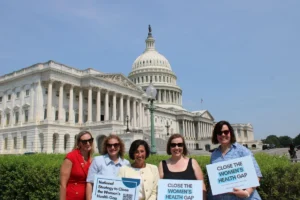
The legislative victories of FY 2026 are widely attributed to the coordinated efforts of the scientific community. The Endocrine Society spearheaded a year-long advocacy campaign that utilized a multi-pronged approach, including "Hill Days," where members met directly with congressional staff, and online grassroots campaigns that mobilized thousands of voices.
A pivotal moment in the campaign was a joint letter sent to congressional leadership, which garnered signatures from over 140 professional medical societies and patient advocacy groups. This unified front demonstrated to lawmakers that the push for NIH funding was not merely a parochial interest of a single organization but a broad-based demand from the entire healthcare ecosystem. By convening these diverse groups, the Society was able to amplify its message and present a cohesive argument for the economic and societal value of endocrine research.
Education on Obesity and Metabolic Health
Beyond funding, the Endocrine Society has focused on educating policymakers about emerging treatments for metabolic diseases. In January, the Society partnered with the American Association for the Study of Liver Diseases (AASLD) to host a congressional briefing titled "GLP-1s: A Game Changer for the Treatment of Liver Disease."
Former Endocrine Society President Dale Abel, MD, PhD, led the briefing, providing congressional staff with a technical overview of how Glucagon-like peptide-1 (GLP-1) receptor agonists function. The presentation detailed the impact of obesity on a spectrum of diseases, with a specific focus on Metabolic Dysfunction-Associated Steatohepatitis (MASH), formerly known as NASH. Following the briefing, Dr. Abel conducted targeted visits to the offices of congressional leadership to discuss policy options for improving access to these medications. This initiative has helped position the Society as a primary authority on obesity policy at a time when the clinical use of GLP-1s is expanding rapidly.
Looking Ahead: The FY 2027 Budget Cycle
As the dust settles on the FY 2026 appropriations, the focus has already shifted to the upcoming fiscal year. The administration is expected to release its FY 2027 budget proposal in mid-March, and early indications suggest that research funding may once again be targeted for significant reductions.
In response, the Endocrine Society is preparing for a new round of advocacy, beginning with a virtual Hill Day scheduled for March 13. This event will allow members to engage with congressional offices remotely, emphasizing the need for steady, sustainable, and predictable funding increases. The Society has signaled that it will remain vigilant against any proposals to restructure the NIH in ways that might marginalize endocrine research or disrupt the established peer-review system.
The successes of the past year serve as a template for future engagement. By combining rigorous scientific data with personal narratives from researchers and patients, the advocacy community has proven its ability to influence even the most challenging fiscal environments. As the FY 2027 cycle begins, the priority remains clear: protecting the federal investment in science to ensure that the next generation of endocrine breakthroughs can move from the laboratory to the patient’s bedside.