

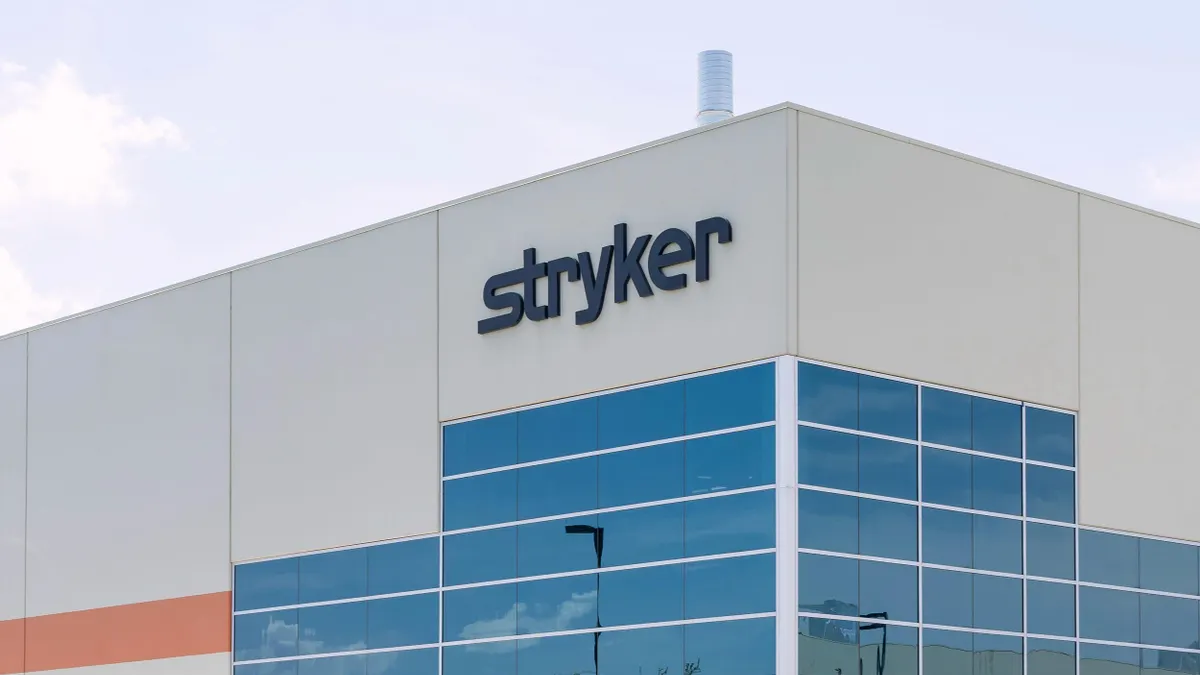
The medical technology giant Stryker confirmed on Wednesday, March 11, 2026, that it is currently navigating a significant global network disruption affecting its internal Microsoft environment. The breach, which has impacted operations across dozens of countries, is the result of a sophisticated cyberattack that has paralyzed many of the company’s digital communication channels and administrative systems. While the Portage, Michigan-based firm has stated it does not believe the incident involved traditional ransomware or malware designed for financial extortion, the scale of the disruption has forced the company to implement emergency business continuity measures to maintain support for its global healthcare partners and customers.
According to internal communications and reports from cybersecurity researchers, the attack targeted Stryker’s cloud-based and on-premise Microsoft infrastructure. The breach manifested in a particularly destructive manner, with hackers reportedly gaining enough administrative access to remotely wipe company-issued devices, including laptops and smartphones running the Windows operating system. This aggressive tactic effectively neutralized the hardware used by thousands of employees, rendering them unable to access company networks, patient data, or internal logistics platforms.
A Targeted Disruption of Medical Infrastructure
Stryker is one of the world’s most prominent medical technology corporations, reporting a 2025 annual revenue of $25.1 billion. With a workforce of approximately 56,000 employees operating in 61 countries, the company’s footprint in the healthcare sector is immense. Its portfolio includes high-stakes medical equipment ranging from surgical robotics and orthopedic implants to neurosurgical tools and hospital beds. The disruption of such a central player in the medical supply chain has raised immediate concerns regarding the stability of hospital operations that rely on Stryker’s proprietary software and hardware maintenance.
In a statement released via LinkedIn on Wednesday, the company sought to reassure stakeholders. "Our teams are working rapidly to understand the impact of the attack," the statement read. "Stryker has business continuity measures in place to continue to support our customers and partners. We are committed to transparency and will keep stakeholders informed as we know more." Despite these assurances, the company has yet to provide a specific timeline for the restoration of its global network or an estimate of the total number of devices compromised by the remote wiping command.
Identification of the Threat Actor: Handala
Cybersecurity experts have identified the perpetrator of the attack as a group known as Handala. According to a spokesperson for Check Point Research, Handala has claimed responsibility for the breach. While the group often presents itself as a pro-Iranian hacktivist collective, intelligence from Palo Alto Networks’ Unit 42 suggests a more formal connection to state apparatus. Researchers believe Handala is likely an arm of the Iranian Ministry of Intelligence and Security (MOIS), operating under the guise of independent activism to provide the Iranian government with plausible deniability.
The targeting of Stryker marks a significant shift in Handala’s operational history. Previously, the group’s activities were largely confined to Middle Eastern targets, specifically focusing on Israeli infrastructure and private enterprises. The attack on Stryker represents the first time the group has successfully executed a high-impact operation against a major United States-based corporation. This escalation is viewed by analysts as a direct digital spillover of the ongoing physical conflict between the U.S., Israel, and Iran, which intensified in late February 2026.
Sergey Shykevich, threat intelligence group manager at Check Point Research, emphasized the gravity of the situation. "The fact that they’ve set their sights on a major medical device company is particularly alarming," Shykevich noted. "Critical healthcare infrastructure represents a high-value, high-impact target. Disruption in this sector doesn’t just mean financial data loss; it can directly impact patient safety and the delivery of life-saving medical procedures."
Chronology of the Incident and Geopolitical Context
The cyberattack on Stryker did not occur in a vacuum. It follows a month of heightened cyber activity linked to the geopolitical instability in the Middle East.
- Early February 2026: Security firms Symantec and Carbon Black began detecting backdoors in the networks of several U.S. firms. These intrusions were attributed to Seedworm (also known as MuddyWater), another state-linked Iranian actor.
- Late February 2026: Following the commencement of direct military engagements involving U.S. and Israeli forces against Iranian interests, various hacktivist groups launched "Operation Epic Fury," a coordinated series of cyber strikes against Western financial and technological hubs.
- March 9-10, 2026: Stryker employees began reporting unusual activity on their Microsoft Windows devices. Reports surfaced of laptops spontaneously resetting to factory settings and mobile devices losing access to corporate email and authentication apps.
- March 11, 2026: Stryker issued an urgent internal directive, viewed by The Wall Street Journal, instructing all 56,000 employees to disconnect from all networks and refrain from powering on any company-issued devices. Later that day, the company went public with the news of the disruption.
The timing of the attack suggests it was designed to maximize psychological and operational pressure on the U.S. during a period of military tension. Unlike ransomware attacks, which seek a payout, "wiper" attacks are purely destructive or disruptive, intended to drain resources, cause chaos, and demonstrate the reach of the adversary’s cyber capabilities.

Technical Analysis of the Breach
The methodology employed by Handala indicates a deep understanding of enterprise-level Microsoft environments. By compromising the central management systems used to deploy updates and manage devices—such as Microsoft Intune or Azure Active Directory—the attackers were able to send a "wipe" command to the fleet of end-user devices. This approach is highly efficient, as it uses the company’s own administrative tools against itself.
By focusing on the Microsoft environment, the attackers hit the core of Stryker’s daily operations. Microsoft’s suite of products handles everything from internal communications (Teams/Outlook) to cloud storage (OneDrive/Azure) and device management. When these systems are compromised or intentionally shut down to prevent further spread, the company is effectively "blinded," losing the ability to coordinate logistics, process orders, or communicate with field representatives who assist surgeons in the operating room.
Implications for the Medtech Industry and Patient Safety
The broader implications of the Stryker attack are currently being assessed by healthcare providers worldwide. Stryker’s products are integrated into the surgical workflows of thousands of hospitals. For instance, the company’s Mako robotic-arm assisted surgery platform requires precise software calibration and data uploads. While these machines can often operate offline for short periods, a prolonged network outage could hinder the scheduling of new cases or the processing of pre-operative CT scans necessary for robotic surgery.
Furthermore, Stryker is a major supplier of emergency medical equipment and hospital infrastructure, such as smart beds that integrate with nurse call systems. A disruption in the digital backend of these systems could lead to administrative bottlenecks, potentially delaying patient discharges or the intake of new patients in high-capacity trauma centers.
The incident also serves as a stark reminder of the vulnerabilities inherent in the "Internet of Medical Things" (IoMT). As medical devices become increasingly interconnected and reliant on cloud environments for data analytics and remote monitoring, the attack surface for state-sponsored actors expands. The Stryker breach demonstrates that an attacker does not need to target a specific pacemaker or ventilator to cause harm; by disabling the corporate network that supports the technicians and clinicians, they can achieve a similar level of systemic paralysis.

Official Responses and Recovery Efforts
As of Wednesday evening, Stryker has not provided a definitive date for when it expects its systems to be fully operational. The recovery process for a "wiper" attack is notoriously grueling. Unlike a ransomware scenario where a decryption key might restore data, a wiper attack requires the manual re-imaging or replacement of every affected device. For a company with 56,000 employees, this involves a massive logistical effort to redistribute clean hardware and verify the integrity of every server on the network.
Federal authorities, including the Cybersecurity and Infrastructure Security Agency (CISA) and the FBI, are reportedly monitoring the situation. Given the attribution to an Iranian state-linked actor, the incident is likely being treated as a matter of national security rather than a simple criminal case.
Stryker’s leadership has emphasized that its business continuity plans are active. These plans typically involve reverting to manual, paper-based processes for order fulfillment and utilizing "clean" communication lines to coordinate with hospital procurement departments. However, the efficiency of these manual workarounds remains to be seen given the global scale of the company’s supply chain.
Future Outlook: A New Era of Cyber Sabotage
The Stryker cyberattack is likely to be a watershed moment for the medical technology industry. It underscores a shift in the threat landscape from financially motivated cybercrime to geopolitical cyber sabotage. For years, the primary concern for medtech C-suites was the theft of intellectual property or the locking of data for ransom. The Handala attack proves that the destruction of operational capacity is now a primary objective for state-aligned actors.
In the coming months, Stryker will likely face intense scrutiny from regulators, including the Securities and Exchange Commission (SEC), regarding the robustness of its cybersecurity posture and the speed of its disclosure. Under 2023 SEC rules, public companies are required to disclose "material" cybersecurity incidents within four business days of determining the incident is material. Given Stryker’s $25 billion revenue and the global nature of this disruption, the financial and operational fallout will undoubtedly meet that threshold.

For the wider healthcare sector, the lesson is clear: digital resilience is no longer just an IT concern; it is a fundamental component of patient care and national security. As the conflict in the Middle East continues to drive aggressive behavior in the digital domain, other major U.S. infrastructure and healthcare providers are being urged to harden their defenses against wiper-style attacks and to ensure that their business continuity plans can withstand the total loss of their primary Microsoft environments.
