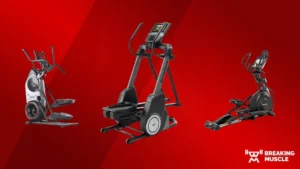










Elliptical machines have undergone significant advancements in specifications and technology, offering an ergonomic design that maximizes workout quality and intensity by engaging both upper and lower body muscles. This comprehensive approach to exercise enhances cardiovascular fitness while crucially preserving the structural integrity of users’ joints, a benefit widely recognized in fitness research. As the demand for effective home-based fitness solutions continues to grow, particularly in the post-pandemic era, understanding the leading elliptical machines available in 2025 is paramount for consumers seeking to optimize their home workouts. This guide presents top picks for the best elliptical machines and offers a detailed breakdown of factors to consider before making a purchase, ensuring informed decisions for a healthier lifestyle.
Top Elliptical Machines for 2025: A Comprehensive Review
The market for home fitness equipment is increasingly sophisticated, with elliptical trainers at the forefront of low-impact cardiovascular exercise innovation. These machines cater to a wide range of fitness levels and goals, from weight loss and joint pain management to space-saving solutions for compact living. This review highlights several standout models, analyzing their unique features, benefits, and potential drawbacks.
Best Overall Elliptical: NordicTrack FS10i
The NordicTrack FS10i distinguishes itself by seamlessly integrating the functionality of a treadmill, elliptical, and stair stepper into a single, versatile machine. This innovative design provides users with the flexibility to diversify their cardio routines, preventing workout monotony and engaging a broader range of muscle groups. A key feature is its 32-inch adjustable stride, which dynamically adapts to the user’s leg movements. For instance, when used as a stair stepper, leg motion is primarily vertical, whereas in elliptical mode, the stride shifts to a more linear, back-and-forth motion.
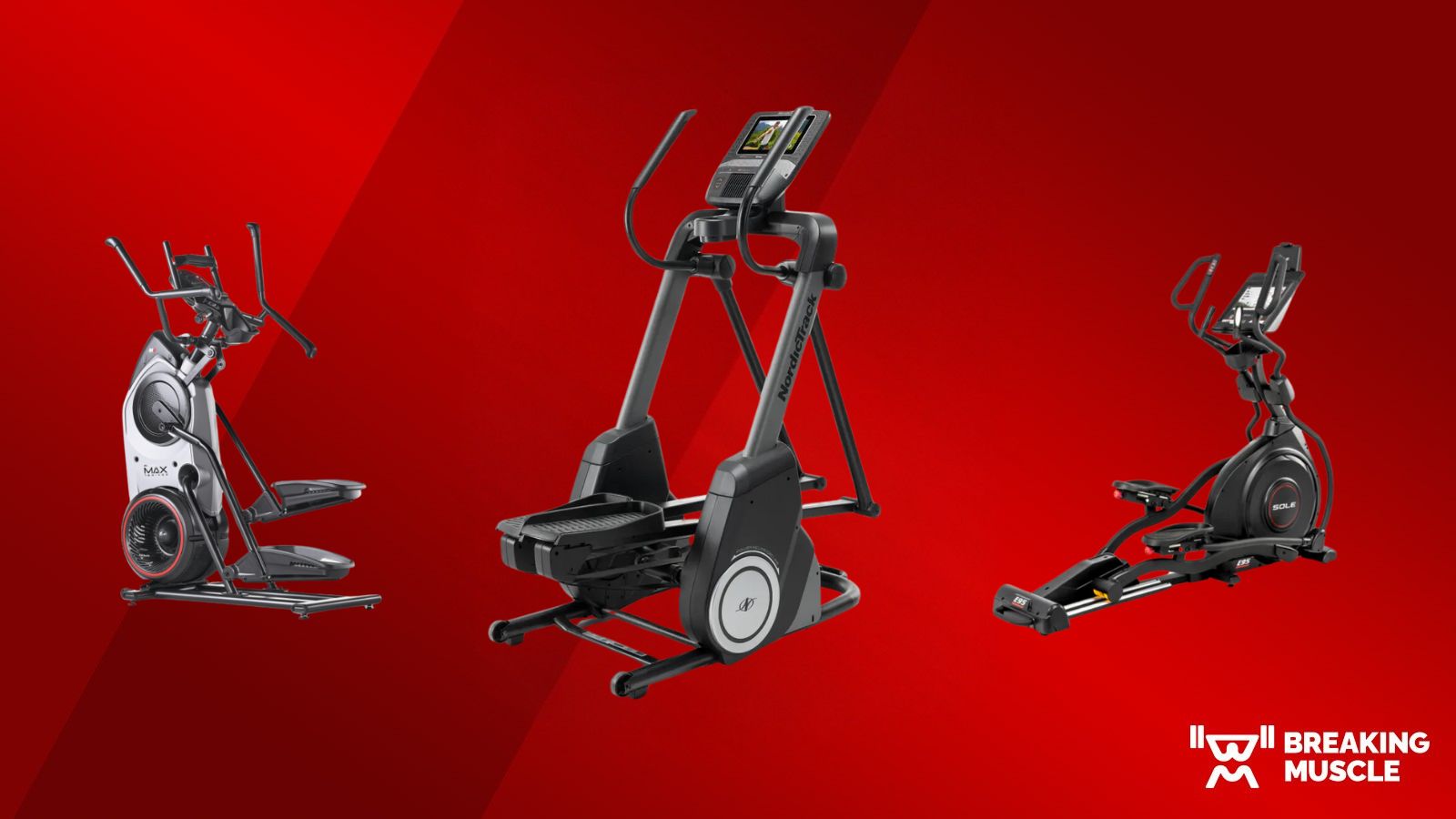
This machine boasts a 10-inch HD touchscreen that serves as the gateway to iFIT classes, a subscription-based interactive training platform ($39/month). The screen displays vital workout metrics such as elapsed time, speed, distance, and calories burned. For enhanced training, iFIT trainers can digitally control the machine’s incline, adjusting it up to 10 percent, and users can select from 24 resistance levels. For those preferring manual control, intuitive one-touch buttons are conveniently located next to the touchscreen, allowing for immediate adjustments to incline and resistance. The FS10i’s ability to offer multiple workout modalities in one unit makes it a highly adaptable and efficient choice for comprehensive home fitness.
- Pros:
- 3-in-1 functionality: treadmill, elliptical, and stair stepper.
- 32-inch adjustable stride for personalized movement.
- Large HD touchscreen for interactive iFIT training.
- Integrated incline and resistance controls.
- Engages both upper and lower body for a full-body workout.
- Cons:
- Requires a monthly subscription for iFIT classes.
- Larger footprint compared to some basic ellipticals.
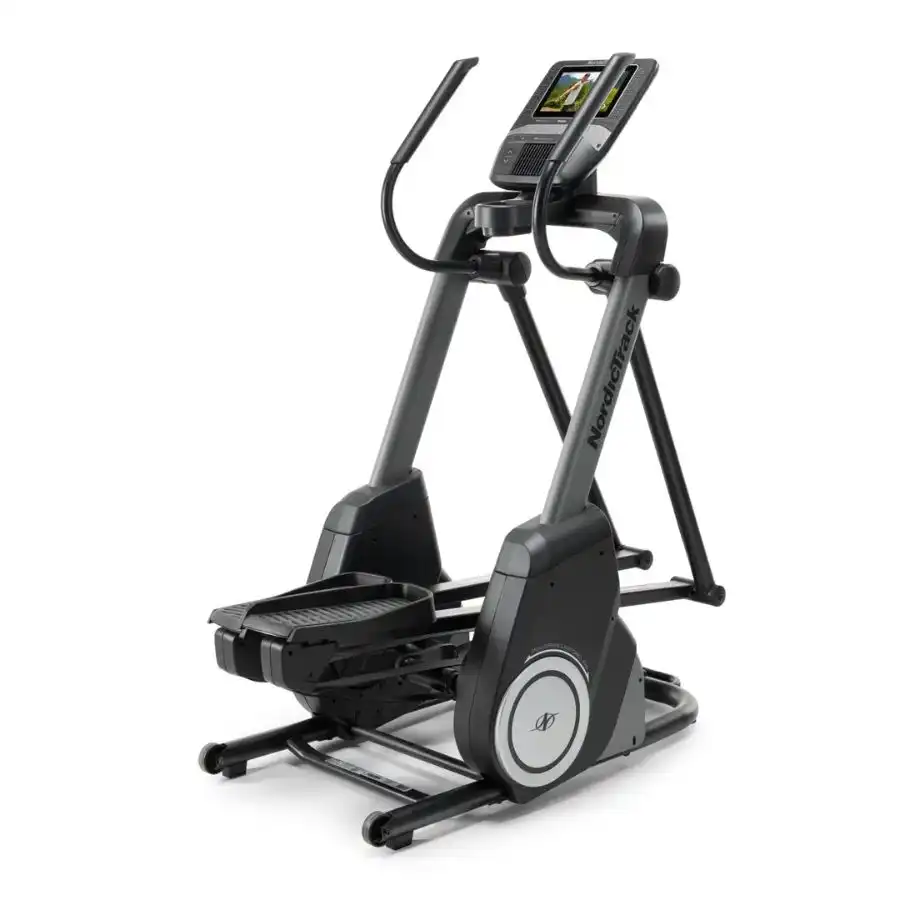
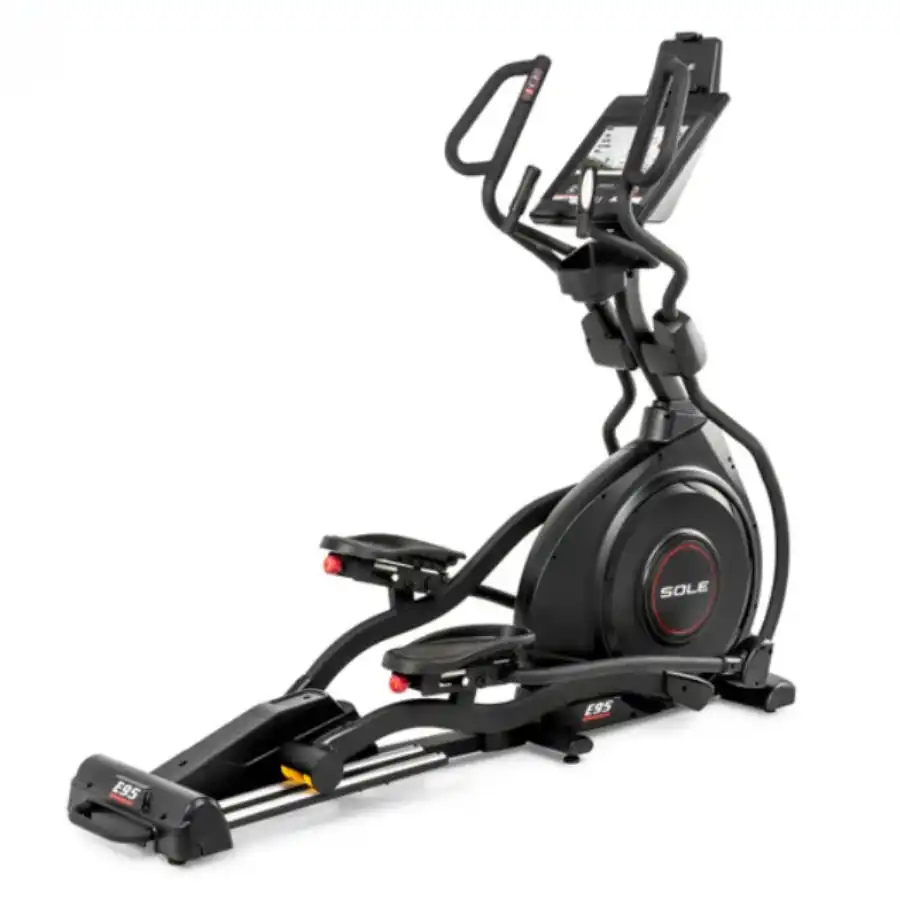
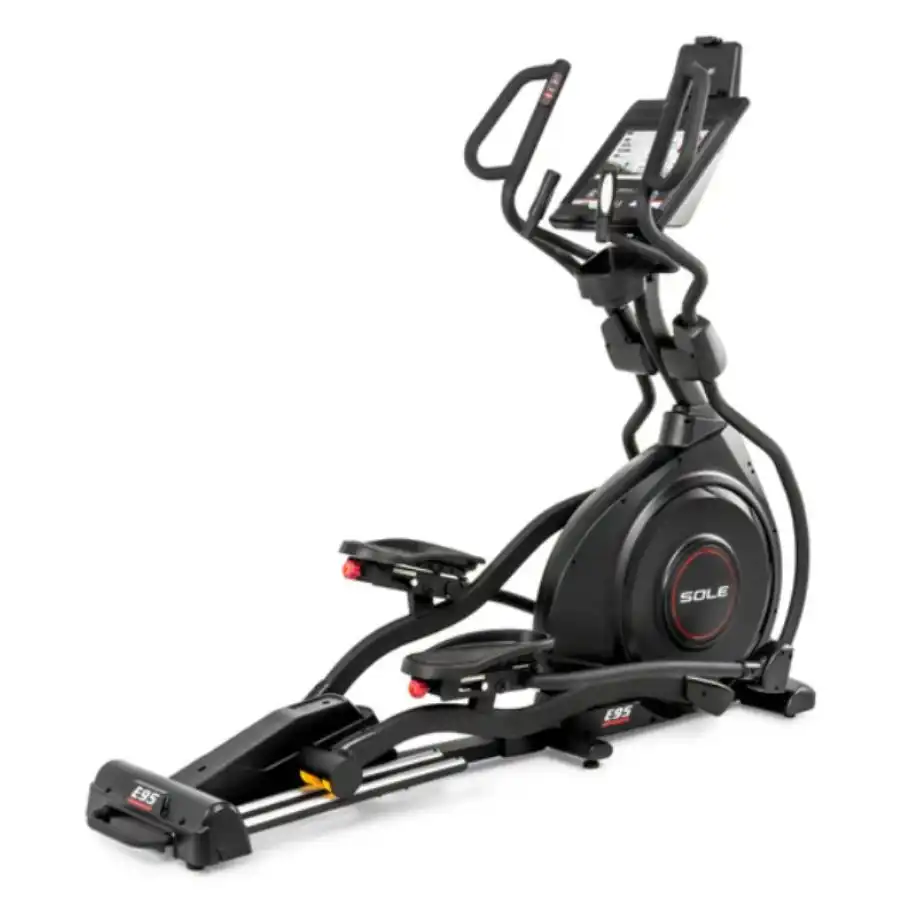
Best Elliptical for Weight Loss: Sole Fitness E95
For individuals focused on weight loss, consistent exercise coupled with a balanced diet is crucial. The Sole Fitness E95 is engineered to support these goals by providing a robust cardio platform that can be integrated with existing weight-loss programs and apps. While any elliptical can contribute to a calorie deficit, the E95 stands out with its complimentary fitness app, Sole+, and integrated streaming services, designed to boost motivation.
The Sole+ app offers access to over 3,000 trainer-led workouts and classes, usable both on and off the elliptical, providing a holistic fitness experience. For entertainment during workouts, the E95 features built-in streaming service integration, allowing users to access platforms like Netflix, Amazon Prime, and Hulu directly from the console. This feature is invaluable for maintaining engagement and making longer workout sessions more enjoyable.
Comfort is also a priority with the E95. Its cushioned foot pedals are designed to minimize stress on knees and ankles during extended use. The pedals are adjustable to accommodate individual gaits, with a standard two-degree inward angle designed for natural foot placement. The machine offers 20 resistance levels, enabling users to progressively challenge themselves, with controls conveniently located on the handlebars. Sole’s drive system is engineered for quiet operation, ensuring a peaceful workout environment. Integrated speakers allow users to listen to their workout audio or music, and a built-in tablet holder provides a stable place for devices.
- Pros:
- Free companion app (Sole+) with extensive workout library.
- Integrated streaming services for entertainment.
- Cushioned, adjustable foot pedals for enhanced comfort.
- 20 resistance levels for progressive training.
- Quiet drive system and built-in speakers.
- Cons:
- May be larger than some users prefer for home gyms.
Best Elliptical for Joint Pain: Sole Fitness E35
The Sole Fitness E35 is an excellent choice for individuals seeking a low-impact exercise solution, particularly those experiencing joint pain or recovering from injuries. Its design prioritizes a smooth, comfortable ride, making it accessible for a wide range of users. The E35 is known for its straightforward setup and user-friendly operation, making it an ideal entry point for those new to home fitness equipment.
The machine’s ramp-like design facilitates easy mounting and dismounting, and its full-body workout capability is achieved without undue strain on the back or joints. With 20 levels of resistance, users can tailor their workouts to their specific fitness levels and evolving goals. It also includes 10 preloaded workout programs, complemented by free access to the Sole+ fitness app, which can significantly aid beginners in starting their training regimen effectively. Despite not being the heaviest-duty model, the E35 comfortably supports users up to 300 pounds. Additional user-centric features include built-in fans for cooling and a fully adjustable console for optimal viewing comfort.
- Pros:
- Exceptional comfort for users with joint pain.
- Smooth, stable ride with a user-friendly interface.
- 20 resistance levels and 10 preloaded programs.
- Access to the Sole+ fitness app.
- Supports users up to 300 pounds.
- Cons:
- May lack some of the advanced technological features found in higher-end models.
Best Elliptical Machine for Small Spaces: Bowflex Max Trainer M6
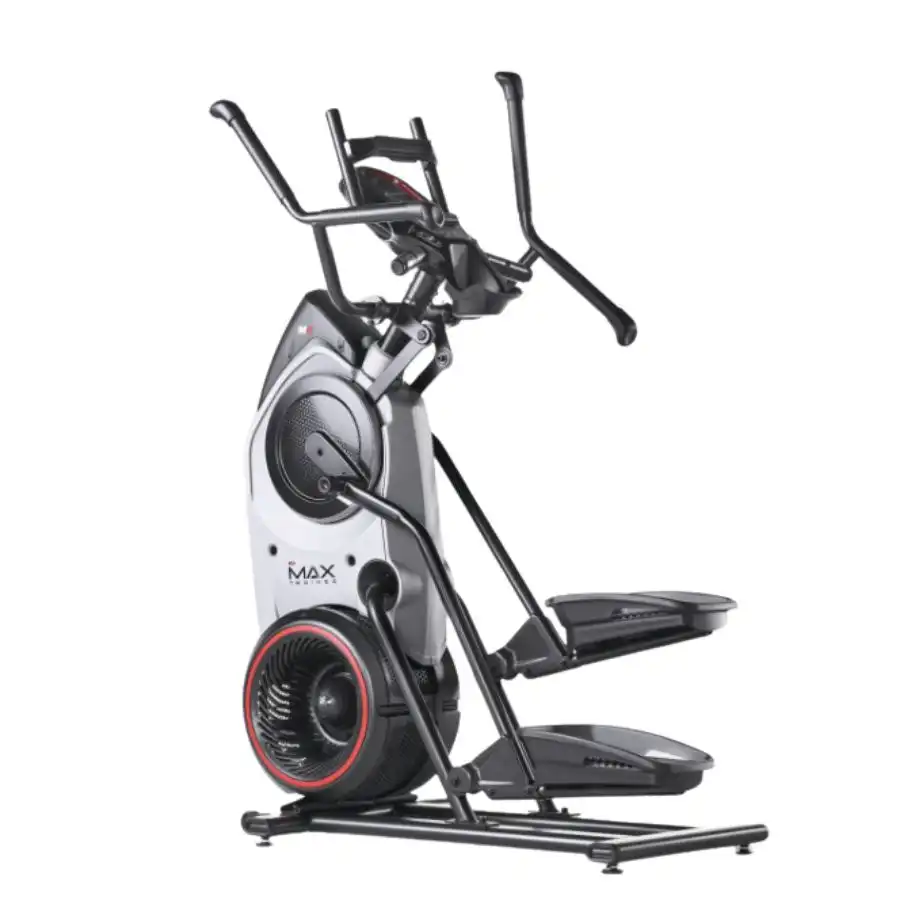
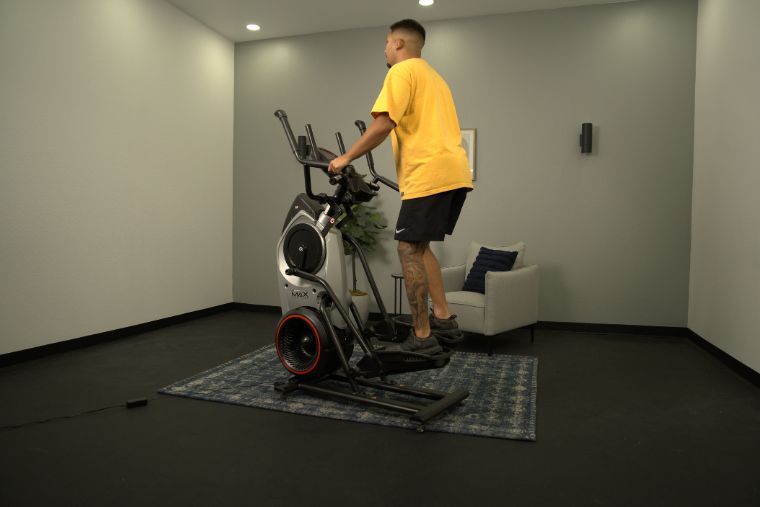
For individuals with limited living or home gym space, the Bowflex Max Trainer M6 offers a compact yet powerful cardio solution. Measuring 46 inches long, 26 inches wide, and 64.2 inches high, its footprint is considerably smaller than many traditional treadmills or other large cardio machines. While its 15-inch stride length might be less ideal for very tall individuals, it efficiently accommodates users weighing up to 300 pounds.
The M6 provides 16 levels of resistance, a USB charging port, a water bottle holder, and Bluetooth heart rate compatibility. Its multi-grip moving handlebars include pulse contact grips for real-time heart rate monitoring. A distinctive feature is its "burn rate" display, which tracks calories burned per minute and allows users to set activity level targets.
The machine integrates with the JRNY digital fitness platform, offering tailored workouts, on-demand classes, real-time coaching, and personalized programming. A complimentary JRNY membership is included with the purchase of the M6. Users can download the workout app, place their device in the magnetic media holder, and begin their session. Bowflex offers in-home assembly for an additional fee, which is recommended as assembly can be time-consuming. However, the warranty is a point of concern, offering only two years on the frame and parts, which is notably shorter than many competitors who provide up to a decade for frame coverage.
- Pros:
- Compact design ideal for small spaces.
- 16 resistance levels and integrated heart rate monitoring.
- JRNY digital fitness platform integration with free membership.
- Unique burn rate display for calorie tracking.
- Cons:
- 15-inch stride length may be restrictive for taller users.
- Limited warranty period.
- Assembly can be complex and time-consuming.
Best Under-Desk Elliptical: Cubii Go
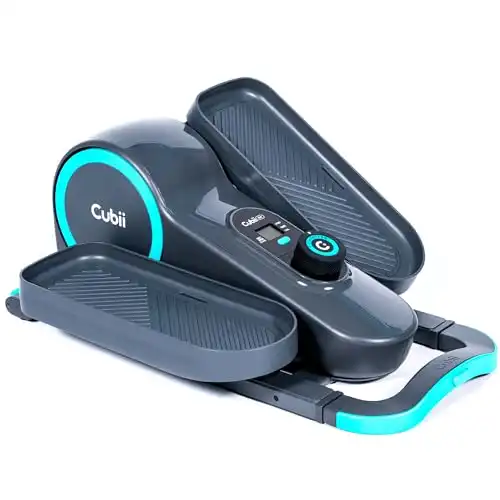
The Cubii Go redefines the concept of an under-desk elliptical, offering a portable and discreet way to incorporate movement into sedentary workdays. This compact device fits easily under a desk and is designed for on-the-go use, featuring built-in wheels and a retractable handle. Unlike under-desk treadmills, the Cubii Go allows users to remain seated while pedaling, making it suitable for use during meetings, calls, or while watching entertainment.
Its large flywheel supports up to ten resistance levels, allowing for varied intensity. An illuminated display projects workout statistics, and the accompanying Cubii app provides detailed tracking of workout data. The portability of the Cubii Go is a significant advantage, making it easy to transport between home and office or to different locations.
Customer reviews on the Cubii website indicate a high level of satisfaction, with an average rating of 4.8 out of 5 stars from over 238 reviews. While most feedback is positive, some criticisms have been noted regarding the machine’s stability and design. However, four-star reviews consistently praise its effectiveness and ease of use.
- Pros:
- Extremely compact and portable design.
- Ideal for use under a desk while seated.
- Up to 10 resistance levels.
- Cubii app for workout tracking.
- Built-in wheels and retractable handle for easy transport.
- Cons:
- Stability concerns noted by some users.
- Limited resistance range compared to full-sized ellipticals.
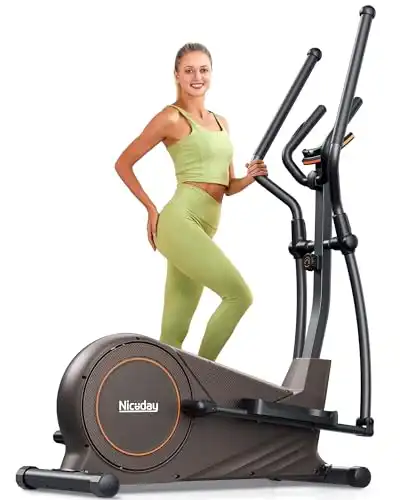
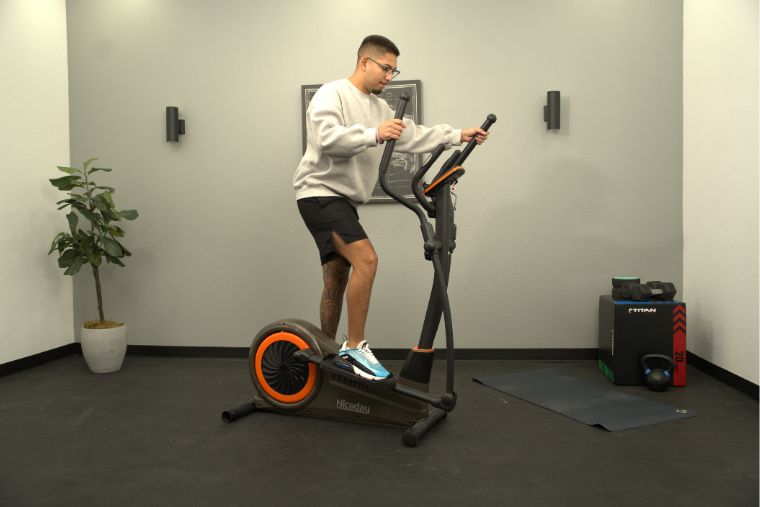
Most Comfortable Elliptical: Niceday Smart Elliptical CT11
For first-time elliptical buyers who may feel intimidated by complex equipment, the Niceday Smart Elliptical CT11 offers a comfortable and accessible entry point. Constructed with steel and featuring large pedals, it supports users up to 400 pounds and is designed to accommodate individuals ranging from 4’9” to 6’4” in height. Although the 15.5-inch stride length might feel somewhat limited for taller users, its overall design prioritizes ease of use.
A significant advantage for those less inclined towards technical assembly is that the CT11 comes 90 percent pre-assembled, simplifying the setup process. The machine utilizes a magnetic drive system engineered for exceptionally quiet operation, with noise levels reported to be below 20 decibels, comparable to rustling leaves. This makes it an excellent choice for users who value a peaceful workout environment.
The Niceday Smart Elliptical CT11 offers 16 levels of resistance, catering to a wide spectrum of workout intensities, from light cardio to more demanding leg and glute exercises. It is compatible with the Kinomap app and digitally records key metrics such as speed, distance, calories burned, and heart rate. On Amazon, the CT11 has garnered an average rating of 4.4 out of 5 stars from nearly 3,000 reviews. While most feedback highlights its performance, some users have noted concerns regarding noise levels (despite its quiet design claims) and its suitability for taller individuals.
- Pros:
- High weight capacity (up to 400 pounds).
- Designed for a wide range of user heights.
- 90 percent pre-assembled for easy setup.
- Ultra-quiet magnetic drive system.
- 16 resistance levels and Kinomap compatibility.
- Cons:
- 15.5-inch stride length may be restrictive for very tall users.
- Some user feedback suggests noise can still be a factor.
Who Should Buy an Elliptical?
Elliptical machines are a compelling choice for individuals seeking a low-impact, full-body cardiovascular workout that can be adapted to any intensity level. As explained by Samantha April, P.T., D.P.T., U.S.A.-W, "You’re using both your arms and your legs to propel yourself, and you can adjust the resistance based on what works for you." This dual-action capability makes them particularly beneficial for those with balance concerns, offering a more controlled and stable exercise experience compared to treadmills, where feet must constantly move with the belt. April notes, "Someone may use an elliptical over a treadmill if they’re looking for something that’s a little more controlled and they want to move with the machine and keep their feet stationary versus a treadmill where they’re required to move."
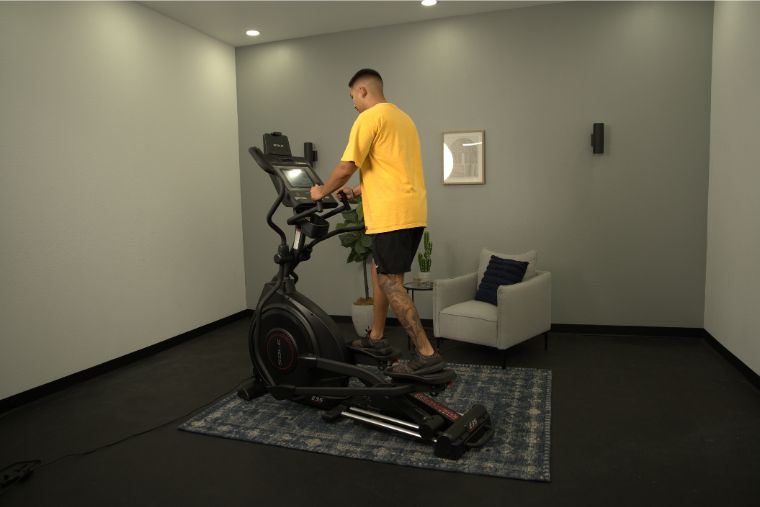
However, ellipticals are not universally suited for all home gym environments. April cautions, "If space is a concern inside of your home gym, ellipticals take up a pretty fair amount of space, so it’s important that you’ll actually have the space to accommodate that." Potential buyers in smaller living spaces should carefully measure their available area and consider compact models or folding options.
How to Use an Elliptical Effectively
Maximizing the benefits of an elliptical trainer involves understanding proper usage techniques, from initial warm-ups to structured workout routines.
Getting Started
Before beginning any workout, a warm-up is essential. This includes deep breathing exercises and dynamic stretching to prepare the muscles. Once ready, step onto the pedals, grip the moving handlebars, and initiate a gentle walking motion with your feet.
Basic Workouts
A foundational elliptical workout typically lasts between 15 to 20 minutes. As endurance and comfort levels increase, users can progressively enhance their workouts by increasing speed, resistance, and incline (if applicable to the machine).
Interval Workouts
For a more dynamic and challenging session, interval training can be highly effective. Matt Petrillo, C.S.C.S., director of adult fitness at The Annex Sports Performance, outlines a low-intensity interval training (LIIT) protocol for ellipticals:
"My clients utilize ellipticals through low-intensity interval training. To do this, choose a work interval ranging from 30-90 seconds and a rest interval between 30-60 seconds, making sure your work period is longer than your rest."
Work Intervals
During the high-intensity work periods, the aim is to elevate your heart rate. Petrillo suggests starting each interval with a heart rate close to 120 beats per minute, striving to reach between 150-160 beats per minute by the end of the work phase. For those without a heart rate monitor, an alternative is to maintain the fastest sustainable pace possible while breathing exclusively through your nose.
Rest Intervals
The rest interval is crucial for recovery and preparing for the next work phase. The objective is to lower your heart rate back to approximately 120 beats per minute. This recovery period should be shorter than the work interval to maintain a challenging training stimulus.
Depending on an individual’s fitness level and available time, this work/rest cycle can be repeated for 15 to 30 rounds. Petrillo emphasizes the physiological benefits: "This type of workout helps build our aerobic system, which can greatly improve our cardiovascular and overall health."
How We Chose the Best Ellipticals
The selection of the best elliptical machines involved a rigorous evaluation process, considering dozens of models and analyzing several key performance and feature indicators. This included assessing flywheel weight and stability, the range and effectiveness of resistance levels, the utility of incline features, the suitability of stride length for various users, overall machine size and footprint, integrated technology and user interface, and cost relative to value. The goal was to identify machines that offer a compelling combination of performance, comfort, durability, and user-centric features across different price points and use cases.
What to Look For When Choosing an Elliptical Machine
Selecting the right elliptical machine involves understanding the core components and features that contribute to an effective and enjoyable workout experience.
Flywheel
The flywheel is the heavy, rotating wheel within the machine’s mechanism. Its primary function is to provide momentum and stability during the pedaling motion. A heavier flywheel generally results in a smoother, more fluid, and natural-feeling stride, though machines with heavier flywheels tend to be more expensive.
Resistance
The range of resistance levels is critical for workout variability and progression. Unlike treadmills, where speed is the primary means of increasing intensity, ellipticals rely on resistance adjustments. A machine with a wide array of resistance settings—typically ranging from 16 to 24 levels—allows users to progressively challenge themselves as their fitness improves, ensuring continued adaptation and results.
Incline
While not always a standard feature, adjustable incline on an elliptical can add another dimension to training. By altering the ramp’s angle, users can engage different muscle groups and modify workout intensity without significantly changing speed or resistance. An increased incline requires more effort to maintain speed, effectively raising the heart rate and providing a more demanding workout, akin to walking uphill.
Stride Length
Stride length, defined as the distance the pedals travel from one end of their arc to the other, is a highly personal specification. It significantly impacts the comfort and natural feel of the workout. A stride that is too short can feel cramped, particularly for individuals with longer legs, while a stride that is too long might feel awkward for shorter users. Most ellipticals offer a standard 20-inch stride length, which is suitable for the majority of users. However, some models offer adjustable or longer strides, which can be beneficial for taller individuals or those who prefer a more expansive movement.
Size
For users with limited space, particularly in apartments or smaller home gyms, the physical dimensions of the elliptical are a crucial consideration. Compact designs and folding capabilities can be essential. It is advisable to measure the intended workout area and compare it against the machine’s specifications before making a purchase to ensure a proper fit.
Tech and Features
Modern elliptical machines often come equipped with advanced technology and features designed to enhance the user experience. This can include interactive touchscreens, integrated workout programs, Bluetooth connectivity for heart rate monitoring and app synchronization, built-in speakers, and cooling fans. For users who value connectivity and a digitally enhanced workout, identifying a machine that aligns with their technological preferences is important. Creating a list of desired features can help streamline the selection process.
Cost
The price of elliptical machines varies considerably, from a few hundred dollars for basic models to several thousand for high-end, feature-rich units. Establishing a clear budget is essential to narrow down options and ensure a purchase that offers the best value for the intended use and desired features.
Final Thoughts
Elliptical cross-trainers are a highly effective tool for improving cardiovascular fitness and building overall strength. The coordinated movement of the pedals and handlebars engages both the upper and lower body, providing a comprehensive workout that enhances both endurance and muscle tone. The low-impact nature of these machines makes them an accessible option for a broad demographic, including those managing joint issues or seeking a gentler alternative to high-impact exercises.
Frequently Asked Questions
Should I get an elliptical or a treadmill?
The choice between an elliptical and a treadmill largely depends on individual fitness goals, current physical condition, and any existing injuries. Ellipticals offer a full-body workout and are gentler on joints due to the continuous contact of feet with the pedals. They are ideal for users with joint pain or lower-body injuries. Treadmills, conversely, are better suited for individuals focused on building leg strength and endurance, particularly runners and walkers. Ellipticals are often quieter than treadmills and can have a steeper learning curve due to their more complex movement patterns.
Can you lose belly fat with an elliptical?
While it’s not possible to target fat loss in specific areas, using an elliptical machine as part of a calorie-controlled diet can contribute to overall fat reduction, including belly fat. Consistent cardiovascular exercise on an elliptical helps create a calorie deficit necessary for weight loss.
Which elliptical is best for weight loss?
The most effective elliptical for weight loss is the one that a user consistently utilizes. Key features that promote adherence include motivational programs, interactive training options, and comfort. However, it is crucial to remember that nutrition plays an equally significant role in weight loss alongside exercise.
Is the elliptical a full-body workout?
Yes, an elliptical machine provides a full-body workout by engaging the lower body (glutes, quadriceps, hamstrings, calves) and the upper body (arms, shoulders, chest, back) through the use of the moving handlebars. The core is also activated for stability.
Is using an elliptical better than walking?
Both walking and using an elliptical are beneficial cardio workouts. Ellipticals often allow for greater calorie expenditure due to varied intensities, resistance, and programmed workouts. They are also significantly easier on the joints than walking, especially on hard surfaces like pavement or treadmills, making them a superior option for those seeking a low-impact alternative.
How long does it take to see results while using an elliptical?
The timeline for seeing results from elliptical training varies based on individual goals, workout intensity, frequency, duration, and overall lifestyle factors such as diet. Consistent effort and adherence to a training plan are key to achieving noticeable improvements in cardiovascular fitness, strength, and body composition.