

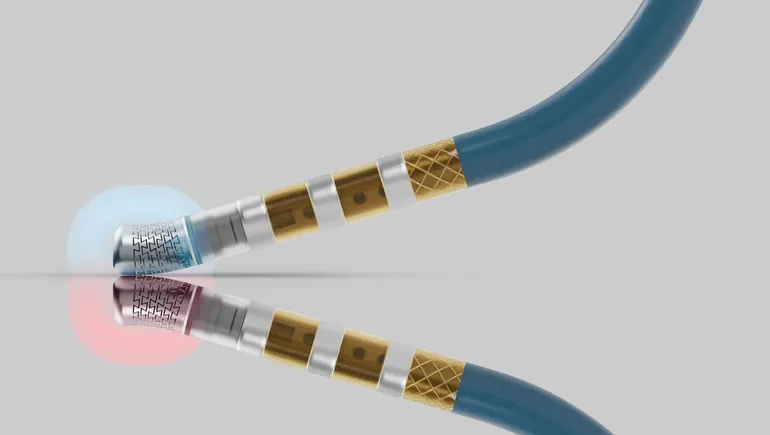
The global medical technology landscape is currently witnessing a transformative shift in the treatment of cardiac arrhythmias, led by significant advancements in ablation technology. Abbott Laboratories, a titan in the cardiovascular device sector, has recently accelerated its efforts to dominate the electrophysiology market with the introduction and pending rollout of two pivotal technologies: the TactiFlex Duo Ablation Catheter, Sensor Enabled, and the Volt Pulsed Field Ablation (PFA) System. These innovations arrive at a critical juncture as healthcare providers seek safer, more efficient methods to manage Atrial Fibrillation (AFib), a condition that affects millions of individuals worldwide and poses a substantial risk for debilitating strokes and heart failure.
The Growing Clinical Challenge of Atrial Fibrillation
Atrial Fibrillation is characterized by an irregular and often rapid heart rate that can lead to blood clots, stroke, heart failure, and other heart-related complications. During AFib, the heart’s two upper chambers (the atria) beat chaotically and irregularly—out of coordination with the two lower chambers (the ventricles). For many, this manifests as heart palpitations, shortness of breath, and fatigue. However, the most significant danger lies in the increased risk of ischemic stroke; the irregular rhythm allows blood to pool in the atria, potentially forming clots that can travel to the brain.
Clinical data suggests that AFib is the most common type of treated heart arrhythmia. In the United States alone, the Centers for Disease Control and Prevention (CDC) estimates that approximately 12.1 million people will have AFib by 2030. The progression of the disease often starts as paroxysmal AFib, where episodes stop on their own within seven days. If left untreated, the condition can evolve into persistent or long-standing persistent AFib, which are much harder to manage and carry higher morbidity rates. Consequently, early intervention through catheter ablation has become a cornerstone of modern cardiac care, moving from a second-line therapy to a primary treatment option for many patients.
Comparing Ablation Modalities: Radiofrequency vs. Pulsed Field
For decades, Radiofrequency (RF) ablation has been the gold standard for treating AFib. This technique utilizes thermal energy (heat) delivered through a catheter to create tiny scars in the heart tissue. These lesions block the irregular electrical signals that cause the arrhythmia. While highly effective, RF ablation requires precise control to avoid damaging adjacent structures, such as the esophagus or the phrenic nerve, which controls the diaphragm.
In contrast, Pulsed Field Ablation (PFA) represents a paradigm shift in electrophysiology. Instead of using extreme temperatures, PFA employs high-voltage, ultra-short electrical pulses to create pores in the cell membranes of heart tissue—a process known as irreversible electroporation. The primary advantage of PFA is its "tissue selectivity." Cardiac muscle cells are more sensitive to these electrical fields than neighboring tissues like nerves or the esophagus. This selectivity significantly reduces the risk of collateral damage, potentially making the procedure safer and faster than traditional thermal methods.
Abbott’s strategy involves a dual-track approach, offering advanced solutions in both RF and PFA categories to cater to varying clinical needs and physician preferences. The TactiFlex Duo represents the pinnacle of RF technology, while the Volt system marks Abbott’s high-stakes entry into the rapidly expanding PFA arena.
The Strategic Rollout of TactiFlex Duo and Volt PFA
Abbott has signaled a robust commercial strategy for its new electrophysiology portfolio. The company announced that it will begin performing cases with the TactiFlex Duo across the United States in the coming weeks. This device is designed to work seamlessly with Abbott’s EnSite X EP System, providing physicians with high-density mapping and precise contact force sensing. Contact force is a critical metric in RF ablation; it ensures that the catheter is making sufficient contact with the heart wall to create an effective lesion without applying excessive pressure that could cause a perforation.
Simultaneously, the Volt PFA system is positioned as a disruptive force in the market. Abbott introduced the next-generation Volt PFA catheter in the U.S. in May 2024, following a period of intense clinical evaluation. The Volt system is unique because it integrates PFA technology with Abbott’s established mapping capabilities, allowing doctors to visualize the heart’s anatomy and electrical activity in real-time while delivering therapy. This integration is expected to reduce the need for multiple catheters and simplify the procedural workflow.
According to a July earnings call, Abbott CEO Robert Ford expressed high confidence in these products. Ford noted that the combination of Volt and TactiFlex is expected to help the company regain market share in the electrophysiology space and drive sales growth at a rate exceeding the overall market average. The company is eyeing 2025 as a landmark year, with anticipated full regulatory approvals and expanded commercial availability in both the U.S. and European markets.
Competitive Dynamics and Market Positioning
The electrophysiology market is currently one of the most competitive segments in MedTech, valued at over $8 billion annually and growing at double-digit rates. Abbott faces stiff competition from other industry giants who have also recognized the potential of PFA.
- Boston Scientific: Their Farapulse PFA system was the first to gain significant traction in the U.S., setting a high bar for ease of use and safety.
- Medtronic: With the PulseSelect PFA system, Medtronic was the first to receive FDA approval for a PFA device, leveraging its massive global distribution network.
- Johnson & Johnson (Biosense Webster): As the long-standing market leader in electrophysiology, J&J is currently advancing its Varipulse PFA platform to maintain its dominant position.
- Abbott: By entering the PFA market slightly later than some competitors, Abbott has had the opportunity to refine its technology. The Volt system aims to address some of the "first-generation" limitations of PFA, specifically by improving the integration between the ablation catheter and the 3D mapping system.
Abbott’s "TactiFlex Duo" acts as a bridge for physicians who are not yet ready to fully transition to PFA but desire the most advanced RF tools available. By providing a "duo" of options, Abbott ensures it remains a one-stop shop for electrophysiology labs, regardless of which energy source a particular clinician prefers.
Chronology of Development and Regulatory Milestones
The path to Abbott’s current position has been marked by several years of research and strategic acquisitions.
- Pre-2022: Abbott focuses on perfecting its EnSite X mapping system, recognizing that high-quality visualization is the prerequisite for any successful ablation, regardless of the energy source.
- 2023: Clinical trials for the Volt PFA system begin globally. Early data suggests high rates of acute procedural success and a favorable safety profile, with no reported instances of esophageal injury or phrenic nerve palsy.
- May 2024: Abbott introduces the Volt PFA catheter in the U.S. for limited clinical use and begins the process of gathering real-world evidence to support a full commercial launch.
- July 2024: During the Q2 earnings call, leadership confirms that the electrophysiology segment is a primary growth driver, with the TactiFlex Duo and Volt systems at the center of the strategy.
- Late 2024 (Upcoming): Initial U.S. cases with TactiFlex Duo are scheduled to begin, marking the start of a broader commercial rollout.
- 2025 (Projected): Abbott expects to secure comprehensive U.S. and European regulatory approvals for the Volt PFA system, allowing for a full-scale global marketing push.
Economic and Healthcare Implications
The introduction of these technologies has broader implications for the healthcare economy. AFib is a costly condition; the total incremental cost of AFib in the U.S. is estimated to be between $6 billion and $26 billion annually. These costs are driven by hospitalizations, long-term medication use (such as anticoagulants), and the management of stroke-related disabilities.
If Abbott’s new systems can shorten procedure times and reduce complication rates, the economic benefits could be substantial. PFA, in particular, is noted for its speed. Some clinical studies suggest that PFA can reduce the "skin-to-skin" time of an ablation procedure by up to 25-30% compared to RF. Faster procedures allow hospitals to increase patient throughput, potentially reducing waiting lists for AFib treatment and improving the overall efficiency of cardiac catheterization labs.
Furthermore, the integration of mapping and ablation—as seen in the Volt system—reduces the "procedural footprint." Using fewer catheters and requiring less fluoroscopy (X-ray imaging) protects both the patient and the medical staff from radiation exposure.
Physician and Industry Reactions
While official statements from medical societies are usually reserved for peer-reviewed data publications, the "buzz" at recent industry conferences like the Heart Rhythm Society (HRS) annual meeting has been focused on the "PFA Revolution." Electrophysiologists have generally welcomed Abbott’s entry into the PFA space, noting that competition drives innovation and potentially lowers costs for hospitals.
Physicians have highlighted the TactiFlex Duo’s "dual-insertion" capability and its enhanced irrigation features as significant upgrades for complex RF cases. For PFA, the focus remains on the "learning curve." Unlike RF, which requires years of experience to master the nuances of heat delivery, PFA is often described as more "forgiving," though clinicians emphasize that precise mapping—Abbott’s specialty—remains essential for long-term success.
Conclusion: A New Era in Heart Rhythm Management
The upcoming rollout of the TactiFlex Duo and the anticipated 2025 milestones for the Volt PFA system represent a defining moment for Abbott’s cardiovascular division. By addressing the limitations of traditional thermal ablation and embracing the safety and efficiency of pulsed field technology, Abbott is positioning itself not just as a participant, but as a leader in the next generation of cardiac care.
As these technologies become more widely available, the focus will shift from clinical feasibility to long-term durability. The medical community will be closely watching for five-year data to see if PFA-induced lesions are as permanent as those created by RF. In the interim, the immediate benefits of reduced procedural risk and increased lab efficiency are likely to drive rapid adoption. For millions of patients living with the shadow of AFib, these advancements offer more than just technical progress; they offer a safer, more effective path toward a life free from the risks of irregular heart rhythms.
