

The landscape of modern product innovation has fundamentally shifted, with artificial intelligence (AI) no longer a discretionary tool but a non-negotiable cornerstone for achieving and sustaining competitive advantage. In the dynamic realm of product development, continuous cycles of improvement are the norm, each iteration presenting a unique blend of opportunities and formidable challenges. To not only keep pace but to lead in this fiercely competitive environment, R&D teams must embrace and master new methodologies, cutting-edge tools, and advanced techniques. The notion that AI is merely optional is now a relic of the past; its integration is critical for market success.
Imagine if Albert Einstein had possessed the instantaneous information access and processing power available today. It is conceivable that his monumental ten-year journey to conceptualize the theory of relativity might have been significantly accelerated. Similarly, for contemporary R&D departments, the paramount objective is to strategically integrate AI to forge pathways toward innovative products. This integration aims to maximize market success, identify novel ingredients, and, most crucially, address genuine unmet consumer needs and persistent problems. While AI offers unparalleled support and deep insights, its efficacy is directly proportional to the precision of the prompts it receives. AI cannot, and should not, supplant strategic foresight or meticulously structured execution. Instead, it should function as a powerful accelerant, rendering innovation pathways more coherent, targeted, and ultimately, more fruitful.
The nutraceutical sector, in particular, faces a delicate balancing act: the imperative for rapid innovation must be harmonized with unwavering scientific integrity. Achieving this equilibrium is a complex undertaking, but the deployment of the right technological frameworks and AI-driven tools can indeed enable the compliant and timely delivery of groundbreaking products.
The Accelerating Role of AI in Supplement Development Research
The very existence of problems in the world is a testament to the potential for improvement and growth. When a need or deficiency arises, it signifies an opportunity for progress, indicating a misalignment with expectations or an unmet demand. This realization initiates a rigorous process of identifying these gaps and unmet market needs. While a passion for scientific inquiry can undoubtedly spark innovative ideas and inspire the exploration of previously uncharted solutions, these concepts must ultimately demonstrate their value and utility within the marketplace. This is where AI is revolutionizing the initial stages of product development.
Enhancing Research Speed Through Data Mining
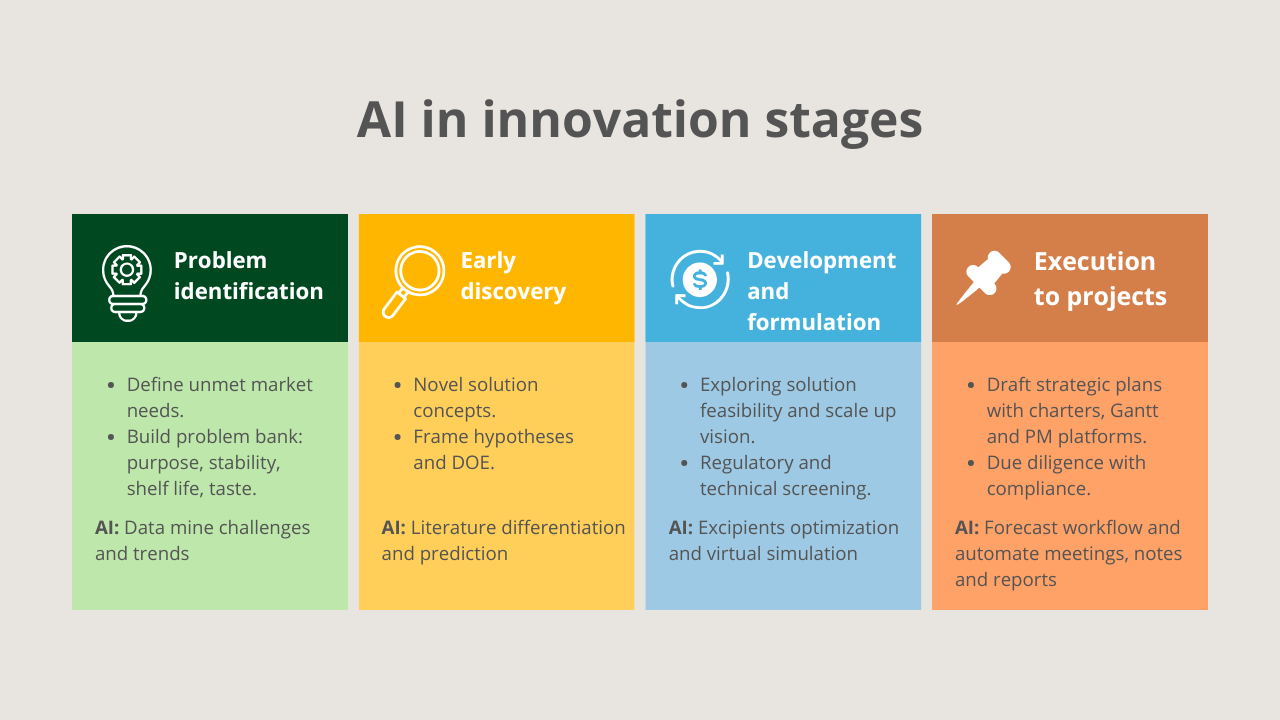
The foundational step in addressing any issue, particularly within product development, involves comprehensive data mining. This process typically begins with an examination of the chosen ingredient, its intended usage, and its purpose. It then expands to encompass critical considerations such as ingredient stability, product shelf-life, palatability, optimal dosage, and a myriad of other factors. Traditionally, gathering and analyzing the vast datasets required for such an undertaking would consume significant amounts of time. AI, however, dramatically accelerates this process. By rapidly scanning enormous datasets, AI algorithms can identify subtle patterns, detect anomalies, and predict potential challenges much earlier in the research lifecycle, thereby saving invaluable time and resources. For instance, AI can analyze thousands of scientific papers and clinical trial results in minutes, identifying correlations between specific compounds and desired health outcomes that might take human researchers months to uncover.
Revolutionizing Product Ideation with AI and Human Insights
While AI provides robust support in identifying product development challenges and opportunities, traditional methods of ideation, such as word-of-mouth and direct feedback, remain profoundly influential in the nutraceutical industry. Insights gleaned from industry conferences, specialized seminars, and direct customer interactions, though sometimes appearing anecdotal, have proven to be exceptionally valuable. These sources often highlight emerging ingredients and nascent trends that AI is rapidly adapting to within the supplementation domain. AI can then be used to analyze the sentiment and prevalence of these trends across broader market data, providing a quantitative validation to qualitative observations. For example, if a specific herb gains traction at multiple industry events, AI can cross-reference this with social media mentions, search engine queries, and e-commerce data to gauge its market potential and identify specific consumer interest groups.
Streamlining Literature Reviews with AI-Powered Synthesis
Historically, the early stages of product ideation were characterized by laborious literature reviews and manual data collection, often spanning weeks or even months. This painstaking process was essential for understanding the existing scientific landscape. Today, this phase is rendered significantly more efficient through AI-driven literature mining. These advanced systems can synthesize findings from vast repositories of research papers, identify relevant design of experiments (DOE) parameters, and surface novel ingredient formulations with remarkable speed. The ability to filter and ideate through AI platforms drastically simplifies the identification of promising avenues, making the entire process far more strategic and less prone to overlooking critical information. Imagine an AI system capable of identifying every published study on a particular compound’s efficacy for cognitive function, flagging those with robust methodologies and suggesting potential synergistic ingredients based on co-occurrence in successful formulations.

Fortifying Patent Analysis for Competitive Advantage
Beyond literature mining, AI has become an indispensable tool in patent analysis. By leveraging extensive databases, AI can rapidly uncover prior discoveries and existing intellectual property, helping to avoid costly duplications and identify unique opportunities for product differentiation. This capability is particularly crucial when aiming for product exclusivity or a premium market positioning, as patents and copyrights are vital mechanisms for protecting innovation and securing a lasting competitive edge. AI can scan thousands of patents within seconds, flagging potential conflicts and identifying white spaces where novel formulations can be developed and protected. This proactive approach minimizes legal risks and accelerates the path to market for proprietary products.
Validating Market Potential Through AI-Driven Hypothesis Generation
At the core of successful product development lies hypothesis generation, which forms the bedrock of predictive modeling within an innovation portfolio. This process guides the journey toward a validated proof of concept. While countless ideas may emerge, many will inevitably be discarded if they fail to resonate with market demands. To circumvent this common pitfall, leading innovators skillfully combine scientific curiosity with sharp market intelligence, ensuring that creative endeavors align precisely with consumer desires and needs. AI can play a pivotal role here by analyzing market trends, consumer behavior data, and competitor activities to generate data-backed hypotheses about potential product success. This data-driven approach significantly increases the probability of developing products that meet and exceed market expectations, moving beyond intuitive guesswork to informed prediction.
Proactive Regulatory Review and Risk Mitigation
An additional, significant advantage of AI integration lies in its capacity to flag potential regulatory issues associated with selected ingredients or proposed formulations. This capability empowers development teams to navigate complex regulatory landscapes proactively, before substantial investments are made in development. By identifying potential red flags early on, AI helps mitigate risks, streamline decision-making processes, and prevent costly delays or product recalls. For instance, an AI system could scan ingredient databases against global regulatory lists, immediately identifying any substances that are not Generally Recognized As Safe (GRAS) or are subject to specific restrictions in target markets. This foresight is invaluable for ensuring compliance and accelerating market entry.
Ultimately, AI transforms the early stages of innovation from a slow, labor-intensive manual process into a dynamic, data-driven strategy. This shift facilitates faster idea execution, enhances precision in risk management, and charts a clearer, more assured path toward successful product development.
AI’s Impact on Supplement Development and Formulation
Once an initial product concept has been defined through rigorous research and screening, the subsequent critical phase is development and formulation. At this juncture, while the product’s ultimate feasibility may not yet be fully confirmed, the primary focus shifts to meticulous ingredient selection, thorough regulatory compliance checks, and preliminary technical assessments. AI offers significant advantages in navigating these intricate steps.
Virtual Lab Simulations and Excipient Optimization
Before the tangible, often costly, processes of physical laboratory work commence, leveraging virtually designed simulations powered by AI can yield substantial benefits. These simulations can accurately predict key parameters such as bioavailability, ingredient stability under various environmental conditions, and the complex behavior of ingredients over time. This virtual testing significantly reduces the need for extensive physical experimentation, thereby saving considerable time and financial resources. Furthermore, AI-driven excipient optimization tools simplify the often-daunting task of selecting the right combination of inactive ingredients. By analyzing vast databases of ingredient interactions and performance data, AI can propose strategic formulation designs, reducing reliance on time-consuming and resource-intensive trial-and-error methodologies. This technology acts as an invaluable resource for emerging talents in the nutraceutical field, offering guidance and building confidence, while also serving as a rapid validation tool for experienced chemists to confirm their formulation approaches before committing to physical testing. By minimizing uncertainty at an early stage, AI ensures a more mindful and efficient use of resources.
Intelligent Experimentation Design (DOE)
When the time arrives for physical laboratory experimentation, prompting AI to draft a comprehensive Design of Experiments (DOE) can represent a significant leap forward in efficiency and accuracy. AI can precisely outline experimental variables, establish robust controls, and recommend appropriate statistical models, ensuring that experiments are both efficient and statistically sound from their inception. AI can also suggest the optimal instrumentation required for specific formulations, whether it involves spray dryers, encapsulation systems, or particular types of ethoxylates. This informed guidance minimizes costly trial-and-error processes and ensures that experiments are designed for maximum yield of reliable data. AI effectively transforms formulation development from a labor-intensive guessing game into a data-driven, predictive process, empowering teams to innovate with greater speed, intelligence, and confidence.
Streamlined Project Planning and Resource Allocation
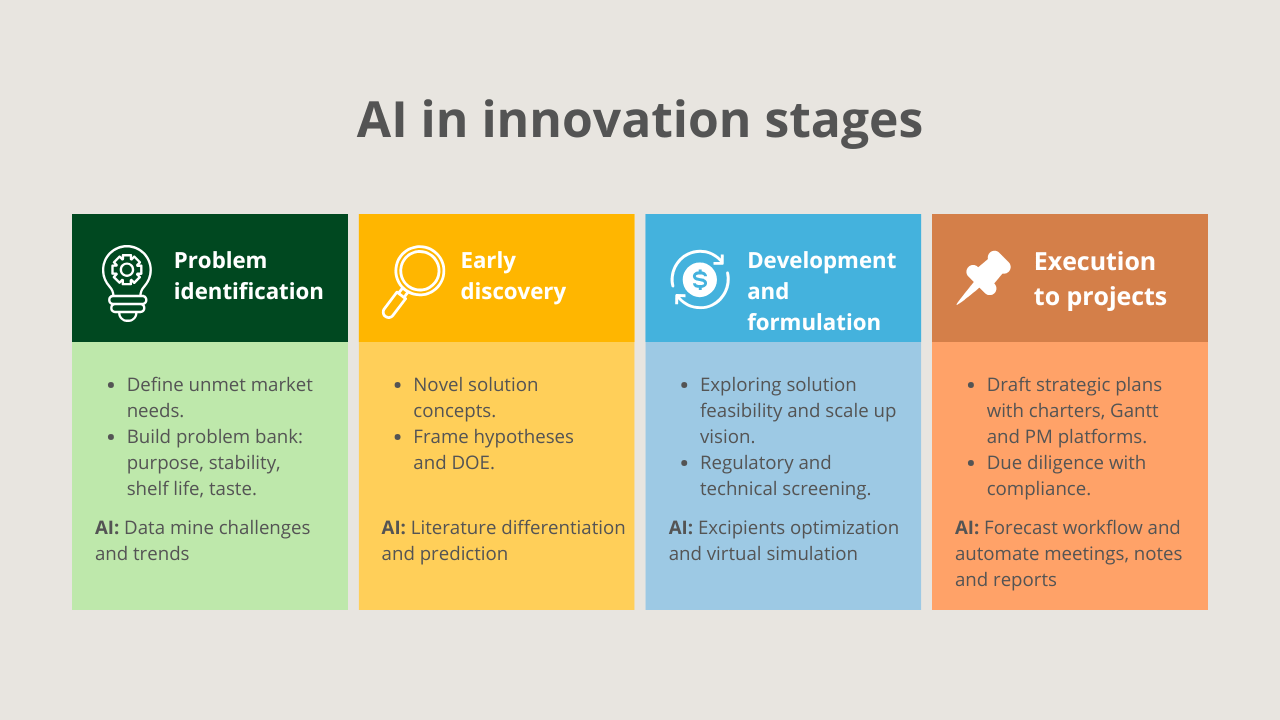
The transition from concept to tangible product is realized through meticulous execution, a responsibility that often falls to project managers (PMs). Organizations typically employ various methodologies and software tools to draft project charters, create Gantt charts, manage tasks, and maintain team alignment. PMs, acting as servant leaders, are tasked with removing obstacles and enabling stakeholder growth while sustaining project momentum. As innovation progresses from the ideation phase to execution, crucial considerations such as resource allocation, strategic mindset, and financial constraints come to the forefront. This is precisely where AI assistance becomes indispensable. AI can contribute significantly to cost modeling, operational planning, and equipment recommendations, while seamlessly integrating with existing project management platforms to optimize project timelines.
Moreover, AI can automate and enhance many of the more routine, yet critical, project management tasks. Real-time notetaking during meetings, workload tracking across team members, and chatbot-driven problem-solving capabilities can significantly improve collaboration and communication across different functional departments. A particularly useful feature is the ability of AI-powered chatbots to assist in troubleshooting issues, provide instant answers to common queries, and facilitate cross-functional communication, thereby reducing delays and expediting decision-making processes. For instance, a chatbot could instantly pull up relevant documentation on a specific ingredient’s regulatory status or provide real-time updates on supply chain logistics, empowering the project manager and team to make faster, more informed decisions.
AI: A Partnership Tool, Not a Replacement for Human Expertise
It is crucial to emphasize that AI functions as a powerful supportive tool, not as a substitute for human judgment and leadership. Project managers, scientists, and regulatory experts remain central to the innovation process. They continue to set strategic direction, plan team meetings, navigate trade-offs, and uphold the highest standards of scientific rigor.
Before any product progresses to the scale-up phase, a non-negotiable period of due diligence is essential. This includes comprehensive compliance checks against GRAS (Generally Recognized As Safe) and NDI (New Dietary Ingredient) regulations, validation of all scientific claims, and thorough reviews of the patent landscape to preemptively avoid any potential surprises or legal challenges. In this context, AI serves as a valuable partner, assisting with resource allocation, sophisticated cost modeling, and timeline optimization. However, it is leadership that ultimately steers the ship, ensuring the project remains compliant with all regulations, technically feasible, and strategically aligned with business objectives. In essence, AI transforms project execution from a manual, often fragmented, process into a dynamic, data-driven workflow, empowering teams to deliver innovation with greater speed, intelligence, and confidence. AI acts as a catalyst for efficiency and innovation in nutraceutical R&D, accelerating discovery, refining formulation decisions, and significantly minimizing execution risks.
However, the ultimate success of AI integration hinges on the effective pairing of AI-generated insights with invaluable human expertise, sound strategic judgment, and unwavering scientific rigor. When project managers, scientists, and regulatory teams judiciously employ AI as a support tool, rather than a wholesale replacement for their critical thinking, they unlock its true transformative potential.
While AI has not yet reached its zenith of maturity, and its limitations, including potential sustainability concerns and the nuanced depth of knowledge it can truly possess, still warrant careful evaluation, its current capabilities are undeniable. AI has already unlocked faster, smarter, and more compliant pathways to market for innovative products. The future of product development belongs to those teams that thoughtfully harness AI, seamlessly integrating its analytical strengths with the irreplaceable qualities of human intellect and experience, all while remaining firmly grounded in real-world needs and the foundational principles of sound science. By embracing this synergistic approach, organizations can transform the often-arduous journey of innovation into a dynamic, data-driven expedition toward meaningful and impactful breakthroughs.
