







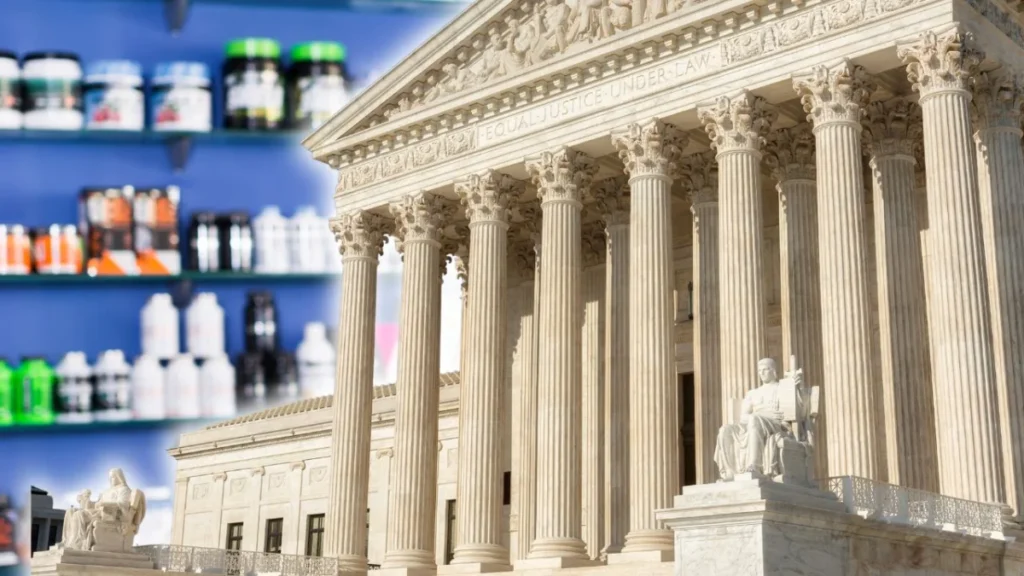
The Council for Responsible Nutrition (CRN) has petitioned the United States Supreme Court for a writ of certiorari, aiming to overturn a Second Circuit Court of Appeals decision that affirmed a New York State law prohibiting the sale of certain dietary supplements to individuals under 18 years of age. This legal maneuver centers on a state law enacted in 2023 and effective April 2024, which specifically targets supplements marketed or labeled for weight loss or muscle building, restricting their sale to those aged 18 and older. The CRN argues that this law represents an unconstitutional infringement on commercial speech, as it penalizes truthful advertising rather than addressing demonstrable product safety concerns.
At the core of CRN’s petition is the assertion that the Second Circuit incorrectly allowed the New York law to stand without requiring the state to provide empirical evidence demonstrating that the restriction meaningfully addresses public health concerns. Furthermore, CRN contends that the appellate court failed to adequately consider less restrictive alternatives that could achieve the state’s purported goals without infringing upon protected speech.
"This case goes to the heart of how the government can restrict commercial speech and the high bar that must be upheld for content-based speech restrictions," stated Megan Olsen, CRN’s Senior Vice President and General Counsel. "The Second Circuit allowed New York to justify the law without evidence that it will actually address the harms the state identified and without requiring the state to demonstrate that the remedy was ‘narrowly tailored’ so as not to chill legitimate protected speech."

A Timeline of Legal Challenges
The legal battle began in March 2024 when CRN filed a lawsuit, asserting that the New York law violates the First Amendment by implementing a sales ban triggered by speech—specifically, the labeling and marketing of products. The initial legal challenge sought a preliminary injunction to halt the law’s enforcement, but this request was denied by the district court in April 2024. The Second Circuit Court of Appeals subsequently affirmed the district court’s decision in November 2025, a ruling that CRN is now seeking to have reviewed by the nation’s highest court. The appellate court’s justification, according to CRN, relied on what they described as "common sense" rather than robust empirical evidence to support the law’s public health objectives.
CRN’s petition to the Supreme Court specifically asks the justices to consider two key questions: Did the Second Circuit err in holding that restrictions on commercial speech can be justified without concrete evidence of material harm? And, was it appropriate for the appellate court to defer to legislative judgment without thoroughly exploring less intrusive alternatives to achieve public health goals?
The Genesis of the New York Law
The current law’s origins can be traced to an earlier legislative attempt in New York to regulate dietary supplements based on specific ingredients deemed problematic by the state’s Department of Health. This initial approach, however, faced a significant hurdle when Governor Kathy Hochul vetoed the legislation. Governor Hochul cited concerns regarding the Department of Health’s expertise in analyzing supplement ingredients, a role traditionally and primarily occupied by the U.S. Food and Drug Administration (FDA).
Following the veto of the ingredient-focused bill, lawmakers reportedly pivoted to a speech-based regulatory strategy. This shift meant focusing on how products were labeled and marketed, rather than their specific formulations or constituent ingredients, as the basis for restriction. This new approach, according to CRN, is what led to the enactment of the law now being challenged.
CRN’s Arguments: Protecting Commercial Speech
The Council for Responsible Nutrition, representing a significant segment of the dietary supplement industry, argues that the New York law constitutes a form of censorship. They contend that the law is overbroad and sweeps up a wide array of safe and beneficial supplements, thereby hindering access for consumers, including minors, who might benefit from them under appropriate guidance. The organization maintains that the law fails to effectively address the specific harms the legislature purportedly sought to prevent, while simultaneously undermining fundamental First Amendment protections for commercial speech.
CRN’s legal team asserts that the New York law conflicts with established Supreme Court precedent regarding commercial speech and the standards required for content-based restrictions. They also point to inconsistencies with rulings from other federal circuit courts, suggesting a potential for disparate legal interpretations across the country if the Second Circuit’s decision remains unchallenged at the highest level.
"If this decision stands, it creates a dangerous roadmap for regulating products using speech as a proxy rather than evidence of actual harm caused by the product," emphasized Steve Mister, President and CEO of CRN. "Legislatures should have more than a hunch or wishful thinking when they restrict speech."
Broader Implications for Consumer Products and Advertising
The potential implications of the Second Circuit’s decision, if ultimately upheld by the Supreme Court, extend far beyond the dietary supplement industry in New York. Industry stakeholders and legal analysts are concerned that it could establish a precedent for regulators to enact restrictions on a wide range of consumer products based on their marketing claims rather than on scientifically substantiated risks or harms.
This approach, critics argue, could empower legislatures to bypass the rigorous scientific and regulatory processes typically overseen by federal agencies like the FDA. Instead of focusing on product efficacy, safety, or ingredient scrutiny, regulators could increasingly rely on perceived problematic marketing or labeling as justification for sales bans or restrictions. This could lead to a marketplace where truthful advertising for legitimate products is curtailed based on subjective interpretations of consumer appeal or potential misuse, rather than on objective evidence of danger.
The challenge highlights a critical tension between the government’s role in protecting public health, particularly that of minors, and the constitutional protection afforded to commercial speech. The Supreme Court’s involvement, should it agree to hear the case, would provide an opportunity to clarify the boundaries of governmental authority in regulating advertising and to reinforce the evidentiary standards required for such restrictions, especially when they involve content-based limitations on speech. The outcome could significantly shape the future landscape of product regulation and commercial speech rights in the United States.