









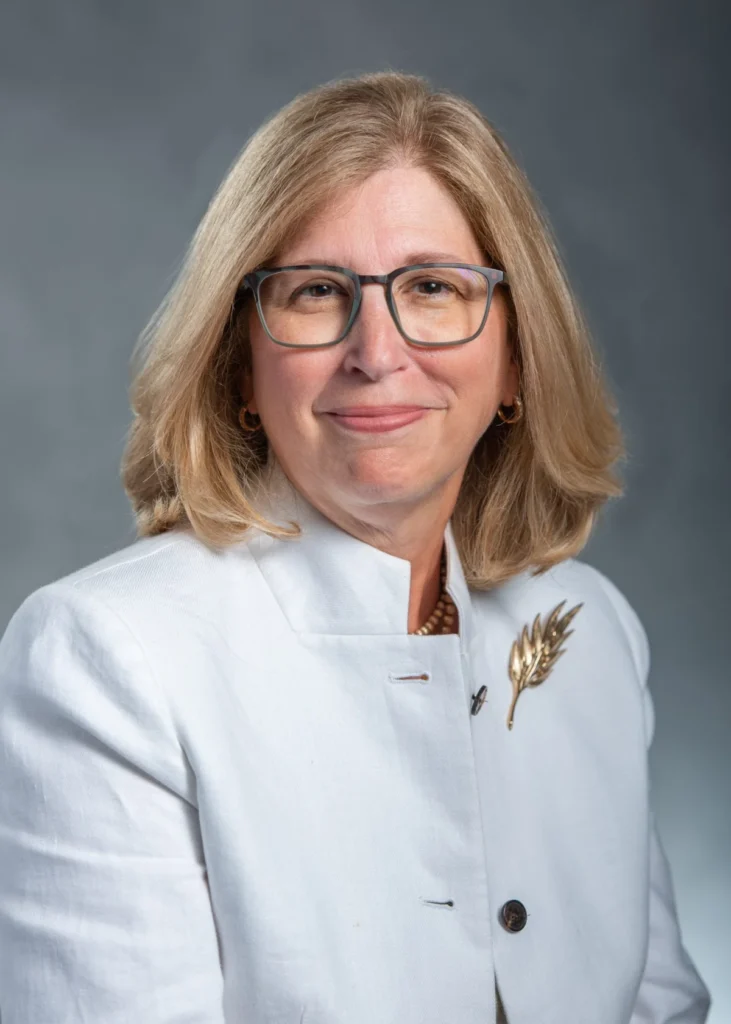
In a significant recognition of a career dedicated to the intersection of oncology and reproductive biology, Dr. Teresa K. Woodruff has been elected to the Fellowship of the Royal Society and the American Philosophical Society (APS). These appointments place Woodruff among the most elite echelons of the global scientific and intellectual community, acknowledging her pioneering work in the field of oncofertility—a term she coined two decades ago to bridge the gap between life-saving cancer treatments and the preservation of reproductive health.
The Royal Society, based in London, is the world’s oldest national scientific institution, having been founded in 1660. To be elected as a Fellow is one of the highest honors a scientist can receive, joining a historical lineage that includes Sir Isaac Newton, Charles Darwin, Albert Einstein, and Stephen Hawking. Simultaneously, her election to the American Philosophical Society marks her entry into the oldest learned society in the United States. Founded in 1743 by Benjamin Franklin for the purpose of "promoting useful knowledge," the APS has historically included luminaries such as George Washington, Thomas Jefferson, and Marie Curie.
Woodruff currently serves as an MSU Research Foundation Distinguished Professor at Michigan State University, holding appointments in the Department of Obstetrics, Gynecology, and Reproductive Biology within the College of Human Medicine, as well as the Department of Biomedical Engineering in the College of Engineering. Her leadership at MSU has been extensive, having served as the university’s provost starting in August 2020 and subsequently as president emerita.

The Genesis and Evolution of Oncofertility
The hallmark of Woodruff’s scientific legacy is the establishment of oncofertility as a recognized medical discipline. Two decades ago, the medical landscape was siloed; oncologists focused on eradicating cancer, while reproductive specialists focused on fertility, often with little communication between the two. For young cancer patients, the aggressive nature of chemotherapy and radiation often resulted in premature ovarian failure or infertility, a "hidden" side effect that many patients only confronted after their primary treatment was concluded.
In 2006, Woodruff coined the term "oncofertility" to describe a new interdisciplinary field that merged these two specialties. Her vision was to ensure that every young person diagnosed with cancer would have the opportunity to discuss fertility preservation options before beginning treatments that might compromise their future ability to have biological children.
The impact of this shift in clinical practice has been profound. According to data from the American Cancer Society, approximately 80,000 adolescents and young adults (ages 15 to 39) are diagnosed with cancer each year in the United States alone. Before the rise of oncofertility, the survival rates for these patients were increasing, but their long-term quality of life was often diminished by the loss of reproductive options. Today, the Oncofertility Consortium, which Woodruff leads, is a global network of providers and scientists across more than 60 countries, ensuring that fertility preservation is a standard component of the cancer care continuum.
A Chronology of Scientific and Academic Leadership
Woodruff’s career is defined by a consistent trajectory of breakthrough research and institutional leadership. Her influence extended into the heart of scientific governance through her tenure as the President of the Endocrine Society from 2013 to 2014. As the world’s largest professional organization devoted to hormone research and the clinical practice of endocrinology, her leadership helped shape global standards for reproductive health.
Her editorial contributions have been equally influential. Serving as the editor-in-chief of the journal Endocrinology, she oversaw the publication of research that defined the molecular mechanisms of hormonal regulation. In 2021, the Endocrine Society recognized her lifetime of work with the Gerald D. Aurbach Laureate Award for Outstanding Translational Research. The award cited her "seminal discoveries about gonadal structure, function, and hormones," particularly her work on the regulation of female fertility.
Beyond the laboratory, Woodruff has been a staunch advocate for policy changes in scientific research. She was a leading voice in the movement to include female animals and cells in preclinical research. For decades, much of medical research was conducted primarily on males, leading to a significant knowledge gap regarding how diseases and treatments affect women. Woodruff’s advocacy contributed to the National Institutes of Health (NIH) implementing the "Sex as a Biological Variable" (SABV) policy in 2016, which requires researchers to consider sex as a fundamental factor in the design and analysis of scientific studies.
Landmark Discoveries: From the Zinc Spark to Ovarian Engineering
Woodruff’s research has frequently resulted in visual and functional breakthroughs that have captivated both the scientific community and the public. One of the most notable is the discovery of the "zinc spark." In collaboration with Thomas O’Halloran, an MSU Research Foundation Distinguished Professor, Woodruff’s lab identified that at the exact moment of fertilization, an egg releases billions of zinc atoms in a series of "sparks."
This phenomenon is more than a visual marvel; it is a critical indicator of egg quality. The intensity of the zinc spark can be used to predict the viability of an embryo, offering a potential non-invasive tool for clinicians in the field of in vitro fertilization (IVF) to select the healthiest embryos for implantation. This discovery has paved the way for ongoing research at Michigan State University, where Woodruff’s team continues to investigate the specific mechanisms behind zinc’s role in egg development and the early stages of life.
Furthermore, Woodruff’s work in bioengineering has led to the development of the "EVATAR," a microfluidic device that mimics the female reproductive tract. This "organ-on-a-chip" technology allows researchers to study the effects of drugs and hormones on human reproductive organs in a controlled environment outside the body. Such innovations are critical for developing new fertility preservation strategies, such as maturing ovarian follicles in a lab setting—a breakthrough that could offer hope to prepubescent cancer patients who cannot yet undergo traditional egg freezing.
Recognition and Global Impact
The election to the Royal Society and the APS adds to a long list of prestigious accolades. Woodruff is a recipient of the National Medal of Science, the highest honor bestowed by the United States government upon scientists and engineers. She also received the Presidential Award for Excellence in Science Mentoring, reflecting her commitment to training the next generation of researchers. Her membership in the National Academy of Medicine, the American Academy of Arts and Sciences, and the National Academy of Inventors further underscores the multifaceted nature of her contributions to society.
Reflecting on her recent honors, Woodruff emphasized that the recognition is a testament to the collective efforts of her colleagues and the pressing medical needs that drove her research. "I am honored to have worked with so many caring scientists and clinicians to make these real-world outcomes a reality," she stated. She noted that the 20th anniversary of the term "oncofertility" serves as a milestone for how far the field has progressed, shifting from a niche concept to an international standard of care.
Broader Implications for Medicine and Society
The elevation of Dr. Woodruff to these historic societies carries broader implications for the visibility of reproductive science and women’s health. Historically, reproductive biology was often sidelined in broader scientific discourse. By recognizing Woodruff’s work, the Royal Society and the American Philosophical Society are acknowledging that reproductive health is not merely a specialized concern but a fundamental pillar of human health and scientific inquiry.
The economic and social implications of her work are also significant. Infertility can have profound psychological effects and carries a high economic burden for patients seeking treatment. By integrating fertility preservation into initial cancer care, Woodruff’s model reduces the long-term healthcare costs associated with infertility and improves the psychological well-being of survivors.
As she continues her active research at Michigan State University, Woodruff remains focused on the future. Her current projects aim to further decode the molecular signals of the "zinc spark" and refine the engineering of ovarian tissues. These efforts are part of a larger mission to ensure that medical advancements continue to outpace the challenges faced by patients.
"I believe the promise of fundamental science in medicine is that tomorrow’s patient is treated better than today’s," Woodruff remarked. "That is the distinction that matters most."
Through her dual role as a high-level university administrator and a groundbreaking researcher, Woodruff has demonstrated how academic leadership can be leveraged to foster an environment where translational science thrives. Her election to the Fellowship of the Royal Society and the American Philosophical Society serves as a definitive validation of a career that has not only expanded the boundaries of human knowledge but has also directly improved the lives of thousands of cancer survivors worldwide.