

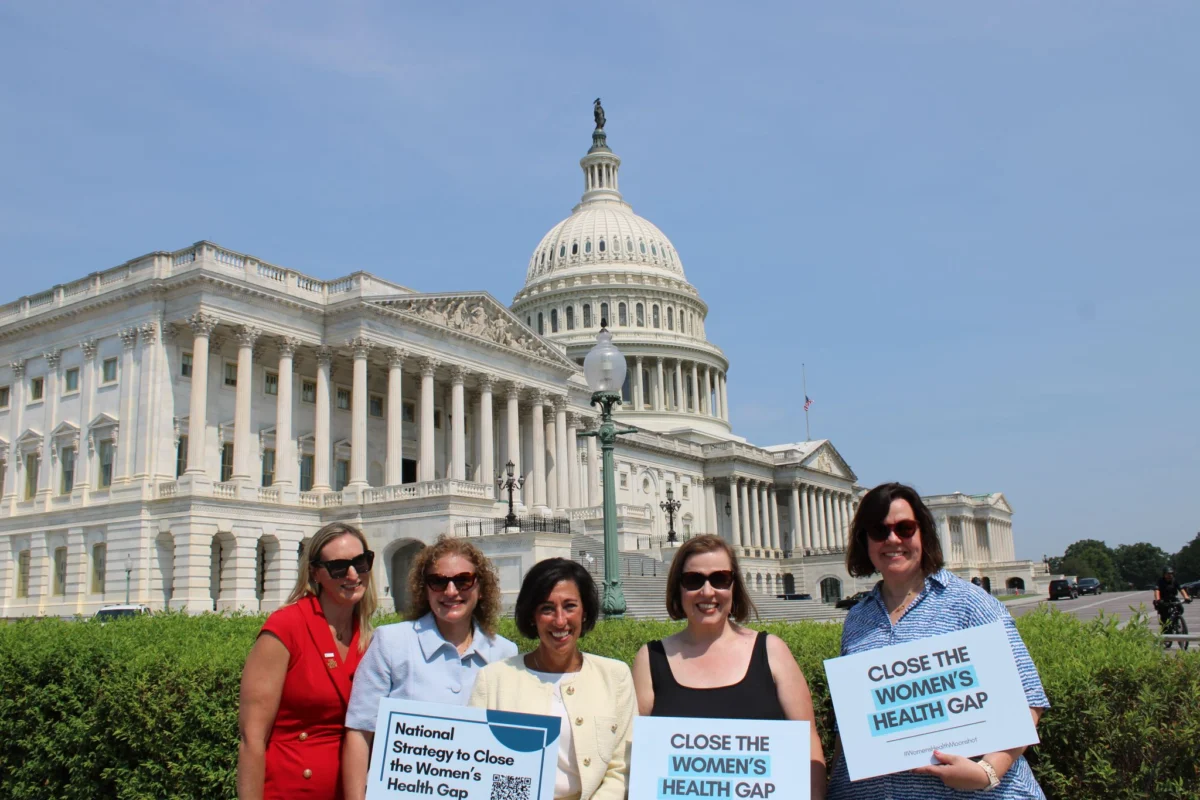
On July 15, a landmark coalition of 38 professional medical organizations, patient advocacy groups, and research institutions gathered in Washington, D.C., to unveil the National Strategy to Close the Women’s Health Gap. This ambitious framework, led by the Society for Women’s Health Research (SWHR), the American College of Obstetricians and Gynecologists (ACOG), and the Women First Research Coalition (WFRC), represents a unified call to action for the United States Congress. The strategy proposes a transformative investment of $20 billion over the next decade to overhaul the current landscape of women’s health research, clinical care, and public health outcomes. The Endocrine Society, a global leader in hormone research and clinical care, joined as a primary endorser, emphasizing that hormone-related conditions are central to the health disparities currently faced by women across the nation.
For decades, women’s health has been characterized by significant gaps in data, funding, and clinical attention. While women represent more than 50% of the U.S. population, medical research has historically relied on male-centered models, often treating women as "smaller men" or focusing exclusively on reproductive health. The National Strategy aims to dismantle these systemic biases by establishing a comprehensive roadmap that addresses health across the entire female lifespan, from puberty through menopause and beyond.
A Decades-Long Disparity: The Historical Context of the Health Gap
The launch of the National Strategy is the culmination of years of advocacy intended to rectify a historical imbalance in medical science. Until the late 20th century, women were frequently excluded from clinical trials, often due to concerns regarding hormonal fluctuations or potential risks to reproductive capacity. It was not until the NIH Revitalization Act of 1993 that the National Institutes of Health (NIH) was legally required to include women and minorities in clinical research. Despite this mandate, sex-disaggregated data—research that analyzes results specifically by biological sex—remains inconsistent across many fields of medicine.
The current "health gap" manifests in several ways: delayed diagnoses for women, a lack of female-specific dosages for medications, and a dearth of research into conditions that primarily or differently affect women. For example, autoimmune diseases, which affect roughly 50 million Americans, occur in women at a rate of nearly 80%. Similarly, women are twice as likely as men to be diagnosed with depression and are more likely to die following a heart attack, often because their symptoms do not match the "classic" male presentation taught in traditional medical curricula.
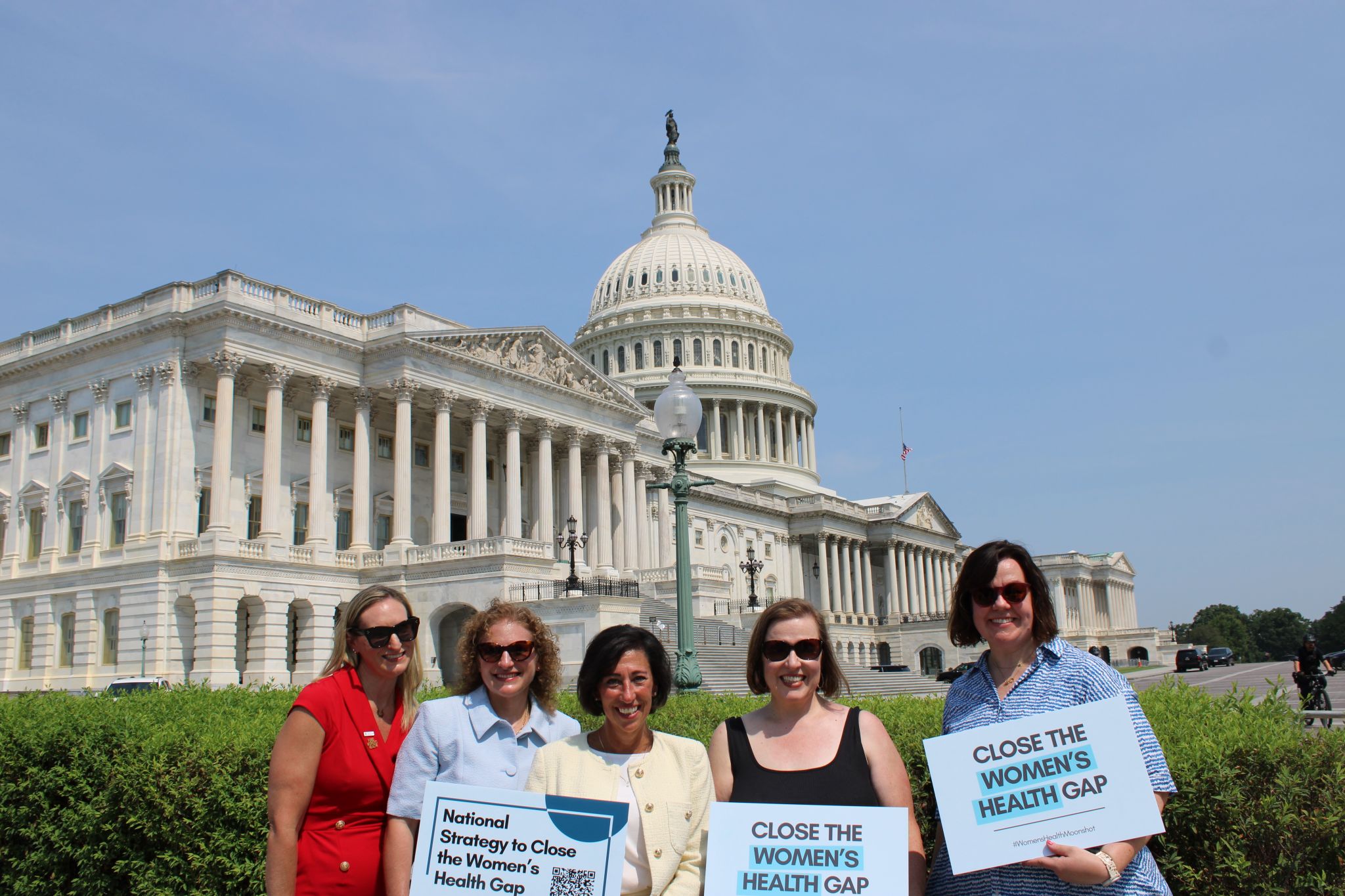
The July 15 announcement in front of the U.S. Capitol served as both a protest against these lingering inequities and a professional proposal for a modernized healthcare infrastructure. Representatives from the Endocrine Society, UsAgainstAlzheimer’s, and the National MS Society stood alongside SWHR and ACOG to signal that this is not merely a "niche" issue, but a systemic failure affecting the core of the American healthcare system.
The Five Pillars of the National Strategy
The National Strategy to Close the Women’s Health Gap is structured around five core pillars designed to create a sustainable and equitable healthcare ecosystem. These priorities were selected to address the specific bottlenecks that currently hinder progress in women’s medical outcomes.
1. Research and Innovation
The strategy calls for a massive infusion of capital into basic and clinical research. This includes increasing funding for the NIH and the Advanced Research Projects Agency for Health (ARPA-H) to study conditions that are either unique to women (such as endometriosis and maternal morbidity) or manifest differently in women (such as cardiovascular disease and Alzheimer’s). The goal is to move beyond "bikini medicine"—a term used to describe the historical focus only on organs covered by a swimsuit—and look at the systemic biological differences in every organ system.
2. Regulatory Coordination and Modernization
To ensure that new discoveries reach patients safely and effectively, the strategy advocates for the modernization of regulatory frameworks. This involves working closely with the Food and Drug Administration (FDA) to ensure that clinical trial diversity is not just encouraged but required, and that sex-specific analysis is a prerequisite for drug approval. Modernizing these pathways will help prevent adverse drug reactions, which are significantly more common in women than in men.
3. Data and Evidence Infrastructure
The coalition emphasizes the need for a robust national data infrastructure. Currently, health data is often siloed, making it difficult for researchers to track long-term health trends in women. By investing in better data collection and interoperable electronic health records (EHRs), the strategy aims to create a "learning health system" where real-world evidence can inform clinical guidelines in real-time.
4. Bolstering the Clinical and Research Workforce
There is a growing shortage of specialists trained in women’s health, as well as a lack of female researchers in leadership positions within academia and the private sector. The National Strategy proposes incentives, such as loan repayment programs and specialized grants, to encourage medical students to enter fields like endocrinology, obstetrics, and female-focused cardiology. Furthermore, it seeks to address the "leaky pipeline" in research, where women are often underrepresented in senior scientific roles.
5. Public Awareness and Education
The final pillar focuses on the patient. Many women suffer for years with conditions like polycystic ovary syndrome (PCOS) or perimenopause symptoms because of a lack of public awareness and societal stigma. The strategy calls for large-scale educational campaigns to empower women to advocate for their own health and to educate primary care providers on the latest evidence-based treatments for female patients.
Supporting Data: The Economic and Social Cost of Inaction
The $20 billion price tag of the National Strategy is a significant request, yet proponents argue that the cost of inaction is far higher. According to a report by the Women’s Health Access Matters (WHAM) collaborative, investing in women’s health research yields a massive return on investment. For instance, doubling the funding for research into coronary artery disease in women could deliver a 400% return on investment to the economy through reduced healthcare costs and increased labor productivity.
The data regarding specific conditions further illustrates the urgency:
- Alzheimer’s Disease: Nearly two-thirds of Americans living with Alzheimer’s are women. By age 65, a woman’s estimated lifetime risk of developing Alzheimer’s is 1 in 6, compared to 1 in 11 for a man.
- Multiple Sclerosis (MS): MS is at least three times more common in women than in men, yet the reasons for this disparity remain poorly understood, particularly regarding the role of sex hormones.
- Maternal Health: The U.S. continues to face a maternal mortality crisis, with rates higher than any other wealthy nation. This crisis disproportionately affects Black and Indigenous women, highlighting the intersection of sex and race in health outcomes.
- Endocrine Disorders: Women are five to eight times more likely than men to have thyroid problems. Additionally, PCOS affects approximately 1 in 10 women of childbearing age and is a leading cause of infertility and metabolic complications.
The Critical Role of Endocrinology in Women’s Health
As a primary endorser of the strategy, the Endocrine Society highlighted the indispensable role of endocrinologists in closing the health gap. Endocrinology is the study of hormones, the chemical messengers that regulate almost every major function in the body, from metabolism and growth to reproduction and sleep. Because women experience significant hormonal shifts throughout their lives—including puberty, pregnancy, and menopause—the endocrine system is often at the heart of female-specific health challenges.
"Endocrinologists play a key role in ensuring that women’s care is focused on the correct balance of hormones," the Society stated during the launch. The Society’s involvement underscores the fact that "women’s health" is not a separate category of medicine but is integrated into the very fabric of human biology. Hormonal health influences bone density (osteoporosis), cardiovascular health, and cognitive function. By advocating for better funding and research, the Endocrine Society aims to address the specific "gaps" in endocrine health that have left many women without adequate treatment options for decades.
Official Responses and Political Momentum
The launch of the National Strategy comes at a time of heightened political focus on women’s health. In late 2023, the White House announced the first-ever White House Initiative on Women’s Health Research, led by First Lady Jill Biden. The July 15 coalition aims to capitalize on this momentum, turning executive interest into legislative action and permanent funding.
Katie Schubert, President and CEO of the Society for Women’s Health Research, emphasized the collaborative nature of the effort. "We are at a turning point," Schubert noted. "The National Strategy provides a clear, actionable path for Congress to ensure that women are no longer an afterthought in the laboratory or the clinic."
Mila Becker, Chief Policy Officer for the Endocrine Society, joined other leaders including Erika Miller (Women’s First Health Coalition), Erika Sward (UsAgainstAlzheimer’s), and Ashleigh Thorpe (National MS Society) at the Capitol launch. Their presence underscored a shared commitment to a "whole-of-government" approach to health equity.
Advocates argue that the $20 billion investment should be viewed not as an expense, but as a long-term strategy for national stability. Healthy women are the backbone of the workforce and the primary caregivers in most families; improving their health outcomes has a "multiplier effect" on the health of children, the elderly, and the economy at large.
Broader Implications and the Path Forward
The introduction of the National Strategy to Close the Women’s Health Gap marks the beginning of what is expected to be a multi-year legislative push. The coalition’s next steps involve briefing members of the House and Senate on the specific budgetary requirements of the strategy and seeking bipartisan sponsorship for a comprehensive Women’s Health Act.
If successful, the strategy would represent the largest dedicated investment in women’s health in American history. It would fundamentally change how medical students are trained, how drugs are tested, and how the government prioritizes scientific discovery. Beyond the financial aspect, the strategy seeks to change the culture of medicine to one that recognizes biological sex as a fundamental variable in health and disease.
As the Endocrine Society and its partners move forward, the focus will remain on evidence-based care and the elimination of the "research gap" that has persisted for too long. By addressing the complexities of the female body with the same rigor and resources historically afforded to men, the National Strategy promises a future where a woman’s health outcomes are no longer determined by the limitations of the past, but by the innovations of a more equitable future.
