

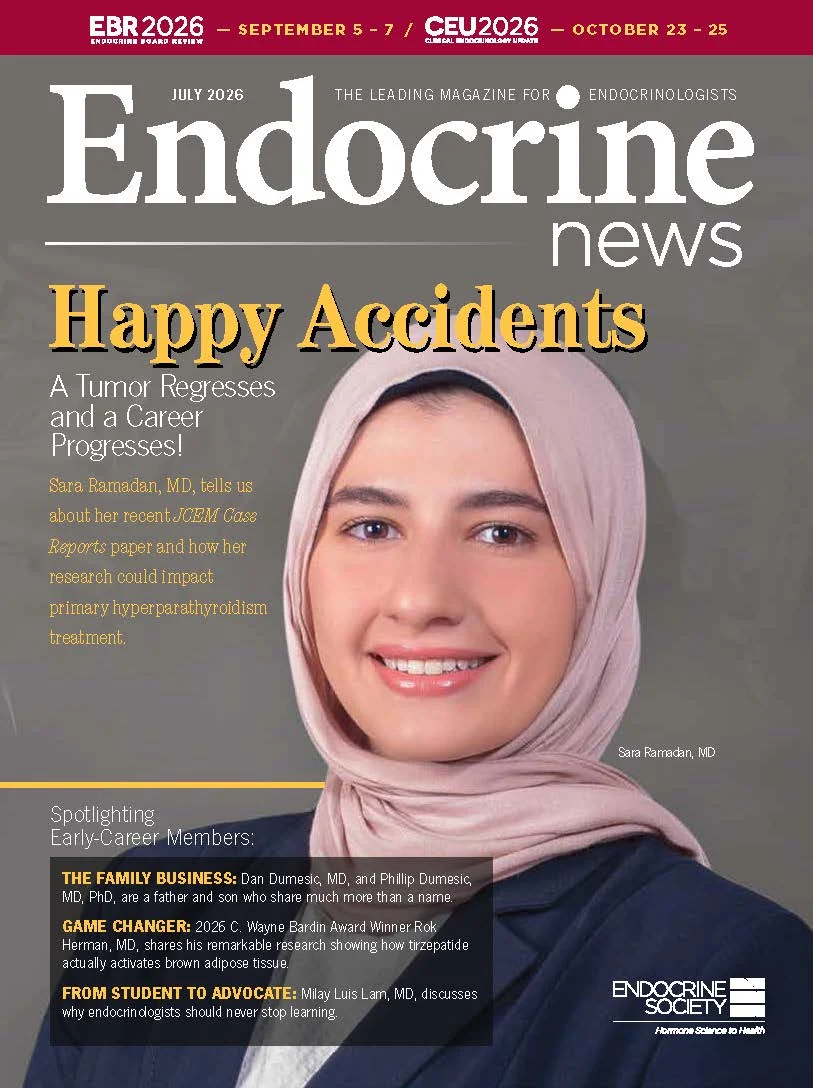
The Endocrine Society has officially released its annual Early-Career issue of Endocrine News, a publication dedicated to highlighting the contributions of emerging researchers and clinicians who are redefining the landscape of endocrinology. The July edition serves as a critical platform for showcasing the intersection of legacy mentorship, groundbreaking metabolic discoveries, and the evolving philosophy of patient-centered care. As the field faces an increasing global burden of metabolic and hormonal disorders, the work of these young professionals provides a roadmap for future therapeutic interventions and professional advocacy.
A Legacy of Metabolic Inquiry: The Dumesic Convergence
A central feature of this year’s issue is the professional trajectory of Phillip Dumesic, MD, PhD, and his father, Dan Dumesic, MD. This narrative highlights a unique convergence of clinical expertise and basic science research within the same family. Dan Dumesic, a recognized authority on Polycystic Ovary Syndrome (PCOS)—now increasingly referred to in academic circles as Polycystic Metabolic Ovarian Syndrome (PMOS)—has spent decades investigating the hormonal underpinnings of reproductive health. His son, Phillip, currently leading a laboratory at the University of California – San Francisco, has transitioned this legacy into the realm of molecular genetics, focusing on gene expression and fat metabolism.
The collaboration and mutual influence between the two researchers center on the adipocyte, or fat cell, which serves as the common denominator in their respective studies. While the elder Dumesic focuses on the systemic physiological impacts of PCOS, the younger Dumesic utilizes advanced molecular tools to study stem cell differentiation. Specifically, his research examines how stem cells choose to become muscle cells versus fat cells and the subsequent implications for sarcopenia—the age-related loss of muscle mass—and metabolic dysfunction.
According to Dan Dumesic, the molecular tools his son employs are essential for understanding the basic science that drives fat metabolism. This intergenerational transfer of knowledge underscores a broader trend in endocrinology: the integration of "bench-to-bedside" research, where molecular discoveries in the lab are directly informed by clinical observations of patient physiology.
Tirzepatide and the Frontier of Thermogenic Activation
The 2026 Bardin Award, named in honor of the late C. Wayne Bardin, a pioneer in reproductive endocrinology, has been awarded to Rok Herman, MD. His research, presented as a standout abstract for the upcoming ENDO 2026 conference, addresses one of the most pressing issues in modern medicine: the global obesity epidemic. Herman’s work focuses on tirzepatide, a dual glucose-dependent insulinotropic polypeptide (GIP) and glucagon-like peptide-1 (GLP-1) receptor agonist.
While tirzepatide is already widely recognized for its efficacy in weight loss through appetite suppression, Herman’s research introduces a transformative finding: the medication appears to activate brown adipose tissue (BAT). Unlike white adipose tissue, which stores energy, brown adipose tissue is thermogenic, meaning it burns calories to produce heat.
Supporting data suggests that the activation of BAT could significantly increase a patient’s basal metabolic rate. Herman notes that this discovery adds a new layer to the understanding of anti-obesity medications. Rather than acting solely as appetite suppressants, these drugs may modulate energy expenditure at the tissue level. This opens a plausible path toward "combination" therapies that target both the neurological drivers of hunger and the peripheral mechanisms of calorie burning. If validated in larger clinical trials, this could represent a watershed moment in metabolic medicine, shifting the focus from caloric restriction to metabolic enhancement.
Clinical Breakthroughs in Primary Hyperparathyroidism
The July issue also highlights the work of Sara Ramadan, MD, whose research into Primary Hyperparathyroidism (PHPT) has challenged conventional treatment expectations. PHPT, characterized by the overactivity of the parathyroid glands and resulting high calcium levels, is the third most common endocrine disorder, particularly affecting postmenopausal women. The standard of care has long been surgical intervention (parathyroidectomy).
In her study, "Unanticipated remission of primary hyperparathyroidism following cinacalcet," published in JCEM Case Reports, Ramadan documented a rare instance of sustained remission following medical management. Cinacalcet is typically used to manage calcium levels in patients who are not candidates for surgery, but it is rarely associated with the total regression of a parathyroid tumor.
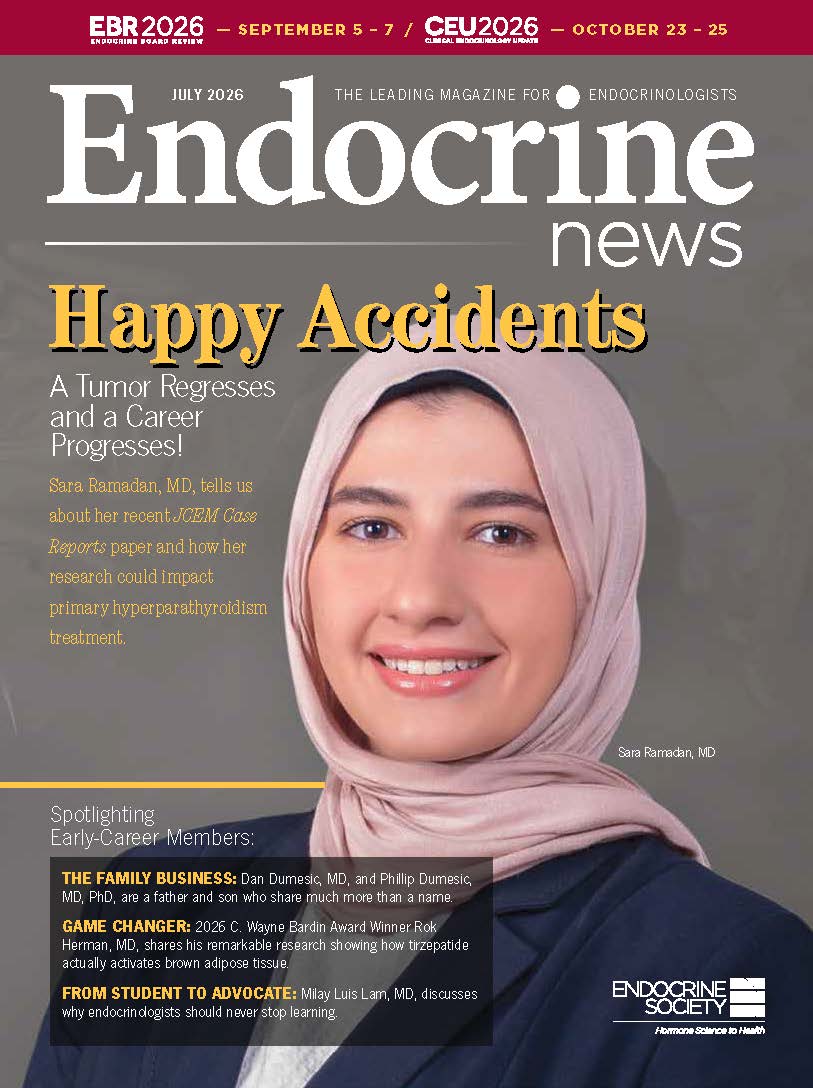
Ramadan’s findings suggest that there may be subsets of PHPT patients who respond to calcimimetics in ways that were previously unobserved. Beyond the clinical data, Ramadan emphasized the importance of professional networks like the Endocrine Society in fostering such research. She noted that for early-career physicians, the ability to observe how senior experts define their clinical niches is as valuable as the research itself. Her experience underscores the role of case reports in identifying "happy accidents" that can lead to broader clinical trials and revised guidelines.
Humanizing Medicine: Advocacy and the Physician-Patient Dynamic
The technical advancements in endocrinology are balanced in this issue by a focus on the "human side" of the profession. Milay Luis Lam, MD, an early-career member who recently participated in the Excellence in Clinical Endocrinology Leadership (EXCEL) meeting in Washington, D.C., has called for a renewed focus on the physician-patient relationship.
The EXCEL program is designed to provide young endocrinologists with the leadership skills necessary to navigate the complexities of modern healthcare systems. Lam’s reflections address a growing concern in the medical community: the "dehumanization" of care caused by systemic pressures, high patient volumes, and the clinical lens through which patients are often viewed.
Lam argues that endocrinologists must act as advocates, bridging the gap between complex diagnoses and the lived experiences of their patients. This advocacy is particularly critical in endocrinology, where chronic conditions like diabetes, thyroid disease, and adrenal insufficiency require long-term, highly personal management strategies. The Endocrine Society’s emphasis on this topic reflects a broader movement within the medical field to combat physician burnout and improve patient outcomes through empathetic communication and structural advocacy.
Chronology of the Endocrine Society’s Early-Career Initiatives
The focus on early-career members is part of a long-term strategic timeline by the Endocrine Society to ensure the sustainability of the specialty.
- 1916: The Endocrine Society is founded, beginning its mission to advance hormone research.
- Early 2000s: Recognition of a looming shortage in the endocrine workforce leads to increased funding for trainee programs.
- 2010s: The establishment of specific awards, such as the Bardin Award, to incentivize high-level research among junior investigators.
- 2020s: Launch of the EXCEL program and expanded digital platforms to facilitate global mentorship.
- July 2024: Publication of the current Early-Career issue, serving as a precursor to the upcoming ENDO 2026 conference.
Broader Impact and Future Implications
The research and perspectives featured in the July issue of Endocrine News have implications that extend far beyond the laboratory. The study of fat metabolism and brown tissue activation by researchers like Herman and Dumesic arrives at a time when the World Health Organization (WHO) estimates that over 1 billion people worldwide are living with obesity. New insights into thermogenesis could lead to more effective, sustainable treatments that reduce the incidence of secondary complications such as Type 2 diabetes and cardiovascular disease.
Furthermore, the work of clinicians like Ramadan and advocates like Lam points toward a more nuanced future for endocrine practice. By moving away from "one-size-fits-all" surgical or pharmaceutical solutions and toward personalized, humanistic care, the next generation of endocrinologists is positioned to improve both the efficacy and the experience of medical treatment.
The upcoming ENDO 2026 meeting in Chicago, Illinois, scheduled for June 13–16, will serve as the next major milestone for these developments. The conference is expected to host thousands of experts and will feature a comprehensive wrap-up of the findings discussed in this issue. As the Endocrine Society continues to migrate its resources to a new website and expand its digital reach, the focus remains on fostering an environment where early-career members can transition from learners to leaders.
In summary, the July Early-Career issue is more than a collection of profiles; it is a testament to the vitality of the field. Through a combination of familial legacy, technological innovation, clinical curiosity, and social advocacy, these emerging professionals are ensuring that endocrinology remains at the forefront of medical progress. Their work confirms that while the tools of the trade are becoming increasingly sophisticated, the core of the profession remains rooted in understanding the complex, interconnected systems of human life.
