

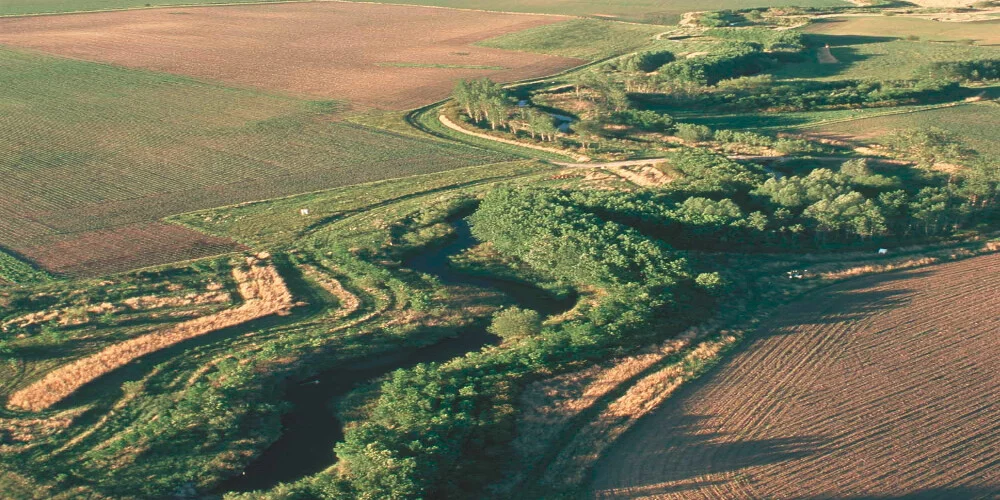
The landscape of western and central Europe is currently defined by a precarious dichotomy: the lush, managed greenery of agricultural heartlands and the smouldering, blackened scars of a continent under siege by fire. As unprecedented heatwaves and prolonged droughts continue to grip the region, the risk of catastrophic wildfires has escalated to levels that challenge the limits of modern emergency response. While the immediate focus remains on the heroic efforts of firefighting crews, a growing body of evidence suggests that the most effective long-term defense against the "Pyrocene" era may lie not in water cannons, but in the hands of regenerative farmers. These land stewards, through holistic grazing and soil management, are creating vital firebreaks, yet they remain on the periphery of the European Union’s financial and structural support systems.
The Immediate Crisis: Tragedy in the Mediterranean and Beyond
The current wildfire season reached a harrowing peak on Sunday near Athens, Greece, where a mid-air collision between two firefighting helicopters resulted in the deaths of a Greek and a Danish national. The incident occurred during an intensive operation to halt the advance of spreading flames toward densely populated suburbs. The tragedy has cast a somber shadow over a summer that was already categorized as one of the most volatile in recent history.
In Greece, the civil protection authorities have been forced into a state of permanent high alert. Near the capital, the fire front has necessitated multiple waves of evacuations, as volatile winds and parched vegetation create a "perfect storm" for rapid fire propagation. This follows a pattern seen across the Mediterranean basin, where the traditional "fire season" has expanded in both duration and intensity.
The crisis is not localized to the southeast. In Western Europe, particularly across France and Spain, the human toll is staggering. Data indicates that approximately one-third of a million people have been displaced from their homes this summer due to encroaching flames. In the Gironde region of France and the autonomous communities of Spain, the sight of mass evacuations has become a hauntingly regular occurrence, disrupting local economies and placing an immense strain on social services.
A Chronology of Escalation: From 2025 to the Present
To understand the severity of the 2026 season, it is necessary to look back at the record-shattering events of 2025. Last year, Europe witnessed an alarming 10,000 square kilometres of land scorched by fire—an area roughly the size of Lebanon. This was driven by a series of "heat domes" that saw temperatures in parts of the continent rise more than twice as fast as the global average.
The timeline of the current 2026 season shows a dangerous acceleration:
- May 2026: Unseasonably high temperatures were recorded in Southern Spain and Italy, leading to early-season brush fires that depleted local water reserves ahead of the peak summer months.
- June 2026: A major drought was declared across the Iberian Peninsula, with reservoir levels dropping to historic lows.
- July 2026: Simultaneous mega-fires broke out in France’s Landes forest and the Greek islands, stretching the European Civil Protection Pool to its limits.
- August 2026: The helicopter collision near Athens and toxic air quality alerts in Spain underscored the lethal nature of the ongoing atmospheric and terrestrial conditions.
The Copernicus Climate Change Service has noted that 2025 was the third hottest year on record globally and in Europe. However, 2026 is currently on a trajectory to potentially surpass those figures, as the cumulative effect of multi-year droughts makes the landscape increasingly combustible.
The Regenerative Solution: Farming as Fire Prevention
Amidst this escalating threat, regenerative agriculture has emerged as a critical, if underutilized, tool for landscape resilience. Regenerative farming refers to a system of principles and practices that increases biodiversity, enriches soils, improves watersheds, and enhances ecosystem services. In the context of wildfires, its most immediate benefit is "fuel load management."
Holistic Grazing and Living Firebreaks
One of the primary drivers of mega-fires is the abandonment of rural land. When traditional farming ceases, fields are overtaken by highly flammable scrub and undergrowth. Regenerative farmers counter this through managed intensive grazing. By using livestock—particularly goats and sheep—to graze on specific areas, farmers can naturally reduce the amount of dry biomass available to fuel a fire.
In regions like Catalonia and Andalusia, "fire-grazing" programs have shown that areas maintained by livestock act as "living firebreaks." When a wildfire hits a regeneratively managed plot, the lack of low-level fuel often causes the fire to drop from the canopy to the ground, slowing its progress and allowing firefighters a window of opportunity to contain it.
Soil Health and Moisture Retention
Beyond physical fuel reduction, regenerative practices focus on soil health. By avoiding tilling and using cover crops, these farmers increase the organic matter in the soil. High-carbon soil acts like a sponge, retaining significantly more moisture than the degraded soils found in industrial monocultures. In a drought-stricken landscape, these pockets of moisture can prevent the soil itself from becoming a heat conductor and help vegetation remain green and fire-resistant for longer into the season.
Supporting Data: The Rising Costs of Inaction
The economic and ecological data surrounding European wildfires paints a stark picture of the necessity for a shift in strategy.
- Suppression vs. Prevention: Currently, the vast majority of EU and national funding is directed toward fire suppression (aircraft, fire trucks, and personnel) rather than prevention. Estimates suggest that for every €1 spent on prevention, up to €7 can be saved in emergency response and recovery costs.
- Carbon Emissions: Wildfires in Europe are no longer just a local disaster; they are a global climate driver. The 2025 fires released an estimated 20 million tonnes of CO2 into the atmosphere, creating a feedback loop that further accelerates the warming of the continent.
- Biodiversity Loss: Beyond the 10,000 square kilometres burned last year, the loss of "old-growth" habitats and protected Natura 2000 sites has been catastrophic, with some ecosystems expected to take centuries to recover.
Official Responses and the Call for Policy Reform
The international community has reacted with a mixture of grief and a call for systemic change. Following the helicopter crash in Greece, European Commissioner for Crisis Management, Janez Lenarčič, emphasized the need for "unwavering solidarity" and increased investment in the RescEU fleet. However, agricultural unions and environmental NGOs are arguing that the solution must be more "ground-up" than "top-down."
Representatives from the European Coordination Via Campesina (ECVC) have stated that the current Common Agricultural Policy (CAP) often penalizes small-scale regenerative farmers. Subsidies are frequently tied to "eligible hectares" that must be kept clear of trees and shrubs, effectively discouraging the silvopasture (the integration of trees and livestock) that is so effective at stopping fires.
"We are fighting a war against the climate with one hand tied behind our backs," says one Spanish agroecologist. "We have the farmers ready to manage the land, to graze the hillsides, and to restore the water cycle. But the current subsidy structure favors industrial giants who contribute to the climate problem, while the small-scale protectors are left to struggle."
Broader Implications: A Continent at a Crossroads
The implications of the 2026 fire season extend far beyond the immediate damage. There is a growing "climate migration" occurring within Europe, as residents of fire-prone regions in the south consider moving north. The tourism industry, a pillar of the Greek, Spanish, and French economies, is also facing a long-term threat as "toxic alerts" and evacuation orders become part of the summer holiday experience.
Furthermore, the "twice as fast" warming of Europe means that the temperate forests of Germany, Poland, and the Czech Republic—once considered safe from large-scale fires—are now entering the danger zone. The transition of wildfires from a Mediterranean problem to a pan-European crisis necessitates a unified agricultural and environmental policy.
To protect the continent, experts suggest a three-pronged approach:
- Reforming the CAP: Aligning agricultural subsidies with environmental outcomes, specifically rewarding farmers who provide "wildfire mitigation services."
- Integrating Silvopasture: Encouraging the return of livestock to forested areas to manage undergrowth, a practice that was common for centuries but has been lost to industrialization.
- Landscape Heterogeneity: Moving away from vast monocultures of flammable species, such as eucalyptus and pine, in favor of diverse, native, and fire-resistant deciduous trees managed through regenerative techniques.
Conclusion: The Path Forward
The smouldering scars across Europe are a physical manifestation of a deeper ecological imbalance. The tragedy of the lives lost in the Athens helicopter collision and the displacement of hundreds of thousands across France and Spain serve as a visceral reminder that the status quo is no longer tenable.
Regenerative farmers represent a "ready-made" workforce for climate adaptation. They offer a decentralized, cost-effective, and ecologically sound method of wildfire protection. However, without a significant shift in European policy—moving from a focus on reactive suppression to proactive, farmer-led prevention—the record-breaking destruction of 2025 and 2026 may soon become the new, devastating norm. The support these farmers need is not just a matter of agricultural policy; it is a fundamental requirement for the safety and resilience of the European continent in an era of unprecedented environmental upheaval.
