

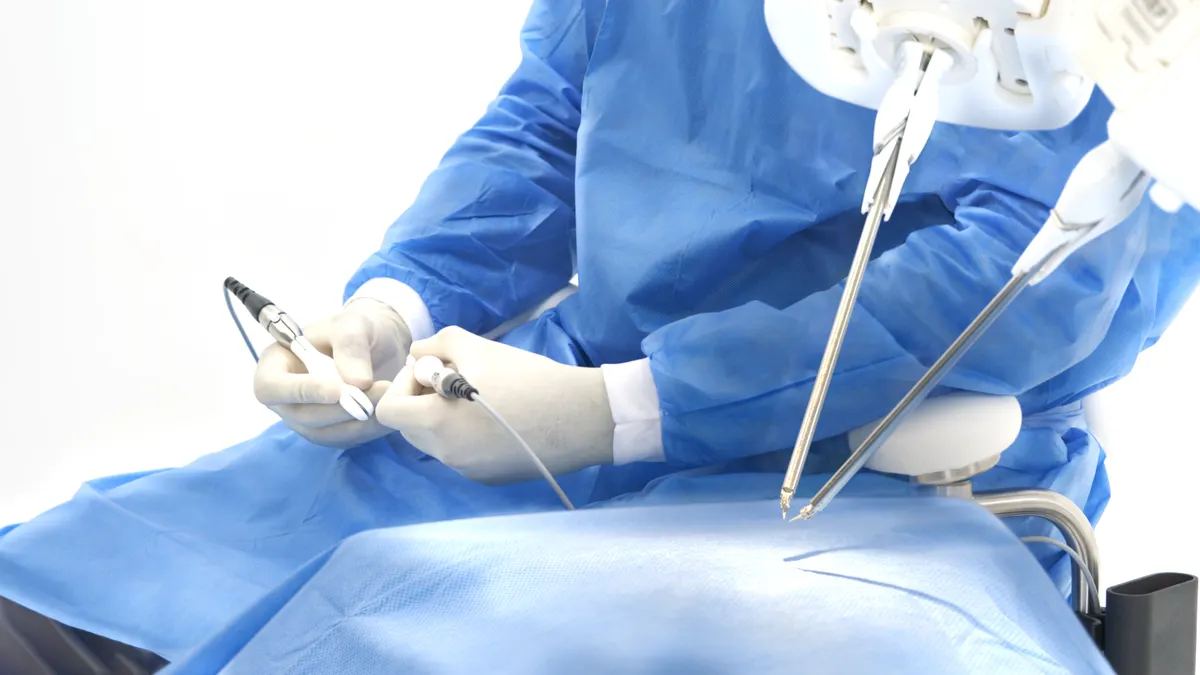
The United States Food and Drug Administration (FDA) has granted an expansion for a pioneering feasibility trial led by Medical Microinstruments (MMI), authorizing the enrollment of additional patients to study a novel robotic surgical intervention for Alzheimer’s disease. This regulatory milestone follows a rigorous review of initial safety data and marks a significant step forward in the application of robotic microsurgery for neurodegenerative conditions. The study, known as the REMIND (Robotic-Enabled Microsurgical Intervention for Neurodegenerative Disease) trial, utilizes MMI’s Symani Surgical System to perform intricate procedures on the lymphatic system, aiming to address the physiological bottlenecks believed to exacerbate the progression of Alzheimer’s.
A New Frontier in Alzheimer’s Treatment: The Lymphatic Connection
For decades, the search for an Alzheimer’s cure has focused largely on pharmaceutical interventions designed to dissolve amyloid-beta plaques and tau tangles within the brain. However, MMI’s approach shifts the focus toward the "plumbing" of the brain. The REMIND trial is grounded in the emerging understanding of the glymphatic system—a macroscopic waste clearance system in the central nervous system.
Researchers believe that in patients with Alzheimer’s, the drainage pathways leading to the deep cervical lymph nodes in the neck become compromised. This "clogging" prevents the natural clearance of neurotoxins. By using the Symani robot to perform microsurgery that restores or enhances these drainage paths, MMI hopes to facilitate the natural removal of harmful proteins, potentially slowing or halting cognitive decline.
The FDA’s decision to allow more patients into the feasibility study comes after a successful review of 30-day safety outcomes from the initial cohort of patients. These participants, all of whom suffer from mild to moderate Alzheimer’s, have undergone the procedure without significant adverse events, providing the clinical confidence necessary to broaden the scope of the investigation.
Technical Sophistication: The Symani Surgical System
At the heart of this medical breakthrough is the Symani Surgical System, currently the only commercially available robotic platform specifically engineered for microsurgery and super-microsurgery. Traditional robotic systems, such as those used in general or urological surgery, are often too large for the delicate work required to repair vessels that are frequently less than one millimeter in diameter.
The Symani system utilizes MMI’s proprietary NanoWrist technology. These miniaturized instruments are designed to replicate the human wrist’s range of motion but at a microscopic scale. Key technical features of the system include:
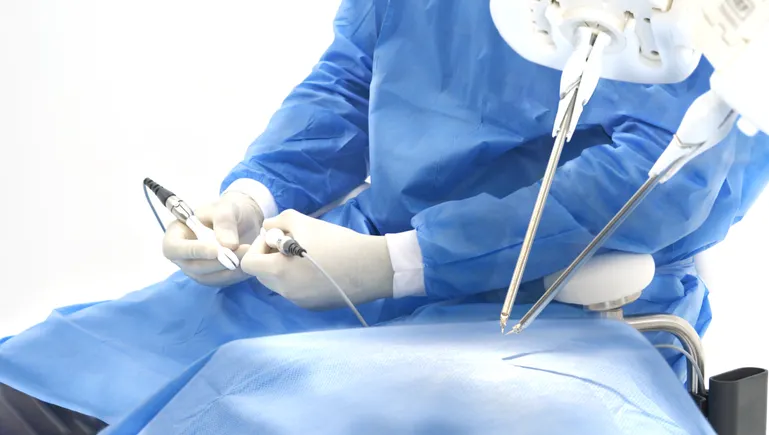
- Motion Scaling: The system can scale a surgeon’s hand movements down by a factor of 7x to 10x. This means a one-centimeter movement by the surgeon translates to a one-millimeter movement by the robotic tip, allowing for unprecedented precision.
- Tremor Filtration: The robot electronically filters out the microscopic tremors inherent in even the most skilled human hands, ensuring steady and stable manipulation of delicate tissues.
- The OperaAir Controller: Surgeons operate the robot from a specialized console using the OperaAir controllers, which provide tactile feedback and ergonomic support, reducing surgeon fatigue during long, complex procedures.
In 2024, the FDA granted the Symani system a De Novo classification for microsurgery, and a subsequent clearance in late 2025 expanded its indications to include soft tissue dissection. The REMIND trial represents the most ambitious application of this technology to date, moving beyond reconstructive surgery into the realm of interventional neurology.
Chronology of the REMIND Trial and MMI’s Regulatory Path
The journey toward this clinical expansion has been marked by several key milestones:
- Early 2024: MMI receives initial FDA Investigational Device Exemption (IDE) to begin the REMIND feasibility study.
- May 2024: The first patient in the world is treated at Baptist Health in Jacksonville, Florida. The procedure was hailed as a landmark event in both robotic surgery and Alzheimer’s research.
- Late 2024 – Early 2025: MMI collects and analyzes 30-day post-operative safety data for the initial patient group, monitoring for surgical complications, infection, and neurological stability.
- Mid-2025: MMI submits a supplement to its IDE to the FDA, requesting an expansion of the patient cohort based on the absence of major safety concerns.
- Present: The FDA approves the expansion, allowing the trial to move into a broader phase that will provide more robust data on both safety and early indicators of efficacy.
Mark Toland, CEO of MMI, has emphasized that the Alzheimer’s procedure is "pushing the boundaries of medicine." By successfully navigating the FDA’s stringent safety requirements, MMI has cleared a major hurdle toward a potential future pivotal trial, which would be the final step before seeking full commercial approval for this specific indication.
Supporting Data: The Global Alzheimer’s Burden
The urgency of MMI’s research is underscored by the staggering statistics surrounding Alzheimer’s disease. According to the Alzheimer’s Association, more than 6.7 million Americans aged 65 and older are currently living with the disease. By 2050, this number is projected to rise to nearly 13 million unless a breakthrough is achieved.
The economic impact is equally profound. In 2023, the total payments for health care, long-term care, and hospice services for people with Alzheimer’s or other dementias were estimated at $345 billion. Current pharmaceutical treatments, while providing hope, often come with significant costs and the risk of side effects like brain swelling or microhemorrhages (ARIA). A surgical intervention that improves the brain’s natural waste-clearance system could offer a complementary or alternative approach with a different risk-benefit profile.
Broad Clinical Applications of Robotic Microsurgery
While the REMIND trial is the most high-profile study currently underway for MMI, the Symani system is already proving its versatility across a wide range of medical disciplines. The ability to reconnect tiny vessels and nerves has implications for:
- Oncology Reconstruction: Reconnecting blood vessels and nerves after the removal of tumors in the head, neck, or breast.
- Lymphedema Treatment: Performing lymphatic-venous anastomosis (LVA) to bypass blocked lymph vessels, a procedure that is notoriously difficult to perform manually.
- Trauma Surgery: Reattaching severed digits or repairing complex tissue damage where manual suturing is limited by human dexterity.
- Otology and Ophthalmology: The robot has been used in experimental settings for cochlear implants and delicate eye surgeries, where the margin for error is measured in microns.
The expansion of the Alzheimer’s trial suggests that the FDA views the robotic platform not just as a tool for reconstruction, but as a potential platform for treating systemic chronic diseases through targeted anatomical modification.

Analysis of Implications and Future Outlook
The expansion of the REMIND trial carries significant implications for the medical device industry and the field of neurology. First, it validates the safety of robotic-assisted lymphatic surgery in the delicate neck region, where proximity to major arteries and nerves makes manual microsurgery high-risk.
Second, if the trial continues to yield positive results, it could lead to a paradigm shift in how neurodegenerative diseases are managed. The integration of "interventional lymphatics" into neurology would create a new sub-specialty, combining the skills of neurosurgeons, vascular surgeons, and robotic specialists.
However, challenges remain. A feasibility trial is designed to prove safety and "proof of concept," not definitive efficacy. MMI will eventually need to demonstrate through a larger, randomized pivotal trial that the surgical restoration of lymphatic drainage actually results in measurable cognitive improvement or a slowing of decline compared to a control group.
Furthermore, the scalability of such a treatment will depend on the training of surgeons and the integration of robotic systems into standard hospital workflows. MMI has already begun addressing this by establishing training centers and focusing on ergonomic designs that lower the learning curve for microsurgeons.
Official Responses and Industry Reaction
The medical community has reacted with cautious optimism. Dr. Christopher J. Farrell, a neurosurgeon involved in initial discussions of the trial, noted that while the "plumbing" theory of Alzheimer’s is compelling, the data from this expanded cohort will be crucial in determining if the physiological changes translate into clinical benefits for patients.
In statements regarding the trial, MMI has reiterated its commitment to clinical rigor. The company’s focus remains on completing the REMIND study and utilizing the data to refine the surgical technique. The FDA’s approval of the supplement is seen as a vote of confidence in MMI’s methodology and the safety profile of the Symani system.
As MMI moves forward with additional enrollments, the eyes of the medtech and neurological communities will be on the results. If successful, the Symani robot may do more than just repair tissue—it may provide a new pathway for the millions of families affected by the slow progression of Alzheimer’s disease. The intersection of robotics and neurodegeneration represents a bold new chapter in 21st-century medicine, where the precision of the machine meets the complex needs of the human brain.
