


The Food and Drug Administration (FDA) is embarking on a pivotal journey to regulate the integration of generative artificial intelligence (GenAI) into medical devices, marking a significant shift in how the agency oversees high-stakes digital health technology. Following years of internal debate and the rapid proliferation of consumer-facing tools like ChatGPT and Claude, the FDA’s Center for Devices and Radiological Health (CDRH) is now working toward formal guidance to address the unique safety and efficacy concerns posed by large language models (LLMs) and other generative architectures. While the agency has authorized more than 1,500 medical devices with traditional AI components to date, it has yet to grant full market authorization to a device that utilizes generative AI in a regulated, clinical capacity.
The medtech industry is currently at a crossroads, with developers and legal experts closely monitoring the FDA’s signals. The core challenge lies in the "black box" nature of generative AI—its ability to produce varied, sometimes unpredictable outputs that can change over time. This characteristic fundamentally clashes with traditional regulatory frameworks designed for "locked" software, where inputs and outputs are predictable and easily validated through static testing. As the agency moves from theoretical discussion to active policy-making, the implications for patient safety, clinical workflows, and the competitive landscape of the healthcare industry are profound.
A New Framework for a Transformed Technological Landscape
In August 2024, the FDA released a landmark discussion paper seeking feedback on the regulation of GenAI-enabled medical devices. This document represents the agency’s most comprehensive effort to date to define the boundaries of the technology. According to Grace Davis Jamison, a spokesperson for the Department of Health and Human Services (HHS), the goal is to "better understand the unique challenges presented by generative AI-enabled medical devices and inform the development of future guidance."
The discussion paper acknowledges that GenAI is a "different beast" compared to the discriminative AI models previously approved for tasks like identifying tumors in radiology scans. Traditional AI identifies patterns within a fixed set of parameters; GenAI creates entirely new content, including text, synthetic images, and clinical recommendations. To address this, the FDA has proposed a "competency-based assessment" model. This approach draws inspiration from the way healthcare systems evaluate human physicians—through a combination of standardized exams, supervised practice, and continuous public reporting. Because GenAI models can generate an infinite variety of outputs, the FDA suggests that benchmarking a model’s general competency may be more effective than attempting to test every possible interaction.
Chronology of the FDA’s Engagement with Generative AI
The timeline of the FDA’s involvement with GenAI reflects the technology’s rapid evolution from a laboratory curiosity to a clinical priority:

- 2021–2023: The FDA observes a surge in AI-enabled device submissions, primarily focusing on "locked" algorithms for imaging and diagnostics. Internal discussions begin regarding the potential for "adaptive" algorithms that learn in real-time.
- Late 2023: The global explosion of consumer GenAI tools prompts the FDA to establish internal working groups dedicated to LLMs in healthcare.
- Early 2024: The FDA begins granting "Breakthrough Device Designation" to specific GenAI tools. This status is reserved for devices that provide more effective treatment or diagnosis of life-threatening or irreversibly debilitating diseases. Notable recipients include Aidoc, for a tool designed to interpret chest X-rays and draft radiology reports, and Modella AI, for a platform that analyzes pathology images and clinical data.
- August 2024: The FDA publishes its discussion paper on GenAI, officially opening a public comment period and signaling the start of a formal guidance-drafting process.
- Late 2024: The agency expands its "Technology-Enabled Meaningful Patient Outcomes" (TEMPO) pilot program. This pilot allows companies to collect real-world data on GenAI tools while operating under certain exemptions from traditional premarket authorization requirements.
- Fiscal Year 2026: The FDA lists "Clinical Evidence Considerations for Digital Mental Health Devices" and other AI-related guidance on its "under construction" list, indicating that formal policy implementation is on the horizon.
Technical Hurdles: Hallucinations and Performance Drift
The primary technical concern cited by the FDA and clinical stakeholders is the phenomenon of "hallucination"—where a generative model produces information that sounds authentic and authoritative but is factually incorrect. In a clinical setting, a hallucination in a radiology report or a medication recommendation could lead to catastrophic patient outcomes.
Furthermore, there is the issue of "performance drift" or "model degradation." Unlike a physical medical device that remains constant unless it breaks, a software model can become less accurate over time as the data environment changes. Ensuring that a model maintains its efficacy months or years after it has entered the market is a significant hurdle.
Environmental costs have also entered the regulatory conversation. Large-scale generative models require immense computational power, leading to concerns about the carbon footprint of widespread medical AI deployment. While not a direct factor in safety and efficacy, the FDA is cognizant of the broader societal impacts of the infrastructure required to support these tools.

The "Foundation Model" Challenge and Regulatory Solutions
Many medtech firms do not build their own AI models from scratch. Instead, they build "wrapper" applications on top of existing foundation models like OpenAI’s GPT-4 or Anthropic’s Claude. This creates a transparency gap; the medical device developer may not have access to the underlying code or training data of the foundation model, making it difficult for the FDA to conduct a thorough review.
To solve this, the FDA has proposed the concept of "foundation model device master files." This would allow model developers (like Microsoft or Google) to voluntarily submit proprietary information about their models directly to the FDA. The agency would hold this information confidentially, allowing them to assess the safety of a medical device without requiring the device manufacturer to reveal trade secrets they do not actually own. Brigid Bondoc, a partner with Morrison Foerster, noted that this mirrors the "Drug Master File" system used in pharmaceuticals, where ingredient suppliers provide data to the regulator that the final drug manufacturer never sees.
Industry Reaction: To Wait or to Innovate?
The medtech sector is currently divided in its response to the FDA’s evolving stance. Large, established firms with a low appetite for risk are largely "dancing around" the regulated space. These companies are focusing on administrative GenAI applications—such as tools that summarize patient charts or streamline billing—which do not require FDA clearance because they do not make clinical diagnoses or treatment decisions.

"No one really wants to be the guinea pig," says Suzanne Levy Friedman, a partner at Honigman. Many firms are waiting for the FDA to provide a clear roadmap before investing millions in clinical trials for GenAI diagnostics.
In contrast, startups like UpDoc and Limbic are leaning into the regulatory process. Limbic, a participant in the TEMPO pilot, uses a GenAI voice agent to provide cognitive behavioral therapy. These companies argue that regulatory leadership is essential to prevent a "patchwork" of state-level regulations or a surge of unregulated, potentially dangerous tools. Sharif Vakili, CEO of UpDoc, emphasized that clear FDA guidance is the most effective way to distinguish legitimate clinical tools from "bad actors" in the consumer space.
Implications for Patients and the Future of Digital Health
Patient advocacy groups, such as Generation Patient, have expressed cautious optimism about the FDA’s direction but are calling for even broader oversight. Luis Gil Abinader, policy director for the organization, highlighted the danger of unregulated commercial chatbots. Many young adults with chronic conditions use LLMs for mental health support or symptom checking, often unaware that these tools have not been vetted for medical accuracy.
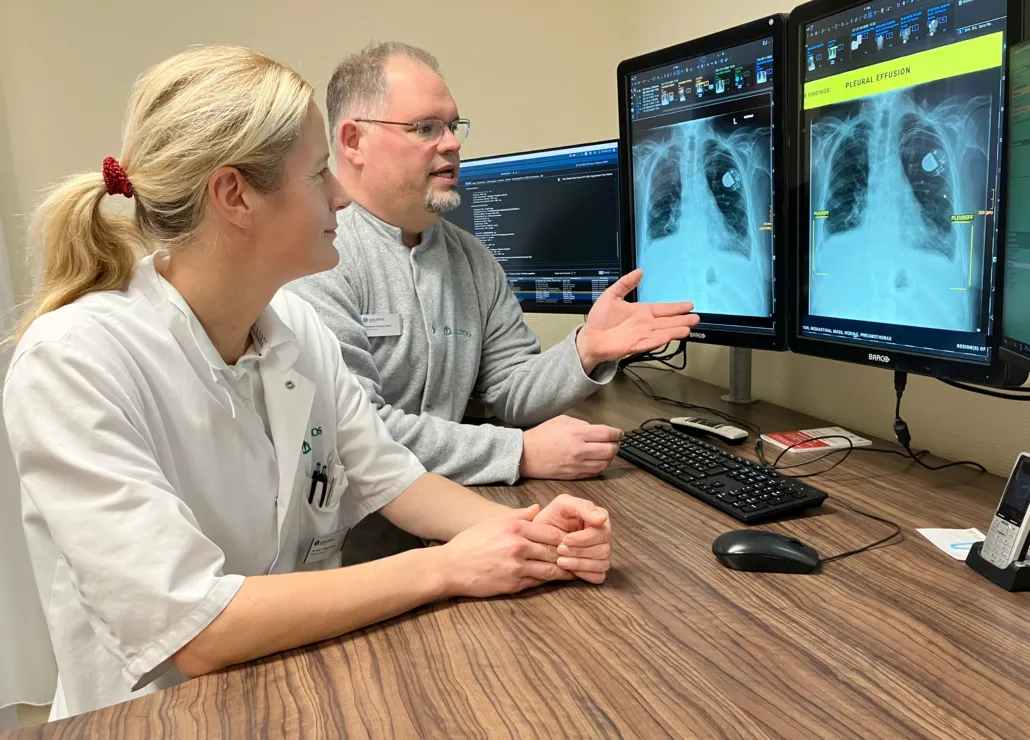
A study published in JMIR Mental Health revealed that nearly 25% of LLM users have utilized the technology for mental health purposes. Experts at a recent FDA digital health advisory committee meeting warned that some commercial chatbots falsely claim to be therapists, posing a risk to vulnerable populations.
As the FDA moves toward its 2026 guidance goals, the agency must balance the need for safety with the political pressure to maintain American leadership in AI. The current administration has signaled a desire for faster AI adoption, but the FDA’s core mission remains the protection of public health.
The coming months will be defined by the FDA’s ability to finalize a framework that accounts for the fluid nature of generative AI. Success will require a shift from "snapshot" approvals to a lifecycle-based approach, where post-market monitoring and real-world evidence become as critical as the initial premarket review. For the medtech industry, the message is clear: the era of generative AI in medicine is arriving, but the path to the clinic will be paved with unprecedented levels of scrutiny and data-driven accountability.
