









The use of ergogenic aids in the fitness industry has transitioned from a niche practice among elite bodybuilders to a multi-billion-dollar global phenomenon. Central to this movement is the pre-workout supplement, a complex formulation of stimulants, amino acids, and vasodilators designed to bridge the gap between fatigue and high-intensity performance. While the efficacy of these products is supported by a growing body of clinical research, the utility of a pre-workout is fundamentally dictated by the science of pharmacokinetics: the study of how the body absorbs, distributes, metabolizes, and excretes these substances. Understanding the precise window of effectiveness is no longer a matter of trial and error but a requirement for athletes seeking to optimize physiological output and avoid the pitfalls of mistimed supplementation.
The Mechanics of Supplement Duration: Understanding Half-Life
To determine how long a pre-workout boost lasts, one must first understand the concept of biological half-life. This term refers to the duration required for the concentration of a substance in the bloodstream to be reduced by exactly one-half. In the context of sports nutrition, the half-life of an ingredient determines not only how long the "surge" feels active but also how long the residual chemicals remain in the system, potentially affecting sleep cycles and recovery.
As the body processes these compounds, the effects do not vanish instantly; rather, they undergo a gradual taper. A well-formulated pre-workout typically reaches peak plasma concentration within 30 to 60 minutes of ingestion. However, because most products contain a proprietary or transparent blend of multiple ingredients, the "boost" is actually a staggered series of physiological peaks. For instance, while a stimulant like caffeine may remain active for several hours, a vasodilator like citrulline may see its primary effects diminish much sooner.


A Chronological Breakdown of Key Ergogenic Ingredients
The duration of a pre-workout’s efficacy is a composite of its individual parts. Scientific literature identifies several core components that dictate the timeline of performance enhancement.
Caffeine: The Primary Stimulant
Caffeine remains the most researched and utilized ergogenic aid in the world. It functions as an adenosine receptor antagonist, effectively blocking the signals in the brain that communicate fatigue.
- Onset and Peak: Caffeine is rapidly absorbed, with levels in the blood peaking between 45 and 60 minutes post-ingestion.
- Duration: The half-life of caffeine is notoriously broad, ranging from 3 to 7 hours depending on individual metabolism, body composition, and even external factors like nicotine or alcohol consumption.
- Impact: Research published in the Journal of the International Society of Sports Nutrition suggests that doses of 3–6 mg/kg of body weight significantly improve muscular endurance and movement velocity. However, the long half-life means that evening consumption can severely disrupt the Rapid Eye Movement (REM) sleep essential for muscle protein synthesis.
Beta-Alanine: The Endurance Buffer
Beta-alanine is the ingredient responsible for the "paresthesia" or tingling sensation many users experience. Its primary role is to increase carnosine levels in the muscles, which helps buffer the accumulation of hydrogen ions during high-intensity exercise, thereby delaying the onset of metabolic acidosis (the "burn").
- Peak and Duration: Beta-alanine reaches its peak concentration within 30 to 45 minutes. Its acute ergogenic window is relatively short, with benefits beginning to decline after roughly 60 to 90 minutes.
- Chronic Loading: Unlike caffeine, beta-alanine is most effective when "loaded" over time. Clinical data suggests that daily supplementation of 4 to 6 grams for at least four weeks is required to maximize muscle carnosine stores.
Nitric Oxide Boosters: Arginine and Citrulline
These amino acids are responsible for vasodilation—the widening of blood vessels—which increases oxygen and nutrient delivery to working muscles.

- Arginine: Once the industry standard, arginine has a relatively low bioavailability. It peaks in about 30 minutes and has a half-life of roughly 1.5 to 2 hours.
- Citrulline: Modern formulations favor L-citrulline or citrulline malate because it is more effectively converted into arginine by the kidneys. Citrulline peaks at approximately 60 minutes and maintains its effectiveness for about an hour afterward. Interestingly, higher doses (6–8 grams) have been shown to slightly extend the duration of the "pump" without necessarily increasing the intensity of the effect.
Creatine Monohydrate: The Outlier
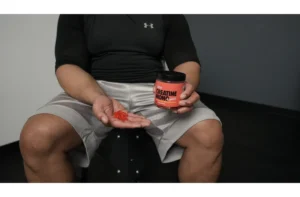
While often included in pre-workout blends, creatine does not provide an acute, immediate boost. Its benefits—increased ATP production and cell volumization—are the result of cellular saturation. Taking creatine 30 minutes before a workout is less about immediate timing and more about the convenience of daily intake. Its "duration" is effectively permanent as long as a daily maintenance dose of 3–5 grams is upheld.
The Timeline of a High-Intensity Session
For a standard training session, the chronology of supplementation follows a predictable path:
- T-Minus 60 Minutes: Ingestion of the supplement. This allows the digestive system to break down the capsule or powder and begin the transit of nutrients into the small intestine for absorption.
- T-Minus 30 Minutes: The "initial onset." Stimulants begin to cross the blood-brain barrier. Beta-alanine may begin to cause skin sensations.
- T-Zero (Start of Workout): The athlete enters the gym. Blood flow is increasing, and mental focus is sharpened.
- T-Plus 45 Minutes: Peak Performance. This usually coincides with the "meat" of the workout—the heaviest sets or highest-intensity intervals. Caffeine and citrulline are at their highest concentrations.
- T-Plus 120 Minutes: The Taper. As the workout concludes, the shorter-lived amino acids begin to metabolize. The "crash" often associated with pre-workouts occurs here if the stimulant dose was excessive and the body’s natural energy reserves are depleted.
Market Context and Regulatory Environment
The pre-workout sector has seen significant evolution since the early 2000s. Previously characterized by "proprietary blends" that hid the exact dosages of ingredients, the industry has moved toward "label transparency." This shift is driven by a more educated consumer base and increased scrutiny from regulatory bodies like the Food and Drug Administration (FDA) in the United States.
Under the Dietary Supplement Health and Education Act of 1994 (DSHEA), supplements are regulated differently than conventional foods and drugs. Manufacturers are responsible for ensuring safety, but they do not require FDA approval before marketing. This has led to a rise in third-party testing certifications, such as NSF Certified for Sport or Informed Choice, which verify that the contents of the bottle match the label and are free of banned substances.

Expert Analysis of Secondary Effects and Risks
While the benefits of timed supplementation are clear, sports nutritionists emphasize the potential for adverse reactions. Overstimulation is the most common side effect, often manifesting as heart palpitations, anxiety, or gastrointestinal distress.
"The ‘more is better’ philosophy is a dangerous fallacy in sports pharmacology," notes one industry analyst. "When caffeine doses exceed 400mg—the equivalent of four cups of coffee—in a single serving, the ergogenic benefits plateau while the cardiovascular risks and cortisol spikes increase exponentially."
Furthermore, the "skin tingles" caused by beta-alanine, while harmless, can be distracting for some. This sensation, known as paresthesia, is caused by the binding of beta-alanine to G-protein-coupled receptors in the skin. Experts suggest that splitting the dose throughout the day can provide the endurance benefits without the acute discomfort.
Broader Implications for Human Performance and Recovery
The strategic use of pre-workout supplements extends beyond the physical act of lifting weights. There is a burgeoning interest in the cognitive benefits of these formulations. Ingredients like L-theanine (often paired with caffeine) and various nootropics are being included to provide "smooth" energy, enhancing the mind-muscle connection and cognitive focus.

However, the broader implication of long-term pre-workout use is the potential for adrenal fatigue or receptor downregulation. The body is highly adaptive; habitual users of high-stimulant products often find they require increasingly larger doses to achieve the same effect. To mitigate this, many performance coaches recommend "cycling" pre-workouts—using them for 4 to 8 weeks followed by a 2-week "washout" period to reset systemic sensitivity.
Conclusion: Maximizing the Ergogenic Window
In the final analysis, a pre-workout supplement is a tool of precision. To capitalize on the physiological "power-up," an athlete must align their training intensity with the peak plasma concentrations of their chosen ingredients.
For the average 60-to-90-minute workout, ingesting a supplement 30 to 45 minutes prior to the first working set provides the most robust overlap of energy, endurance, and blood flow. By understanding the half-lives of caffeine and amino acids, and by prioritizing label transparency, fitness enthusiasts can ensure that their "boost" lasts exactly as long as the mission requires—leaving nothing to chance when the heavy iron is on the line.