






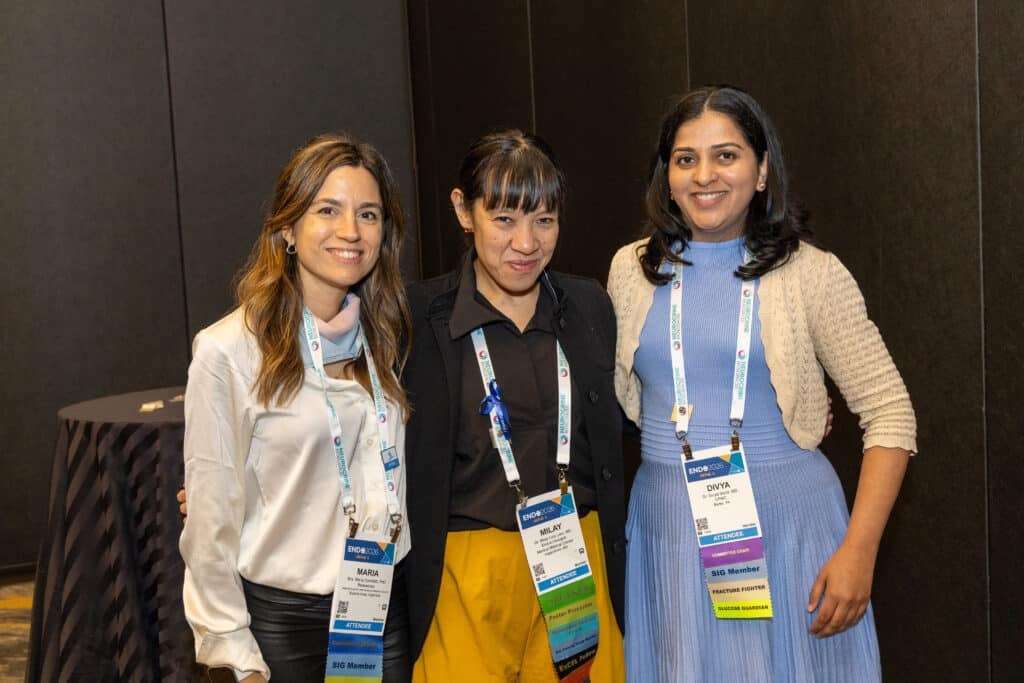
The Endocrine Society’s Excellence in Clinical Endocrinology Leadership (EXCEL) program recently convened its latest session at the society’s headquarters in Washington, D.C., bringing together a diverse cohort of practitioners, researchers, and emerging leaders. This gathering served as more than a standard professional development seminar; it acted as a forum for deep reflection on the shifting paradigms of medical practice. Among the faculty members present was Dr. Milay Luis Lam, Division Chief and Medical Director at Meritus Endocrinology in Hagerstown, Maryland. Dr. Lam’s participation marked a significant professional milestone, as she transitioned from her previous status as a program trainee to a leadership role as faculty. This evolution from student to mentor underscores a critical theme within the endocrine community: the necessity of continuous, lifelong learning and the preservation of humanity within a data-driven medical landscape.
The EXCEL program is designed to equip endocrinologists with the leadership skills necessary to navigate an increasingly complex healthcare environment. While clinical training focuses on the physiological and biochemical intricacies of hormonal health, the EXCEL curriculum addresses the "soft skills" that are often overlooked in traditional medical education, including negotiation, conflict resolution, and the cultivation of emotional intelligence. As the healthcare sector faces unprecedented challenges—ranging from physician burnout to systemic fragmentation—the focus on human-centric leadership has become a primary objective for organizations like the Endocrine Society.
The Context and Chronology of Clinical Leadership Development
The Excellence in Clinical Endocrinology Leadership (EXCEL) initiative was established by the Endocrine Society to bridge the gap between clinical expertise and administrative proficiency. The program specifically targets early-career physicians and mid-career professionals looking to take on greater responsibilities within their institutions. The recent spring meeting in Washington, D.C., represents a continuation of this mission, providing a space where participants can step away from the daily pressures of the clinic to engage in high-level strategic thinking.
For Dr. Lam, the return to the EXCEL program in a faculty capacity provided a unique vantage point from which to assess the current state of the profession. Her journey reflects a broader trend within the specialty: the recognition that medical authority is no longer solely defined by the mastery of lab values and protocols, but by the ability to mentor the next generation and advocate for patient-centric systems. The meeting’s agenda included workshops on navigating institutional hierarchies, fostering inclusive environments, and the importance of self-reflection in preventing professional stagnation.
The timeline of these leadership programs often aligns with the Endocrine Society’s larger annual meetings, such as the ENDO conference series. For instance, Dr. Lam has been a consistent presence at these gatherings, appearing at the All SIG (Special Interest Group) Reception at ENDO 2026 and the FLARE (Future Leaders Advancing Research in Endocrinology) EXCEL Luncheon at ENDO 2023. These touchpoints illustrate a multi-year commitment to professional growth that transcends individual clinical cases.
Supporting Data: The Quantitative Pressures on Endocrinology
To understand why the "humanity" of medicine is under threat, it is necessary to examine the data surrounding the endocrinology workforce and the patient populations they serve. Endocrinology is a field characterized by chronic disease management, which requires long-term patient-physician relationships. However, several factors are currently straining these bonds.

According to data from the Association of American Medical Colleges (AAMC), the United States is facing a projected shortage of up to 124,000 physicians by 2034. Within the specialty of endocrinology, the gap is particularly acute. The Centers for Disease Control and Prevention (CDC) reports that over 38 million Americans have diabetes, and approximately 98 million have prediabetes. Additionally, thyroid disorders affect an estimated 20 million Americans. The ratio of specialists to patients is increasingly lopsided, leading to shorter appointment times and increased administrative burdens on providers.
A 2023 survey on physician burnout conducted by Medscape revealed that endocrinologists report a burnout rate of approximately 44%. The primary contributors cited were bureaucratic tasks, long hours, and a lack of autonomy. In this high-pressure environment, the "quiet dehumanization" mentioned by Dr. Lam becomes a systemic risk. When physicians are forced to prioritize throughput and electronic health record (EHR) documentation over interpersonal engagement, the clinical encounter can become transactional rather than therapeutic.
The Challenge of Quiet Dehumanization in Modern Practice
The concept of "quiet dehumanization" refers to the gradual erosion of the personal connection between the doctor and the patient. In endocrinology, this often manifests as a hyper-focus on "the numbers"—hemoglobin A1c levels, TSH values, and bone density scores. While these metrics are essential for evidence-based care, they do not encompass the entirety of the patient’s experience.
Dr. Lam notes that this dehumanization is a bidirectional phenomenon. Patients, frustrated by a fragmented healthcare system and brief interactions, may perceive their physicians as detached or inaccessible. Conversely, physicians, overwhelmed by high patient volumes and the complexity of modern medicine, may inadvertently view patients as a collection of diagnoses rather than individuals with complex lives.
This disconnect is further exacerbated by cultural and socioeconomic factors. Research indicates that "noncompliance" with medical advice is frequently rooted in barriers that have nothing to do with a patient’s willingness to follow a plan. Factors such as food insecurity, lack of transportation, language barriers, and historical mistrust of the medical establishment play significant roles in health outcomes. A leadership-oriented approach to endocrinology requires physicians to recognize these nuances and advocate for systems that address social determinants of health.
Official Responses and Institutional Advocacy
The Endocrine Society has taken a proactive stance in addressing these systemic issues through its advocacy and educational arms. The society’s leadership emphasizes that advocacy is not just a legislative activity but a daily professional responsibility. This includes advocating for interdisciplinary collaboration and better communication between primary care providers and specialists.
In official statements regarding the EXCEL program, the Endocrine Society has highlighted the importance of "inclusive excellence." This involves creating a workforce that reflects the diversity of the patient population. By training leaders like Dr. Lam, who emphasize the human element of care, the society aims to foster a culture where empathy and clinical excellence are viewed as mutually reinforcing rather than contradictory.
Furthermore, the society’s commitment to programs like FLARE (Future Leaders Advancing Research in Endocrinology) demonstrates an investment in the "pipeline" of the profession. These initiatives ensure that as the field evolves technologically—with the advent of continuous glucose monitors (CGMs) and AI-driven diagnostic tools—the human component remains at the center of the technological integration.
Broader Impact and Implications for the Future of Healthcare
The reflections shared by Dr. Lam following the EXCEL meeting have broader implications for the entire medical community. The shift from a "trainee" mindset to a "faculty" mindset does not mean the end of learning; rather, it signifies a transition into a different type of education—one focused on institutional change and the mentorship of others.
The future of endocrinology will likely be defined by how well the field manages the tension between data and humanity. As precision medicine becomes more prevalent, the ability to interpret genetic and molecular data will be paramount. However, the application of that data requires a physician who can translate complex information into a plan that respects the patient’s values and lifestyle.
The "EXCEL" model of leadership suggests that the most effective endocrinologists of the future will be those who are as skilled in "human physiology" as they are in "human psychology." This involves:
- Systemic Advocacy: Working to reduce the administrative hurdles that contribute to burnout and dehumanization.
- Cultural Competency: Moving beyond a one-size-fits-all approach to recognize the diverse lived experiences of patients.
- Collaborative Care: Breaking down the silos of a fragmented healthcare system to ensure that the patient does not get "passed along" without a clear sense of ownership and care.
As Dr. Lam concluded in her reflection, the ultimate question for the medical profession is whether practitioners remain open enough to let their experiences change them. The recent meeting in Washington, D.C., served as a reminder that medicine is a profoundly human endeavor. While the hormones and the numbers provide the map, it is the humanity of the physician and the patient that determines the direction of the journey. Through programs like EXCEL, the Endocrine Society continues to champion a vision of medicine where leadership is defined by the strength of the connection between those who provide care and those who receive it.