

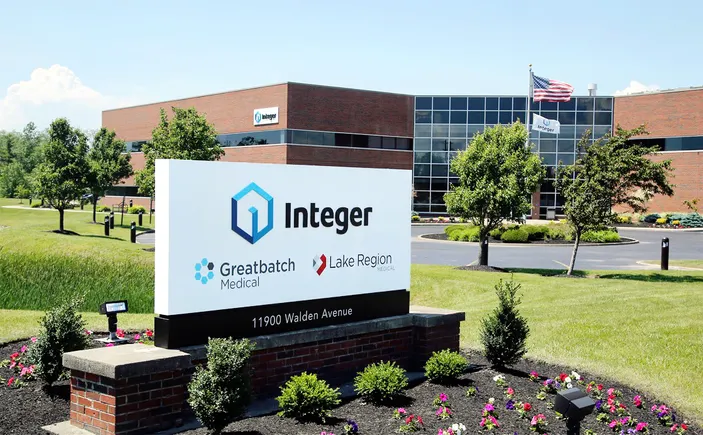
Global investment firm KKR has entered into a definitive agreement to acquire Integer Holdings Corporation, a leading medical device contract development and manufacturing organization (CDMO), in an all-cash transaction valued at approximately $7 billion, including the assumption of debt. The deal, which marks one of the largest private equity entries into the medical outsourcing sector in recent years, will see KKR acquire all outstanding shares of Integer for $127.00 per share. This purchase price represents a significant 51% premium over the company’s closing stock price on April 29, 2026, the final trading day prior to Integer’s public announcement of a formal strategic review.
The acquisition follows a period of intense speculation regarding the future of Integer, which has long served as a critical backbone for the world’s largest medical technology companies. By bringing Integer under its umbrella, KKR is positioning itself at the center of the medtech supply chain, gaining control over a company that provides essential components for life-saving devices ranging from pacemakers to neuromodulation systems.
The Evolution of the Strategic Review
The path to the acquisition began in earnest in April 2026, when Integer’s Board of Directors announced the launch of a strategic review aimed at maximizing stockholder value. At the time, leadership cited "strong unsolicited interest" from multiple parties, including both strategic competitors and financial sponsors. This interest was fueled by Integer’s dominant market position in the cardiac rhythm management (CRM) and neuromodulation sectors, as well as its expanding footprint in the high-growth electrophysiology market.
The strategic review was conducted over several months, during which the board evaluated various alternatives, including remaining an independent public entity, divesting specific business units, or a full-company sale. The decision to proceed with KKR’s all-cash offer suggests that the private equity firm provided the most compelling valuation and certainty of execution. The board has unanimously recommended that shareholders vote in favor of the merger, viewing the $127 per share offer as a fair reflection of the company’s long-term growth potential and current market leadership.
Integer’s Critical Role in Global Medtech
Headquartered in Plano, Texas, Integer Holdings Corporation operates as one of the largest medical device outsource manufacturers in the world. The company’s value proposition lies in its ability to handle the complex engineering and manufacturing requirements that original equipment manufacturers (OEMs) prefer to outsource to specialized partners.
Integer’s product portfolio is categorized into several high-stakes medical categories:
- Cardiac Rhythm Management & Neuromodulation: Integer is a primary supplier of batteries, capacitors, and leads for pacemakers and implantable cardioverter defibrillators (ICDs). They also manufacture leads and IPGs (implantable pulse generators) for spinal cord stimulation and deep brain stimulation.
- Interventional Vascular: The company produces a wide array of catheters, guidewires, and delivery systems used in minimally invasive surgeries, particularly in the cardiovascular and peripheral vascular spaces.
- Electrophysiology: This has been a key growth area for Integer. As the treatment of cardiac arrhythmias moves toward more sophisticated mapping and ablation techniques, Integer has scaled its production of specialized electrophysiology catheters.
The company’s client list includes nearly every major player in the medtech industry, most notably Abbott Laboratories, Boston Scientific, and Medtronic. For these firms, Integer is more than a vendor; it is a strategic partner that manages the regulatory complexities and precision manufacturing necessary for Class III medical devices—those that are implanted in the human body and are life-sustaining.
Financial Performance and Market Context
The acquisition announcement coincided with Integer’s release of its second-quarter 2026 financial results. For the period ending June 30, the company reported sales of $464 million, a 2.6% decrease compared to the same period in the previous year. While the slight dip in revenue reflects broader macroeconomic headwinds and specific timing issues in customer ordering patterns, the company’s underlying fundamentals remained a draw for KKR.
In recent years, Integer had been executing a "Product-to-Market" strategy designed to shift from being a component supplier to a full-system manufacturer. This transition was intended to capture higher margins and deepen the "stickiness" of its relationships with OEMs. Despite the Q2 revenue dip, Integer’s long-term trajectory has been characterized by steady margin expansion and a robust R&D pipeline, factors that likely weighed heavily in KKR’s valuation model.
KKR’s move comes at a time when the broader healthcare sector is seeing a resurgence in private equity activity. High interest rates in 2024 and 2025 had slowed large-scale leveraged buyouts, but as the rate environment stabilized in early 2026, firms with significant "dry powder" began targeting essential infrastructure companies. Integer, with its steady cash flows and high barriers to entry, fits the profile of a "defensive" healthcare investment that can withstand economic volatility.
Timeline and Regulatory Hurdles
The transaction is expected to close by the end of the fourth quarter of 2026, pending the satisfaction of customary closing conditions. These conditions include:
- Shareholder Approval: A majority of Integer’s outstanding shares must be voted in favor of the merger during a special meeting of stockholders.
- Regulatory Clearances: The deal must clear antitrust reviews in the United States under the Hart-Scott-Rodino Act, as well as potential reviews in international jurisdictions where Integer maintains significant manufacturing facilities, such as Mexico, Ireland, and Uruguay.
- Financial Closing: KKR must finalize the debt financing packages associated with the acquisition, though the firm’s substantial capital reserves and the "all-cash" nature of the offer suggest high confidence in funding.
Should the deal face delays or fail to close due to regulatory intervention, the agreement likely includes standard "breakup fees" payable by either party, though the specific figures have not yet been disclosed in SEC filings.
Industry Implications and Competitive Landscape
The acquisition of Integer by KKR is expected to send ripples through the medtech CDMO landscape. For years, the sector has been undergoing a process of consolidation as smaller, specialized manufacturers are absorbed by larger platforms to provide "one-stop-shop" services for OEMs.
By taking Integer private, KKR provides the company with the flexibility to invest in long-term capacity and R&D without the pressure of quarterly earnings reports. This could allow Integer to accelerate its expansion into emerging fields like digital health integration and robotic surgery components. However, the move also raises questions for Integer’s customers. Major OEMs like Medtronic and Abbott may closely monitor whether the change in ownership affects Integer’s pricing structures or its commitment to specific legacy product lines.
Furthermore, the deal may trigger a defensive reaction from other players in the space. Competitors such as Jabil, Plexus, and TE Connectivity may look to bolster their own medical divisions through acquisitions to remain competitive with a KKR-backed Integer.
Analysis: Why KKR Chose Integer
Analysts point to three primary reasons for KKR’s interest in Integer. First is the "outsourcing tailwind." As medical devices become more complex, integrating electronics, software, and advanced materials, even the largest OEMs are finding it more cost-effective to outsource manufacturing to experts rather than maintaining their own massive factory footprints.
Second is the high cost of switching. Once a component from Integer is designed into a PMA (Premarket Approval) device by the FDA, changing suppliers is a multi-year, multi-million dollar process involving new clinical data and regulatory filings. This gives Integer a "moat" that is highly attractive to private equity investors seeking predictable returns.
Third is the opportunity for operational optimization. While Integer has performed well, KKR’s "Value Creation" team often focuses on streamlining global supply chains and improving procurement efficiencies. Under private ownership, Integer may also be used as a platform for "bolt-on" acquisitions, where KKR buys smaller, niche technology companies and integrates them into Integer’s global distribution network.
Conclusion
The acquisition of Integer Holdings by KKR represents a milestone in the maturation of the medical device outsourcing industry. It transitions a historic name in medical technology—Integer’s roots trace back to Greatbatch, the company founded by the inventor of the pacemaker battery—into a new era of private ownership.
For the employees and management of Integer, the deal promises a period of transition but also the potential for aggressive growth backed by KKR’s deep financial pockets. For the broader medtech industry, it serves as a clear signal that the supply chain is no longer just a background function, but a primary driver of value in the modern healthcare economy. As the deal moves toward its expected year-end close, the focus will remain on the regulatory path and the strategic shifts KKR may implement to justify the 51% premium paid for this cornerstone of medical manufacturing.
