








On the final Saturday of January, an annual tradition unfolded at the Vesterheim Norwegian-American Museum in Decorah, Iowa, as community members gathered to observe National Seed Swap Day, an event centered on the exchange of genetic heritage and agricultural knowledge. Organized by representatives from the Seed Savers Exchange (SSE), a prominent nonprofit organization headquartered in the same region, the gathering served as both a local community resource and a microcosm of a broader global movement toward food sovereignty and biodiversity conservation. Natalie Aird, the seed bank’s inventory coordinator, and Josie Flatgard, the exchange coordinator, facilitated the proceedings, transforming a museum hall into a temporary repository for hundreds of years of horticultural history.
The event commenced in the quiet morning hours as Aird and Flatgard meticulously arranged the inventory. The tables were populated with a diverse array of open-pollinated and heirloom seeds, each carrying specific genetic traits and cultural narratives. Among the initial offerings were packets of French Breakfast radishes—an heirloom variety dating back to the late 19th century known for its oblong shape and mild flavor—and arrow-shaped seeds of the Prairie Blazing Star, a native wildflower essential for supporting local pollinator populations. Also prominent was a large jar containing Mayflower bean seeds, a variety famously purported to have been brought to the Americas by pilgrims in 1620.
The Chronology of National Seed Swap Day
The concept of National Seed Swap Day is a relatively modern addition to the agricultural calendar, though the practice of exchanging seeds is as old as sedentary farming itself. The official designation of the last Saturday in January was established in 2006 in Washington, D.C., by Kathy Jentz, editor of Washington Gardener Magazine. The timing is strategically chosen to coincide with the period when gardeners in the Northern Hemisphere begin planning their spring plantings and ordering supplies.
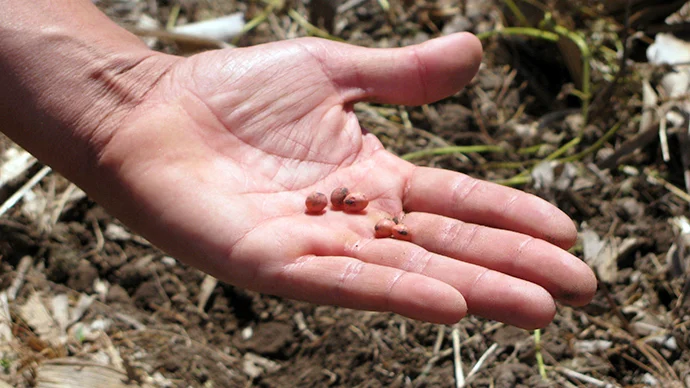
In Decorah, the progression of the day reflected the growing popularity of this movement. Following the initial setup by SSE staff, the mid-morning hours saw an influx of participants. Farmers, young children, horticultural enthusiasts, and community gardeners arrived, carrying with them the remnants of their previous year’s harvests. The atmosphere was one of active exchange: as snow was cleared from boots, participants added their own contributions to the tables. These included the spiky, dark seeds of marigolds, glossy kernels of multi-colored flint corn, flat squash seeds, and the nearly microscopic, round seeds of broccoli.
This chronological flow—from the curation of professional seed bank reserves to the grassroots contribution of local growers—illustrates the symbiotic relationship between institutional preservation and community-level stewardship.
Supporting Data: The Decline of Agricultural Biodiversity
The significance of events like the Decorah seed swap is underscored by sobering statistics regarding global crop diversity. According to the Food and Agriculture Organization of the United Nations (FAO), it is estimated that 75 percent of the world’s crop diversity has been lost since 1900 as farmers worldwide have abandoned their multiple local varieties and "landraces" for genetically uniform, high-yielding varieties.
In the United States, the statistics are even more pronounced. Research conducted in the late 20th century compared the commercial seed catalogs of 1903 with the holdings of the National Seed Storage Laboratory. The study found that roughly 93 percent of the varieties available at the turn of the century had disappeared from the commercial market. For example, of the 497 varieties of lettuce listed in 1903, only 36 remained by the 1980s.
Seed Savers Exchange, the organization represented by Aird and Flatgard, was founded in 1975 specifically to combat this trend. Today, the SSE seed bank at Heritage Farm in Decorah houses more than 20,000 rare, heirloom, and open-pollinated varieties. The participation of SSE staff in local swaps ensures that these "banked" seeds do not remain static in cold storage but are actively grown out, adapted to local climates, and kept in the public commons.
The Role of Open-Pollinated and Heirloom Seeds
To understand the technical importance of the Decorah event, a distinction must be made between the seeds exchanged there and those typically found in large-scale industrial agriculture. The majority of seeds at the swap were "open-pollinated," meaning they are pollinated by natural mechanisms such as wind, insects, or birds.
Unlike F1 hybrid seeds—which are the result of controlled pollination of two different parent varieties and do not "breed true" in the second generation—open-pollinated seeds produce offspring that are nearly identical to the parent plant. This allows gardeners to save seeds from their own harvests year after year, fostering a cycle of self-sufficiency. "Heirloom" seeds are a subset of open-pollinated seeds that have a documented history of being passed down within a family or community, often for 50 years or more.
The Mayflower bean seeds present at the Vesterheim museum are a quintessential example of this. By maintaining these specific lineages, participants are not merely growing food; they are preserving genetic traits—such as drought resistance, pest tolerance, and unique flavor profiles—that have been honed over centuries of selective breeding by home gardeners.
Community Dynamics and Knowledge Transfer
While the biological exchange is the primary focus, the social component of the seed swap provides the framework for its success. For Aird and Flatgard, the event serves as a platform for "knowledge transfer," a critical element in the preservation of agricultural heritage.
Participants do not merely trade physical seeds; they exchange "cultural DNA" in the form of stories, recipes, and cultivation techniques. A veteran gardener might explain the specific soil requirements for a rare variety of flint corn, while a younger participant might share innovative methods for organic pest control. This oral tradition ensures that the practical skills required to sustain these plants are not lost alongside the seeds themselves.
Reflecting on the nature of these events, representatives of the seed-saving movement often note that the "story" of a seed is what ensures its survival. A variety of tomato that has been grown by a single family for four generations is more likely to be preserved if the narrative of its origin and its unique culinary uses is shared with the next grower. In this context, the Vesterheim Norwegian-American Museum—an institution dedicated to the preservation of immigrant history—provided a symbolic backdrop. Many of the heirloom varieties currently grown in the American Midwest were originally brought over by immigrants who sewed the seeds into the hems of their clothing or tucked them into trunks, viewing them as essential tools for survival in a new land.
Broader Impact and Implications for Food Security
The implications of the Decorah seed swap extend far beyond the borders of Winneshiek County. In an era of increasing climate volatility and supply chain instability, the decentralization of the seed supply is increasingly viewed by experts as a matter of national and global security.
- Climate Resilience: Heirloom and open-pollinated varieties often possess a wider range of genetic diversity than modern hybrids. This diversity allows them to be more adaptable to changing environmental conditions. As weather patterns shift, these "locally adapted" seeds provide a reservoir of traits that may prove essential for future food production.
- Economic Autonomy: By saving and exchanging seeds, gardeners and small-scale farmers reduce their dependence on large agribusiness corporations. This fosters a localized "circular economy" where the means of production remain in the hands of the community.
- Nutritional Diversity: Modern industrial breeding often prioritizes shelf life and transportability over flavor and nutrient density. Heirloom varieties are frequently cited for their superior nutritional profiles and diverse flavors, contributing to a more robust and interesting food system.
Analysis: The Growing Popularity of the Seed-Saving Movement
The turnout at the Vesterheim museum is indicative of a broader resurgence in home gardening and seed saving observed over the last decade. This trend saw a significant acceleration during the COVID-19 pandemic, during which Seed Savers Exchange and other seed companies reported record-breaking demand.
The motivations for this resurgence are multifaceted. For some, it is a response to environmental concerns; for others, it is a hobby that offers a sense of connection to the land. However, from a journalistic and sociological perspective, the movement represents a clear shift in the public’s relationship with the food system. There is a growing desire for transparency and a rejection of the "black box" of industrial food production.
Events like National Seed Swap Day democratize the agricultural process. They transform the act of gardening from a solitary pursuit into a collective effort to safeguard a shared heritage. The presence of young children at the Decorah event, "tromping in" with their parents, suggests that this movement is successfully engaging the next generation of stewards.
Conclusion: The Living Archive
As the event in Decorah concluded, the tables that were once neatly organized by Aird and Flatgard were transformed into a chaotic but vibrant mosaic of new contributions. The French Breakfast radishes and Mayflower beans were replaced by the offerings of the community, ensuring that the genetic material will be spread across dozens of different microclimates in the coming growing season.
The work of Seed Savers Exchange and the participants at the Vesterheim Norwegian-American Museum highlights a fundamental truth about agricultural biodiversity: it cannot be preserved in a vacuum. While seed banks and cold storage facilities are vital for long-term security, the true "living archive" exists in the gardens, farms, and backyards of individuals who choose to plant, save, and share.
By facilitating these exchanges, Aird, Flatgard, and the Decorah community are participating in a global effort to ensure that the "Library of Life"—represented by the thousands of varieties of vegetables, fruits, and flowers—remains open and accessible to all. As the last Saturday in January passed, the seeds exchanged in Iowa began their journey toward the soil, carrying with them the potential for future harvests and the continued resilience of the human food supply.