









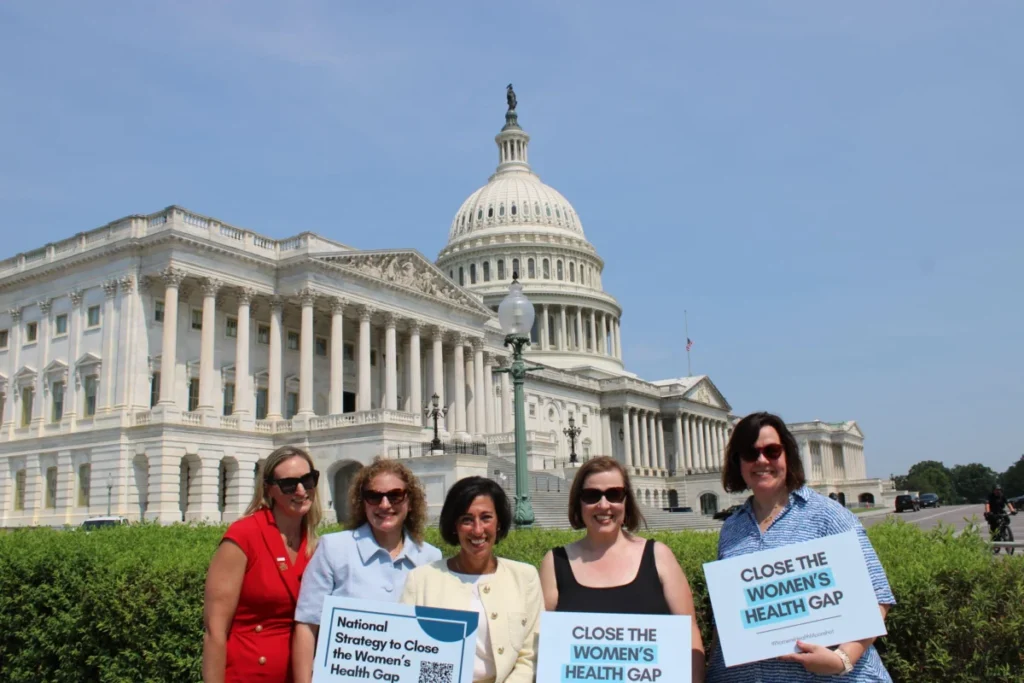
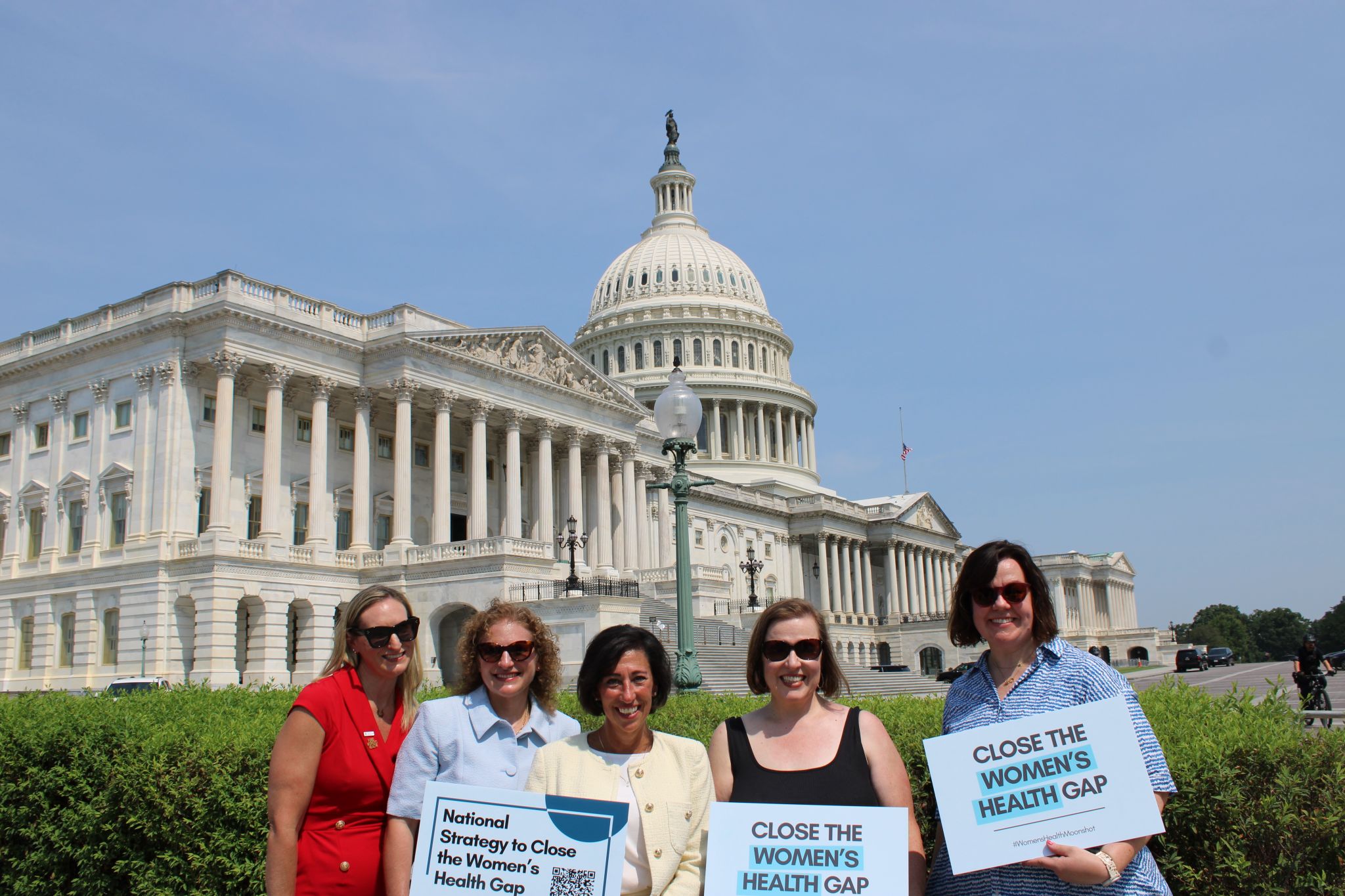
On July 15, a landmark coalition of 38 professional medical, patient advocacy, and research organizations, led by the Endocrine Society, the Society for Women’s Health Research (SWHR), the American College of Obstetricians and Gynecologists (ACOG), and the Women First Research Coalition (WFRC), converged in Washington, D.C., to unveil a comprehensive National Strategy to Close the Women’s Health Gap. This ambitious framework calls upon the United States Congress to authorize a transformative investment of $20 billion over the next decade to address systemic inequities in medical research, clinical care, and health outcomes for women. The strategy represents a unified front in the medical community, aiming to dismantle decades of gender-based disparities that have left women’s health underfunded and misunderstood.
A Decades-Long Disparity: The Rationale for a National Strategy
For much of the 20th century, clinical research was conducted primarily on male subjects, under the flawed assumption that male physiology could serve as a universal proxy for all humans. It was not until the NIH Revitalization Act of 1993 that women were legally required to be included in NIH-funded clinical research. Despite this legislative milestone, the "health gap" persists. Women comprise 51% of the U.S. population, yet they continue to face significant hurdles in receiving accurate diagnoses and effective treatments for conditions that affect them uniquely, differently, or disproportionately.
The newly proposed National Strategy identifies several critical areas where the current system fails women. From the lack of sex-disaggregated data in clinical trials to the shortage of specialized healthcare providers, the gap is not merely a matter of funding but a structural deficiency in the American healthcare infrastructure. The $20 billion request is designed to provide a sustained, decade-long infusion of capital to overhaul these systems, moving beyond piecemeal solutions toward a holistic transformation of women’s health.

The Five Pillars of the National Strategy
The coalition’s framework is built upon five foundational pillars intended to modernize the approach to women’s health from the laboratory bench to the patient’s bedside.
1. Research and Innovation
The strategy calls for a massive expansion of basic and translational research into conditions that are either exclusive to women—such as endometriosis, uterine fibroids, and maternal health complications—or those that present differently in women, such as cardiovascular disease and Alzheimer’s. Currently, cardiovascular disease remains the leading cause of death for women in the U.S., yet women are often underrepresented in heart disease trials, and their symptoms are frequently misdiagnosed. The proposed funding would incentivize researchers to study the biological mechanisms of sex differences at the cellular and molecular levels.
2. Regulatory Coordination and Modernization
To ensure that scientific discoveries reach patients safely and quickly, the strategy advocates for enhanced coordination among federal agencies, including the Food and Drug Administration (FDA) and the National Institutes of Health (NIH). This includes modernizing regulatory pathways to ensure that drugs and medical devices are evaluated specifically for their efficacy and safety in female populations before they reach the market.
3. Data and Evidence Infrastructure
A significant portion of the proposed investment is earmarked for the creation of robust data systems. The coalition argues for a standardized requirement for sex-disaggregated data in all federally funded research. By better tracking how women respond to treatments differently than men, the medical community can develop more personalized and effective care protocols. This also involves improving the collection of real-world evidence to monitor long-term health outcomes in women across different demographics.
4. Bolstering the Clinical and Research Workforce
The U.S. is currently facing a looming shortage of OB-GYNs and specialists in women’s health. The National Strategy proposes grants, fellowships, and loan repayment programs to encourage medical students to enter fields focused on women’s health. Furthermore, it emphasizes the need for a diverse research workforce, as female researchers are statistically more likely to pursue questions related to female biology and health disparities.
5. Public Awareness and Education
Closing the gap requires an informed public. The strategy outlines a national campaign to educate women about their health risks and the importance of participating in clinical trials. It also seeks to educate primary care providers on the latest evidence-based guidelines for treating women, ensuring that the latest research findings are integrated into standard medical practice nationwide.
The Role of Endocrinology in Women’s Health
The Endocrine Society’s involvement in this coalition highlights the critical role that hormonal health plays in the broader landscape of women’s wellness. From puberty and reproductive years through pregnancy and menopause, hormones dictate the fundamental biological processes of the female body. Endocrinologists are essential in managing conditions such as Polycystic Ovary Syndrome (PCOS), which affects roughly one in ten women of childbearing age and is a leading cause of infertility.
"Endocrinologists play a key role in ensuring that women’s care is focused on the correct balance of hormones," the Society stated during the launch. "We are encouraged to see this collaborative effort to close the women’s health gap and advance evidence-based care."
The Endocrine Society specifically pointed to the need for better funding to address gaps in endocrine health, such as the long-term metabolic impacts of menopause and the rising rates of thyroid disorders in women. By advocating for this national strategy, the Society aims to ensure that hormonal health is recognized as a cornerstone of female physiology rather than a niche specialty.
Supporting Data: The Cost of Inaction
The call for a $20 billion investment is supported by staggering data regarding the current state of women’s health in the United States. According to the Centers for Disease Control and Prevention (CDC), the U.S. has the highest maternal mortality rate among developed nations, a crisis that disproportionately affects Black and Indigenous women. Furthermore, women are at a higher risk for many chronic conditions; for instance, nearly 80% of those diagnosed with autoimmune diseases are women.
The economic implications are equally significant. A report by the McKinsey Health Institute recently estimated that closing the women’s health gap could add $1 trillion to the global economy annually by 2040. In the U.S., the "hidden" costs of untreated or mismanaged women’s health conditions—ranging from lost productivity to emergency room visits for preventable complications—far exceed the $20 billion requested over the next decade.
Timeline and Political Context
The launch of the National Strategy on July 15 comes at a pivotal moment in federal health policy. Earlier in 2024, the White House established the first-ever Initiative on Women’s Health Research, led by First Lady Jill Biden. That initiative was followed by an executive order in March directing federal agencies to prioritize women’s health research.
The coalition of 38 organizations is now looking to capitalize on this executive momentum by securing legislative commitments. The July 15 event in Washington, D.C., served as the official kickoff for a sustained lobbying effort. Representatives from the Endocrine Society, including Mila Becker, joined leaders like Katie Schubert of SWHR and Erika Miller of WFRC to present the framework to lawmakers. The goal is to see the $20 billion investment reflected in upcoming appropriations bills and long-term authorization acts.
Perspectives from the Coalition
The breadth of the coalition—which includes groups like Us Against Alzheimer’s and the National MS Society—reflects the intersectional nature of women’s health. Erika Sward of Us Against Alzheimer’s noted that two-thirds of Americans living with Alzheimer’s are women, yet the underlying reasons for this disparity remain under-researched. Similarly, Ashleigh Thorpe of the National MS Society highlighted that Multiple Sclerosis is three times more common in women than in men, necessitating a research focus on how sex hormones influence the progression of neurological diseases.
By uniting these diverse interests under a single "National Strategy," the coalition hopes to prevent the "siloing" of women’s health issues. Instead of competing for small pots of funding for individual diseases, the organizations are advocating for a rising tide that lifts all aspects of female-focused medical science.
Implications for the Future of Healthcare
If adopted, the National Strategy to Close the Women’s Health Gap would represent the largest dedicated investment in female-specific healthcare in U.S. history. The implications extend beyond just funding; it suggests a paradigm shift in how the medical establishment views the female body—not as a variation of the male norm, but as a distinct biological entity requiring its own specialized research and clinical protocols.
For patients, this could mean faster diagnoses for painful conditions like endometriosis, which currently takes an average of seven to ten years to diagnose. It could mean safer pregnancies and a reduction in the alarming rates of maternal morbidity. For the scientific community, it provides a stable, long-term funding environment that allows for ambitious, multi-year longitudinal studies.
As the Endocrine Society and its partners continue their advocacy, the focus remains on ensuring that this strategy translates into tangible policy. The Society has pledged to continue its work on Capitol Hill, advocating for access to care and the closing of research gaps that have for too long left women’s endocrine health in the shadows. The success of this $20 billion proposal will ultimately depend on the willingness of Congress to view women’s health not as a special interest, but as a fundamental pillar of national public health and economic stability.