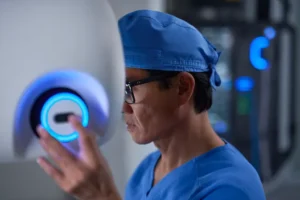








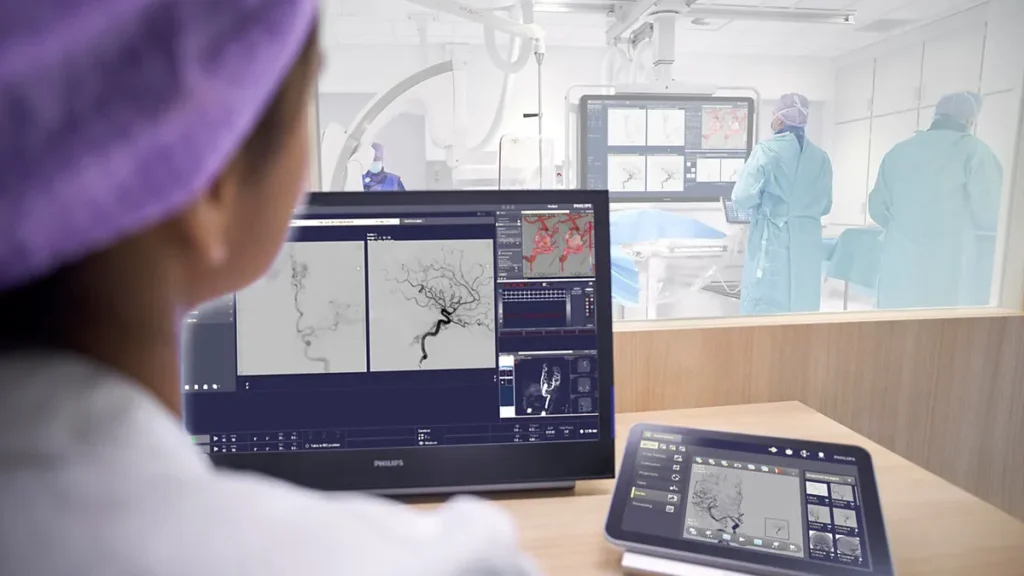
The Advanced Research Projects Agency for Health (ARPA-H), a specialized agency within the United States Department of Health and Human Services, has announced a significant investment of up to $175.3 million to accelerate the development of next-generation medical robotics. At the center of this initiative is a collaborative effort led by global health technology leader Philips, alongside a consortium of top-tier academic institutions, to design and manufacture an autonomous robotic system capable of performing mechanical thrombectomies. This project represents a pivotal shift in the treatment of ischemic strokes, aiming to democratize access to life-saving interventions through the integration of artificial intelligence, advanced imaging, and precision robotics.
The primary objective of the collaboration is to address the critical "time-to-treatment" window that defines stroke outcomes. By combining Philips’ established image-guided therapy infrastructure with cutting-edge innovations from Johns Hopkins University, Boston University, and Weill Cornell Medicine, the project seeks to automate complex endovascular procedures that currently require the presence of highly specialized neurointerventional surgeons. As stroke remains a leading cause of death and long-term disability worldwide, the development of autonomous or semi-autonomous systems could fundamentally alter the landscape of emergency neurology, particularly in underserved or rural regions.
The Technical Framework: AI-Driven Navigation and Steerable Catheters
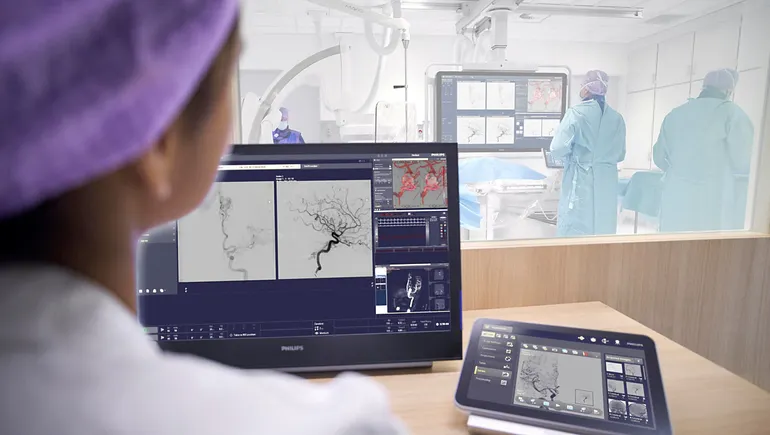
The technological backbone of the project relies on the synergy between hardware and software. Philips is leveraging its Azurion image-guided therapy platform, which is already a standard in many interventional suites, as the foundation for the new robotic system. However, the move toward autonomy requires a level of precision and adaptability that exceeds current manual capabilities.

To achieve this, researchers at Johns Hopkins University are spearheading the development of an autonomous device navigation system. This system utilizes imitation-learning algorithms—a subset of artificial intelligence where the machine learns by observing and replicating the techniques of expert surgeons. By analyzing thousands of hours of successful endovascular procedures, the AI can learn to navigate the tortuous and fragile architecture of the human vascular system, identifying the safest and most efficient paths to a blood clot.
Complementing the AI navigation is the hardware being developed at Boston University. Engineers there are focusing on the creation of advanced steerable catheters. Unlike traditional catheters, which require manual manipulation and often have limited range of motion, these next-generation devices will feature multiple degrees of freedom, allowing them to be guided with extreme precision by the robotic controller. This flexibility is essential for reaching deep into the brain’s vasculature to perform a mechanical thrombectomy—the physical removal of a clot—without damaging the vessel walls.
The ARPA-H Mandate and the Push for Medical "Moonshots"
The funding for this project comes through ARPA-H’s focus on high-risk, high-reward research, often referred to as medical "moonshots." Modeled after the Defense Advanced Research Projects Agency (DARPA), ARPA-H was established to drive transformative health breakthroughs that are too ambitious or risky for the private sector to undertake alone.
In this specific allocation, ARPA-H is not only funding Philips but also Siemens Healthineers, Magnendo, and the University of California, San Diego. These organizations are working on parallel or complementary tracks to develop endovascular and micro-robotic systems. The agency’s strategy is to foster a competitive yet collaborative environment where various technical approaches can be tested and validated.
A crucial component of this ecosystem is the $17.5 million award granted to Kitware, a software company specializing in medical imaging and visualization. Kitware is tasked with developing a virtual simulation and validation test bed. This platform will provide a high-fidelity, physics-based representation of human blood vessels, allowing researchers to test their robotic systems in a digital environment before moving to clinical trials. By simulating the fluid dynamics of blood and the mechanical properties of arterial walls, the test bed will provide a rigorous environment for "stress-testing" autonomous algorithms.
Addressing the Global Stroke Crisis: Background and Context
The urgency of this project is underscored by the staggering statistics surrounding stroke. According to the World Stroke Organization, one in four adults over the age of 25 will have a stroke in their lifetime. In the United States, an American suffers a stroke every 40 seconds, and the condition accounts for one out of every 21 deaths.
Ischemic strokes, which occur when a blood clot blocks an artery leading to the brain, account for approximately 87% of all cases. For these patients, the gold standard of care is a mechanical thrombectomy. However, this procedure is highly time-sensitive. Clinical data suggests that for every minute a large vessel occlusion goes untreated, the brain loses approximately 1.9 million neurons. This reality has birthed the phrase "time is brain" among medical professionals.
Currently, mechanical thrombectomies can only be performed at Comprehensive Stroke Centers (CSCs) by specialized neurointerventionalists. This creates a "hub-and-spoke" model where patients in rural or community hospitals must be stabilized and then transported to a major city for surgery. These transfers often result in delays that can mean the difference between a full recovery and permanent disability. Autonomous robotics offers a potential solution to this geographical disparity, allowing for specialized care to be delivered remotely or through standardized robotic platforms located in smaller hospitals.
Strategic Collaboration and Expert Perspectives
The involvement of Weill Cornell Medicine brings clinical expertise to the forefront of the project. Dr. J. Mocco, the chair of neurological surgery at Weill Cornell and a renowned expert in stroke care, is a key figure in the initiative. His role involves ensuring that the robotic systems meet the rigorous demands of real-world clinical environments.
"Robotics has the potential to improve precision and accuracy in endovascular stroke care, while also extending specialist expertise through remote procedures," Dr. Mocco stated in a recent release. This sentiment highlights the dual benefit of the technology: enhancing the capabilities of surgeons in the operating room while simultaneously expanding the reach of those surgeons to patients hundreds of miles away via telesurgery.

The collaboration also includes a focus on the regulatory pathway. ARPA-H has indicated that the data and software generated through these projects will be made publicly available to an extent. The goal is to create a standardized framework for robotic validation that can be used by the Food and Drug Administration (FDA) and other regulatory bodies. By simplifying the regulatory path, ARPA-H hopes to lower the barrier to entry for other medtech companies, thereby accelerating the adoption of robotic surgery across the healthcare system.
Chronology of Endovascular Evolution
The development of an autonomous stroke robot is the latest step in a decades-long evolution of endovascular therapy.
- Manual Catheterization (1960s-1990s): Early procedures were primarily diagnostic, using catheters to inject contrast dyes for X-ray imaging.
- Introduction of Stents and Coils (1990s-2000s): The field moved toward therapeutic intervention, treating aneurysms and blockages with manual tools.
- The Thrombectomy Revolution (2015): A series of landmark clinical trials (such as MR CLEAN and ESCAPE) proved that mechanical thrombectomy was vastly superior to clot-busting drugs alone for large vessel occlusions.
- Robotic Assistance (2018-Present): Systems like the Siemens Healthineers Corindus platform began allowing surgeons to control catheters via joysticks from a radiation-shielded cockpit, improving precision and reducing physician fatigue.
- The Autonomous Frontier (Current Project): The move toward AI-driven navigation marks the final step in removing the limitations of human dexterity and geographical location from the equation.
Broader Implications for the Healthcare Industry
The success of the Philips-led consortium could have ripple effects far beyond stroke care. The core technologies—steerable catheters, imitation-learning AI, and high-fidelity vascular simulation—are applicable to a wide range of endovascular procedures, including the treatment of coronary artery disease, peripheral vascular disease, and even certain types of cancer through targeted embolization.
From an economic perspective, the long-term impact of autonomous stroke care could be profound. The cost of caring for a stroke survivor with significant disability can reach hundreds of thousands of dollars annually. By improving the "recanalization" rates (the successful reopening of the artery) and reducing the time to treatment, robotic systems could save the healthcare system billions of dollars in long-term care and rehabilitation costs.
Furthermore, this initiative signals a shift in the role of traditional medical device manufacturers. Companies like Philips and Siemens Healthineers are increasingly becoming software and AI companies. Their value proposition is shifting from the physical hardware of the imaging suite to the intelligent algorithms that reside within that hardware.
As the ARPA-H project progresses, the next several years will be defined by rigorous testing and validation. The transition from a controlled laboratory setting to the high-stakes environment of an emergency room is fraught with technical and ethical challenges. However, the collective expertise of Philips, Johns Hopkins, and their partners, backed by substantial federal funding, suggests that the era of autonomous interventional medicine is no longer a distant possibility, but an impending reality. The digital and physical integration of surgery is poised to ensure that in the future, a patient’s zip code no longer determines their chances of surviving a stroke.