


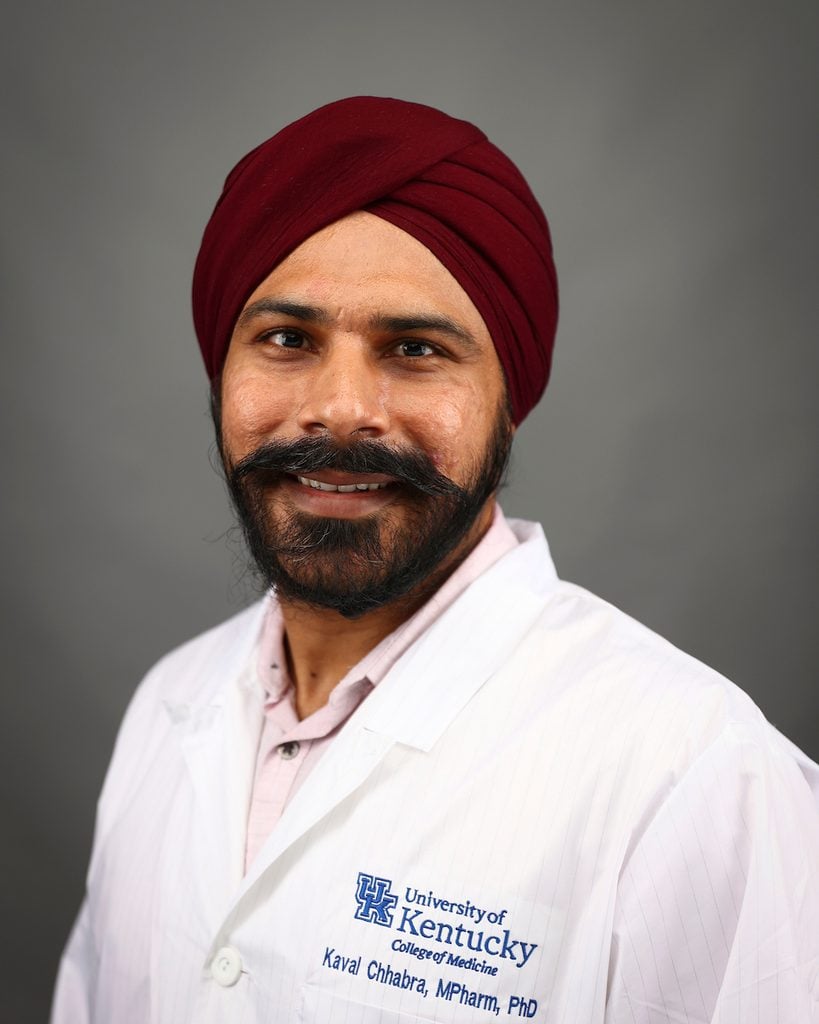
The landscape of modern biomedical research is often defined by its breakthroughs, yet the underlying reality for many scientists is a persistent cycle of trial, error, and professional setback. At the ENDO 2026 conference in Chicago, a gathering of the world’s leading endocrinologists and researchers, this often-ignored aspect of the scientific vocation took center stage. Among the most attended sessions within the Professional Development tract was "Reframing Failure," a panel discussion that sought to de-stigmatize the challenges of the laboratory and provide a roadmap for regaining momentum after significant professional hurdles. A primary voice in this conversation was Kavaljit Chhabra, MPharm, PhD, an associate professor at the University of Kentucky, whose journey from a pharmacy student in India to a leading researcher in glucose homeostasis offers a profound case study in the necessity of resilience.
The Evolution of a Scientific Career: From Gujarat to Kentucky
Dr. Kavaljit Chhabra’s career trajectory illustrates the non-linear path common to many high-achieving researchers. He began his academic journey in India, earning both a Bachelor and Master of Pharmacy at Gujarat University. This foundational training in pharmacology provided the technical basis for his transition into the United States’ research ecosystem. He completed his PhD at the LSU Health Sciences Center in New Orleans under the guidance of Eric Lazartigues, followed by postdoctoral training at the University of Michigan with Malcolm Low. It was during this period that Chhabra specialized in the neurological control of glucose homeostasis, a field that bridges the gap between neuroscience and metabolic health.
In 2018, Chhabra established his independent laboratory at the University of Rochester before relocating to the University of Kentucky in 2024. Today, as a member of the Barnstable Brown Diabetes Research Center, his work focuses on the intricate signaling between the brain and kidneys that maintains blood glucose stability. A significant milestone in his research has been the identification of ADGRL1 as a glucose-binding receptor. This discovery is particularly impactful as it introduces a new class of potential drug targets for type 2 diabetes and obesity—conditions that affect over 500 million and 650 million people globally, respectively.

Despite these successes, Chhabra maintains that his technical training did not fully prepare him for the complexities of lab management. "I was trained to design experiments," he noted during the ENDO 2026 session. "Nobody trained me in people management." This gap between scientific expertise and leadership capability is a systemic issue in academia, where Principal Investigators (PIs) are often thrust into administrative and human resources roles without formal preparation.
The Anatomy of Failure: Distinguishing Science from Leadership
A central theme of Chhabra’s philosophy is the differentiation between scientific failure and leadership failure. In the context of the laboratory, a hypothesis that proves incorrect is not a failure but a successful application of the scientific method. According to Chhabra, science "works correctly" when it provides an answer, regardless of whether that answer aligns with the initial prediction.
In contrast, Chhabra defines true failure as a "preventable loss of time, resources, or trust." Through his experience as a PI, he identified six critical areas where his own leadership decisions led to setbacks:
- The Inability to Say No: Attempting to be supportive, Chhabra often allowed trainees to pursue flawed experimental designs. This "kindness" resulted in months of wasted effort and increased frustration for the trainee.
- Over-commitment: By accepting too many collaborations, reviews, and committee roles, Chhabra found his schedule dictated by external priorities rather than the core mission of his lab.
- Passive Oversight: Assuming that capable researchers would automatically maintain momentum led to project drift and misaligned expectations.
- Conflict Avoidance: Hoping that interpersonal tensions would resolve themselves often allowed small misunderstandings to escalate into damaged professional relationships.
- Performance Inflation: Giving uniformly positive evaluations to avoid hurting feelings deprived trainees of the honest feedback necessary for growth and removed Chhabra’s leverage when correction was eventually required.
- Isolation in Leadership: Chhabra initially believed that a PI must handle all group difficulties independently. This reluctance to seek institutional support prolonged internal lab conflicts.
Supporting Data: The Hidden Costs of Lab Mismanagement
The implications of Chhabra’s insights are supported by broader trends in academic research. Studies on laboratory environments suggest that "soft skills"—communication, conflict resolution, and project management—are significant predictors of lab productivity and trainee retention. According to data from the National Postdoctoral Association, a substantial percentage of researchers cite "poor mentorship" or "toxic lab culture" as primary reasons for leaving academia.
Furthermore, the financial cost of "preventable" failures is significant. With the average NIH R01 grant providing approximately $250,000 to $500,000 in annual direct costs, a six-month delay due to poor oversight or flawed experimental design represents a loss of tens of thousands of dollars in taxpayer-funded resources. Chhabra’s emphasis on "keeping the price of the lesson down" reflects a burgeoning movement toward more efficient, business-minded management within scientific institutions.
Institutional Responses and the Shift Toward Accountability
The Endocrine Society’s Trainee and Career Development Core Committee (TCDCC) has recognized these challenges by incorporating more leadership-focused programming into their annual meetings. The "Reframing Failure" session at ENDO 2026 served as a platform for early-career supervisors to share experiences that are rarely discussed in formal literature.
One of the more surprising revelations from the panel was the discussion of "upward" difficult behavior. While much of the academic discourse focuses on the power dynamics of PIs over trainees, Chhabra highlighted that early-career supervisors often face challenging behavior from subordinates. Because of the perceived power imbalance, many PIs feel they cannot report these issues without appearing incompetent. Chhabra’s advocacy for using institutional resources—such as HR, ombuds offices, and department chairs—marks a shift toward a more holistic view of university support systems.
Broader Implications for the Future of Endocrinology
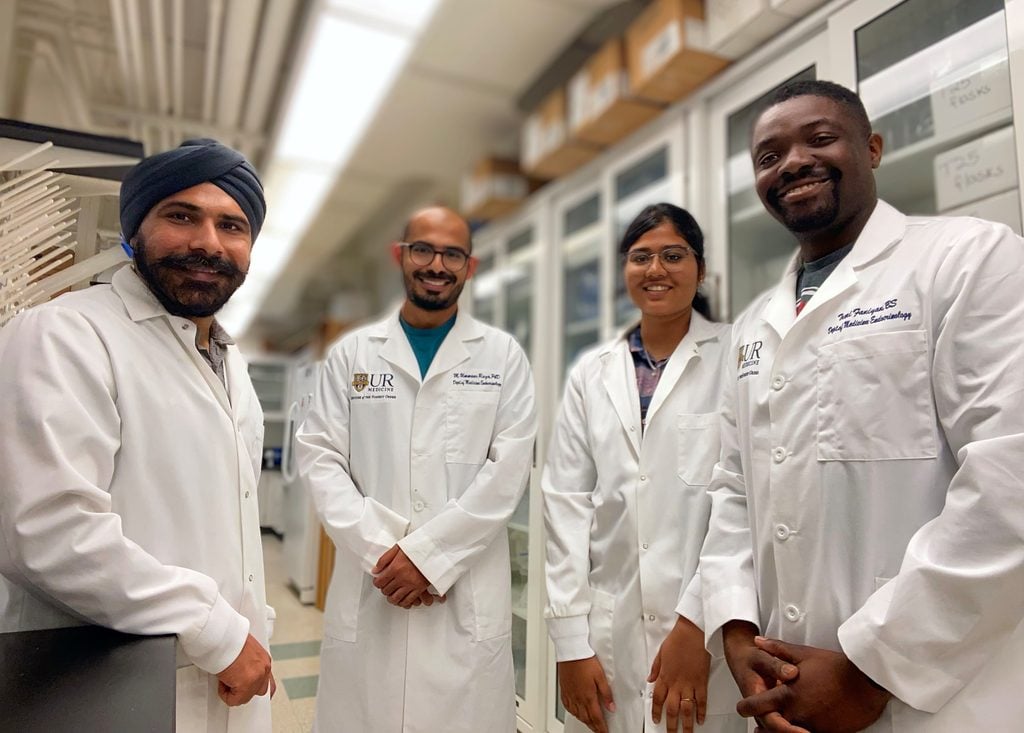
The transition from "kindness" to "effectiveness" that Chhabra describes has profound implications for the speed of medical discovery. In the field of endocrinology, where the path from basic signaling research to clinical drug trials can take decades, the efficiency of the lab environment is paramount. By implementing structured check-ins, clear milestones, and honest feedback loops, PIs can ensure that their teams remain focused on high-impact discoveries, such as the glucose-binding mechanisms of ADGRL1.
Moreover, Chhabra’s approach to "portfolio risk management" offers a template for sustainable research. By balancing high-risk, high-reward projects with incremental, established studies, a lab can survive the inevitable failure of a single hypothesis without facing a catastrophic loss of funding or morale. This strategic diversification is essential in an era where NIH funding rates remain highly competitive, often hovering between 10% and 20% for many institutes.
Conclusion: Leadership as a Discipline
Kavaljit Chhabra’s journey serves as a reminder that the most important "experiment" in a scientific career is often the development of the scientist themselves. The transition from a technician to a leader requires a fundamental shift in perspective: recognizing that clarity is a form of kindness and that truthful feedback is a gift rather than a punishment.
As the scientific community continues to grapple with issues of burnout and reproducibility, the lessons from ENDO 2026 suggest that the solution lies not just in better technology, but in better leadership. By reframing failure as an inevitable data point in the larger experiment of a career, researchers can build labs that are not only scientifically rigorous but also humanly resilient. Chhabra’s conclusion remains a guiding principle for the next generation: "Don’t let a failed project become a statement about you; it’s a result about a hypothesis. Data is something you analyze; it isn’t something you carry."
