

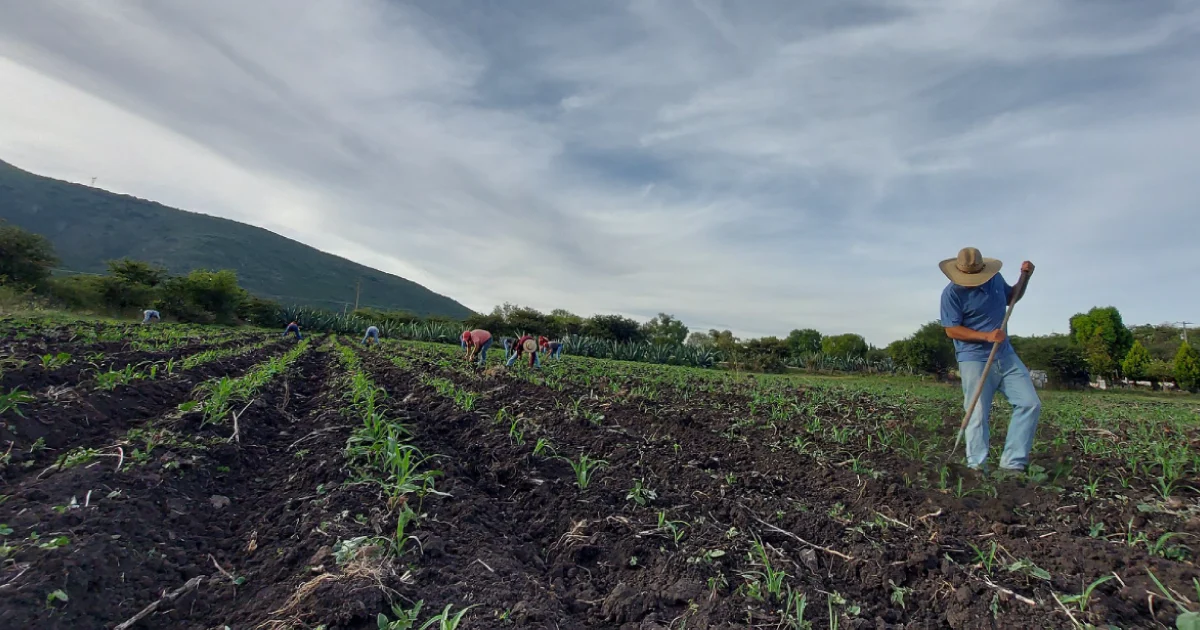
A comprehensive study published in the European Journal of Agronomy has identified a critical divergence in the resilience of agricultural systems, concluding that organic land management offers significantly better protection against climate-induced soil degradation than chemical-intensive methods. The research, which focused on wheat cropping systems across the European continent, highlights the dual pressure of the escalating climate crisis and industrial farming practices on the foundational health of the Earth’s soil. As global temperatures continue to rise, the findings suggest that the transition to organic frameworks is no longer merely an environmental preference but a strategic necessity for food security and ecosystem stability.
While the study acknowledges that climate change remains the most dominant force shaping soil health across Europe, it emphasizes that human-controlled variables—specifically the choice between organic and synthetic-chemical inputs—act as either a buffer or an accelerant to these environmental stressors. The research arrives at a pivotal moment, following a series of reports from international bodies like the United Nations Environment Programme (UNEP) and the World Meteorological Organization (WMO) regarding the acceleration of global warming and the increasing frequency of extreme weather events.
The Intersection of Climate Instability and Agricultural Management
The study’s findings are rooted in the analysis of wheat cropping systems, which serve as a primary caloric staple for a significant portion of the global population. Researchers observed that in regions experiencing erratic precipitation and temperature spikes, soils managed under organic protocols maintained higher levels of biological activity and structural integrity. In contrast, chemical-intensive systems—characterized by the heavy use of synthetic fertilizers, herbicides, and pesticides—showed increased vulnerability to erosion, nutrient leaching, and a decline in microbial diversity.
This disparity is largely attributed to the "soil-plant-atmosphere" continuum. Organic systems typically prioritize the accumulation of soil organic matter (SOM) through practices such as crop rotation, cover cropping, and the application of natural compost. This organic matter acts as a sponge, increasing the soil’s water-holding capacity and providing a stable habitat for beneficial microorganisms. Chemical-intensive systems, while often producing high yields in the short term, frequently result in "lazy" root systems and a dependency on external inputs that can strip the soil of its natural resilience over decades.
A Chronology of Declining Soil Health and the Push for Reform
The current crisis in soil health is the culmination of nearly a century of industrialization in the agricultural sector. To understand the significance of the 2026 findings, one must look at the timeline of agricultural evolution and its environmental impact:
- The 1940s–1960s (The Green Revolution): The introduction of high-yield crop varieties and synthetic chemical inputs revolutionized global food production but initiated a long-term trend of soil nutrient depletion and chemical dependency.
- The 1990s: Growing awareness of environmental degradation led to the formalization of organic certification standards in the United States and Europe, though these remained niche markets for several decades.
- 2015 (The Paris Agreement): Global leaders acknowledged the role of agriculture in both contributing to and potentially mitigating climate change, specifically through carbon sequestration in soil.
- 2023–2025: Successive years of record-breaking global temperatures and unprecedented El Niño events highlighted the fragility of conventional monocultures, leading to a surge in research regarding "regenerative" and organic resilience.
- September 2026: The publication of the study in the European Journal of Agronomy provides continental-scale evidence that organic management is a primary defense against climate-driven soil collapse.
Supporting Data: The Quantitative Advantage of Organic Soil
The research provides empirical data supporting the superiority of organic systems under stress. According to the study, organic soils exhibited a 15% to 25% higher water-retention capacity compared to chemically treated plots. This factor is critical during periods of prolonged drought, which are becoming more common across the European wheat belt.
Furthermore, the microbial biomass—a key indicator of soil health and nutrient cycling—was found to be significantly higher in organic systems. Microbial diversity allows the soil to recover more quickly from extreme weather events, such as flash flooding, which can wash away the topsoil in degraded, chemical-heavy fields. The study also noted that organic systems sequestered more carbon, effectively turning agricultural land into a carbon sink rather than a source of greenhouse gas emissions.
In contrast, the UNEP report Limiting Overshoot – Navigating exceedance of 1.5°C and pathways towards return, released earlier this month, warns that the continued reliance on the industrial status quo is pushing the planet toward a 1.5-degree Celsius increase. This threshold is widely considered by the scientific community as the "tipping point" for biodiversity collapse. The UNEP data suggests that without a fundamental shift in land management, the very systems intended to feed the world will become non-viable due to the degradation of the underlying soil ecosystem.
Meteorological Warnings and the El Niño Phenomenon
The urgency of the study is underscored by the current meteorological landscape. The World Meteorological Organization (WMO) has issued warnings regarding an intensified El Niño-Southern Oscillation (ENSO). This naturally occurring climate pattern, characterized by fluctuating ocean temperatures in the Pacific, has been exacerbated by the long-term accumulation of atmospheric carbon from fossil fuel combustion.
The WMO defines this phenomenon as a major disruptor of global weather patterns, leading to severe droughts in some regions and catastrophic flooding in others. For wheat farmers in Europe and beyond, an intensified El Niño means that the margin for error in soil management has vanished. Chemical-intensive soils, which lack the structural complexity to handle such extremes, are at a much higher risk of total crop failure compared to organic soils that possess the "buffering" capacity of high organic matter.
Reactions from Scientific and Environmental Communities
The publication has elicited a range of responses from stakeholders in the agricultural and environmental sectors. Advocates at Beyond Pesticides, a leading organization in the movement for non-toxic land management, argue that the study confirms what has been observed on the ground for years.
"The science is clear: we cannot continue to poison the soil and expect it to protect us from a changing climate," a spokesperson for the organization noted in a preliminary analysis. "Organic agriculture is not just about avoiding pesticides; it is about building a biological fortress that can withstand the volatility of a warming planet."
On the policy front, some members of the European Parliament have pointed to the study as a reason to accelerate the "Farm to Fork" strategy, which aims to reduce chemical pesticide use by 50% and increase organic land use to 25% by 2030. However, industry groups representing agrochemical interests have traditionally pushed back, citing concerns over immediate yield gaps and the economic transition costs for farmers.
Analysis of Implications: Food Security and Economic Stability
The implications of this research extend far beyond environmental conservation; they touch upon the core of global economic stability. Soil degradation is estimated to cost the global economy trillions of dollars in lost productivity and environmental restoration. By demonstrating that organic systems are more resilient, the study suggests that the long-term economic risk of conventional farming may far outweigh the short-term profits generated by high-input systems.
If wheat-producing regions across Europe and North America continue to see a decline in soil health, the volatility of food prices is likely to increase. This creates a feedback loop where food insecurity leads to social and political instability. Transitioning to organic-intensive management offers a pathway to stabilize yields in the face of climate uncertainty.
Furthermore, the "resilience gap" identified in the study suggests that future agricultural subsidies may need to be restructured. Instead of incentivizing high-volume production through chemical inputs, governments may shift toward "ecosystem services" payments, rewarding farmers for building soil health and sequestering carbon.
Future Outlook: A New Paradigm for Global Agriculture
As the Earth approaches and potentially exceeds the 1.5-degree Celsius threshold, the role of soil as a protective barrier becomes paramount. The study in the European Journal of Agronomy serves as a definitive call for a paradigm shift in how land is managed. The transition from chemical-intensive "extraction" to organic "regeneration" is no longer a fringe movement but a core component of climate adaptation.
The data indicates that while we cannot immediately stop the warming of the planet, we can choose how our landscapes respond to it. By fostering healthy, organic soil ecosystems, humanity can maintain a level of agricultural productivity that is capable of weathering the storms of the 21st century. The challenge remains in the implementation—scaling these organic practices fast enough to stay ahead of the accelerating climate curve.
In the coming years, the success of global agricultural systems will likely be measured not just by the bushels produced per acre, but by the resilience of the soil beneath the surface. As the WMO and UNEP continue to track the rising stakes of the climate crisis, the health of the soil remains the single most important variable in the survival of human civilization’s food supply.
