









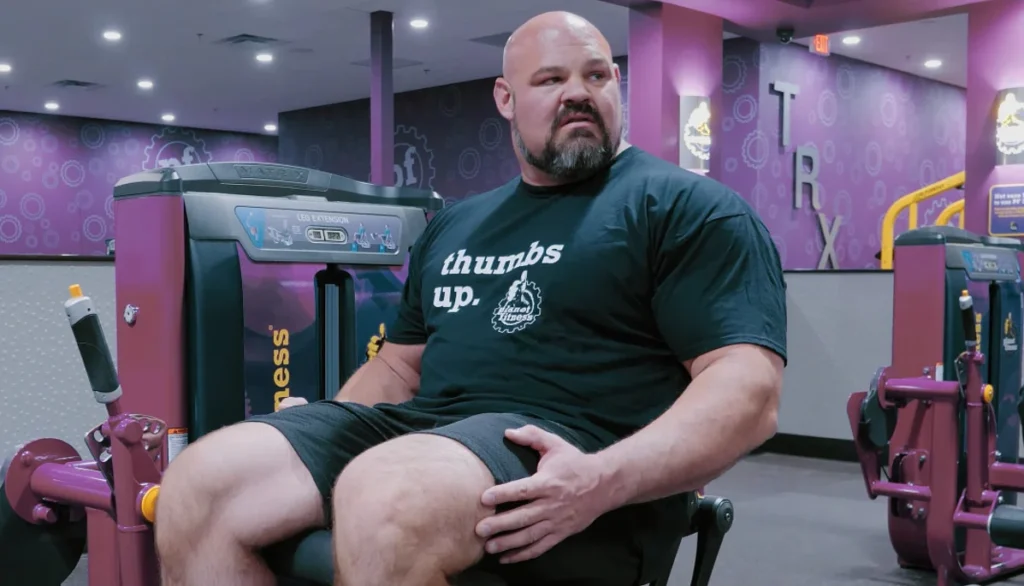
The landscape of professional strength sports often requires specialized environments equipped with heavy-duty machinery, reinforced flooring, and implements that are rarely found in conventional health clubs. However, in a notable departure from their typical training regimens, two of the most decorated figures in the history of the World’s Strongest Man (WSM) competition—Brian Shaw and Eddie Hall—recently conducted a lower-body training session at a Planet Fitness franchise in Colorado. This encounter served as a unique case study in the physical and logistical limitations that elite-level strength athletes face when operating within facilities designed for the general population.
Brian Shaw, a four-time World’s Strongest Man champion (2011, 2013, 2015, 2016), and Eddie Hall, the 2017 World’s Strongest Man and the first person to officially deadlift 500 kilograms (1,102 pounds), documented the session for Shaw’s digital platforms. The event highlighted the stark contrast between the "Judgement Free Zone" philosophy of the commercial gym chain and the high-intensity, high-volume demands of professional strongman training.
Profiles in Strength: The Athletes Involved
To understand the scale of this session, one must consider the physical dimensions and professional standing of the participants. Brian Shaw stands at 6 feet 8 inches and has maintained a competitive body weight often exceeding 400 pounds throughout his career. His training typically takes place in his private, purpose-built facility, which houses specialized equipment such as Atlas stone platforms, heavy-duty power racks, and custom-made leg presses capable of holding thousands of pounds.

Eddie Hall, known as "The Beast," stands 6 feet 3 inches and, at the peak of his strength career, weighed approximately 430 pounds. While Hall transitioned into professional boxing for a period following his 2017 WSM victory, he has recently re-engaged with the strength community. At the time of this session, Hall was preparing for a return to the competitive arena as the captain of Team UK for the World’s Strongest Nation contest.
Chronology of the Training Session
The session was characterized by a series of adaptations as the athletes attempted to utilize equipment designed for average fitness enthusiasts. Planet Fitness is known for its "Lunk Alarm"—a siren intended to discourage loud grunting or the dropping of weights—features that are often unavoidable in professional strength training.
Adaptation to the Smith Machine
The primary challenge began with the absence of traditional squat racks, a standard omission in many Planet Fitness locations to prioritize safety and accessibility for beginners. Consequently, Shaw and Hall utilized a Smith machine for their primary compound movement. The Smith machine uses a barbell fixed within steel rails, allowing only for vertical or near-vertical movement.
For athletes of their size, the narrow dimensions of the Smith machine presented immediate ergonomic difficulties. Shaw, in particular, found the frame restrictive, eventually having to stabilize himself by holding the outer support beams of the machine to maintain balance during his repetitions. Despite these constraints, the duo progressed to a workload of five 45-pound plates on each side of the bar, totaling 450 pounds plus the weight of the carriage.
High-Volume Leg Press and Accessory Movements
Following the squats, the pair moved to the seated leg press. In a professional strongman gym, it is not uncommon for these athletes to load a leg press with upwards of 1,000 to 2,000 pounds. At Planet Fitness, they reached the machine’s functional capacity by loading six 45-pound plates on each side, with an additional plate placed atop the sled. Observations noted that the athletes moved this weight with significant ease, suggesting the resistance was more representative of a "pump" session rather than a true maximal strength effort.
The workout continued through a circuit of selectorized machines, including:
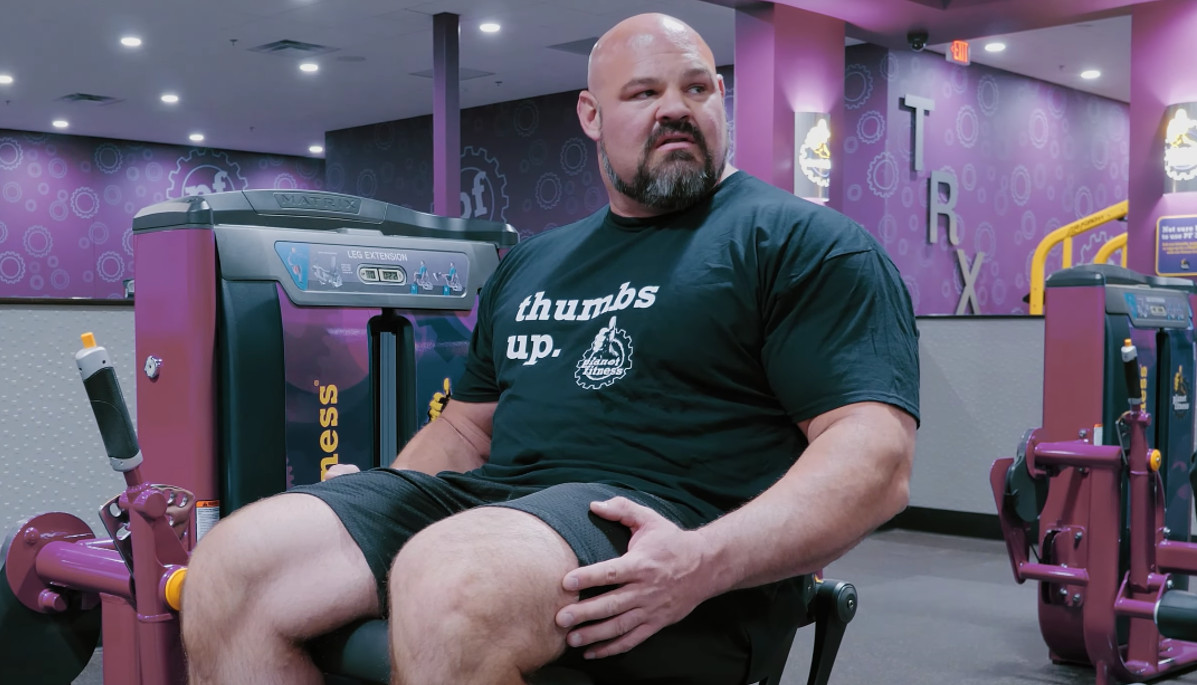
- Abdominal Crunches: Utilizing the cable-weighted machines for core stability.
- Leg Extensions: Focusing on quadriceps isolation.
- Adductor and Abductor Machines: Targeting the inner and outer thigh muscles, movements often neglected in pure strength sports but utilized here for general hypertrophy.
The Final Challenge: The 20-Station Circuit Race
The session concluded with a competitive "circuit race" within the gym’s dedicated 30-minute express workout area. The challenge required each athlete to perform one repetition at the maximum available weight on each of the 20 different machines in the room. This transitioned the workout from a test of strength to a test of anaerobic capacity and agility.
Eddie Hall completed the 20-station circuit in 1 minute and 15.09 seconds. Brian Shaw followed closely, completing the task in 1 minute and 19 seconds. The four-second margin underscored the competitive nature that persists between the two athletes, even in a non-traditional training environment.
Technical Analysis of Equipment Limitations
The session provided a practical demonstration of why elite strength athletes require specialized facilities. Most commercial gym equipment is engineered for a "three-standard-deviation" user base. This means the machines are designed to accommodate 99% of the population, but Hall and Shaw exist in the 1% of the 1% regarding height, limb length, and force production.
- Weight Capacity: Most commercial selectorized machines (machines with a pin-and-plate stack) max out at 200 to 300 pounds. For an athlete who can deadlift over 900 pounds, these stacks do not provide enough resistance to stimulate neuromuscular adaptation.
- Structural Integrity: The frames of standard commercial equipment are often made of lighter-gauge steel. When Shaw and Hall utilize these machines, the frames can flex or shift, as seen when Shaw had to brace the Smith machine manually.
- Range of Motion: Machines are built for average limb lengths. For a 6’8" athlete like Shaw, the pivot points on leg extension or curl machines often do not align with his joints, increasing the risk of connective tissue strain.
The Broader Impact on Strength Sports Visibility
The collaboration between Shaw and Hall in a mainstream setting like Planet Fitness serves a dual purpose. First, it acts as a significant marketing vehicle for the sport of Strongman. By placing "larger-than-life" figures in a relatable environment, it bridges the gap between the niche world of professional strength and the general public.
Second, the session highlighted the upcoming competitive schedule. At the time of the recording, Eddie Hall was finalizing his preparation for the World’s Strongest Nation contest in Liverpool, England. This event, organized by Giants Live, features a "UK vs. USA" format. Hall’s role as captain of Team UK placed him in direct opposition to the American team, captained by 2019 World’s Strongest Man Martins Licis. This rivalry adds a layer of narrative tension to what might otherwise appear to be a casual training session.
Professional Implications and Industry Response
While Planet Fitness has not issued a formal statement regarding the specific visit of Shaw and Hall, the event aligns with a growing trend of "fitness influencers" and professional athletes filming content in commercial spaces. This trend often presents a challenge for gym management, who must balance the publicity gained from such high-profile visitors with the comfort and safety of their regular membership base.
In the case of Shaw and Hall, the tone of the session remained lighthearted, characterized by the "funny noises" and gym pranks mentioned in the video’s metadata. However, the underlying reality is that for these men, training is a professional necessity. The fact that they could complete a workout—albeit an unconventional one—at a facility like Planet Fitness suggests a level of versatility required in the life of a traveling professional athlete.
Conclusion
The training session of Brian Shaw and Eddie Hall at Planet Fitness serves as a compelling intersection of elite performance and mainstream fitness culture. It underscores the physical realities of being a world-class strongman: from the difficulty of fitting into standard machines to the inability of commercial weight stacks to provide adequate resistance.
As Brian Shaw continues his off-season preparations and Eddie Hall reintegrates into the competitive circuit, this session remains a notable moment in their respective careers. It demonstrates that while the tools of the trade are essential for peak performance, the mindset of a champion allows for adaptation in any environment, regardless of the limitations of the "Judgement Free Zone." The contrast between the 500kg deadlifter and the purple-and-yellow aesthetic of a commercial health club provides a vivid reminder of the extraordinary nature of professional strength athletes.