







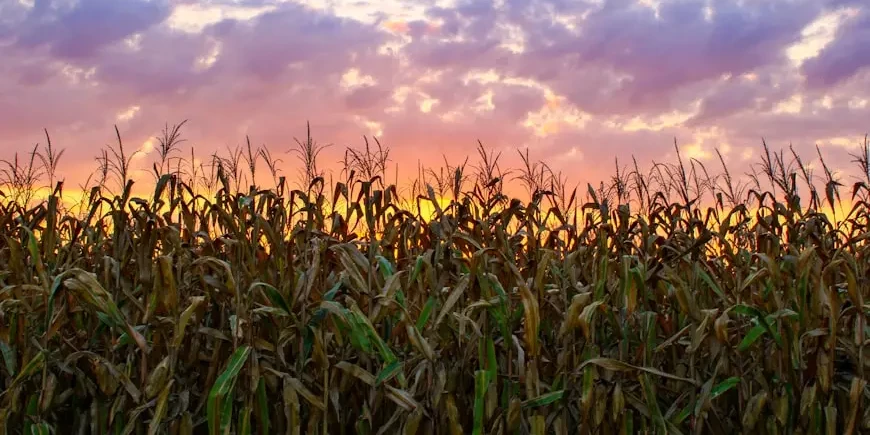
Mexico currently stands at a transformative juncture in its agricultural history, grappling with the tension between a centuries-old heritage of biodiversity and a modern landscape defined by industrial chemical dependency. For decades, the nation’s agricultural sector has been the site of a profound struggle: the preservation of the milpa—a sophisticated polyculture system—against the encroaching tide of synthetic fertilizers, herbicides, and monoculture practices. At the center of this movement toward ecological restoration is Homero Blas Bustamante, an agronomist and farmer whose work in the state of Oaxaca serves as a blueprint for a nationwide transition toward sustainable food systems. Bustamante’s approach is rooted in the philosophy of practical demonstration, utilizing his own land in Cafetitlán as a living laboratory to prove that traditional knowledge, when reinforced by modern ecological science, offers a viable and necessary alternative to the industrial model.
The Historical Context: From the Green Revolution to Agrochemical Lock-in
To understand the significance of Bustamante’s work, one must look at the trajectory of Mexican agriculture over the last century. Mexico is the cradle of maize domestication, and for millennia, the milpa system—incorporating maize, beans, squash, and various other plants—sustained diverse civilizations while maintaining soil fertility. However, the mid-20th century brought the "Green Revolution," a period of rapid technological transfer that introduced high-yield crop varieties and a corresponding reliance on intensive chemical inputs.
Beginning in the 1940s and accelerating through the 1970s, Mexican agricultural policy shifted toward industrialization. Government subsidies and credit programs were often tied to the purchase of synthetic nitrogen fertilizers and chemical pesticides. By the time the North American Free Trade Agreement (NAFTA) was implemented in 1994, the pressure on smallholder farmers (campesinos) reached a breaking point. Small-scale producers were forced to compete with highly subsidized, large-scale industrial corn production from the United States. To survive, many abandoned traditional polycultures for chemical-intensive monocultures, a shift that eventually led to soil degradation, loss of native seed varieties, and a cycle of debt driven by the rising costs of external inputs.

Homero Blas Bustamante: Leading by Demonstration in Oaxaca
In the rugged terrain of Oaxaca, a state renowned for its indigenous heritage and biological diversity, Homero Blas Bustamante has spent his career dismantling the myth that industrial chemicals are the only path to productivity. As an agronomist, Bustamante possesses the technical expertise to analyze soil health and crop yields, but it is his role as a farmer in Cafetitlán that grants him his primary authority among the campesino community.
Bustamante’s methodology is based on "visible results." In Cafetitlán, he manages his land as a testing ground for agroecological techniques, such as the use of bio-fertilizers, cover cropping, and integrated pest management that avoids synthetic toxins. By assuming the financial and physical risks of these transitions himself, he addresses the primary barrier to change for smallholders: the fear of crop failure. When neighboring farmers observe that his yields remain stable or improve while his input costs drop, the transition from chemical dependency to organic practices becomes a logical economic choice rather than a theoretical ideal.
Supporting Data: The Economic and Ecological Cost of Chemical Agriculture
The push for a return to agroecology is supported by increasingly stark data regarding the limitations of the industrial model. According to data from the Mexican Ministry of Agriculture and Rural Development (SADER), the cost of synthetic fertilizers has seen extreme volatility over the last decade, often rising by more than 30% in a single year due to global supply chain disruptions. For a smallholder farmer with limited liquid capital, these price spikes can mean the difference between a profitable harvest and total insolvency.
Furthermore, environmental assessments by the National Institute of Ecology and Climate Change (INECC) indicate that over 45% of Mexico’s soil is affected by some degree of degradation, much of it linked to the excessive use of nitrogen-based fertilizers and the lack of crop rotation inherent in monocultures. In contrast, studies on the milpa system show that polycultures can sequester more carbon, provide better resistance to pests without chemical intervention, and offer a more diverse nutritional profile for the families who cultivate them.
In Oaxaca specifically, where Bustamante operates, the coffee sector—a pillar of the local economy—has been hit hard by climate change and fungal diseases like coffee leaf rust (roya). The conventional response has been increased fungicide application, which often harms the local water table and beneficial insect populations. Bustamante’s work emphasizes that healthy, organic soil creates more resilient plants capable of withstanding these pressures naturally.
A Chronology of the Transition
The movement led by figures like Bustamante has gained significant momentum through a series of recent policy shifts and grassroots milestones:
- 2013: The "Sin Maíz No Hay País" (Without Corn, There is No Country) campaign gains national traction, successfully filing a lawsuit to halt the planting of genetically modified (GM) corn in Mexico to protect native landraces.
- 2020: The Mexican government issues a landmark presidential decree calling for a phase-out of the herbicide glyphosate and the use of genetically modified corn for human consumption by 2024. This move sparked intense debate between environmental advocates and international agrochemical corporations.
- 2021-2023: Implementation of the "Producción para el Bienestar" program, which began including "Agroecological Transition" as a core pillar, providing technical assistance to farmers to move away from synthetic inputs.
- Present Day: Homero Blas Bustamante continues to lead the Mexican Society of Organic Production (SOMEXPRO), working to expand the certification of organic products and ensuring that smallholders have access to fair-trade markets.
Official Responses and Stakeholder Perspectives
The shift toward the practices advocated by Bustamante has met with a complex array of reactions. Government officials within SEMARNAT (Ministry of Environment and Natural Resources) have praised the transition as a matter of national food sovereignty. "We cannot be truly independent if our food system depends on imported chemicals and proprietary seeds," stated a spokesperson for the ministry during a recent forum on agroecology.
Conversely, industry groups such as the National Agricultural Council (CNA) have expressed concerns. They argue that a rapid move away from synthetic fertilizers and herbicides could lead to a drop in overall production volume, potentially increasing Mexico’s reliance on food imports. They advocate for an "integrated" approach that includes both chemical and organic methods.
For Bustamante and his peers, these concerns are precisely why the "testing ground" model is so vital. By providing empirical evidence of success at the farm level, they demonstrate that agroecology is not a return to the past, but a sophisticated advancement into a more stable future.
Broader Impact and Implications for Food Sovereignty
The work of Homero Blas Bustamante in Oaxaca has implications that extend far beyond the borders of Mexico. As the global community faces the dual challenges of climate change and biodiversity loss, the "Oaxacan model" of agroecology offers a case study in resilience.
The restoration of the milpa and the rejection of chemical dependency represent a move toward "food sovereignty"—the right of peoples to healthy and culturally appropriate food produced through ecologically sound and sustainable methods. By reclaiming traditional knowledge and validating it with modern agronomic science, Bustamante is helping to rebuild the social fabric of rural Mexico.
The transition also has significant implications for public health. Reducing the chemical load in the environment decreases the exposure of farming communities to carcinogenic substances and endocrine disruptors often found in industrial pesticides. Furthermore, the diversification of crops in a polyculture system ensures a more varied diet, addressing issues of malnutrition and obesity that have plagued Mexico since the shift toward processed, corn-syrup-heavy diets.
Analysis: The Path Forward
The success of the movement depends on the scaling of Bustamante’s "see-and-do" philosophy. While individual farmers in Oaxaca are making the switch, a national transition requires systemic support, including infrastructure for bio-fertilizer production, fair-trade logistics, and the protection of native seed banks.
The challenge remains the entrenched nature of the agrochemical industry. For decades, the "choice" to use chemicals was manufactured through policy and marketing. Bustamante’s career has been dedicated to making the alternative visible again. His work suggests that the future of Mexican agriculture does not lie in the laboratory of a multinational corporation, but in the soil of places like Cafetitlán, where the wisdom of the past meets the necessity of the present.
As Mexico continues to navigate this crossroads, the path blazed by Homero Blas Bustamante stands as a testament to the power of grassroots agronomy. By proving that sustainability is both possible and profitable, he is helping to ensure that the rich agricultural traditions of the campesino are not just a memory, but a living, breathing foundation for the nation’s future.