A novel postbiotic ingredient, Thryvia, has officially entered the market, bolstered by a growing body of scientific evidence and the manufacturing prowess of a prominent German ingredient supplier. Developed by Superbrewed Food, Thryvia is derived from a specific strain of Clostridium tyrobutyricum, a bacterium historically significant in industrial applications for its role in butyric acid production. This development marks a significant step forward in the burgeoning postbiotic landscape, offering a potentially valuable new tool for the supplement and functional food industries.
The introduction of Thryvia underscores the increasing sophistication of the postbiotic category, moving beyond general fermentation byproducts to highly characterized and scientifically validated ingredients. Postbiotics, defined as the bioactive compounds secreted by or derived from microorganisms, are gaining traction as consumers and manufacturers seek the benefits of probiotics without the challenges associated with live bacteria, such as stability and specific strain requirements. Thryvia’s emergence suggests a maturation of this field, with a focus on specific microbial metabolites and cellular components that elicit targeted physiological responses.
The Science Behind Thryvia: A Deep Dive into Immune Modulation

At the core of Thryvia’s scientific validation is its unique mechanism of action. According to Superbrewed Food, preclinical and pilot studies indicate that the heat-killed ingredient selectively activates key components of the innate immune system, specifically the pattern-recognition receptors TLR2, TLR5, and NOD2. These receptors play a critical role in the body’s defense mechanisms, identifying and responding to invading pathogens and other foreign substances. The targeted activation of these pathways suggests that Thryvia could contribute to a more balanced and responsive immune function.
Further supporting these findings, a four-week tolerability and consumer perception study yielded positive results across a range of gut health and comfort parameters. While specific metrics from this study were not detailed in the initial announcement, the positive consumer feedback suggests Thryvia is well-received and effectively addresses common concerns related to digestive well-being. The company’s commitment to ongoing research indicates a long-term strategy to further elucidate the full spectrum of Thryvia’s benefits.
From Bacteria to Bioactive: The Genesis of Thryvia
The journey of Thryvia from a specific bacterial strain to a market-ready postbiotic ingredient is a testament to focused research and development. Superbrewed Food identified Clostridium tyrobutyricum as a promising candidate due to its historical association with butyric acid, a short-chain fatty acid (SCFA) known for its numerous health benefits, including its role in gut health and its anti-inflammatory properties. However, the company emphasizes that the precise strain is paramount.
Clostridium tyrobutyricum is a diverse species, and while some strains can be problematic, Superbrewed Food’s specific strain, designated ASM 19, has undergone rigorous safety review and achieved FDA-reviewed GRAS (Generally Recognized As Safe) status. This designation is crucial for its adoption in food and supplement applications, providing a foundational layer of regulatory confidence for manufacturers and consumers alike. The GRAS notification process involves a thorough evaluation of scientific data demonstrating the ingredient’s safety under its intended conditions of use.

Strategic Manufacturing and Investment: The DÖHLER Partnership
The production of Thryvia has been expertly developed and refined by DÖHLER, a renowned German ingredient supplier with a global footprint. DÖHLER’s involvement extends beyond manufacturing; the company has also made a strategic investment in Superbrewed Food through its venture capital arm. This partnership is significant for several reasons.
Firstly, DÖHLER’s established expertise in fermentation and ingredient production ensures a high-quality, scalable manufacturing process for Thryvia. The ability to produce the ingredient consistently and efficiently is critical for meeting market demand and maintaining product integrity. Secondly, DÖHLER’s investment signals strong confidence in Thryvia’s market potential and Superbrewed Food’s scientific approach. This financial backing can fuel further research, market development, and expansion efforts.
The manufacturing of Thryvia in DÖHLER’s European facilities offers a distinct advantage, particularly concerning future non-GMO certification. According to Superbrewed CEO Bryan Tracey, North American fermented ingredients often utilize GMO carbohydrates in their production. Superbrewed Food’s process, facilitated by DÖHLER, is designed to pave the way for potential non-GMO certification, aligning with a growing consumer preference for non-genetically modified products.
The Protein Powerhouse: Unpacking Thryvia’s Composition
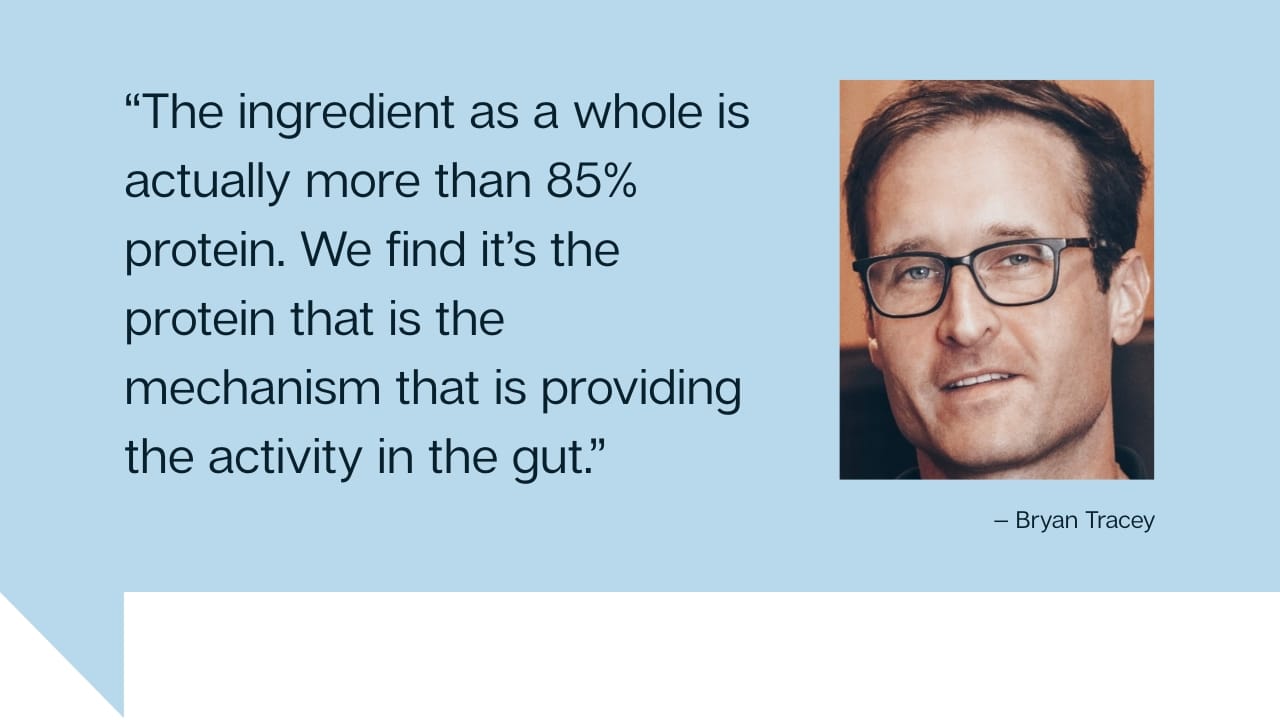
A key insight emerging from Superbrewed Food’s research is the significant protein content of Thryvia. Bryan Tracey explained to SupplySide Supplement Journal that the ingredient is comprised of "more than 85% protein," and it is this protein component that is believed to be the primary driver of its biological activity in the gut. This revelation positions Thryvia not just as a postbiotic in the traditional sense of microbial metabolites, but as a "protein-derived" postbiotic, highlighting a unique characteristic.
This protein-centric understanding opens up avenues for further innovation. The inherent properties of these proteins could potentially be leveraged for applications beyond their current postbiotic role, suggesting a multi-faceted potential for the ingredient.
Industry Veteran Sees Immense Potential
The protein component of Thryvia, and its potential for future development, was a significant draw for industry veteran Mike Bush. Bush, former president and CEO of Ganeden and a former board member of the International Probiotics Association (IPA), has joined Superbrewed Food’s board. His extensive experience in the probiotic and functional ingredient sectors provides valuable strategic guidance.
Bush commented on the attractive properties of the protein, suggesting it could warrant development as a standalone ingredient. However, he also emphasized the compelling postbiotic narrative of the whole ingredient. He highlighted Thryvia’s practical advantages for formulators: the inert nature of the bacterial cells makes it shelf-stable and easy to incorporate into various product matrices. Furthermore, its efficacy at a low inclusion rate, around 200 mg, contributes to cost-effectiveness in finished products.
The partnership with DÖHLER is also crucial in Bush’s view, especially concerning market viability. He noted that while many novel ingredients boast impressive scientific backing, their high production costs can limit their commercial success. Thryvia, he stated, benefits from an "inexpensive fermentation process," a critical factor for widespread adoption and consumer accessibility.
The Postbiotic Landscape: A Growing Frontier
The emergence of Thryvia signifies the ongoing evolution and maturation of the postbiotic market. As scientific understanding deepens, ingredients like Thryvia, backed by specific mechanisms of action and robust safety profiles, are poised to capture a larger share of the functional ingredient market. The global postbiotics market is projected to grow significantly in the coming years, driven by consumer demand for scientifically validated health solutions and the inherent advantages of postbiotics over live probiotics in certain applications.
Market research reports consistently highlight the rising consumer awareness of gut health and its impact on overall well-being. This trend, coupled with the increasing demand for natural and scientifically supported ingredients, creates a fertile ground for postbiotics. Thryvia’s focus on immune modulation and gut comfort aligns perfectly with these prevailing consumer interests.
The challenges for postbiotic ingredients often lie in establishing clear differentiation and providing compelling scientific evidence. Thryvia’s approach, emphasizing specific immune receptor activation and demonstrating positive consumer outcomes, addresses these challenges head-on. The collaborative effort between Superbrewed Food and DÖHLER, combining innovative science with advanced manufacturing capabilities, positions Thryvia for a strong market entry.
Implications for the Supplement and Food Industries
The introduction of Thryvia has several key implications for the broader supplement and functional food industries:
- Enhanced Product Development: Thryvia offers formulators a novel postbiotic ingredient with a distinct scientific profile, allowing for the development of new products targeting immune support and gut health. Its protein-derived nature also presents opportunities for unique marketing angles.
- Increased Credibility for Postbiotics: The robust scientific evidence and regulatory clearance (FDA-reviewed GRAS) associated with Thryvia can help build consumer and industry confidence in the postbiotic category as a whole.
- Focus on Specificity and Efficacy: Thryvia exemplifies a trend towards more specific and targeted postbiotic ingredients, moving away from broad-spectrum approaches. This focus on mechanism of action is crucial for demonstrating tangible health benefits.
- Global Manufacturing Synergies: The partnership with DÖHLER highlights the importance of strategic global collaborations for scaling production and ensuring quality, particularly for ingredients with complex manufacturing processes.
- Potential for Non-GMO Products: The manufacturing process’s design for future non-GMO certification addresses a significant consumer demand, potentially giving Thryvia-containing products a competitive edge.
As the supplement industry continues to seek innovative solutions backed by solid science, ingredients like Thryvia are set to play an increasingly important role. The combination of a well-characterized bacterial strain, a focus on protein-driven bioactivity, stringent safety evaluations, and a strategic manufacturing partnership with a global leader suggests that Thryvia is poised to make a significant impact on the market. Further research and clinical trials will undoubtedly continue to uncover the full potential of this promising new postbiotic ingredient.