
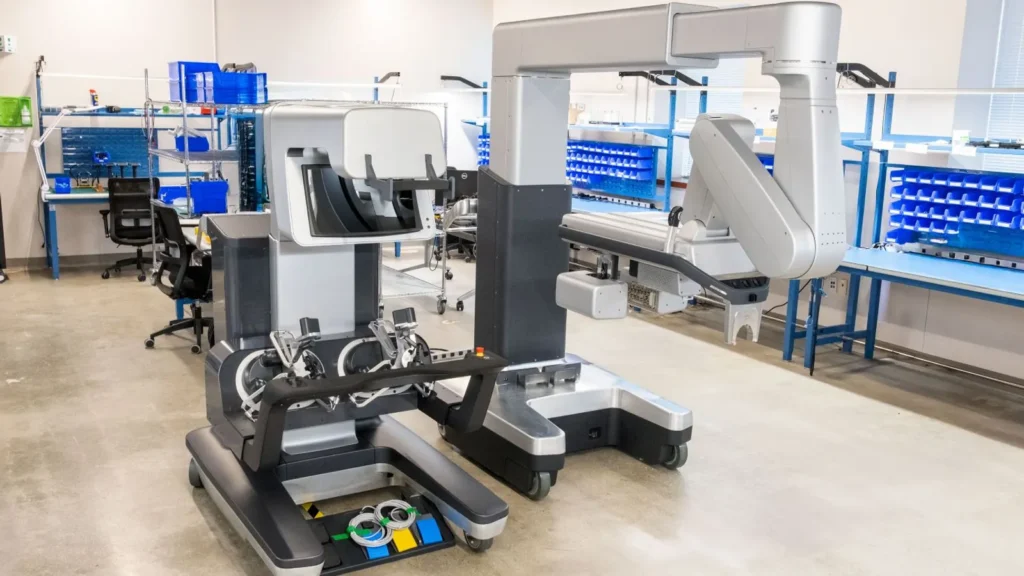
The board of directors of Vicarious Surgical, a developer of advanced robotic-assisted surgical systems, has formally recommended that its stockholders approve a plan to dissolve the company and liquidate its assets through an insolvency procedure. In a definitive proxy statement filed with the Securities and Exchange Commission on June 22, the board outlined a proposed wind-down of operations, marking a significant collapse for a firm once heralded as a high-potential challenger in the soft tissue robotics market. The board has scheduled a special meeting of stockholders for July 21 to vote on the proposal, which would effectively end the company’s efforts to bring its proprietary single-port robotic system to market.
The decision follows a period of acute financial distress characterized by recurring operating losses and negative cash flows. According to the board’s notice, the company is expected to continue generating substantial losses and consuming its remaining cash resources for the foreseeable future without any clear path to commercialization or additional funding. As of March 31, Vicarious Surgical reported cash and cash equivalents of approximately $3.7 million, a figure the company admitted is insufficient to sustain operations as a "going concern" for any significant period.
A Strategic Pivot Toward Insolvency
The recommendation for dissolution comes after the company’s management and board exhausted various strategic alternatives. Over the past several months, Vicarious Surgical actively sought additional equity or debt financing and attempted to secure a buyer or a strategic partner to keep the venture afloat. However, these efforts proved unsuccessful. The company noted in its filing that while it continues to explore potential last-minute opportunities, it is highly unlikely that a viable transaction will emerge before the scheduled shareholder vote.

The proposed liquidation plan represents a stark reversal for a company that entered the public markets with significant fanfare. Vicarious Surgical, which focuses on developing a single-port robotic system designed for abdominal procedures, had aimed to disrupt a market long dominated by Intuitive Surgical’s da Vinci platform. By utilizing a single entry point for surgical instruments, the Vicarious system was intended to minimize patient trauma and improve surgeon precision through enhanced visualization and "decoupled" robotic arms. Despite the technological promise, the capital-intensive nature of medical device development, combined with shifting market dynamics and internal delays, ultimately outpaced the company’s ability to secure long-term stability.
Chronology of Challenges and Technical Setbacks
The path to the current insolvency proposal is marked by a series of operational hurdles and missed milestones that eroded investor confidence. Vicarious Surgical gained prominence in 2021 when it went public via a merger with D8 Holdings Corp., a special purpose acquisition company (SPAC). At the time of the merger, the company was valued at approximately $1.1 billion and counted high-profile figures such as Bill Gates, Eric Schmidt, and Khosla Ventures among its backers.

However, the transition from a well-funded startup to a public entity coincided with a tightening of the capital markets and increased regulatory scrutiny for robotic surgical platforms. A critical turning point occurred last year when the company announced a significant delay in its clinical timeline. A planned clinical trial to evaluate the safety and efficacy of its robotic system—a prerequisite for FDA clearance—was postponed, pushing the potential commercial launch further into the future.
In early 2024, the company’s troubles deepened when it received a delisting notice from the New York Stock Exchange (NYSE) because its market capitalization and stock price had fallen below required thresholds. While the company expressed hope at the time that it could regain compliance by achieving a "design freeze" for its robot by the end of the year and potentially listing on the Nasdaq, the financial reality of its burn rate made those goals increasingly unattainable.
Leadership Transitions and Personnel Shifts
The company’s internal instability was further highlighted by recent changes in its executive suite. CEO Stephen From, who joined the company last year to steer it through its developmental milestones, implemented several rounds of cost-cutting measures and operational shifts. These maneuvers were intended to preserve cash and focus resources on the most critical engineering challenges. Despite these efforts, the scale of the required investment for a de novo robotic platform proved too great for the company’s dwindling reserves.
Compounding the sense of a closing chapter, Vicarious Surgical’s Chief Financial Officer, Sarah Romano, announced her intention to step down effective July 22. Romano, who has navigated the company’s complex financial reporting during its decline, is slated to join SS Innovations International, another developer in the robotic surgery space. Her departure on the day after the scheduled shareholder vote underscores the finality of the board’s recommendation to wind down.
The Competitive Landscape of Soft Tissue Robotics
The failure of Vicarious Surgical to reach the commercial stage highlights the immense barriers to entry in the surgical robotics industry. The market for soft tissue surgery is currently undergoing a period of rapid evolution and intense competition. While Intuitive Surgical remains the dominant force with its da Vinci system, several well-funded incumbents and agile newcomers have entered the fray.
Medtronic, with its Hugo robotic-assisted surgery (RAS) system, and Johnson & Johnson, through its Ottava platform, represent the "Big MedTech" challenge to Intuitive’s monopoly. Additionally, companies such as CMR Surgical with the Versius system, Distalmotion with the Dexter robot, and Moon Surgical with the Maestro system have all made significant strides in securing regulatory approvals and clinical adoption globally.

Vicarious Surgical’s specific focus on a single-port system placed it in direct competition with Intuitive’s da Vinci SP (Single Port). Developing a system that can provide the necessary force, dexterity, and visualization through a single small incision is a monumental engineering task. While Vicarious claimed its architecture offered superior reach and "natural" movement compared to existing technologies, the transition from a laboratory prototype to a clinical-grade, manufacturable product requires hundreds of millions of dollars in research, development, and regulatory testing—capital that Vicarious was ultimately unable to sustain.
Financial Data and Market Implications
The financial metrics disclosed in the recent proxy filing provide a sobering look at the cost of innovation in this sector. Since its inception, Vicarious Surgical has operated at a loss, a common trait for pre-revenue medical device companies. However, the widening gap between its cash burn and its ability to raise capital became a terminal issue. The $3.7 million remaining in the bank as of late March stands in sharp contrast to the tens of millions typically required annually to maintain a staff of specialized engineers and navigate the FDA’s pre-market approval (PMA) or 510(k) pathways.
The broader implications of the Vicarious Surgical liquidation may be felt across the MedTech startup ecosystem. The company’s trajectory serves as a cautionary tale regarding the "SPAC boom" of 2020-2021, where many pre-revenue technology companies went public with high valuations based on long-term projections. As interest rates rose and investor appetite for risk-heavy "moonshot" projects waned, many of these companies found themselves unable to return to the public markets for the follow-on funding necessary to reach commercialization.
Looking Ahead: The Liquidation Process
If shareholders approve the proposal on July 21, the company will begin the formal process of winding down its corporate affairs. This will involve the sale of its intellectual property, equipment, and other physical assets. The proceeds from these sales, if any, will first be used to satisfy the company’s remaining liabilities and obligations to creditors. Given the insolvency status, it remains uncertain whether any residual value will be distributed to common stockholders.
The dissolution of Vicarious Surgical marks the end of a high-stakes attempt to redefine abdominal surgery. While the company’s vision of a highly portable, single-port robotic system garnered significant interest from the surgical community and elite investors, the reality of the "valley of death" in medical device development proved insurmountable. For the industry, the focus now shifts to the remaining competitors who must prove they can not only develop advanced technology but also build the commercial infrastructure necessary to challenge the status quo in the world’s operating rooms.
As of the time of publication, Vicarious Surgical has not provided further comment regarding the specifics of the liquidation plan or the potential for a last-minute acquisition of its intellectual property. The surgical robotics community will be watching the July 21 vote closely, as it represents the final chapter for one of the industry’s most watched startups.