

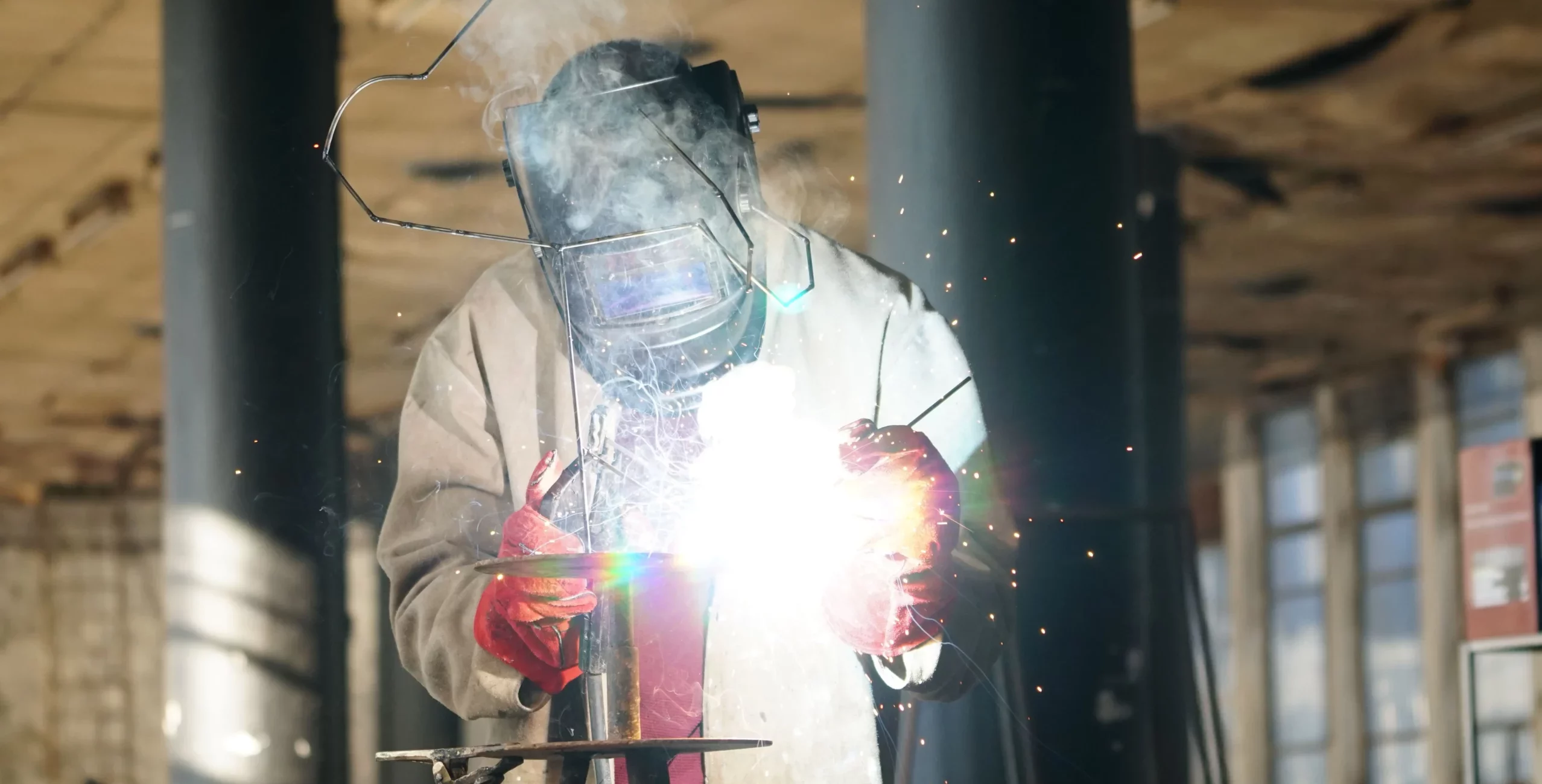
Deep within the rolling landscapes of Waldoboro, Maine, the rhythmic resonance of a hammer meeting metal serves as a constant pulse within the garage of a sprawling farmhouse. This is the workshop of Erica Moody, a master metalworker whose career has transitioned from the high-stakes world of architectural fabrication to the intimate, meticulous craft of fine brass servingware. The air inside the studio is heavy with the scent of hot metal and the fine particulate of industrial polish, a sensory testament to the labor-intensive processes that define Moody’s daily operations. On a recent afternoon, the atmosphere was one of quiet, focused productivity as Moody’s summer assistant, Annalise Rubida, worked at a long table, carefully drilling spoon handles and preparing them for the delicate bending process. Nearby, rows of finished serving spoons and forks stood in formation, their handles etched with hauntingly intricate patterns that have become a hallmark of Moody’s contemporary portfolio.
The Evolution of a Metalworking Career
Erica Moody’s tenure in the field of professional metalwork spans over three decades, beginning in 1994. Her trajectory reflects a broader trend within the American craft movement: a shift from large-scale industrial commissions toward smaller, highly specialized artisanal products. Before establishing her presence in the Midcoast Maine region, Moody spent twenty years in the Boston area, where she built a reputation as a versatile and highly skilled fabricator. Her early career was defined by collaborations with leading architects, interior designers, and institutional clients, requiring a mastery of varied disciplines including welding, machining, forging, and specialized finishing.
The diversity of her past projects illustrates the breadth of her technical expertise. In her Boston-based years, Moody was tasked with creating everything from custom-engineered hinges and sophisticated railings to high-end furniture pieces. One of her more notable and unusual commissions involved the fabrication of a wind tunnel for a science laboratory at Harvard University—a project that demanded extreme precision and an understanding of aerodynamic structural integrity. This foundation in rigorous, technical metalwork provided the scaffolding for her current, more artistic endeavors in Waldoboro.
Transitioning to the Artisanal Table
The move to Waldoboro represented a pivot toward a more personal and sustainable mode of production. While architectural metalwork remains a part of her skillset, Moody has increasingly focused on what she calls "fine metal tools for the kitchen and home." This transition allows for a more direct connection between the maker and the end-user, a shift that aligns with the growing consumer demand for heirloom-quality, domestically produced goods.
The process of creating a single brass spoon in Moody’s workshop is a multi-stage endeavor that marries industrial technique with hand-forged artistry. Each piece begins as raw stock—typically brass, though she also works with steel and copper. The metal is cut, forged to shape at the anvil, and then refined through a series of machining and hand-filing steps. The final stage involves the application of decorative elements, often utilizing etching techniques that Moody traces back to her childhood influences.
Artistic Lineage and the Influence of Printmaking
The aesthetic sensibility found in Moody’s metalwork is deeply rooted in her upbringing in Saratoga, New York. She credits much of her artistic development to observing her mother, a professional printmaker, whose work involved etching metal plates to create complex visual narratives. This early exposure to the chemical and physical processes of etching—applying resists, bathing plates in acid, and observing the resulting textures—has directly informed Moody’s approach to surface design on her brassware.
"She would etch plates and print them, and then stitch and sew onto them," Moody recalls of her mother’s process. This multidisciplinary approach to craft—combining the rigidity of metal with the delicacy of textiles and print—is mirrored in Moody’s own work. By etching patterns into the handles of her serving pieces, she elevates a functional tool into a piece of sculpture, bridging the gap between the utilitarian and the ornamental.
The Economic Impact of the Craft Movement in Maine
Moody’s success in Waldoboro is reflective of a larger economic trend within the state of Maine. According to data from the Maine Crafts Association and the Maine Department of Economic and Community Development, the "creative economy" accounts for a significant portion of the state’s GDP, contributing billions of dollars annually. Maine has long been a haven for artisans, attracted by the lower cost of living relative to urban centers like Boston or New York, as well as a cultural heritage that prizes self-sufficiency and manual skill.
In rural communities like Waldoboro, the presence of high-end artisanal workshops provides more than just aesthetic value; it contributes to local economic stabilization. These businesses often provide specialized employment and apprenticeship opportunities, as seen with Moody’s mentorship of Annalise Rubida. By bringing young talent into the trade, Moody is participating in a crucial transfer of knowledge that ensures the survival of traditional metalworking techniques in an increasingly digital world.
Technical Analysis of Brass Fabrication
The choice of brass as a primary medium is both aesthetic and practical. Brass, an alloy of copper and zinc, is prized for its malleability, corrosion resistance, and its warm, golden hue that develops a unique patina over time. From a metallurgical perspective, brass is an ideal material for hand-forging servingware because it can be work-hardened to maintain its shape while remaining soft enough to accept intricate surface detailing.
In Moody’s workshop, the technical workflow involves:
- Material Selection: Utilizing high-quality alloys that meet food-safety standards while offering the necessary structural integrity.
- Forging and Shaping: Using heat to alter the molecular structure of the metal, allowing it to be hammered into the ergonomic curves required for spoons and forks.
- Precision Machining: Employing lathes and milling machines to ensure consistency in the functional aspects of the tools.
- Surface Etching: Applying a resist and using acid-etching or engraving techniques to transfer complex patterns onto the metal, a direct nod to the printmaking traditions of Moody’s past.
- Finishing: A rigorous polishing and buffing process that brings out the natural luster of the brass while ensuring a smooth tactile experience for the user.
Mentorship and the Future of the Trade
The presence of Annalise Rubida in the workshop highlights a critical component of the modern craft landscape: the revival of the apprenticeship model. In an era where vocational training in the manual arts has often been sidelined in favor of technology-based education, practitioners like Moody are essential in preserving "tacit knowledge"—the kind of skill that can only be learned through hands-on experience and observation.
Rubida’s role in the workshop involves the repetitive but necessary tasks that form the backbone of production. By drilling handles and assisting in the finishing stages, an apprentice gains a fundamental understanding of the material’s behavior. For Moody, having an assistant allows for a higher volume of production without sacrificing the handmade quality that defines her brand. This collaborative environment also fosters a space for experimentation and the exchange of ideas, ensuring that the craft continues to evolve rather than becoming a static imitation of historical styles.
Broader Implications for the Midcoast Region
The emergence of Waldoboro as a hub for specialized metalwork is part of a broader revitalization of the Midcoast region. Historically known for shipbuilding and heavy industry, towns like Waldoboro are seeing a second life as centers for the "New Maker" movement. This shift has implications for local real estate, as older industrial buildings and farmhouses are repurposed into studios, and for the local tourism industry, which increasingly caters to "craft tourists" seeking authentic, locally made products.
Moody’s work has garnered national attention, appearing in high-profile design publications and being stocked in boutique galleries across the country. This national reach brings external capital into the Maine economy, proving that rural-based artisans can compete on a global scale through e-commerce and a strong brand identity rooted in authenticity.
Conclusion: The Intersection of Utility and Art
Erica Moody’s career serves as a case study in the successful integration of industrial skill and artistic vision. By taking the lessons learned from architectural fabrication and Harvard-bound wind tunnels and applying them to the humble serving spoon, she has created a body of work that celebrates the dignity of manual labor.
As the workshop in Waldoboro continues to produce these "hauntingly delicate" pieces, the impact of Moody’s work extends beyond the kitchen table. It is a contribution to the cultural fabric of Maine, a reinforcement of the value of the apprenticeship system, and a reminder that in an age of mass production, there remains a profound desire for objects that bear the mark of the human hand. The heat of the forge and the smell of hot metal in a Waldoboro garage are not just remnants of a bygone era; they are the ingredients of a thriving, modern, and deeply personal industry.
