








The United States agricultural landscape is currently facing a period of profound legislative and ecological transition as Congress deliberates the provisions of the 2026 Farm Bill. Central to these discussions is a controversial provision known as Section 12006, which critics argue represents a significant rollback of animal welfare standards and a consolidation of power within foreign-owned agribusinesses. This legislative move comes at a time when scientific research is increasingly highlighting the long-term impacts of industrial farming, from the transgenerational effects of fungicides to the systemic health risks posed by microplastics and genetically modified organisms (GMOs). As the bill moves through the House, the debate has expanded beyond simple subsidy allocations to encompass the very sovereignty of state-level food regulations and the future of American land ownership.

The Legislative Flashpoint: Section 12006 and State Sovereignty
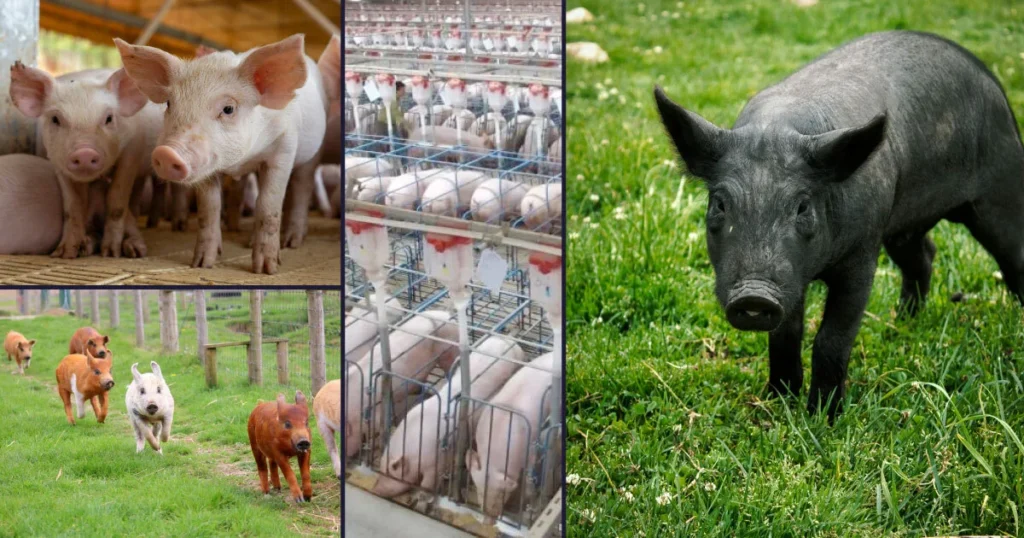
At the heart of the 2026 Farm Bill debate is Section 12006, a provision designed to preempt state-level animal welfare laws. Over the past decade, 15 U.S. states have passed legislation, often via popular ballot initiatives, to ban the most restrictive forms of livestock confinement. These laws typically target "gestation crates" for pregnant pigs, "battery cages" for egg-laying hens, and "veal crates" for calves. The most prominent of these is California’s Proposition 12, which was upheld by the U.S. Supreme Court in 2023. The Court ruled that states have the right to regulate products sold within their borders to protect the health and well-being of their citizens.
Section 12006 seeks to effectively nullify these state mandates by establishing a federal standard that prevents states from imposing stricter requirements than those found at the national level. Proponents of the section, primarily large-scale industrial meat producers, argue that a "patchwork" of state laws creates interstate commerce barriers and increases costs for consumers. However, opponents point out that this provision would dismantle years of progress in humane farming and ignore the democratic will of voters in states like California, Massachusetts, and Michigan.

The primary beneficiaries of Section 12006 appear to be massive, often foreign-controlled, meat-processing corporations. For example, Smithfield Foods, the largest pork producer in the world, is owned by the Chinese WH Group, while JBS, the world’s largest meatpacker, is a Brazilian-based entity. These corporations operate on high-volume, low-margin models that rely on intensive confinement systems. By lobbying for Section 12006, these entities aim to avoid the capital expenditures required to transition to cage-free or crate-free facilities, even as consumer demand for ethically raised meat continues to rise.
The Genomic Frontier: GMO Wheat and Herbicide Resistance
Parallel to the animal welfare debate is the recent U.S. government approval of HB4 genetically engineered (GMO) wheat, developed by the Argentine firm Bioceres Crop Solutions. For decades, wheat remained one of the few major commodity crops in the U.S. not dominated by GMO varieties, largely due to concerns over international trade and consumer acceptance. The approval of HB4 marks a significant shift in U.S. agricultural policy.

HB4 wheat is specifically engineered to be drought-tolerant and resistant to glufosinate-ammonium, a broad-spectrum herbicide. While drought tolerance is marketed as a climate-resilience tool, environmental advocacy groups like Friends of the Earth warn that the primary impact will be an increase in the use of glufosinate. Unlike glyphosate, which has faced extensive litigation over cancer links, glufosinate is under scrutiny for its neurotoxicity and reproductive health risks. It is currently banned in the European Union due to its potential to cause developmental harm.
The introduction of GMO wheat poses a dual threat to American farmers. First, there is the risk of "transgenic drift," where GMO pollen contaminates non-GMO and organic wheat fields, potentially stripping farmers of their organic certification and access to premium markets. Second, major export markets, particularly in Asia and Europe, maintain strict regulations against GMO wheat. If U.S. wheat supplies become comingled with HB4 varieties, American exporters could face widespread rejections, mirroring the 2013 incident where the discovery of unapproved GMO wheat in Oregon led to a temporary halt in imports by Japan and South Korea.

Transgenerational Toxicity: The Long Shadow of Fungicides
As the Farm Bill considers the future of chemical usage, new scientific data suggests that the impacts of agricultural toxins may be far more persistent than previously understood. A groundbreaking study recently published in the Proceedings of the National Academy of Sciences (PNAS) has revealed that exposure to common fungicides can have health consequences that span dozens of generations.
The research focused on vinclozolin, a fungicide historically used on a wide array of crops including strawberries, lettuce, and grapes. Researchers found that when pregnant rats were exposed to a single dose of the chemical, their descendants showed increased rates of kidney disease, prostate disease, and infertility. Most alarmingly, these health issues did not fade over time; in fact, they worsened. By the 20th and 23rd generations, the "epimutations"—chemical changes that turn genes on or off without altering the DNA sequence—were still present in the sperm of the male descendants.

This study underscores a major flaw in current regulatory frameworks, which typically only assess the "direct toxicity" of a substance on the individual exposed. The reality of epigenetic inheritance means that the pesticides and fungicides applied to fields today could be shaping the health profiles of humans and wildlife for centuries. This adds significant weight to the arguments for organic and regenerative farming practices that eschew synthetic chemical inputs in favor of biological pest management.
The Microplastic Crisis and Human Reproductive Health
The health implications of the modern industrial system extend beyond the field to the very packaging used to transport food. The documentary The Plastic Detox has recently brought renewed attention to the work of epidemiologist Shanna Swan, whose research indicates that the chemicals used in plastics—such as phthalates and bisphenols—are significant drivers of the global decline in human fertility.

Swan’s research suggests that sperm counts in Western countries have dropped by more than 50% over the last four decades. These endocrine-disrupting chemicals (EDCs) mimic hormones and interfere with the reproductive development of fetuses. The documentary highlights a small-scale experiment where couples struggling with infertility were able to see measurable improvements in their hormonal health after just three months of reducing their exposure to plastics.
This issue is increasingly relevant to the Farm Bill as the agricultural sector is one of the largest users of "plasticulture"—the use of plastic films for mulching, irrigation, and greenhouse structures. As these plastics degrade, they shed microplastics into the soil, which are then taken up by crops and enter the human food chain. Addressing the plastic crisis is no longer just an ocean-conservation issue; it is a fundamental public health necessity linked to the future of human reproduction.

Land Tenure and the Future of the American Small Farm
The economic structure of American farming is also at a crossroads. Over the next 20 years, approximately 300 million acres of U.S. agricultural land—roughly one-third of all land in the lower 48 states—is expected to change hands as the current generation of farmers retires or passes away. How this land is transferred will dictate the resilience of the U.S. food system.
Currently, the high cost of land is the single greatest barrier for new and beginning farmers. In many regions, farmland prices have been driven up by institutional investors, real estate developers, and large-scale agricultural conglomerates. These entities often view land as a financial asset rather than a resource for food production, leading to the consolidation of small farms into massive industrial operations.

Advocates for small-scale agriculture are calling on Congress to use the 2026 Farm Bill to provide better land-access incentives, such as tax breaks for landowners who sell to beginning farmers and increased funding for the Agricultural Conservation Easement Program (ACEP). Without intervention, the trend of land consolidation is likely to accelerate, further hollowing out rural communities and reducing the diversity of the American food supply.
Ecological Interdependence: The Role of Fungi and Forest Networks
While much of the Farm Bill focuses on annual crops, the health of the nation’s forests and the underground networks that support them is gaining recognition as a vital component of environmental stability. Forest ecologist Suzanne Simard, in her recent work When the Forest Breathes, has demonstrated that forests are not merely collections of individual trees competing for resources, but complex, cooperative communities.

Simard’s research into mycorrhizal fungi—the "Wood Wide Web"—shows that older "mother trees" use fungal networks to send nutrients and chemical signals to younger saplings, helping them survive in the shade or during times of stress. These fungi are responsible for sequestering vast amounts of carbon and are estimated to contribute $55 trillion to the global economy through their roles in nutrient cycling and soil formation.
However, industrial forestry and heavy pesticide use in agriculture threaten these delicate underground networks. Mycologists are now urging international bodies to recognize fungi as a "third kingdom" of life, deserving of the same conservation status as plants and animals. Protecting these networks is essential for maintaining the soil health required for long-term food security.

Nutritional Science and Mental Health: The Fructose Connection
Finally, new research is bridging the gap between agricultural output and mental health. A study published in Brain, Behavior, and Immunity has linked fructose malabsorption to increased levels of anxiety and systemic inflammation. Fructose, a sugar found in fruit but consumed in massive quantities in the form of high-fructose corn syrup (HFCS), can be difficult for the human digestive tract to process in high doses.
When fructose is not absorbed in the small intestine, it travels to the large intestine, where it can alter the gut microbiome and trigger an immune response. This "leaky gut" effect leads to body-wide inflammation, which has been increasingly linked to psychiatric conditions. Given that the Farm Bill heavily subsidizes corn production—the feedstock for HFCS—this research suggests that current agricultural subsidies may be indirectly contributing to the rising rates of metabolic and mental health disorders in the United States.

Broader Impact and Implications
The 2026 Farm Bill is more than a budget for the Department of Agriculture; it is a blueprint for the nation’s health, environment, and ethical standards. The inclusion of Section 12006 suggests a preference for corporate efficiency over state-level democracy and animal welfare. Meanwhile, the approval of GMO wheat and the continued reliance on transgenerational toxins highlight a regulatory system that may be failing to account for long-term ecological and biological costs.
As the debate continues, the focus remains on whether the U.S. will continue to move toward a highly consolidated, chemically dependent industrial model, or if it will pivot toward a regenerative system that prioritizes soil health, animal welfare, and the viability of small-scale farmers. The decisions made in the coming months will resonate not just for the next five years of the Farm Bill’s lifespan, but for the generations that will inherit the consequences of today’s agricultural policies.