







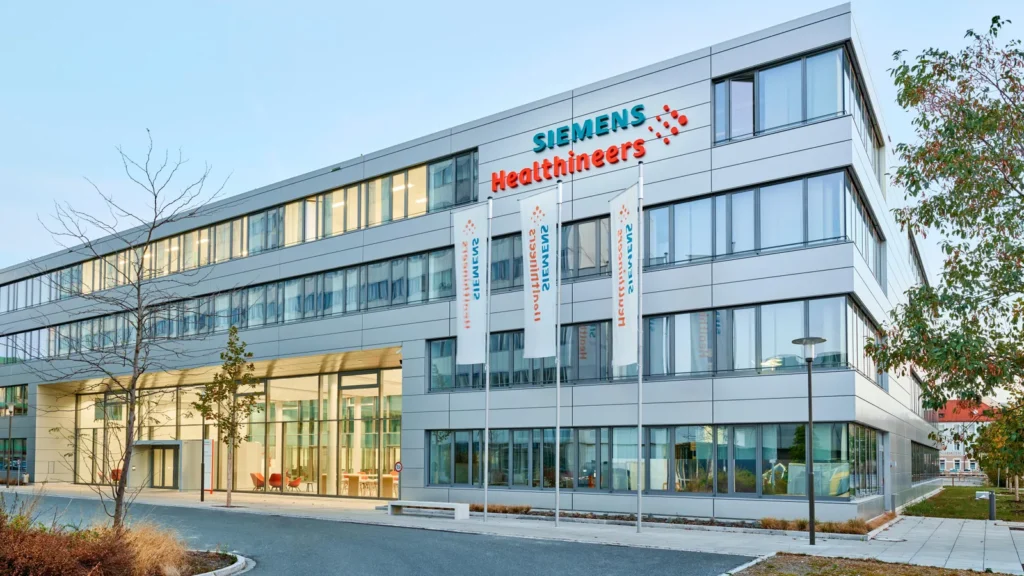
Siemens AG has officially signaled its intention to accelerate the structural separation of its healthcare subsidiary, Siemens Healthineers, marking a definitive shift in the German industrial giant’s long-term corporate strategy. In a move that has been anticipated by market analysts for several years, the Munich-based parent company confirmed that preparations are well underway to relinquish its majority stake in the medical technology powerhouse. This transition is expected to culminate in a pivotal vote at the company’s upcoming annual general meeting in February, where shareholders will decide on the final execution of the spinoff plan.
The decision represents a watershed moment for both organizations. For Siemens AG, the divestment is the final cornerstone of a decade-long transformation from a sprawling conglomerate into a focused technology company centered on industrial digitalization, smart infrastructure, and sustainable transportation. For Siemens Healthineers, the move promises total operational autonomy, removing the "conglomerate discount" that often weighs on the valuation of subsidiary companies and providing the entity with a cleaner balance sheet to pursue aggressive growth in the rapidly evolving global medtech landscape.
A Strategic Roadmap to Independence
The journey toward this full separation began in earnest in March 2018, when Siemens Healthineers was first listed on the Frankfurt Stock Exchange. At the time of the Initial Public Offering (IPO), Siemens AG retained an approximately 85% stake, a figure that has since been adjusted through various capital measures and secondary offerings to approximately 67%. The upcoming spinoff will see Siemens stockholders receive shares of Siemens Healthineers directly, a mechanism designed to ensure that the value created within the healthcare division is transferred directly to the investors who have supported the parent company’s diversification.
The strategic rationale behind the move is rooted in capital allocation flexibility. By decoupling the healthcare business, Siemens AG can direct its significant R&D budget and investment capital toward its core "Digital Industries" and "Smart Infrastructure" segments. These divisions are currently at the forefront of the "Industry 4.0" revolution, focusing on software-driven automation and the "industrial metaverse." Conversely, Siemens Healthineers operates in a capital-intensive sector characterized by long product lifecycles in medical imaging and high-stakes innovation in laboratory diagnostics and cancer therapy.
Historical Context and the Evolution of Siemens Healthineers
To understand the magnitude of this spinoff, one must look at the historical trajectory of Siemens Healthineers. Long considered the "crown jewel" of the Siemens portfolio, the healthcare division has consistently delivered high margins and stable cash flows, even during periods of industrial cyclicality. However, the management team at Siemens AG, led by CEO Roland Busch, has argued that the differing business models of a software-heavy industrial firm and a patient-centric medical device firm create internal friction.
The 2021 acquisition of Varian Medical Systems for $16.4 billion was a clear indicator of Healthineers’ intent to operate as a sovereign global leader. That acquisition, which integrated world-class radiation oncology solutions into the Healthineers portfolio, was largely managed and funded with a degree of independence that signaled the inevitable exit of the parent company. The Varian deal transformed Healthineers into a comprehensive "medtech" player, moving beyond diagnostic imaging (MRIs and CT scans) into active therapeutic intervention.
Financial Performance and Segment Analysis
Siemens Healthineers currently operates across four primary segments: Imaging, Diagnostics, Varian, and Advanced Therapies.
- Imaging: This remains the most profitable arm, contributing the lion’s share of the company’s revenue. With a market-leading position in magnetic resonance (MR), computed tomography (CT), and molecular imaging, this segment benefits from an aging global population and the rising demand for early disease detection.
- Diagnostics: While this segment faced headwinds following the decline in COVID-19 testing demand, a major restructuring program is currently underway. The "Atellica" laboratory platform is central to the company’s strategy to regain market share from competitors like Abbott and Roche.
- Varian: Since its integration, Varian has seen double-digit growth in orders, driven by the expansion of cancer care infrastructure in emerging markets.
- Advanced Therapies: This segment focuses on image-guided minimally invasive treatments, a field that is seeing rapid adoption as hospitals look to reduce patient recovery times and lower costs.
In the most recent fiscal year, Siemens Healthineers reported revenues exceeding €21 billion. By exiting the majority position, Siemens AG allows the market to value these specific revenue streams without the noise of the parent company’s railway or factory automation businesses.
The Regulatory Landscape and Contractual Hurdles
Despite the forward momentum, the path to the February vote is not without complexity. Siemens AG noted in its latest update that "final confirmation from regulators remains outstanding." In the European Union and the United States—two of the company’s largest markets—spinoffs of this scale are subject to rigorous antitrust and tax scrutiny.
The "review of all key contractual relationships" mentioned by the company is particularly critical. Siemens AG and Siemens Healthineers currently share various administrative services, real estate, and intellectual property frameworks. The separation process requires the untangling of these "intercompany agreements" to ensure that Healthineers can function as a truly standalone entity without "parental" support. This includes establishing independent IT infrastructures, HR systems, and procurement chains.
From a financial perspective, the spinoff must be structured to be tax-neutral for shareholders. Under German tax law, specific holding periods and distribution methods must be adhered to so that stockholders are not hit with immediate capital gains liabilities upon receiving their new Healthineers shares.
Market Reactions and Shareholder Sentiment
Institutional investors have generally reacted positively to the news. The prevailing sentiment in the financial community is that "pure-play" companies are easier to value and often command higher price-to-earnings (P/E) multiples. Analysts from major European investment banks have noted that Siemens AG has been trading at a discount compared to more focused peers like Schneider Electric or Rockwell Automation. By shedding the majority stake in Healthineers, Siemens AG moves closer to that pure-play industrial software profile.
Similarly, Healthineers stands to benefit from increased liquidity in its own stock. As Siemens AG distributes shares, the "free float" (the portion of shares available for public trading) will increase significantly. This often leads to the stock’s inclusion in more prominent global indices, attracting passive investment from ETFs and large-scale mutual funds that previously found the limited free float a barrier to entry.

Broader Implications for the Global Medtech Industry
The Siemens spinoff is part of a broader global trend of "de-conglomeration." In recent years, we have seen General Electric (GE) split into three separate entities (GE Aerospace, GE Vernova, and GE HealthCare), and Johnson & Johnson spin off its consumer health business into Kenvue.
These moves suggest that the era of the "industrial supermarket" is over. In the modern economy, agility and specialized focus are seen as more valuable than the perceived safety of diversification. For the medtech industry specifically, the independence of Siemens Healthineers means it can now use its own stock as "currency" for future acquisitions without needing approval from a parent board that might have competing priorities in the energy or rail sectors.
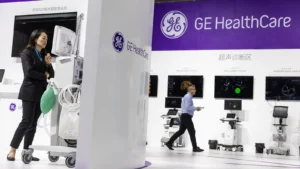
As healthcare becomes increasingly data-driven, Healthineers is expected to lean heavily into Artificial Intelligence (AI) for image interpretation and "digital twins" for surgical planning. Having the autonomy to pivot quickly into these digital health spaces is essential for maintaining a competitive edge against tech-native entrants and traditional rivals like GE HealthCare and Philips.
Looking Ahead to the February Annual Meeting
The upcoming vote in February is more than a formality; it is the final legal trigger for one of the largest corporate reorganizations in German history. Shareholders will be looking for specific details regarding the distribution ratio—how many Healthineers shares will be granted for every Siemens AG share held—and the exact timeline for the transfer.
Between now and February, the management teams of both companies will likely embark on a global roadshow to reassure investors that the "umbilical cord" can be cut without disrupting service to hospital clients or slowing the pace of innovation.
While Siemens AG will likely retain a minority "financial stake" in the short term to maintain some balance sheet stability, the message is clear: the era of the Siemens conglomerate is ending, and the era of two independent, global leaders is beginning. The success of this transition will be measured not just by the stock price on the day of the spinoff, but by the ability of both companies to thrive in their respective, highly specialized ecosystems over the next decade.