


GE HealthCare and DeepHealth, a subsidiary of RadNet, Inc., have announced a significant expansion of their strategic collaboration, marking a pivotal shift in the integration of artificial intelligence into the global breast cancer screening landscape. Building upon an initial agreement established in early 2024, the two organizations are moving to deploy advanced AI-driven clinical tools and workflow solutions across international markets. This expanded partnership aims to address the critical challenges of clinician burnout, the rising demand for early cancer detection, and the complexities associated with screening diverse patient populations, particularly those with dense breast tissue.
The collaboration centers on the integration of DeepHealth’s comprehensive AI portfolio with GE HealthCare’s industry-leading mammography hardware, specifically the Senographe Pristina and the recently unveiled Pristina Via systems. By combining high-resolution imaging hardware with sophisticated algorithmic analysis, the partnership seeks to transform the traditional mammography workflow into an intelligent, data-driven process that enhances diagnostic accuracy while streamlining administrative and clinical tasks for radiologists.
The Technological Foundation: Hardware Meets Artificial Intelligence
At the heart of this expansion is the synergy between GE HealthCare’s imaging infrastructure and DeepHealth’s software ecosystem. GE HealthCare’s Senographe Pristina has long been recognized for its focus on patient comfort, featuring a design intended to reduce the anxiety and physical discomfort often associated with mammograms. In late 2024, the company introduced Pristina Via, a workflow solution designed to optimize the technologist’s experience and improve overall throughput in busy imaging centers.

DeepHealth, acquired by RadNet in 2020, brings a suite of AI tools that have been validated through extensive clinical data. The expanded agreement allows GE HealthCare to offer several key DeepHealth applications as part of its mammography packages. These include:
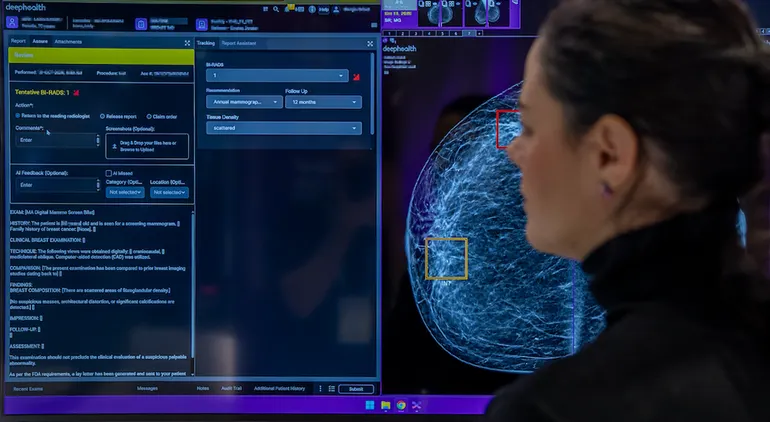
- Automated Lesion Localization: An AI solution that identifies potential abnormalities and provides a "degree of suspicion" score. This helps radiologists prioritize cases and focus on areas that require the most scrutiny.
- Automated Breast Density Assessment: Identifying breast density is a critical component of modern screening. Women with dense breast tissue face a higher risk of cancer, and tumors are often harder to detect on standard mammograms. The AI-driven assessment provides objective, consistent categorization, reducing the variability often found in manual assessments.
- SmartScan and Workflow Orchestration: These tools are designed to manage the high volume of data generated by modern 3D mammography (Digital Breast Tomosynthesis or DBT), ensuring that the most relevant information is presented to the radiologist at the right time.
Chronology of the GE HealthCare-DeepHealth Alliance
The trajectory of this partnership reflects the rapid evolution of AI in the medical device sector. The timeline began with RadNet’s strategic move to acquire DeepHealth, a startup co-founded by Dr. Gregory Sorensen, to bolster its internal radiology capabilities with proprietary machine learning.
- Early 2024: GE HealthCare and DeepHealth announced their initial partnership. The primary focus was the integration of DeepHealth’s AI with the Senographe Pristina system for the U.S. market. This pilot phase was designed to prove the efficacy of the AI in a real-world clinical setting within the United States’ massive outpatient imaging network.
- Late 2024: GE HealthCare rolled out Pristina Via, a system focused on streamlining the technologist’s workflow. This release set the stage for a more integrated software-hardware approach, moving beyond simple image capture to comprehensive case management.
- Current Expansion: The companies have now moved to a global footing. This expansion involves not just a wider geographic reach—targeting markets in Europe and Asia—but also a deeper integration of the "Safeguard" review process and other secondary review workflows.
Global Clinical Challenges: Addressing the Radiologist Shortage
The expansion of this partnership comes at a time when the global healthcare system is under unprecedented strain. There is a documented shortage of radiologists specializing in breast imaging, particularly in Europe and parts of Asia. According to the Royal College of Radiologists, many countries are facing a double-digit percentage shortfall in the number of consultants needed to meet current demand.
In this context, the integration of AI is not merely a luxury but a clinical necessity. DeepHealth’s AI solutions act as a "force multiplier," allowing radiologists to interpret scans more quickly without sacrificing—and often improving—accuracy. By automating the more routine aspects of the review, such as density assessment and the initial flagging of clear-negative cases, the AI allows human experts to dedicate more time to complex, borderline, or high-risk cases.
Furthermore, the partnership addresses the specific needs of different regulatory environments. In the United States, the standard of care typically involves a single reading by a radiologist. However, in many European countries, "double reading"—where two separate radiologists review every mammogram—is the mandated quality assurance standard. The expanded partnership includes an optional secondary review workflow that uses AI to flag potential misses, effectively serving as an automated "second reader" or an arbitrator in cases of disagreement between human readers.
AI Features and Clinical Efficacy in Diverse Populations
A major focal point of the GE HealthCare and DeepHealth collaboration is the performance of AI in diverse patient populations. Historical data has shown that traditional screening methods can vary in effectiveness based on a patient’s ethnicity and breast tissue composition.
The companies have emphasized that their AI models have been trained on vast, diverse datasets to ensure equitable performance. This is particularly vital for women with dense breast tissue, which accounts for approximately 40% to 50% of the screening-age population. In dense tissue, both the tissue and potential tumors appear white on a mammogram, creating a "masking effect." DeepHealth’s algorithms are specifically tuned to identify the subtle architectural distortions and microcalcifications that might be obscured to the human eye in these cases.
Supporting data suggests that AI-assisted mammography can lead to a significant reduction in false positives, which in turn reduces the number of unnecessary biopsies and the associated patient anxiety. Conversely, it has shown a measurable increase in the cancer detection rate (CDR) for invasive cancers that might have been overlooked during a standard manual review.
Official Strategic Perspectives and Industry Reactions
While specific financial terms of the expanded pact have not been disclosed, executives from both organizations have signaled that this is a cornerstone of their long-term growth strategies.
GE HealthCare, which became an independent entity after spinning off from General Electric in 2023, has identified "Precision Care" as its primary mission. Peter Arduini, CEO of GE HealthCare, has frequently spoken about the company’s transition from a pure hardware manufacturer to a digital health leader. By partnering with DeepHealth, GE HealthCare is able to offer a turnkey solution that includes both the "eyes" (the imaging hardware) and the "brain" (the AI software).
On the other side of the partnership, RadNet and DeepHealth view this as a way to scale their technology far beyond RadNet’s own 350+ imaging centers. Dr. Gregory Sorensen, CEO of DeepHealth, has noted that the goal is to make high-end, AI-powered diagnostics accessible to every woman, regardless of where they receive their care. Industry analysts suggest that this partnership places GE HealthCare in a strong competitive position against other imaging giants like Hologic and Siemens Healthineers, both of whom are also investing heavily in AI-integrated mammography solutions.
The Economic and Strategic Rationale
From an economic perspective, the expansion addresses the "value-based care" model that is becoming increasingly prevalent in global healthcare systems. By improving the efficiency of the screening process, healthcare providers can lower the cost per scan while improving patient outcomes.
The "Safeguard" review process, a key feature of the expanded partnership, is particularly relevant here. In the U.S., where a secondary review is not typically required, the AI can act as a safety net. In Europe, the AI can drastically reduce the labor costs associated with double reading. If an AI can reliably identify a large percentage of scans as "definitively normal," it could potentially allow healthcare systems to move toward a model where human radiologists only review the cases flagged by the AI, though regulatory hurdles for such a shift remain significant.
Broader Impact and the Future of Breast Cancer Screening
The implications of the GE HealthCare and DeepHealth partnership extend beyond the immediate clinical benefits. It represents a broader trend toward the "democratization of expertise." By embedding world-class diagnostic algorithms into mammography systems used in community hospitals and rural clinics, the partnership helps bridge the gap between specialized academic medical centers and local healthcare providers.
As the partnership moves into its next phase, the focus is expected to shift toward multi-modal AI—integrating data from mammography with ultrasound, MRI, and even genetic information to create a comprehensive risk profile for each patient.
The global expansion of this collaboration serves as a benchmark for how medical device manufacturers and software developers can align to solve systemic issues in healthcare. By focusing on international markets and addressing specific regional needs like the European double-reading standard, GE HealthCare and DeepHealth are positioning themselves as leaders in the next generation of oncological care.
In conclusion, the integration of DeepHealth’s AI into GE HealthCare’s global mammography portfolio represents a significant milestone in the fight against breast cancer. It combines the physical precision of advanced imaging hardware with the analytical power of machine learning, providing clinicians with the tools necessary to detect cancer earlier, categorize risk more accurately, and manage increasing patient volumes in an increasingly complex global health environment. As these systems are deployed across Europe, Asia, and the Americas, the data gathered will likely continue to refine the algorithms, leading to a virtuous cycle of improvement in diagnostic standards worldwide.