









In an era defined by unprecedented global interconnectedness and increasingly apparent resource limitations, the dietary supplement industry finds itself at a critical juncture. The intricate dance of global supply chains, perpetually subject to disruption from geopolitical events, climate change, and economic fluctuations, has been further complicated by a growing awareness of the finite nature of natural resources. These converging pressures present a formidable set of challenges and concerns for manufacturers, formulators, and consumers alike, demanding innovative solutions and a recalibrated approach to ingredient procurement and utilization.
Recognizing the urgent need for informed dialogue and actionable strategies, SupplySide Supplement Journal, a leading publication dedicated to the advancements and trends within the nutritional science and supplement sectors, has announced an upcoming educational series webinar. This pivotal online event aims to dissect the multifaceted issues surrounding sustainable ingredient sourcing and formulation, bringing together a distinguished panel of top industry experts. The webinar is designed to provide attendees with practical, real-world insights and guidance on how to seamlessly integrate ethical sourcing practices and robust environmental stewardship into their product development pipelines, thereby fostering innovation that is both efficacious and ecologically responsible.
The impetus for this timely discussion stems from a growing body of evidence highlighting the vulnerability of current supply chains. For instance, recent reports from organizations like the World Economic Forum have consistently flagged supply chain disruptions as a top global risk, with impacts ranging from increased costs and delayed deliveries to outright shortages of critical raw materials. The supplement industry, heavily reliant on botanical extracts, amino acids, vitamins, and minerals often sourced from diverse geographical regions, is particularly susceptible to these vulnerabilities. Furthermore, concerns about over-extraction of certain plant species, agricultural practices that deplete soil health, and the carbon footprint associated with global transportation are increasingly becoming central to consumer purchasing decisions and regulatory scrutiny.

The decision by SupplySide Supplement Journal to convene this expert panel reflects a broader industry trend towards prioritizing sustainability not merely as a corporate social responsibility initiative, but as a fundamental business imperative. Companies that proactively address these challenges are not only mitigating risks but are also positioning themselves for long-term success by aligning with evolving consumer values and regulatory landscapes. The webinar’s focus on "qualifying and formulating with sustainable ingredients" suggests a deep dive into the practicalities of this transition, moving beyond abstract principles to concrete methodologies and best practices.
Background and Context: A Shifting Industry Landscape
The dietary supplement industry has experienced remarkable growth over the past two decades, driven by increased consumer awareness of health and wellness, an aging global population, and a desire for preventative healthcare solutions. This expansion, however, has often occurred without a commensurate focus on the sustainability of the underlying supply chains. Historically, the primary drivers of ingredient selection have been cost, efficacy, and availability. Yet, the narrative is rapidly changing.
The COVID-19 pandemic served as a stark reminder of the fragility of global supply networks. Lockdowns, transportation restrictions, and labor shortages led to significant disruptions, highlighting the need for greater resilience and transparency. Simultaneously, the escalating climate crisis has brought into sharp focus the environmental impact of various industries, including agriculture and manufacturing, which are integral to the supplement supply chain. Extreme weather events, changing precipitation patterns, and soil degradation directly affect the cultivation and availability of many botanical ingredients.
This confluence of factors has created a fertile ground for discussions around sustainability. Consumers are increasingly demanding transparency about where their products come from, how they are produced, and their environmental footprint. A 2022 survey by NielsenIQ found that 73% of consumers globally are willing to change their consumption habits to reduce their environmental impact, with a significant portion of this demographic actively seeking out products with sustainability claims. This consumer-driven demand is a powerful force pushing the industry towards more responsible practices.
The Webinar’s Objectives: Empowering Innovation with Sustainability
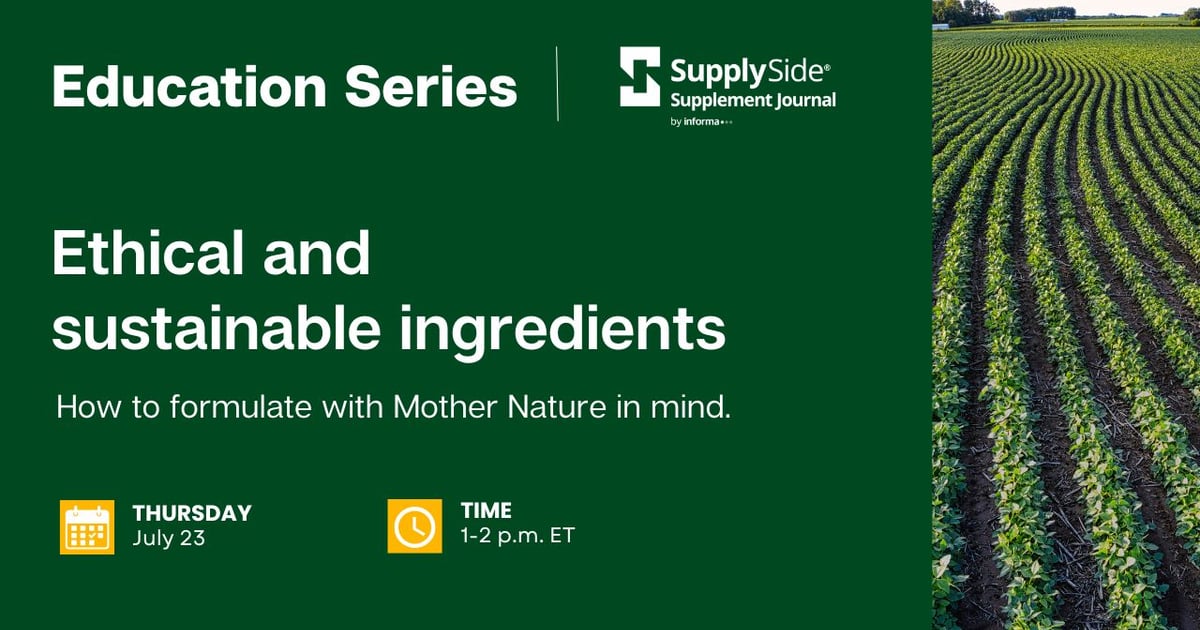
The educational series webinar hosted by SupplySide Supplement Journal is structured to equip industry professionals with the knowledge and tools necessary to navigate this complex terrain. The stated learning objectives, though not explicitly detailed in the provided snippet, can be logically inferred to encompass critical aspects of sustainable ingredient sourcing and formulation. These likely include:
- Understanding the Principles of Ethical Sourcing: This would involve exploring fair labor practices, community engagement, and ensuring that ingredient sourcing benefits the local populations where raw materials are harvested. It also touches upon avoiding ingredients linked to deforestation, illegal harvesting, or human rights abuses.
- Assessing Environmental Impact: Participants are expected to learn how to evaluate the ecological footprint of different ingredients, considering factors such as water usage, land use, biodiversity impact, and greenhouse gas emissions throughout the cultivation, harvesting, and processing stages.
- Identifying and Qualifying Sustainable Ingredients: This objective would focus on practical methods for vetting suppliers, understanding certifications (e.g., organic, fair trade, regenerative agriculture), and utilizing tools for lifecycle assessments. It also involves navigating the complexities of ingredient traceability.
- Formulating with Sustainable Alternatives: The webinar will likely address how to incorporate sustainable ingredients into product formulations without compromising efficacy, stability, or sensory attributes. This might include discussions on ingredient innovation, such as the use of upcycled materials or ingredients produced through more environmentally friendly methods like precision fermentation.
- Communicating Sustainability Efforts Effectively: A crucial aspect for any company is how to transparently and authentically communicate its sustainability initiatives to consumers, building trust and brand loyalty.
The Role of Industry Leaders and Expert Insights
The caliber of the "top industry experts" participating in the webinar is paramount to its success. These individuals are expected to bring a wealth of experience from various facets of the supplement industry, including ingredient suppliers, contract manufacturers, brand owners, regulatory consultants, and sustainability advocates. Their collective insights will offer a holistic perspective on the challenges and opportunities associated with sustainable sourcing.
For example, an ingredient supplier might share their journey in establishing traceable supply chains for a key botanical, detailing the investments in regenerative agriculture practices and the benefits realized in terms of both ingredient quality and environmental health. A formulator might discuss the technical hurdles and innovative solutions developed to replace a less sustainable ingredient with a more eco-friendly alternative without compromising product performance. A brand owner could articulate their strategy for embedding sustainability into their brand ethos and how it has resonated with their target market.
The webinar’s sponsorship by Bionap, as indicated by the provided image, is also significant. Bionap is a company known for its expertise in plant-based extracts and natural ingredients, often emphasizing the scientific validation and sustainable sourcing of its portfolio. Their support suggests a commitment to promoting these values within the industry and likely indicates that their own operations and ingredient offerings align with the themes to be discussed. This sponsorship adds credibility to the event and potentially offers attendees a direct link to a company actively engaged in the sustainable ingredient space.
Practical Implications and Broader Impact
The information disseminated through this webinar is expected to have tangible, practical implications for businesses operating within the supplement sector. Companies that embrace sustainable sourcing and formulation can anticipate several key benefits:
- Enhanced Supply Chain Resilience: Diversifying sourcing, building strong relationships with suppliers who employ sustainable practices, and investing in traceability can create more robust supply chains that are less susceptible to external shocks.
- Improved Brand Reputation and Consumer Loyalty: As consumer awareness of sustainability grows, companies demonstrating genuine commitment to ethical and environmental responsibility are likely to gain a competitive edge, fostering deeper trust and loyalty among their customer base.
- Risk Mitigation and Regulatory Compliance: Proactive adoption of sustainable practices can help companies stay ahead of evolving environmental regulations and avoid potential penalties or reputational damage associated with non-compliance.
- Innovation and New Product Development: The pursuit of sustainable ingredients can spur innovation, leading to the development of novel products and formulations that meet both market demands and environmental imperatives.
- Cost Efficiencies: While initial investments may be required, sustainable practices can often lead to long-term cost savings through improved resource efficiency, reduced waste, and enhanced agricultural yields in the long run.
Beyond individual business benefits, the broader impact of such an initiative is substantial. By fostering a culture of sustainability within the supplement industry, this webinar contributes to a larger global effort to promote responsible consumption and production. It encourages a shift from a linear "take-make-dispose" economic model to a more circular and regenerative approach, where resources are managed judiciously and environmental impact is minimized.
The challenge of limited resources is not a distant concern but a present reality. From water scarcity impacting agricultural output to the depletion of certain mineral reserves, the foundations of many industries, including supplements, are being tested. The webinar serves as a crucial platform to address these realities head-on, offering practical pathways for the industry to adapt and thrive in a resource-constrained future. It underscores the understanding that true innovation in the supplement industry must now encompass not only efficacy and safety but also environmental and social responsibility, ensuring that the pursuit of health and wellness does not come at the expense of planetary well-being.
The timing of this webinar is particularly opportune. As the industry continues to grow, the pressure to operate sustainably will only intensify. By providing a forum for experts to share their knowledge and for professionals to learn, SupplySide Supplement Journal is playing a vital role in guiding the supplement sector toward a more responsible and resilient future. The insights gained from this educational event will undoubtedly empower businesses to make informed decisions, drive meaningful change, and contribute to a healthier planet alongside healthier consumers. The call to action for the industry is clear: to embrace sustainability not as an optional add-on, but as an integral component of innovation and long-term success.