

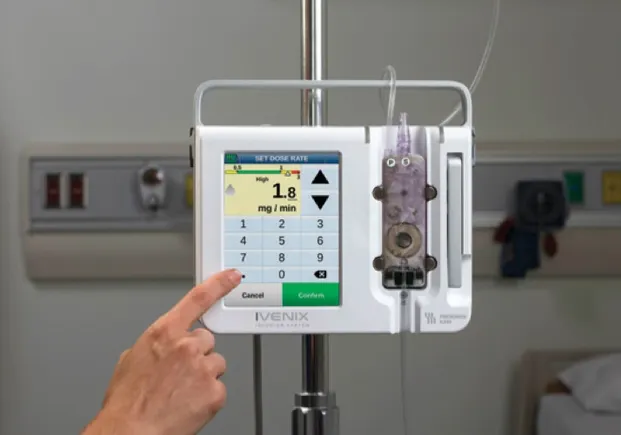
The U.S. Food and Drug Administration (FDA) has designated a recent software recall involving Fresenius Kabi’s Ivenix Large Volume Pump (LVP) as Class I, the agency’s most severe classification. This designation indicates that the use of the affected devices carries a reasonable probability of causing serious adverse health consequences or death. The recall, which was initiated by the company in late 2024, follows reports of software anomalies that can lead to unexpected pump shutdowns or the freezing of the user interface, both of which pose significant risks to patients receiving life-sustaining medications. As of the latest regulatory update, at least two serious injuries have been linked to these malfunctions, underscoring the critical nature of the software failures within clinical environments.
The Ivenix Large Volume Pump is a cornerstone of Fresenius Kabi’s infusion technology portfolio, designed to deliver fluids, medications, blood, and blood products to patients in various healthcare settings. However, the software governing these devices has been found to harbor two distinct "anomalies" that compromise the reliability of the infusion process. The first issue pertains to the device’s battery management system. When the pump operates on battery power for extended periods, the software may fail to accurately calculate and report the remaining battery capacity. This discrepancy can result in the device shutting down without sufficient warning to the clinical staff, even if the interface indicates that power remains.
The second software anomaly involves a specific user-interface error triggered during the programming phase. If a clinician enters a delivery rate that includes two leading zeroes (for example, "00.5" instead of "0.5"), and subsequently presses the "back" or "OK" buttons, the pump may enter a "fail-stop" alarm state. In this state, the user interface freezes entirely, rendering the device unresponsive. If this occurs while an infusion is active or during the critical seconds of a medication change, the resulting interruption or delay in therapy can have immediate physiological consequences for the patient.
Technical Analysis of the Software Anomalies
The failures identified in the Ivenix LVP highlight the increasing complexity and potential vulnerability of software-defined medical devices. The battery reporting error is particularly hazardous in transport situations—such as moving a patient from an intensive care unit (ICU) to a radiology suite—where wall power is unavailable. In such scenarios, clinicians rely entirely on the device’s internal "fuel gauge" to monitor remaining runtime. An unexpected shutdown during the administration of high-risk medications, such as vasopressors for blood pressure support or sedatives for ventilated patients, can lead to rapid hemodynamic instability.
The user interface (UI) freeze caused by leading zeroes represents a classic logic error in software validation. In medical device design, "fail-stop" mechanisms are intended to prevent the device from operating under unsafe conditions. However, when a fail-stop is triggered by a routine input error rather than a mechanical failure, it creates a "nuisance alarm" that can paradoxically create a new hazard: the cessation of therapy. The FDA’s recall notice emphasizes that any interruption in the delivery of critical medications, particularly those with short half-lives, can lead to a reversal of the therapeutic effect and jeopardize patient safety.
Chronology of Regulatory and Corporate Events
The current Class I recall is the latest in a series of challenges Fresenius Kabi has faced regarding the Ivenix platform since its acquisition. The timeline of these events illustrates a mounting regulatory pressure on the company to address quality management and software integrity issues.
- March 2022: Fresenius Kabi announces the acquisition of Ivenix, Inc. for approximately $240 million. The move was intended to bolster Fresenius’s presence in the North American infusion pump market with a state-of-the-art, digitally integrated system.
- January 2024: The company initiates a recall for specific administration sets used with the Ivenix LVP. The FDA later classifies this as a Class I recall, citing improper assembly of the sets which could lead to leaks or air in the line.
- Early 2024: The FDA issues a warning letter to Fresenius Kabi following an inspection of its facilities. The letter details significant lapses in the company’s Quality Management System (QMS), specifically noting that the company failed to conduct timely investigations into device malfunctions and did not adequately document the risks associated with known hardware and software problems.
- Mid-2024: An "early alert" is issued by the FDA regarding a separate problem related to pump alarms that could cause treatment interruptions.
- November 2024: Fresenius Kabi sends a formal letter to customers warning of the battery reporting and UI freeze anomalies in the Ivenix LVP software.
- December 2024: The FDA officially classifies the software recall as Class I, noting the two reported serious injuries.
Regulatory Context and the FDA Warning Letter
The classification of this recall as Class I is exacerbated by the findings of the 2024 FDA warning letter. Regulatory inspectors found that Fresenius Kabi’s internal processes were insufficient for the scale and complexity of the Ivenix platform. The warning letter specifically criticized the company for its "lack of adequate procedures for performing corrective and preventive actions (CAPA)."
According to the FDA, the company took an unacceptable amount of time to resolve reported issues and failed to implement robust risk-assessment protocols. When a manufacturer fails to document the potential for a device to cause harm, they effectively bypass the safety checks intended to protect patients. This history of delayed response likely influenced the FDA’s decision to apply the highest risk category to the current software recall, as it reflects a systemic concern regarding the manufacturer’s ability to maintain the safety profile of its products.
Clinical Recommendations and Mitigation Strategies
In response to the software anomalies, Fresenius Kabi has provided specific instructions to healthcare providers to mitigate risk until a permanent software patch is deployed. For the battery reporting issue, the company strongly recommends that the Ivenix pumps remain plugged into a reliable AC power source whenever possible. During patient transport, clinicians are advised to ensure the battery is fully charged and to have backup infusion methods available if the medication being delivered is life-critical.
Regarding the UI freeze, Fresenius Kabi has instructed clinicians to avoid using leading zeroes when entering infusion rates. If a pump does enter the "fail-stop" alarm state, the current protocol requires the device to be removed from patient use and restarted or serviced by biomedical engineers. The company has stated that a software update is being developed to resolve both anomalies, though a specific global rollout timeline has not been publicly finalized.
Market Impact and the Competitive Landscape
The acquisition of Ivenix for $240 million was a strategic bet by Fresenius Kabi to challenge the dominance of established players like Becton Dickinson (BD), Baxter International, and ICU Medical. The Ivenix system was marketed as a "next-generation" pump, featuring an intuitive, smartphone-like interface and advanced data integration capabilities. However, the recurring Class I recalls and the 2024 warning letter have hampered the platform’s adoption and damaged the company’s reputation in the highly sensitive medical technology sector.
From a financial perspective, the cost of remediating these issues—including software development, hardware repairs, and potential legal liabilities—could significantly exceed the initial acquisition costs. Furthermore, the reputational damage may lead hospital systems to favor competitors with more stable regulatory track records. The infusion pump market is notoriously difficult for manufacturers, as the devices are subject to intense scrutiny due to their ubiquity in hospitals and the high stakes of their performance.
Broader Implications for the Medtech Industry
The Fresenius Kabi recall serves as a cautionary tale for the broader medical device industry regarding the integration of software into clinical hardware. As devices become more "intelligent," the surface area for potential failure shifts from mechanical components to lines of code. The FDA has recently increased its focus on software validation and cybersecurity, recognizing that a single bug can affect thousands of devices simultaneously across the country.
This event also highlights the risks inherent in the acquisition of smaller medtech startups by larger conglomerates. While the acquisition brings capital and scale, the integration of different quality management systems and the transfer of technical knowledge can lead to gaps in oversight. For Fresenius Kabi, the challenge remains to prove to both regulators and the medical community that it can stabilize the Ivenix platform and uphold the rigorous safety standards required for Class I medical devices.
Conclusion and Outlook
As Fresenius Kabi works toward a software resolution, the medical community remains on high alert. The two serious injuries reported serve as a stark reminder of the narrow margin for error in infusion technology. The FDA is expected to continue its close monitoring of the company’s corrective actions, and further inspections may be conducted to ensure that the deficiencies noted in the 2024 warning letter are fully addressed. For now, hospitals using the Ivenix LVP must rely on the recommended workarounds, emphasizing the importance of clinician vigilance in the face of technical instability. The resolution of this recall will be a pivotal moment for Fresenius Kabi as it seeks to maintain its foothold in the competitive U.S. medical device market.
