

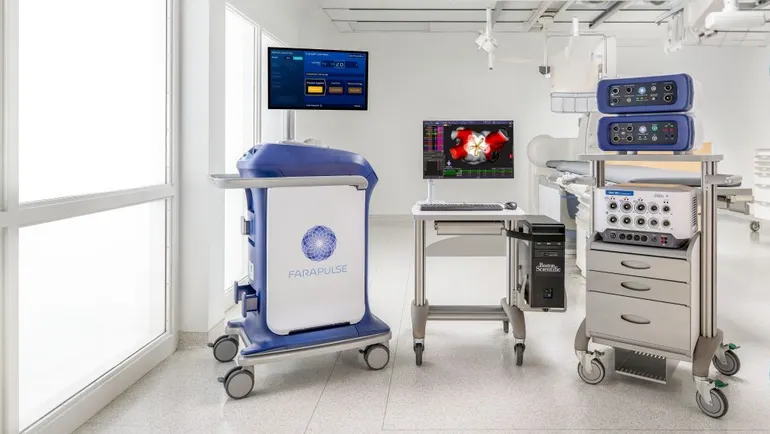
The medical technology landscape reached a significant milestone this week as Boston Scientific announced that it has received expanded CE Mark labeling for its Farapulse Pulsed Field Ablation (PFA) system, now authorized for the treatment of patients with persistent atrial fibrillation (AFib) across Europe. This regulatory advancement follows a similar expansion granted by the U.S. Food and Drug Administration (FDA) in July 2024, solidifying the platform’s position as a primary tool for electrophysiologists managing the most challenging forms of cardiac arrhythmias. The move is expected to broaden the patient population eligible for this non-thermal treatment modality, moving beyond those with intermittent symptoms to those suffering from more continuous and debilitating rhythm disorders.
The Evolution of Cardiac Ablation and the Rise of PFA
For decades, the standard of care for treating AFib involved thermal ablation—either using radiofrequency (RF) energy to generate heat or cryoballoon therapy to freeze targeted cardiac tissue. While effective, these methods carry inherent risks because they are non-selective in their application of energy. Excessive heat or cold can inadvertently damage adjacent structures, such as the esophagus, the phrenic nerve, or the pulmonary veins, leading to complications like esophageal fistulas or phrenic nerve palsy.
Pulsed Field Ablation represents a paradigm shift in electrophysiology. Unlike its thermal predecessors, PFA utilizes microsecond-scale, high-voltage electrical fields to create pores in the membranes of heart muscle cells, a process known as irreversible electroporation. Because different types of tissue have varying thresholds for cell death when exposed to these electrical fields, PFA can be tuned to target cardiac myocytes while sparing surrounding sensitive structures. This "tissue selectivity" is the hallmark of the Farapulse system, offering a safety profile that has rapidly accelerated its adoption among clinicians.
Clinical Context: Paroxysmal vs. Persistent AFib
The recent label expansion is particularly significant due to the clinical differences between the two primary stages of atrial fibrillation. Paroxysmal AFib is characterized by episodes that start and stop spontaneously, usually lasting less than a week. In contrast, persistent AFib is defined by continuous episodes that last longer than seven days and often require medical intervention, such as cardioversion, to restore a normal heart rhythm.
Persistent AFib is notoriously more difficult to treat because the prolonged arrhythmia often leads to structural remodeling of the heart, including atrial scarring and enlargement. Patients with the persistent form of the disease are at a significantly higher risk for chronic fatigue, dizziness, and life-threatening complications like stroke and heart failure. By securing the CE Mark for this specific indication, Boston Scientific can now market the Farapulse system as a validated solution for this more advanced and harder-to-manage patient demographic in the European Union and other regions recognizing the CE Mark.
A Chronology of Innovation and Market Entry
The journey of the Farapulse system is a testament to Boston Scientific’s aggressive strategy in the electrophysiology (EP) sector. The company’s dominance in the PFA space began with the 2021 acquisition of Farapulse, Inc., a privately held pioneer in the field. This acquisition allowed Boston Scientific to leapfrog competitors and become the first major cardiac device manufacturer to offer a commercial PFA system in Europe.
A timeline of the Farapulse regulatory and commercial milestones illustrates the rapid pace of adoption:
- Early 2021: Boston Scientific receives the initial CE Mark for the Farapulse system, specifically for the treatment of paroxysmal AFib.
- August 2021: Boston Scientific completes the acquisition of Farapulse, Inc., integrating the technology into its global EP portfolio.
- January 2024: The FDA grants approval for the Farapulse PFA system in the United States for paroxysmal AFib, triggering a major shift in the domestic market.
- July 2024: The FDA expands the Farapulse label to include persistent AFib, based on data from clinical studies showing the system’s efficacy in more complex cases.
- Late 2024: The European regulatory body grants the expanded CE Mark, aligning European clinical guidelines with the most recent American standards for the device.
Supporting Data and Clinical Evidence
The expansion of the label is underpinned by robust clinical data, most notably from the ADVANTAGE AF clinical trial. This study was designed to evaluate the safety and effectiveness of the Farapulse system specifically in patients with symptomatic persistent AFib. The trial data indicated that the system achieved high rates of procedural success and a low incidence of major adverse events, comparable to or exceeding the results seen in paroxysmal AFib populations.
Furthermore, the MANIFEST-17K registry, which tracked real-world outcomes of over 17,000 patients treated with Farapulse in Europe, has provided the medical community with extensive evidence regarding the system’s safety. The registry data highlighted a remarkable reduction in procedure times compared to traditional RF ablation, with many procedures completed in under an hour. This efficiency not only benefits the patient by reducing time under anesthesia but also allows hospitals to increase their procedural volume, addressing the growing backlog of AFib patients.
Competitive Landscape and Market Dynamics
The electrophysiology market is currently experiencing one of its most transformative periods in decades, driven almost entirely by the transition to PFA. Boston Scientific currently competes in a "Big Four" environment alongside Medtronic, Johnson & Johnson (Biosense Webster), and Abbott Laboratories.
Medtronic was the first to receive FDA approval for a PFA catheter (the PulseSelect system) shortly before Boston Scientific’s U.S. launch. However, Boston Scientific’s Farapulse has gained significant traction due to its unique "basket and flower" catheter design, which clinicians have praised for its ease of use and consistent lesion creation. Johnson & Johnson is currently advancing its Varipulse platform, while Abbott is developing its Volt PFA system, which incorporates integrated mapping capabilities.
Despite the entry of these competitors, Boston Scientific CEO Mike Mahoney expressed high confidence during a recent earnings call. Mahoney noted that the company expects to outpace the overall growth of the electrophysiology market through 2026. This optimism is fueled by the rapid global adoption of Farapulse and the company’s ability to secure expanded indications ahead of many of its rivals.
The Global Burden of Atrial Fibrillation
The clinical need for advanced ablation tools is underscored by the staggering prevalence of AFib. It is estimated that approximately 59 million people worldwide live with the condition. As the global population ages, this number is projected to rise significantly. In Europe alone, millions of individuals suffer from the persistent form of the disease, which often goes undertreated due to the complexities and risks associated with older ablation technologies.
AFib is a leading cause of stroke, as the irregular heart rhythm can allow blood to pool and clot in the left atrial appendage. When these clots travel to the brain, they cause ischemic strokes, which are often more severe in AFib patients than in those with other risk factors. By providing a safer and more efficient way to neutralize the rogue electrical signals causing AFib, PFA systems like Farapulse play a critical role in long-term stroke prevention and the reduction of healthcare costs associated with chronic heart disease.
Official Responses and Industry Implications
While official statements from European regulatory bodies focus on the technical compliance of the device with the Medical Device Regulation (MDR) standards, the response from the medical community has been overwhelmingly positive. Electrophysiologists have noted that the ability to use a single, proven platform for both paroxysmal and persistent patients streamlines hospital workflows and reduces the need for multiple different catheter types.
Industry analysts suggest that this label expansion will likely lead to an immediate uptick in Farapulse utilization in major European markets, including Germany, France, and the United Kingdom. The persistent AFib population represents a larger and more underserved segment of the market compared to paroxysmal patients. Furthermore, the safety profile of PFA may encourage general cardiologists to refer patients for ablation earlier in the disease progression, before the heart undergoes irreversible remodeling.
Future Outlook and Technological Integration
Looking ahead, Boston Scientific is not resting on its current successes. The company is actively working on integrating the Farapulse system with its Faraview mapping software, which would allow physicians to visualize the ablation procedure in real-time with greater precision. Currently, many PFA procedures are performed using fluoroscopy (X-ray), but the move toward "zero-fluoroscopy" procedures is a major trend in the industry to protect both patients and medical staff from radiation exposure.
The expansion of the CE Mark also sets the stage for potential future indications. Researchers are currently investigating the use of PFA for other types of cardiac arrhythmias, such as atrial flutter and ventricular tachycardia. As the clinical body of evidence grows, PFA is expected to eventually replace thermal ablation as the primary energy source for nearly all cardiac ablation procedures.
In conclusion, the expanded CE Mark for the Farapulse PFA system represents more than just a regulatory win for Boston Scientific; it signifies a shift in the standard of care for millions of European patients. By successfully addressing the complexities of persistent atrial fibrillation with a safer, faster, and more selective energy source, the medical community is better equipped to combat the growing global epidemic of heart rhythm disorders. The commercial success of the platform, combined with its proven clinical utility, ensures that PFA will remain at the forefront of cardiac innovation for the foreseeable future.
