

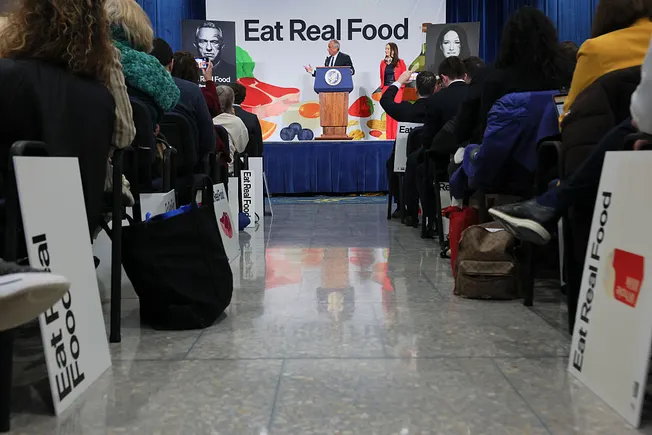
Sean McBride, founder of DSM Strategic Communications and former executive vice president of the Grocery Manufacturers Association (now the Consumer Brands Association), offers an analysis of the current regulatory landscape surrounding the "Make America Healthy Again" (MAHA) movement’s approach to food policy.
The foundational principle of effective governance, particularly within the United States federal system, mirrors the pedagogical imperative of a diligent mathematics instructor: to demonstrate the logical progression and empirical substantiation behind every conclusion. Agencies are not merely empowered to enact policy; they are mandated to "do the work," meticulously proving that proposed actions are justified by a clear cost-benefit analysis and possess a substantial probability of achieving their intended outcomes. This rigorous process ensures that public policy is rooted in evidence, not mere assertion, and that the citizenry is protected by actions that are both necessary and effective.
However, a critical examination of the "Make America Healthy Again" (MAHA) movement’s engagement with the nation’s food supply reveals a striking dichotomy between its pronouncements and its actions. The movement, which advocates for significant changes to the food system, often frames processed foods as a direct threat to public health, at times even characterizing them as "poisonous." If such claims were to be taken at face value and substantiated, they would indeed represent an existential crisis for the American populace, demanding an immediate and comprehensive governmental response. Yet, despite the gravity of these accusations and the considerable regulatory authority vested in federal agencies, a pattern of inaction and indirect engagement has emerged, prompting questions about the movement’s true strategy and its efficacy in protecting public well-being.
The Disconnect Between Rhetoric and Regulatory Action
The MAHA movement, spearheaded by prominent figures advocating for a radical overhaul of dietary norms, has consistently voiced concerns about the health implications of various food components and product categories. These concerns range from the alleged dangers of petroleum-based synthetic food dyes to the broader classification of "ultra-processed foods" (UPFs) as detrimental to public health. Furthermore, the movement has taken stances on specific dietary recommendations, such as advocating against the use of certain cooking oils and questioning the nutritional value of items commonly purchased through the Supplemental Nutrition Assistance Program (SNAP).
Despite the assertive language used to describe these issues—labeling them as "unsafe," "poison," or posing a "threat to public health"—the federal agencies ostensibly aligned with the MAHA agenda have, in many instances, refrained from initiating formal regulatory processes to address these concerns. Instead, the approach has frequently involved public appeals to the food industry for voluntary changes, encouragement of state-level regulatory patchwork, or a deferral of action, citing potential economic repercussions.
Case Study 1: Synthetic Food Dyes
One prominent example involves the use of petroleum-based synthetic food dyes. Health and Human Services Secretary Robert F. Kennedy Jr. has publicly stated that these dyes are unsafe. The Food and Drug Administration (FDA), under his purview, has the authority to investigate and potentially ban ingredients deemed harmful to public health. While the FDA has announced plans to phase out certain petroleum-based synthetic dyes, this process has been characterized as a voluntary agreement with the industry rather than a formal regulatory mandate initiated through a comprehensive risk assessment and public comment period. This approach, while potentially achieving a similar outcome, bypasses the established legal and scientific processes that lend greater authority and permanence to regulatory decisions.
Case Study 2: Ultra-Processed Foods (UPFs)
The classification and regulation of ultra-processed foods (UPFs) represent another area where a significant gap exists between rhetoric and action. Secretary Kennedy has repeatedly characterized UPFs as "poisonous" and a threat to national health. However, the agency he leads, the FDA, has yet to deliver on its publicly stated promise to issue the federal government’s first-ever formal definition of UPFs. Without a clear, scientifically grounded definition, it becomes challenging for regulatory bodies to establish specific guidelines, conduct targeted research, or implement policies aimed at restricting or labeling these products. Consequently, the FDA has not initiated a formal rule-making process to establish bans or significant restrictions on UPFs, despite the strong pronouncements from leadership.
Case Study 3: SNAP and Unhealthy Options
The MAHA movement’s position on SNAP benefits, arguing that recipients should not be able to purchase items like soda and candy due to their perceived unhealthiness, highlights a similar pattern. While the U.S. Department of Agriculture (USDA) has the authority to set guidelines for SNAP purchases, the movement’s advocacy has largely focused on encouraging individual states to implement waivers and restrictions on specific product categories. This approach results in a fragmented regulatory landscape, where access to certain foods varies significantly by state, rather than a cohesive, nationwide policy based on irrefutable scientific evidence and codified through federal legislation. A nationwide ban, if scientifically justified, would require robust data collection, rigorous scientific review, and legislative action to ensure equitable application and enforceability across all states.
Case Study 4: Seed Oils and Pesticides
Further illustrating this pattern, Secretary Kennedy has publicly voiced strong opinions on seed oils, calling them "poison." However, instead of pursuing regulatory action to ban their use, the approach has involved urging restaurants and food companies to voluntarily adopt alternatives such as beef tallow, lard, and butter. Similarly, despite a history of labeling advanced crop protection products as "toxic carcinogens," Kennedy has reportedly declined to partner with the Environmental Protection Agency (EPA) to attempt a ban on widely used pesticides like glyphosate. This decision has been attributed to concerns about negatively impacting farmers and the broader economy, indicating a prioritization of economic considerations over the stated public health concerns when faced with the complexities of direct regulatory intervention.
The Underlying Patterns: Irresponsibility and Recklessness
The consistent divergence between the strong rhetoric employed by MAHA advocates and their actual regulatory engagement suggests two deeply concerning patterns within the federal agencies responsible for food safety and public health.
First, the pervasive narrative that "just about everything they consume is poison" is not only irresponsible but also contributes to a climate of fear and confusion among the public. While a vigilant approach to public health is essential, unsubstantiated or hyperbolically framed warnings can erode public trust and lead to unnecessary anxiety. A more constructive approach would involve clear, evidence-based communication about specific risks associated with particular ingredients or dietary patterns, accompanied by actionable guidance.
Second, and perhaps more critically, the failure to empower leading food safety experts at agencies like the FDA and USDA to conduct thorough investigations, gather data, and make the requisite scientific determinations for ingredient health and safety is reckless. These agencies possess the institutional knowledge, scientific infrastructure, and legal frameworks necessary to conduct rigorous assessments. When these processes are circumvented in favor of less formal or indirect methods, the integrity of the regulatory system is undermined, and the public is left vulnerable to unsubstantiated claims or, conversely, to genuine but unaddressed risks.
A Signal of Weakness, Not Strategic Prowess
The MAHA movement and its allies currently hold significant power, controlling the executive branch and both chambers of Congress. This position of authority theoretically provides them with the necessary tools and influence to implement their agenda directly and decisively. The fact that they have not pursued a more direct regulatory path suggests that their current strategy, characterized by public pronouncements and indirect pressure, may be a reflection of underlying weaknesses rather than a shrewd political maneuver.
The most plausible interpretation of this approach is that the MAHA movement understands its policy proposals and proposed food restrictions lack the robust legal and scientific justification required for successful federal regulation. The exhaustive investigation, public debate, and transparent evidence-gathering inherent in the federal regulatory process are precisely the arenas where their ideas may falter. These processes are designed to withstand scrutiny, ensuring that policies are not only well-intentioned but also factually sound and legally defensible.
The Courtroom as a Bellwether
Evidence of this underlying weakness can be observed in recent legal challenges to MAHA-influenced policies. In states like West Virginia and Texas, courts have placed injunctions on laws mandating ingredient bans and ultra-processed food labeling requirements that were inspired by the MAHA agenda. While these rulings are preliminary, the strong language used by judges in their injunction orders suggests that these laws may face significant hurdles in being upheld. This judicial pushback indicates that the scientific and legal underpinnings of these initiatives may be insufficient to meet the rigorous standards required for regulatory enforcement. The repeated instances of legal challenges and preliminary injunctions serve as a stark reminder that public opinion and strong advocacy, while important, are not substitutes for concrete evidence and sound legal reasoning.
The Imperative of Thoughtfulness and Predictability in Food Policy
The production and distribution of food in the United States, a complex system tasked with nourishing over 350 million Americans affordably and nutritiously, demands a foundation of thoughtfulness, stability, and predictability. Sound public policy necessitates that those in positions of power submit their words and ideas to rigorous examination, grounded in a comprehensive and unbiased assessment of facts. This includes transparency in data, open scientific discourse, and adherence to established legal frameworks.
If the MAHA movement possesses genuine conviction in the efficacy and necessity of its proposed food policies, it must embrace this rigorous process. This would involve initiating formal regulatory proceedings, presenting scientific evidence transparently, and engaging in open public discourse. The current trajectory, marked by strong rhetoric but a hesitant embrace of direct regulatory action, suggests a potential unwillingness or inability to meet these demands. The movement’s current approach may ultimately prove to be a disservice to public health by creating uncertainty and failing to implement demonstrably effective solutions, all while potentially undermining the established processes that are designed to ensure the safety and integrity of the nation’s food supply. The long-term implications of such a strategy could be a public that is both misinformed and underserved by regulatory bodies that appear more interested in pronouncements than in demonstrable, evidence-based action.
