

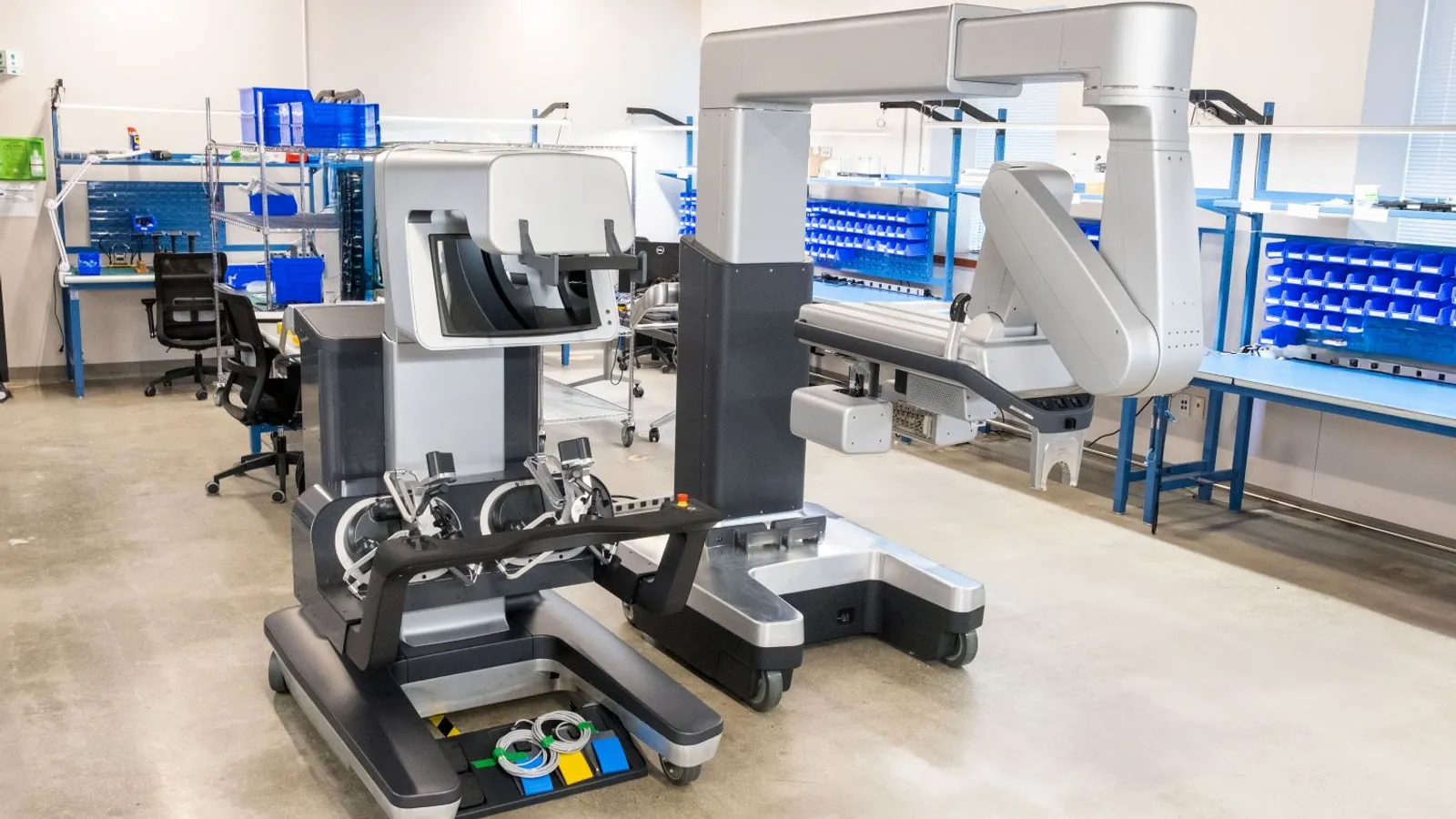
Vicarious Surgical, a Waltham, Massachusetts-based medical technology company, is currently undergoing a significant strategic transformation designed to stabilize its financial position and streamline the path toward the commercialization of its proprietary robotic surgical system. Following a period of market volatility and shifting development timelines, the company has implemented a rigorous cost-reduction strategy, overhauled its executive leadership, and pivoted its research and development focus to ensure the successful delivery of its single-port robotic platform. These efforts are aimed at securing a foothold in the increasingly competitive abdominal surgery market, where the demand for minimally invasive, high-precision tools continues to grow.
Historical Context and the 2021 Public Offering
The trajectory of Vicarious Surgical is deeply intertwined with the broader financial trends of the early 2020s, specifically the surge in Special Purpose Acquisition Companies (SPACs). In 2021, Vicarious Surgical went public through a merger with D8 Holdings Corp., a move that provided the company with approximately $220 million in gross proceeds. At the time, the transaction was viewed as a major endorsement of the company’s "virtual reality" approach to robotic surgery, which promises to give surgeons an immersive, 360-degree view inside the patient’s body coupled with miniaturized robotic arms that mimic human motion.
However, like many medical technology firms that entered the public markets via the SPAC route, Vicarious Surgical faced immediate pressure to meet aggressive development milestones while managing the high costs associated with bringing a Class II or Class III medical device to market. By 2023, the company encountered significant headwinds, including a declining stock price that triggered a potential delisting warning from the New York Stock Exchange (NYSE). The company successfully avoided delisting by demonstrating a viable plan for recovery, but the episode underscored the urgent need for a more disciplined operational approach.
Strategic Pivot: From Clinical Trials to Design Freeze
A pivotal moment in the company’s recent history occurred last year when management made the difficult decision to cancel planned clinical trials for its robot. While clinical trials are a necessary step for FDA approval, Vicarious leadership determined that the existing prototype required further refinement before entering the human testing phase. The focus shifted toward achieving a "design freeze" for the commercial version of the system, designated as v1.0.
A design freeze is a critical milestone in medical device engineering, representing the point at which the product’s specifications are finalized and no further changes are made before formal regulatory testing and manufacturing scale-up. By prioritizing the completion of the commercial design over premature clinical trials, Vicarious aims to avoid the costly "re-work" cycles that often plague medical device startups. This decision reflects a broader industry trend where companies are increasingly prioritizing long-term reliability and manufacturing readiness over short-term developmental "wins."
In January 2024, the company reported significant progress toward this goal. Vicarious announced that it had successfully completed elements of a ventral hernia repair in a porcine (pig) model, marking its first animal lab in several years. This in-vivo testing provided essential data on the system’s performance in a living biological environment, particularly regarding the dexterity of its miniaturized robotic arms and the clarity of its immersive visualization technology.
Leadership Transition and Operational Efficiency
The shift in strategy has been accompanied by a transition in leadership. Stephen From, who previously served as the Executive Chairman of the Board, assumed the role of Chief Executive Officer to lead the company through its next phase of execution. From’s appointment was seen by analysts as a move to bring more seasoned operational oversight to the company as it transitions from a pure research-and-development entity into a pre-commercial organization.
Under From’s leadership, Vicarious has adopted a more lean operational model. One of the most notable changes is the company’s decision to partner with an external engineering and software development firm to handle specific non-core functions of the robot’s design. This outsourcing strategy is intended to reduce fixed overhead costs and allow the company’s internal team to focus exclusively on its "secret sauce"—the proprietary miniaturized actuators and the immersive visualization software that differentiate the Vicarious system from existing platforms like Intuitive Surgical’s da Vinci system.
Financial Trajectory and Cash Burn Management
Financial discipline has become the cornerstone of Vicarious Surgical’s current roadmap. The medical technology sector is notoriously capital-intensive, and maintaining a healthy cash runway is essential for survival. In December, the company updated its financial guidance, lowering its full-year 2025 cash burn forecast to approximately $45 million. This represented a $5 million reduction from previous estimates. Furthermore, the company projected a further reduction in 2026, targeting a cash burn of roughly $35 million.
These reductions are being achieved through a combination of workforce optimizations, the aforementioned outsourcing of engineering tasks, and a more focused approach to vendor management. For investors, these figures are a critical metric of the company’s sustainability. By narrowing the burn rate, Vicarious is effectively extending its "runway"—the amount of time it has to reach commercialization or secure additional funding before exhausting its cash reserves.
The Technical Edge: Single-Port Robotics and Miniaturization
To understand the potential impact of Vicarious Surgical, one must look at the technical challenges it seeks to solve. Most existing robotic platforms require multiple incisions (ports) to accommodate various surgical instruments and a camera. Vicarious is developing a single-port system, which requires only one small incision, typically through the umbilicus (belly button).
The engineering challenge of single-port surgery is significant: the robotic arms must be small enough to enter through a single tube but strong and flexible enough to perform complex tasks once inside the abdominal cavity. Vicarious utilizes a "decoupled" actuator architecture, which allows for greater range of motion without the mechanical interference often seen in traditional cable-driven robots. When paired with a virtual reality-style headset, the system is designed to make the surgeon feel as though they are physically inside the patient, providing a level of intuitive control that the company believes will reduce the learning curve for new robotic surgeons.
Competitive Landscape and Market Implications
Vicarious Surgical is entering a market dominated by Intuitive Surgical, the pioneer of the da Vinci system. While Intuitive has its own single-port offering (the da Vinci SP), the market for abdominal robotic surgery is far from saturated. Competitors like Medtronic (with its Hugo system) and Johnson & Johnson (with its Ottava platform) are also vying for market share.
The broader implication of Vicarious’s entry into this space is the potential for increased democratization of robotic surgery. If the company can deliver a system that is more portable, easier to learn, and more cost-effective than current multi-port towers, it could expand the use of robotics into smaller community hospitals and ambulatory surgery centers (ASCs). These facilities often lack the space or the capital to house traditional, large-scale robotic systems.
Furthermore, the focus on ventral hernia repair as an initial clinical application is a strategic choice. Hernia repair is one of the most common surgical procedures performed globally, providing a high-volume entry point for the technology. Success in this area would provide a foundation for expanding into other abdominal procedures, such as cholecystectomies (gallbladder removal) and colorectal surgeries.
Regulatory Pathway and Future Milestones
Looking ahead, the primary focus for Vicarious Surgical remains the "design freeze" targeted for the end of 2024. Following this milestone, the company will likely move into formal verification and validation testing, a rigorous process required by the U.S. Food and Drug Administration (FDA) to ensure the device meets all safety and performance standards.
The timeline for FDA submission remains a key area of interest for stakeholders. While the company has extended its development timelines to ensure design integrity, the pressure to reach the "De Novo" or 510(k) submission stage remains high. The medical device community will be watching closely for the results of subsequent animal studies and, eventually, the resumption of human clinical trials.
Conclusion
Vicarious Surgical represents a case study in the evolution of a high-growth medtech startup navigating the transition from the "hype" phase of a public listing to the "execution" phase of product development. By embracing a strategy of fiscal conservatism, leadership renewal, and technical focus, the company is attempting to de-risk its path to market.
The road ahead is not without challenges. The robotic surgery market is fiercely competitive, and regulatory hurdles are formidable. However, by reducing its cash burn and achieving critical technical milestones like the porcine lab success, Vicarious Surgical has positioned itself as a resilient contender in the quest to define the next generation of minimally invasive surgery. The coming 18 to 24 months will be decisive as the company moves from a design freeze toward the ultimate goal of regulatory clearance and commercial launch, potentially reshaping the landscape of the operating room.
