
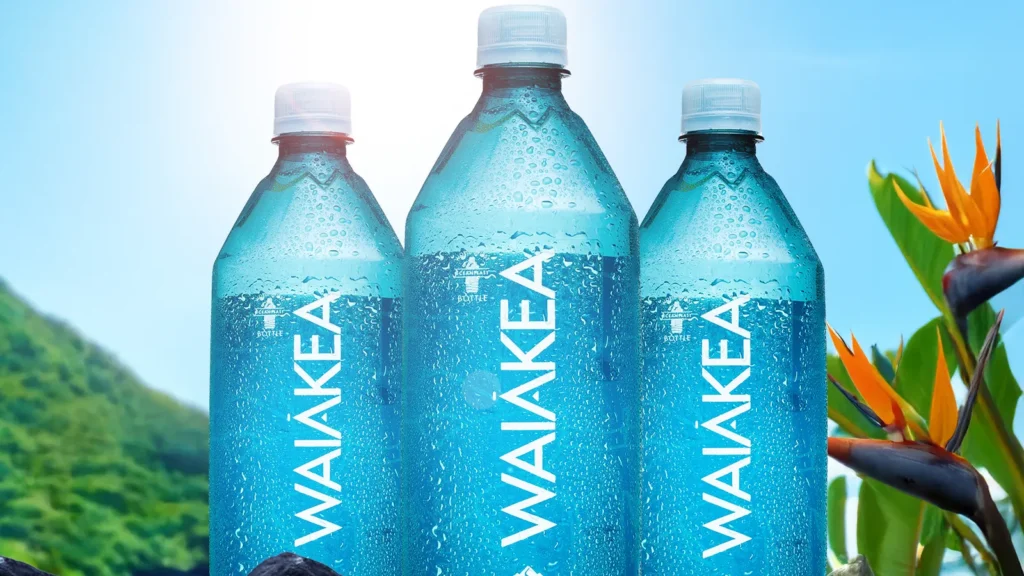
Waiakea Hawaiian Volcanic Beverages is redefining industry standards for sustainability, pushing beyond its established role as a provider of premium bottled water and small-batch coffee. The company is making significant strides in revolutionizing the beverage sector’s approach to environmental responsibility, most recently with the commercial debut of labels printed with algae-based ink. This innovation, developed over four years of intensive research and collaboration with industry leaders, marks another significant milestone for Waiakea, building on its legacy of pioneering sustainable packaging solutions.
A Legacy of Environmental Leadership
Waiakea’s commitment to sustainability is not a recent development. In 2012, the company achieved a landmark distinction by becoming the first beverage company to exclusively utilize 100% post-consumer recycled plastic (rPET) in its packaging. This forward-thinking approach set a precedent for the industry, demonstrating the viability and desirability of circular economy principles within a highly competitive market. The company’s dedication to reducing its environmental footprint extends to its sourcing and manufacturing processes, aiming to create a holistic model of sustainable business operations.
The introduction of algae-based ink is the latest testament to Waiakea’s unwavering pursuit of environmental innovation. This groundbreaking pigment, developed in partnership with Living Ink Technologies, Actega, and NextGen Label Group, represents a significant departure from conventional petroleum-based inks. Hawai’i-based Waiakea is proud to be the first in the world to implement and commercialize these sustainable labels, further solidifying its position as a leader in eco-conscious product development.

The Environmental Imperative of Algae Ink
The traditional ink used in most commercial printing is carbon black, a pigment derived from petroleum. This reliance on fossil fuels contributes to significant environmental concerns, including greenhouse gas emissions and the depletion of non-renewable resources. Waiakea highlights that a staggering 33 billion pounds of carbon black pigment are produced annually, with a substantial portion dedicated to printing applications. The implications of transitioning to sustainable alternatives are profound.
According to Waiakea’s projections, if the global supply of black pigment were entirely replaced by their ACTExact UV Black Algae Ink, the environmental benefit would be equivalent to removing approximately 25 million cars from the road. This calculation underscores the immense potential of algae-based inks to mitigate the environmental impact of the printing industry. The ink utilizes a renewable resource, reducing dependence on fossil fuels and offering a biodegradable alternative.
The development process for this innovative ink was a testament to collaborative effort and scientific rigor. The four-year research period involved close cooperation with specialized partners, each bringing unique expertise to the table. Living Ink Technologies, known for its pioneering work in bio-based inks, provided the core algae pigment technology. Actega, a global leader in specialty coatings and adhesives, contributed its expertise in ink formulation and application, ensuring the ink’s performance and durability. NextGen Label Group, a prominent player in the labeling industry, facilitated the integration of the algae ink into commercial printing processes, paving the way for its widespread adoption.
A Commitment to Open Innovation and Broader Impact
Waiakea’s commitment to sustainability extends beyond its own product lines. The company has made a deliberate decision not to pursue exclusivity or proprietary intellectual property rights over the algae ink technology. Instead, Waiakea is actively open-sourcing the ink through its development partners. This inclusive approach aims to democratize access to this sustainable innovation, enabling brands across a wide spectrum of industries to adopt environmentally friendly printing practices.
This strategy aligns with Waiakea’s overarching mission to act as a catalyst for positive change within the broader consumer packaged goods (CPG) industry. "For us, innovation extends far beyond the traditional sense, where we’re always at the drawing board, coming up with creative products or marketing solutions," stated Ryan Emmons, CEO of Waiakea, in an email correspondence. "Our goal is to use Waiakea as a catalyst for change and better standards for not just bottled water but beverage and CPG overall."
The company’s vision includes scaling the development of additional pigment colors derived from algae in the coming years, further expanding the possibilities for sustainable printing across the industry. This commitment to open innovation signals a departure from the competitive, proprietary models that often characterize technological advancements, instead prioritizing collective environmental benefit.
The Genesis of Waiakea: Visionaries and Early Adopters
Waiakea was founded in 2012 by Ryan Emmons, along with his cousin Alex Preston and friend Matt Meyer. From its inception, the company was driven by a desire to challenge the status quo in the beverage industry. Their early commitment to sustainability was evident in the creation of the first commercially available bottle made from recycled polyethylene terephthalate (rPET). This initiative not only diverted plastic waste from landfills but also established a benchmark for responsible packaging within the bottled water sector.
Beyond packaging, Waiakea has also invested in technology to minimize its operational footprint. The company developed proprietary tracking software designed to optimize transportation logistics, thereby reducing the carbon emissions associated with product distribution. This comprehensive approach to sustainability integrates product design, manufacturing, and distribution into a cohesive environmental strategy.
Oceanplast Bottles: From Coastal Communities to Consumer Hands
A cornerstone of Waiakea’s sustainable packaging strategy is its Oceanplast bottles. These bottles are crafted from plastic collected from coastal communities, a critical intervention point to prevent plastic waste from entering the marine environment. The sourcing of this material directly addresses the urgent issue of ocean pollution, transforming potential environmental hazards into valuable resources.
The process involves rigorous cleaning and breakdown of the collected plastic until it is transformed into high-quality rPET pellets. These pellets are then used to manufacture new bottles, creating a closed-loop system that minimizes the need for virgin plastic. This initiative not only contributes to cleaner coastlines but also provides economic opportunities for the coastal communities involved in the plastic collection and processing.
Navigating a Competitive Landscape
The bottled water market in the U.S. is a substantial and highly competitive sector, representing the largest beverage category by volume. Dominated by established giants like Perrier, Aquafina, and Dasani, the industry presents significant challenges for new entrants. While many upstart brands have sought to differentiate themselves through functional ingredients, unique flavor profiles, or niche marketing strategies, Waiakea has strategically positioned itself as a leader in sustainability.
This differentiation strategy appears to resonate with a growing segment of environmentally conscious consumers. As awareness of climate change and plastic pollution intensifies, consumers are increasingly seeking brands whose values align with their own. Waiakea’s consistent and vocal commitment to sustainability provides a compelling reason for consumers to choose its products over competitors.
Future Innovations and Product Offerings
Waiakea’s commitment to environmental innovation is set to continue with upcoming initiatives. Later this year, the company plans to launch a limited edition glass line. These glass bottles are designed with recycled content and engineered for reuse, further promoting a circular economy model. This expansion into reusable glass packaging demonstrates Waiakea’s ongoing exploration of diverse sustainable solutions.
"We really want to establish ourselves as the enviro-tech leader of our category," Emmons emphasized, underscoring the company’s ambition to be at the forefront of environmental technology within the beverage industry.
Beyond Sustainability: Core Product Attributes
While sustainability remains a primary driver for Waiakea, the company also emphasizes the intrinsic quality and health benefits of its volcanic water. The water is naturally filtered through approximately 14,000 feet of porous volcanic rock in Hawai’i. This unique geological filtration process imbues the water with natural alkalinity and a rich profile of electrolytes, appealing to consumers seeking hydration benefits and natural mineral content. Waiakea offers both still and sparkling versions of its water, catering to a range of consumer preferences.
In addition to its bottled water, Waiakea also offers small-batch coffee, further diversifying its product portfolio. The company’s products are currently available in an extensive network of 45,000 retail locations across the continental U.S. and Hawai’i. With an eye towards global expansion, Waiakea is also exploring international distribution channels in markets such as Australia and Japan.
Strategic Funding and Influencer Partnerships
To fuel its ambitious growth and sustainability initiatives, Waiakea successfully closed an $11 million funding round at the beginning of the year. This significant investment attracted a notable group of professional athletes, including Tetairoa McMillan of the Carolina Panthers, Devin Williams of the New York Mets, and Jerami Grant, who previously played for the Portland Trail Blazers.
The company’s roster of athlete investors also includes prominent figures like Aaron Judge, Myles Garrett, and Klay Thompson, as well as several Hawaii-based athletes. This strategic alignment with athletes serves a dual purpose: it expands Waiakea’s reach to new consumer demographics and, crucially, connects the brand with individuals who share its commitment to sustainability. "Partnering with athletes allows the company to reach customers it wouldn’t ordinarily who also share the company’s sustainability mission," Emmons explained.
Navigating a Polarizing Climate
In an era where environmental, social, and governance (ESG) issues have become increasingly politicized, many companies are adopting a more subdued approach to discussing their sustainability efforts, a phenomenon sometimes referred to as "greenhushing." However, Waiakea has consistently doubled down on its sustainability practices, maintaining a vocal and transparent stance. Emmons believes that this unwavering commitment is precisely what attracts consumers who are actively seeking brands that reflect their personal values.
"It’s a lot easier to stay consistent when it’s baked into your company’s ethos vs. when you are a large public company that focuses on quarterly earnings," Emmons commented. This perspective highlights the inherent advantage of a company built on a foundational commitment to sustainability, allowing for long-term strategic decision-making that prioritizes environmental responsibility over short-term financial gains. Waiakea’s journey exemplifies how a company can integrate environmental stewardship into its core business model, driving both market differentiation and positive global impact.