The landscape of diabetes management is undergoing a significant transformation as Senseonics Holdings, Inc. and Beta Bionics, Inc. announced a formal collaboration to integrate the Eversense 365 Long-Term Continuous Glucose Monitoring (CGM) system with the iLet Bionic Pancreas. This strategic partnership aims to provide patients with a more seamless, automated approach to insulin delivery, combining the world’s first year-long implantable glucose sensor with a pump platform designed to eliminate the complexities of traditional insulin dosing. The integration marks a pivotal step in the evolution of "closed-loop" systems, which rely on the constant communication between a glucose sensor and an insulin pump to regulate blood sugar levels with minimal human intervention.
For millions of individuals living with Type 1 diabetes, the daily burden of care involves a relentless cycle of glucose monitoring, carbohydrate counting, and manual insulin adjustments. The partnership between Senseonics and Beta Bionics is specifically designed to alleviate these pressures. By combining their respective technologies, the companies seek to offer a therapeutic solution that prioritizes user choice, long-term convenience, and clinical accuracy. This move follows a broader industry trend toward interoperability, where device manufacturers collaborate to create "plug-and-play" ecosystems that allow patients to customize their care based on their lifestyle needs.
Technical Synergy: The Eversense 365 and the iLet Bionic Pancreas
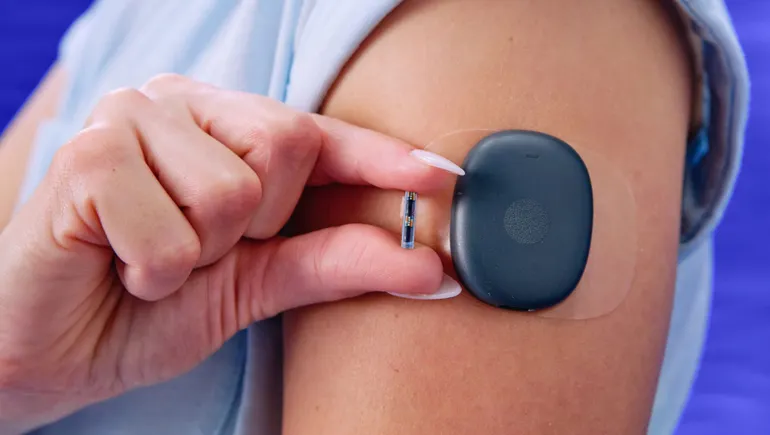
The core of this integration lies in the unique technical capabilities of both devices. Senseonics’ Eversense 365 is a breakthrough in the CGM market, distinguished by its longevity and placement. Unlike traditional CGMs from manufacturers like Dexcom or Abbott, which typically require a new sensor to be inserted into the skin every 10 to 14 days, the Eversense 365 is a small, silicone-based sensor implanted subcutaneously by a healthcare provider. Once in place, it remains active for an entire year. The system utilizes proprietary fluorescence-based technology to measure glucose levels in the interstitial fluid, offering high levels of accuracy, particularly in the hypoglycemic (low blood sugar) range where precision is most critical for safety.

On the delivery side of the equation, the Beta Bionics iLet Bionic Pancreas represents a shift toward radical simplification. Traditional automated insulin delivery (AID) systems require users to enter precise carbohydrate counts for every meal and calculate correction boluses based on complex ratios. The iLet system, however, operates on a different philosophy. Upon setup, the user only needs to input their body weight. From that point forward, the iLet’s autonomous algorithms make all dosing decisions. Users simply "announce" a meal by categorizing it as "usual," "less," or "more" than their typical intake, and the device handles the rest.
The integration of these two technologies creates a synergy where the high-fidelity data from a year-long sensor feeds directly into an autonomous dosing algorithm. This reduces the frequency of sensor changes—a common pain point for pump users—and minimizes the cognitive load of managing insulin-dependent diabetes.
Historical Context and Chronology of Innovation
The path to this partnership is rooted in years of regulatory milestones and technological advancements for both companies. To understand the significance of this integration, it is essential to look at the timeline of development for both the Eversense and iLet platforms.
The journey for Senseonics began in 2018 when the U.S. Food and Drug Administration (FDA) approved the first 90-day Eversense system. This was followed by the 2022 approval of the Eversense E3, which extended the wear time to 180 days. In late 2024, the company reached a major milestone with the FDA clearance of the Eversense 365, making it the first and only CGM system to offer a one-year wear duration. Throughout this progression, a primary challenge for Senseonics was the lack of pump compatibility. Many patients preferred the long-term sensor but were hesitant to use it because it could not communicate with their automated insulin pumps, forcing them to use a separate handheld receiver or smartphone app while manually programming their pumps.
Beta Bionics has followed a similarly ambitious trajectory. Founded as a public benefit corporation, the company sought to commercialize the "bionic pancreas" technology developed at Boston University. In May 2023, the FDA cleared the iLet ACE Pump and the iLet Decision Strategy software for people aged six and older with Type 1 diabetes. Recognizing the importance of consumer choice, Beta Bionics designed the iLet to be compatible with multiple "integrated CGMs" (iCGMs). The system was initially launched with compatibility for the Dexcom G6 and later expanded to include the Dexcom G7 and the Abbott FreeStyle Libre 3.
The partnership announced this month represents the culmination of these two timelines. Senseonics needed a robust pump partner to expand its market share and reduce patient churn, while Beta Bionics needed to continue its "sensor-agnostic" strategy to provide its users with the most advanced monitoring options available.
Market Data and the Growing Demand for AID Systems
The move toward integration is supported by compelling market data and clinical evidence. According to the Centers for Disease Control and Prevention (CDC), approximately 1.6 million Americans are living with Type 1 diabetes, a condition that requires lifelong insulin therapy. Research has consistently shown that AID systems—which link a CGM and a pump—significantly improve "Time in Range" (TIR), the percentage of time a person’s blood glucose stays within the target window of 70 to 180 mg/dL.
However, despite the benefits of AID systems, adoption has faced hurdles. A common reason for discontinuation is "device fatigue." Traditional CGMs require approximately 26 to 36 sensor changes per year, each involving skin preparation, insertion, and a "warm-up" period where no data is available. By reducing this to a single annual procedure, the Eversense 365 addresses a major barrier to long-term adherence.
Senseonics Chief Commercial Officer Brian Hansen recently highlighted the impact of pump compatibility on business growth. During a recent earnings call, Hansen noted that the lack of integration with automated pumps was a leading cause of patient attrition. Before the Eversense 365 was cleared for pump integration, users were required to manually interpret their glucose data and program their pumps—a process that is both time-consuming and prone to human error. The company’s first foray into integration was with Sequel Med Tech’s Twist AID system, a partnership that Hansen credited with stabilizing the user base and attracting new patients. Adding Beta Bionics as a second pump partner is expected to accelerate this growth.
Official Perspectives and Strategic Rationale
Executives from both companies have emphasized the patient-centric nature of the collaboration. Mark Hopman, Chief Commercial Officer of Beta Bionics, stated that the partnership is designed to reduce the "constant work and decision-making" that defines life with diabetes. By automating the most difficult aspects of care, the companies hope to improve clinical outcomes while simultaneously enhancing the quality of life for their users.
From a strategic standpoint, the partnership allows both companies to compete more effectively against "Big MedTech" players like Medtronic, Tandem Diabetes Care, and Insulet. Medtronic offers a vertically integrated system where they manufacture both the sensor and the pump, but their sensors have historically lagged behind in wear time and ease of use. Tandem and Insulet have seen massive success by partnering with Dexcom and Abbott, but they do not yet offer an implantable sensor option.
By offering the Eversense 365 as a compatible sensor for the iLet, Beta Bionics provides a unique value proposition: the simplest pump on the market paired with the longest-lasting sensor. This "low-maintenance" profile is particularly attractive to patients who are overwhelmed by the technical demands of other systems or those who have skin sensitivities to the adhesives used in short-term sensors.
Broader Implications for the Diabetes Care Industry
The collaboration between Senseonics and Beta Bionics has implications that extend beyond their immediate product lines. It signals a shift in the regulatory and commercial environment toward "interoperable" medical devices. The FDA’s creation of the iCGM (integrated CGM) and ACE (alternate controller enabled) pump categories was intended to foster this exact type of collaboration, allowing different components from different manufacturers to work together safely.
Furthermore, the partnership highlights the growing importance of "smart" algorithms in healthcare. The iLet’s ability to dose insulin based on weight and qualitative meal descriptions (small, medium, large) rather than precise math represents the next generation of medical AI. When paired with the highly accurate, continuous data stream from the Eversense 365, the potential for reducing hypoglycemic events and long-term complications like neuropathy and retinopathy increases significantly.
Looking ahead, the road for Beta Bionics includes further expansion into the "patch pump" market. In September 2024, the company received FDA clearance for "Mint," its first insulin patch pump. Unlike the traditional iLet, which uses a tube to deliver insulin, the Mint is worn directly on the skin. Beta Bionics has indicated that a full U.S. launch for the Mint is planned for the first quarter of 2027. It is highly probable that the integration work currently being done for the iLet and Eversense 365 will serve as a foundation for future compatibility with the Mint patch pump, offering patients even more form-factor choices.
Conclusion
The integration of the Senseonics Eversense 365 and the Beta Bionics iLet Bionic Pancreas is a landmark development for the diabetes community. By addressing the twin challenges of device fatigue and dosing complexity, the two companies are positioning themselves as leaders in the movement toward truly autonomous diabetes care. As the medical device industry continues to move away from "closed" ecosystems and toward interoperable solutions, patients stand to benefit from a new era of flexibility and precision. For the thousands of individuals who will eventually use this integrated system, the promise is clear: less time spent thinking about diabetes, and more time spent living life.